 By Bread Styles Team
Table of Contents
What Is a Temple Fade with Beard? {#what-is-a-temple-fade-with-beard}
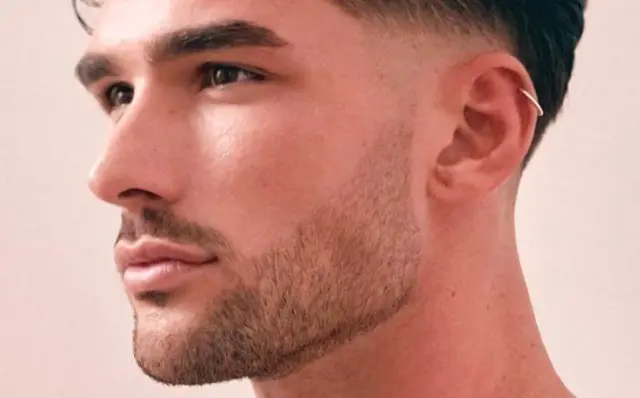
A temple fade with beard is a haircut where the fading is localized just around the temples and the area directly above the ears, rather than extending across the entire side and back of the head. The rest of the hair stays at its natural length, which means a temple fade with beard can sit underneath hair that’s short, medium, or even quite long, without the dramatic all-over contrast a full fade creates.
It’s often the go-to choice for guys who like the clean, tidy feel of a fade but don’t want to commit to short hair everywhere. Combined with a well-shaped beard, a temp fade beard combo gives just enough definition around the hairline to look intentional, without turning the whole haircut into a statement.
How a Temp Fade Differs From a Full Fade {#how-it-differs}
A temple fade is localized to the area around the temples and above the ears, while a full fade extends the tapering effect across the entire side and back of the head. This makes a temple fade a much more subtle option, since most of the hair retains its natural length and only the hairline area gets the tapered treatment.
| Feature | Full Fade (Low/Mid/High) | Temple Fade |
| Area affected | Entire side and back of the head | Localized around the temples |
| Contrast level | Low to bold, depending on height | Minimal to moderate |
| Hair length elsewhere | Usually short to match the fade | Can stay medium to long |
| Commitment level | Higher, especially for high fades | Lower, easier to grow out |
Anyone who wants more contrast across the whole head rather than just around the temples might prefer one of the fuller options, such as a <a href=”https://beardstyles.net/low-fade-with-beard/”>low fade with beard</a> or <a href=”https://beardstyles.net/mid-fade-with-beard/”>mid fade with beard</a>, both of which extend the tapering effect much further than a temple fade does.
Why It’s the Low-Key, Low-Commitment Choice {#why-low-commitment}
- It works with almost any hair length. Because only the temple area is faded, guys with long, medium, or short hair can all add this detail without changing their overall style.
- It’s more forgiving between barber visits. Since there’s less area to maintain, a temple fade grows out far more gracefully than a full fade of any height.
- It’s subtle enough for conservative settings. A temp fade beard combo tends to read as neat and tidy rather than bold, which is part of why it fits comfortably among <a href=”https://beardstyles.net/professional-beard-styles/”>professional beard styles</a>.
- It’s an easy way to test the fade look. For guys who’ve never had a fade before, a temple fade offers a taste of that clean, tapered feel without the full commitment of a proper fade haircut.
Best Temple Fade Beard Combinations {#best-combinations}
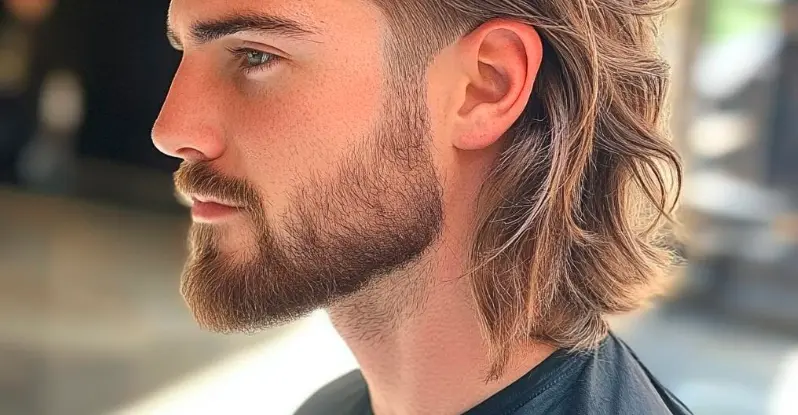
Temple Fade with Long Hair
Keeping length on top while tapering just the temples gives a polished, put-together look that still allows for versatile styling, whether that’s slicked back, pushed forward, or left loose. This pairing shows up often among <a href=”https://beardstyles.net/beard-styles-with-long-hair/”>beard styles with long hair</a>.
Temple Fade with Medium Beard
A balanced, everyday combination that doesn’t demand much daily styling. It’s a strong pick among <a href=”https://beardstyles.net/medium-beard-styles/”>medium beard styles</a> for guys who want tidy without looking overly done.
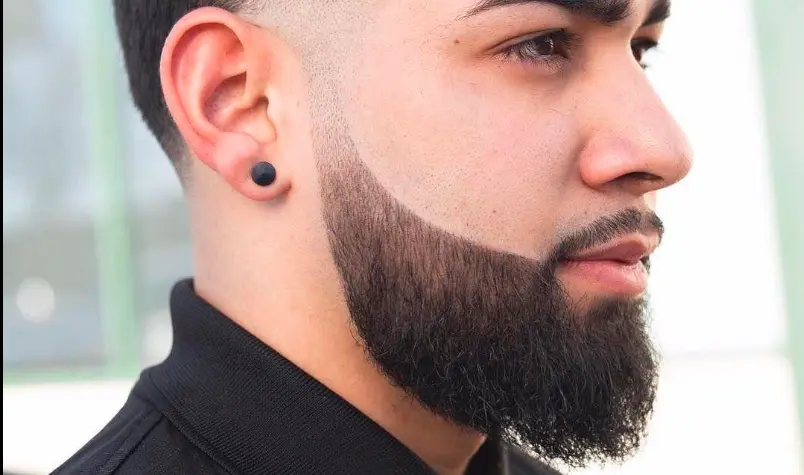
Temple Fade with Full Beard
A denser beard against a subtle temple fade keeps the overall look grounded and mature, with clean shaping along the <a href=”https://beardstyles.net/beard-cheek-line/”>cheek line</a> tying the two together.

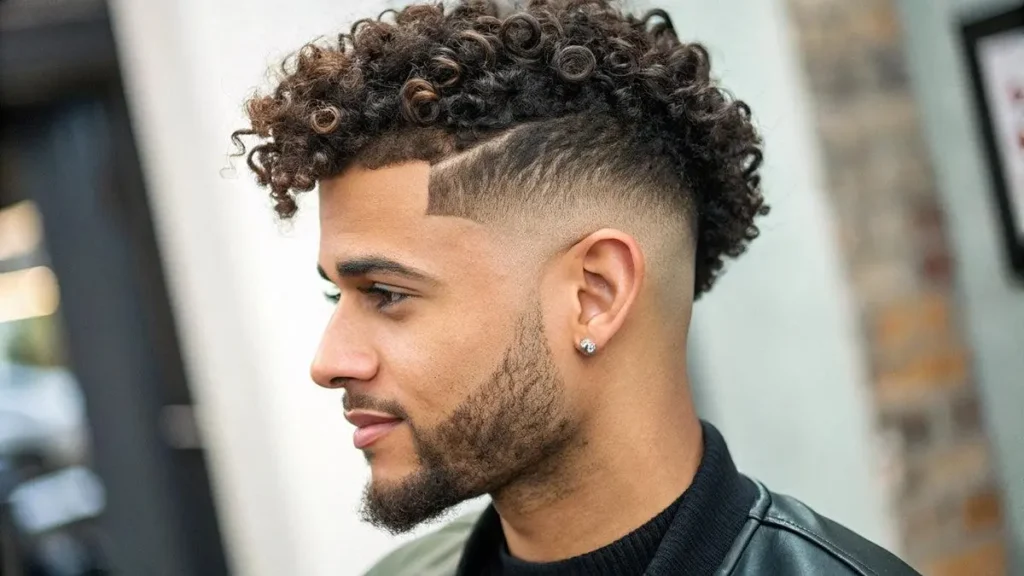
Temple Fade with Curly Top
Curly or coily hair paired with a temple fade lets the natural texture stay front and center while the tapered temples keep the hairline looking sharp and controlled.
Temple Fade with Stubble
A lighter, low-effort pairing for guys who want just a touch of definition. The <a href=”https://beardstyles.net/stubble-beard/”>stubble beard guide</a> covers the lengths that read as deliberate rather than unshaven.
Face Shapes and Temple Fade Beard Pairings {#face-shape}
A temple fade with beard suits virtually every face shape, since the subtlety of the fade means it rarely interacts strongly with facial proportions the way a bolder fade can. Beard length is still worth choosing based on face shape, even though the temple fade itself is one of the more universally flattering options.
| Face Shape | Beard Recommendation | Why |
| Round | Fuller, angled at the jaw | Adds length and structure |
| Square | Short to medium, clean lines | Complements the jaw naturally |
| Oval | Most lengths work | Naturally balanced |
| Oblong | Fuller sides, shorter chin | Adds width instead of length |
| Heart | Fuller at the jaw | Balances a wider forehead |
The dedicated guides on the <a href=”https://beardstyles.net/best-beard-for-oval-face/”>best beard for an oval face</a> and <a href=”https://beardstyles.net/best-beard-for-heart-face/”>best beard for a heart face</a> offer more detailed shaping advice for those specific shapes.
Hair Types and Lengths That Work Best {#hair-types}
- Straight hair shows a clean, subtle taper around the temples, blending easily into the length above it.
- Wavy hair takes to a temple fade especially well, since the natural movement helps soften the transition between the tapered area and the rest of the hair.
- Curly hair pairs nicely too, letting curls stay full and expressive while the temples stay controlled and tidy.
- Coily hair works well with a temple fade for the same reason, and it’s a popular way to keep a fuller top style looking neat around the hairline without shortening the rest.
Because a temple fade only affects a small area, it’s genuinely one of the more forgiving choices across hair types and lengths compared to a full fade.
Growing Out Your Hair? Why This Is the Perfect Transition Style {#growing-out}
One of the more practical reasons guys ask for a temple fade with beard is that it works as a bridge between a short, faded haircut and a longer style. Rather than living through weeks of awkward, uneven growth as a full fade grows out, a temple fade keeps the hairline looking clean while the rest of the hair is allowed to grow.
This makes it a smart option for anyone transitioning away from a bolder cut, like a <a href=”https://beardstyles.net/high-fade-with-beard/”>high fade with beard</a>, without wanting to look unkempt during the process. It also works the other way — as a starting point for guys easing into their first fade before committing to something bolder later.
How to Ask Your Barber for a Temple Fade with Beard {#how-to-ask}
- Say “temple fade” or “temp fade” specifically, since it’s a distinct, localized style rather than a full fade.
- Clarify how much length to keep everywhere else. Since the fade is localized, the rest of your hair length is really the main decision here.
- Bring a reference photo if you have one, especially to show how subtle or defined you want the tapered area to look.
- Discuss how the beard connects. Even with a subtle fade, a clean transition into the beard keeps the whole look cohesive.
- Ask about touch-up frequency for your specific hair growth rate, since this varies more with a temple fade depending on how much length you’re keeping overall.
Maintenance Schedule {#maintenance}
A temple fade with beard is one of the more forgiving fade styles to maintain, since there’s less area involved and the rest of the hair isn’t affected by the taper at all.
Every 3–5 weeks:
- Book a touch-up around the temples. Because the fade is localized, it holds its shape longer than a full fade of similar contrast.
Weekly:
- Trim the beard’s neckline and cheek line to keep the shape crisp.
- Wash the beard with a proper <a href=”https://beardstyles.net/beard-shampoo/”>beard shampoo</a> and apply <a href=”https://beardstyles.net/beard-oil/”>beard oil</a> daily.
For general trimming techniques between visits, the <a href=”https://beardstyles.net/how-to-trim-a-beard/”>how to trim a beard</a> guide and broader <a href=”https://beardstyles.net/beard-care-guide/”>beard care guide</a> go into more depth than we can here.
Common Myths About Temple Fades {#myths}
Myth: A temple fade is just a smaller version of a regular fade. It’s more accurate to think of it as a different approach altogether — localized rather than all-over, which changes both the look and the maintenance schedule significantly.
Myth: You need short hair everywhere for a temple fade to work. Quite the opposite. A temple fade is often chosen specifically because it works with longer hair, unlike a full fade which usually pairs with short length throughout.
Myth: A temp fade beard combo looks unfinished compared to a full fade. It simply looks different — more understated rather than incomplete. Plenty of men prefer this subtlety over the bolder statement of a full fade.
Myth: A temple fade doesn’t need regular maintenance. It needs less frequent attention than a full fade, but it still grows out and softens over time, so it isn’t a completely maintenance-free style.
Mistakes to Avoid {#mistakes}
- Letting the fade grow out too far. Even though it’s more forgiving than a full fade, a temple fade still needs periodic touch-ups to keep the hairline looking tidy.
- Ignoring the beard-to-fade connection. A subtle fade still benefits from a clean transition into the beard rather than an abrupt change in length.
- Choosing beard length without considering overall hair length. Since a temple fade often pairs with longer hair on top, the beard should feel proportional to that length, not just the fade itself.
- Skipping skin care around the temples. Close trimming near the hairline can cause irritation. The American Academy of Dermatology recommends trimming in the direction of hair growth to help prevent ingrown hairs.
- Assuming any barber will interpret “temple fade” the same way. Bring a reference photo, since some barbers use the term more loosely than others.
Temple Fade vs Regular Fade vs Taper Fade with Beard {#comparison}
| Feature | Temple Fade | Regular Fade | Taper Fade |
| Area affected | Localized around temples | Entire side and back | Gradual, no skin exposed |
| Hair length elsewhere | Can stay long | Usually short to match | Usually short to medium |
| Maintenance | Every 3–5 weeks | Every 2–4 weeks (varies by height) | Every 3–5 weeks |
| Best for | Subtlety, versatility | Balanced, modern styles | Classic, low-maintenance looks |
For a broader, more traditional alternative that still avoids exposing bare skin, the <a href=”https://beardstyles.net/taper-fade-with-beard/”>taper fade with beard</a> guide covers a style that shares a similar low-maintenance philosophy but extends further across the head.
Who Should Get a Temple Fade with Beard {#who-should-get-one}
Best age groups: A temple fade with beard suits nearly every age, since its subtlety means it doesn’t skew particularly young or particularly mature the way a bold fade might.
Best occasions: It’s one of the more versatile options across settings, working equally well in offices, casual environments, and anywhere in between, which makes it a reliable pick among <a href=”https://beardstyles.net/office-beard-styles/”>office beard styles</a>.
Best hair situations: Anyone with longer hair who still wants a clean hairline, anyone transitioning between haircuts, or anyone testing out the fade look for the first time.
Product Checklist {#products}
- Beard trimmer: A dependable <a href=”https://beardstyles.net/beard-trimmer/”>beard trimmer</a> for maintaining the neckline and cheek line between barber visits.
- Beard oil: Keeps skin comfortable where the fade connects to the beard.
- Beard balm: Useful for holding shape on fuller beards without adding excess weight.
- Styling product for length on top: Since a temple fade often pairs with longer hair, a lightweight cream or pomade helps keep the top styled without overpowering the subtle fade underneath.
Final Thoughts {#final-thoughts}
A temple fade with beard offers a genuinely different approach to combining short hair and facial hair — subtle, localized, and far more forgiving than a full fade in terms of both styling flexibility and maintenance. It works with long hair, medium hair, and short hair alike, making it one of the more versatile choices in the fade family, and it’s a smart option whether you’re growing your hair out, testing the fade look for the first time, or simply prefer understated over bold. Whatever length you keep everywhere else, a well-shaped beard and a clean temple fade combination tends to look tidy without looking overdone.
FAQs {#faqs}
What is a temple fade with beard?
A temple fade with beard is a haircut where the fading is localized around the temples and above the ears, while the rest of the hair keeps its natural length, paired with a shaped beard.
What’s the difference between a temp fade and a regular fade with beard?
A temple fade only affects the area around the temples, while a regular fade extends the tapering effect across the entire side and back of the head.
Does a temple fade with beard work with long hair?
Yes, it’s actually one of the most common reasons people choose a temple fade, since it keeps the hairline clean without requiring short hair everywhere else.
How often does a temp fade beard combo need maintenance?
Typically every 3 to 5 weeks, since the localized area holds its shape longer than a full fade would.
Is a temple fade with beard good for round faces?
Yes, especially when paired with a fuller beard angled at the jaw, though the subtlety of the fade means it works well across most face shapes.
Can a temple fade with beard work with curly hair?
Yes, curly and coily hair pair well with a temple fade, letting curls stay full while the temples stay clean and controlled.
Is a temple fade suitable for professional workplaces?
Yes, it’s one of the more workplace-friendly fade options because of how subtle and understated it looks compared to a full fade.
What should I say to my barber for a temple fade with beard?
Ask specifically for a “temple fade” or “temp fade,” clarify how much length you want to keep elsewhere, and bring a reference photo if possible.
Is a temple fade with beard a good option for growing out my hair?
Yes, it’s often used as a transition style, keeping the hairline tidy while the rest of the hair grows out from a shorter cut.
What beard length works best with a temple fade?
Most lengths work well, though the beard should feel proportional to whatever length you’re keeping on top, especially with longer hairstyles.
Does a temple fade with beard need a razor finish?
Not usually. Since it doesn’t typically go down to bare skin, a temple fade is generally achieved with clippers alone.
Can a temple fade with beard cause skin irritation?
It’s less likely than a bolder fade since less skin is exposed, though trimming in the direction of hair growth still helps reduce any risk of irritation.
Is a temple fade with beard a good first fade for beginners?
Yes, it’s often recommended as an easy way to try the fade look without committing to a bolder, more noticeable style.
Does a temple fade suit older men?
Yes, its understated look works well across a wide age range, including men who prefer a cleaner hairline without an overly modern or trend-driven haircut.
How does a temple fade with beard compare to a taper fade with beard?
A temple fade is localized around the hairline while the rest of the hair stays untouched, whereas a taper fade gradually shortens hair across a wider area without exposing skin.