 By Bread Styles Team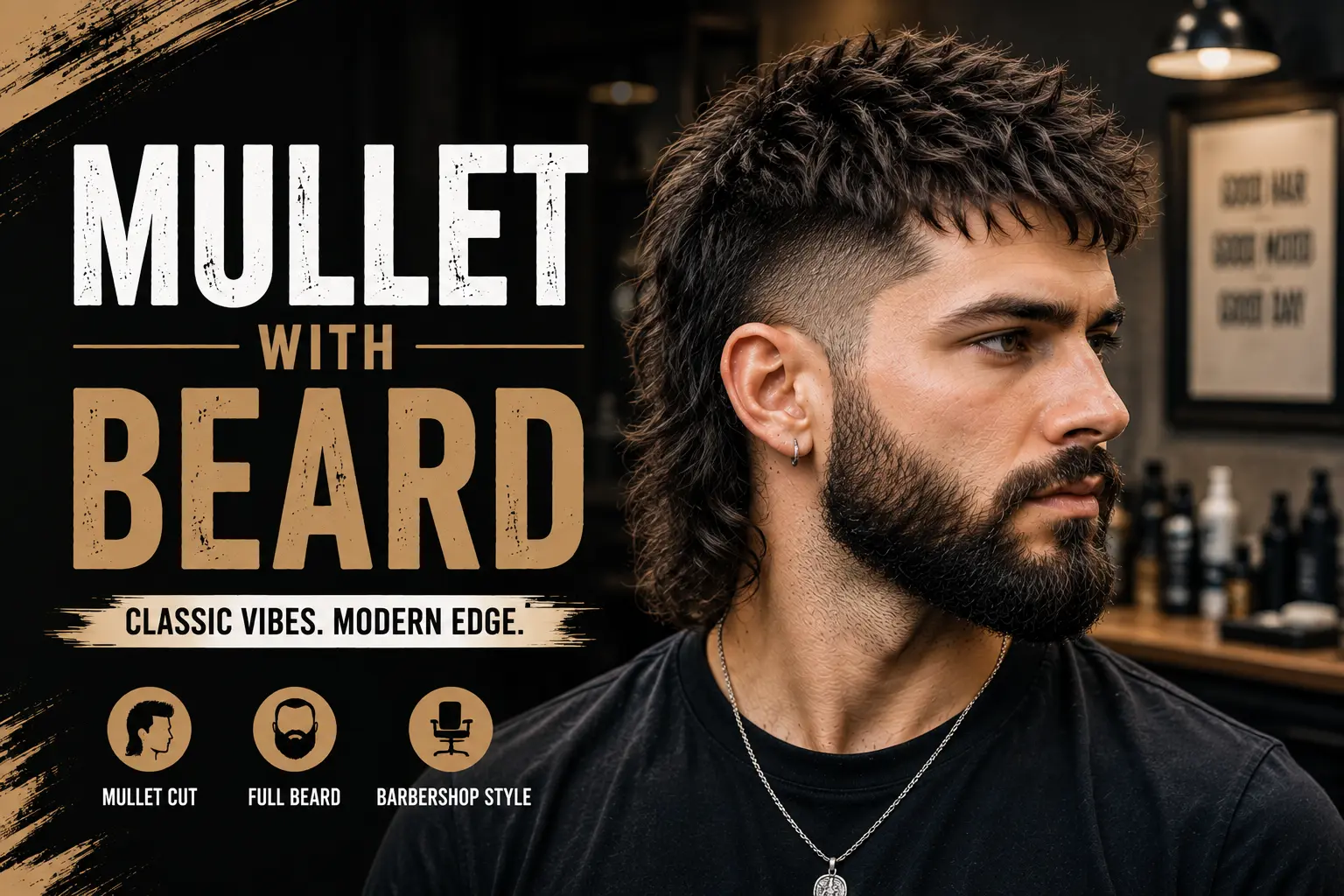
A mullet with beard keeps hair shorter at the front and sides while leaving it noticeably longer at the back, and pairs that contrast with a groomed beard for balance. It’s a style that spent a couple of decades as a punchline before quietly working its way back into barbershops, largely because the modern version bears only a loose resemblance to the exaggerated cuts people remember from the 80s.
This guide covers what actually separates a genuinely modern mullet beard combination from the dated version, how long it realistically takes to grow one out, and which beard styles keep the whole look feeling deliberate rather than accidental.
Table of Contents
What Is a Mullet with Beard
A mullet is a haircut with shorter hair at the front, top, and sides, transitioning into noticeably longer hair at the back and nape of the neck. The length difference is the entire point of the style, creating a clear before-and-after when viewed from the front versus the back.
A mullet with beard pairs that length contrast with facial hair, usually short to medium length, to add structure and keep the front of the face looking as intentional as the back. Because the haircut already carries a distinctive silhouette, the beard often becomes an important part of making the whole look feel finished rather than simply grown out.
Old-School Mullet vs Modern Mullet Beard
This comparison matters more here than almost anywhere else on this site, because the perception gap between the two versions is significant.
| Feature | Old-School Mullet | Modern Mullet Beard |
| Front and sides | Often longer, less defined | Tight fade or taper |
| Back length | Very long, uneven | Moderate, shaped |
| Transition | Abrupt, unblended | Blended or intentionally disconnected |
| Overall impression | Dated, undone | Deliberate, styled |
The classic version, associated heavily with 1980s style, tended to keep the sides longer and left the back to grow with minimal shaping. The modern take pairs a tight fade or taper at the sides, similar to what you’d see on a skin fade with beard or low fade with beard, with a more deliberately shaped and often shorter section at the back. That contrast, tight sides against contained length at the back, is what makes a modern mullet beard look like a genuine style choice rather than a haircut left too long between visits.
How Long It Actually Takes to Grow One
Unlike most haircuts on this list, a proper mullet requires real patience before it looks the way most reference photos suggest.
- Starting point: Most barbers need at least 4 to 6 inches of length at the back to create a defined mullet shape.
- Growing phase: If you’re starting from a short haircut, expect 4 to 8 months of growth before there’s enough length at the back to properly shape.
- Maintenance phase: Once established, the front and sides get trimmed regularly while the back is only lightly shaped to maintain length.
Ask your barber about a “grow-out plan” if you’re starting from scratch. Most will shape the sides and front into their eventual style early on while leaving the back alone, so the transition period doesn’t look like an accident.
Best Face Shapes for a Mullet with Beard
| Face Shape | Front Styling | Beard Pairing |
| Round | Height or texture at the front | Boxed beard with sharp angles for extra length |
| Square | Textured, moderate front | Short beard or stubble, keep proportions clean |
| Oval | Flexible, most front styles work | Wide range of beard lengths suit it |
| Long | Lower front volume | Fuller sides, shorter chin to add width |
| Diamond | Moderate front height | Fuller jawline beard to balance a narrow chin |
For more detail on pairing beard length to face shape, see best beard for round face, best beard for square face, and best beard for oblong face.
Beard Styles That Pair Best
Because the back of a mullet carries so much of the visual weight, the front of the face, and by extension the beard, benefits from staying clean and well-defined.
- Short beard — a structured, reliable pairing that balances the length at the back with definition at the jaw. See short beard styles.
- Stubble — works well with the more casual, textured versions of the modern mullet. Full guide at stubble beard.
- Corporate beard — for a more restrained, workplace-friendly take on the style. Covered in corporate beard.
- Circle beard — a minimalist option that keeps the front simple while the back does the visual work.
A fuller, longer beard can work with a mullet, particularly since both involve embracing more length than most short cuts, though it’s worth keeping the beard well-shaped so the overall look doesn’t feel unstructured throughout.
Styling Product Guide
| Product | Purpose | Best For |
| Matte clay | Texture at the front, no shine | Everyday, modern mullet finishes |
| Sea salt spray | Texture and slight wave at the back | Adding movement to longer back sections |
| Light-hold pomade | Subtle shine and control | More polished, styled versions |
| Texturizing powder | Extra grip for fine hair | Building volume at the front |
How to Style It Step by Step
- Towel-dry hair to about 70%. This applies to both the front and the longer back section.
- Apply matte clay or texturizing powder to the front section. Style it up, forward, or textured, depending on your preferred finish.
- Apply a small amount of sea salt spray or light pomade to the back. This adds definition and a bit of movement without weighing the length down.
- Use your fingers rather than a comb for the back section. This preserves natural texture instead of flattening it.
- Finish the beard to match. A pass with a beard comb keeps the whole look feeling coordinated front to back.
Most versions take three to five minutes once you’re familiar with how your specific hair responds at both lengths.
Hair Type Considerations
| Hair Type | Fit for a Mullet |
| Straight | Works well, though the back may need product to avoid looking flat |
| Wavy | Excellent natural fit, adds movement to the longer back section |
| Curly | Suits a mullet particularly well, since the back naturally holds shape and volume; check the curly beard care guide if the beard is curly too |
| Thick | Handles the length contrast especially well |
| Fine | Needs a texturizing product at both the front and back to avoid the style looking thin |
How to Ask Your Barber for It
- Ask for a tight fade or taper at the sides and front, with length retained at the back, being specific about how much length you want to keep.
- Bring reference photos, since “mullet” covers a wide range of looks from subtle to dramatic.
- Mention if you’re growing into the style, so your barber can plan the shaping in stages.
- Ask for the beard to be shaped in the same visit for a coordinated finish.
- Specify whether you want the back left natural and textured or more precisely shaped, since this changes the barber’s approach.
Maintenance and Daily Upkeep
Hair:
- Trim the sides and front every 2–3 weeks to keep the contrast with the back sharp
- The back generally needs shaping only every 6–8 weeks to maintain length while removing split ends
- Apply product daily to both sections for the most polished, intentional finish
Beard:
- Trim every 1–2 weeks with a reliable beard trimmer to keep pace with the haircut
- Apply beard oil daily to prevent dryness
- Wash with a dedicated beard wash rather than regular shampoo
- Keep the beard neckline and beard cheek line sharp, ideally weekly
The beard care guide has a complete routine breakdown if you’re setting one up from scratch.
Where It Works and Where It Doesn’t
A modern mullet with beard tends to suit creative industries, music, hospitality, and casual workplaces well, particularly when the sides are kept tight and the overall look feels deliberate rather than undone. It’s a harder sell in traditional corporate environments and conservative office beard styles settings, where the length at the back may draw more attention than intended.
For events like weddings, a more restrained, well-shaped version can work, though it’s worth checking general dress expectations beforehand. The wedding beard styles guide has broader advice on coordinating haircuts and beards for formal occasions.
Best Age Groups
- Teens and 20s: Where this style is most commonly worn, often a bolder, more textured version paired with stubble or a developing short beard.
- 30s and 40s: Frequently a more restrained modern mullet beard combination, paired with a fuller, well-groomed short beard.
- 50s and beyond: Less common but not impossible, typically a subtler version alongside greying facial hair. The beard styles for men over 50 guide has broader advice on pairing longer styles with grey hair.
Common Mistakes
- Letting the sides grow out too long. This is what causes a modern mullet to start looking like the dated 80s version rather than a deliberate style.
- Skipping the growing-out plan. Trying to force a mullet shape before there’s enough length at the back rarely looks intentional.
- Neglecting the beard. A styled, contrasted haircut next to an ungroomed beard looks unfinished.
- Not using product on the back section. Left completely untouched, longer hair at the back can look unstyled rather than shaped.
- Choosing too dramatic a version for a conservative workplace. A subtler length contrast is usually the safer choice if you’re unsure how it’ll be received.
Myths About the Mullet
Myth: It always looks like the 80s version. A tight fade at the sides and a shaped, intentional back section look considerably different from the longer, unblended cuts associated with that era.
Myth: It’s just a haircut you grow out accidentally. A proper modern mullet beard combination is deliberately shaped at both lengths, not simply the result of skipping haircuts.
Myth: It only works for musicians or a specific subculture. It’s become common across a wide range of everyday settings, particularly in creative fields and casual workplaces.
FAQs
What is a mullet with beard? A mullet with beard combines shorter hair at the front and sides with noticeably longer hair at the back, paired with a groomed beard, usually short to medium length, for a deliberate length contrast.
What’s the difference between an old-school mullet and a modern mullet beard? The modern version pairs a tight fade or taper at the sides with a more shaped, contained back section, while the old-school version typically kept the sides longer and left the back largely unshaped.
How long does it take to grow a mullet with beard? Most men need 4 to 8 months of growth at the back before there’s enough length to shape into a defined mullet, depending on hair growth rate and starting length.
Is a mullet with beard appropriate for work? It depends on the workplace. Creative and casual environments tend to accommodate it well, while conservative corporate settings generally do not.
What beard length works best with a mullet? Short beard or stubble tends to work best, offering structure at the front without competing with the length at the back.
Does a mullet with beard suit round faces? Yes, particularly with some height or texture at the front, paired with a beard shaped to add further length and angles to the jaw.
Can I get a mullet with curly hair? Yes, curly hair often suits this style particularly well, since natural curl adds volume and shape to the longer back section without much extra effort.
What products do I need for a mullet with beard? Matte clay or texturizing powder for the front, and sea salt spray or light pomade for the back, cover most versions of this style.
How do I ask my barber for a mullet? Bring reference photos, specify how much length you want at the back versus the sides, and mention if you’re growing into the style from a shorter cut.
How often should I trim a mullet with beard? Trim the sides and front every 2–3 weeks, the back every 6–8 weeks, and the beard every 1–2 weeks.
Can teenagers wear a mullet with beard? Yes, it’s a popular choice among younger men, often the bolder, more textured version paired with stubble or an early short beard.
Does a mullet suit thinning hair? It can be more difficult with significant thinning at the crown, since the style relies on contrast between lengths, though a more subtle version may still work depending on where the thinning occurs.
Is a mullet with beard suitable for weddings? A more restrained, well-shaped version can work, though it’s worth checking the general dress expectations of the event beforehand.
What’s the easiest way to grow into a mullet? Ask your barber to shape the front and sides into their intended style early while leaving the back to grow, avoiding an awkward, unstyled transition period.
Does a modern mullet beard style suit older men? It’s less common but can work with a subtler length contrast, particularly paired with a well-groomed grey or salt-and-pepper beard.
A mullet with beard rewards patience more than almost any other style on this list, but the modern version genuinely bears little resemblance to the dated cuts it’s often unfairly compared to. Keep the sides tight, shape the back deliberately rather than leaving it to grow untouched, and pair it with a beard that stays sharp and well-defined throughout the process. For more ways to pair facial hair with distinctive haircuts, the types of beard styles page is worth a look before your next barber visit.