
 By Bread Styles Team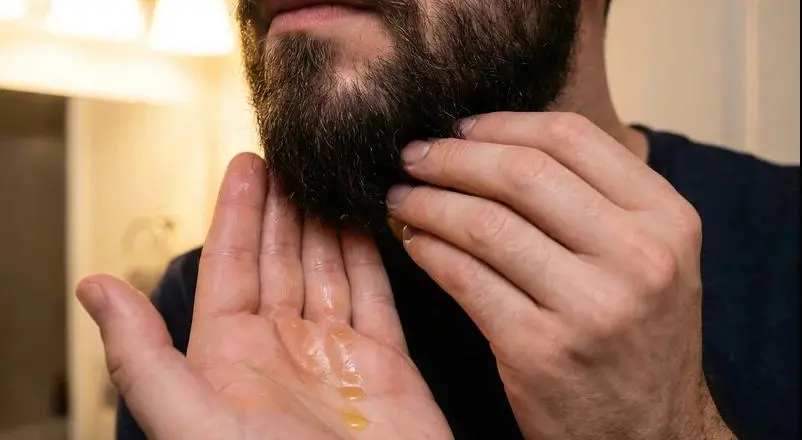
Ask ten men why they started using beard oil and you’ll get ten slightly different answers — the itching stopped, the beard looked less wiry, their partner stopped complaining about the dry flakes on the pillow. All of those reasons are legitimate, and they all come back to the same basic function: beard oil conditions skin and hair that regular face products simply aren’t built to handle. It’s one of the few grooming products where the reputation mostly matches the reality.
This guide covers what beard oil for men actually does, how it compares to balm and wax, how often to use it, and how to pick one that suits your skin without wasting money on the wrong formula.
Table of Contents
What Is Beard Oil and Why Men Use It
Beard oil is a blend of carrier oils, sometimes combined with a small amount of essential oils, designed to moisturize the skin underneath a beard and condition the hair itself. It’s used primarily to reduce itchiness, soften coarse growth, and prevent the dry, flaky skin that shows up once regular face moisturizer stops reaching skin covered by hair.
The need for it is mostly practical. Facial hair blocks natural oil distribution from reaching the skin the way it does on a clean-shaven face, and beards trap dust and product residue that regular skin doesn’t. A few drops of oil daily fill that gap.
Beard Oil Benefits: What It Actually Improves
Reduces Itching During the Growth Phase
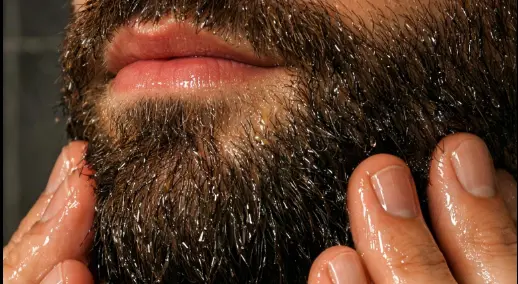
This is the single biggest reason most men pick up their first bottle. New hair pushing through skin during the early weeks of growing a beard causes genuine irritation, and consistent oil use noticeably reduces it. If you’re in this stage right now, our beard growth guide covers what else to expect during this window.
Softens Coarse or Wiry Hair
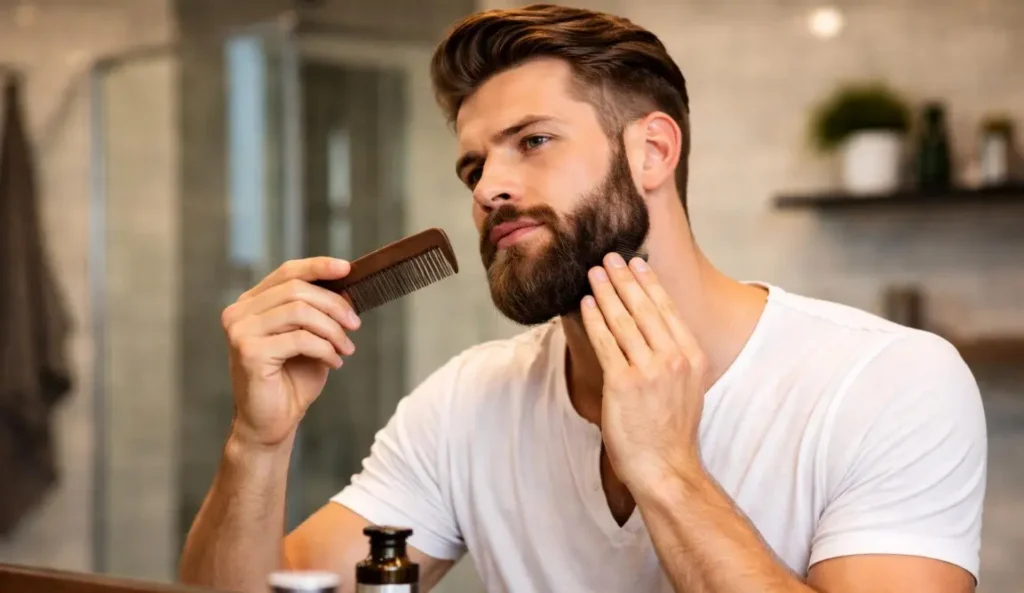
Untreated facial hair, especially coarser or curlier types, can feel rough and difficult to style. Regular oiling softens the hair shaft over time, making it more manageable to comb, trim, and shape.
Prevents Beardruff
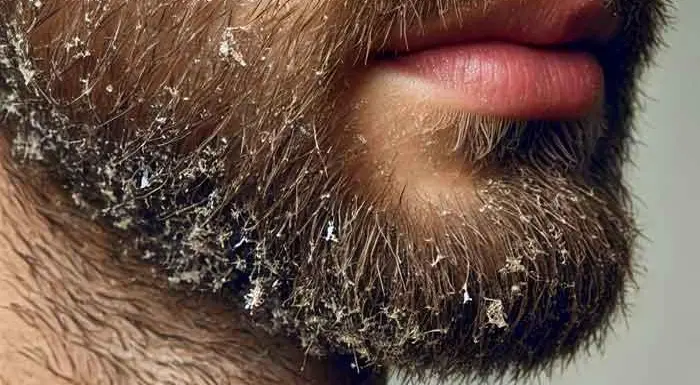
Beardruff — the flaky, dry skin that shows up underneath longer facial hair — is essentially dandruff caused by dry skin trapped beneath the beard. Daily moisture from oil is one of the more effective, low-effort ways to prevent it.
Adds Natural Shine Without Looking Greasy
A well-applied beard oil, used in moderate amounts, gives facial hair a healthy sheen rather than a flat, dull appearance, without leaving it looking wet or oily if used correctly.
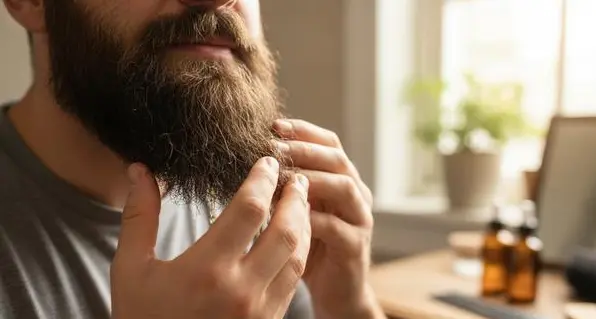
Supports Skin Health Underneath
Beyond comfort, moisturized skin underneath a beard is less prone to irritation, ingrown hairs, and breakouts, particularly in areas that trap sweat and product buildup.
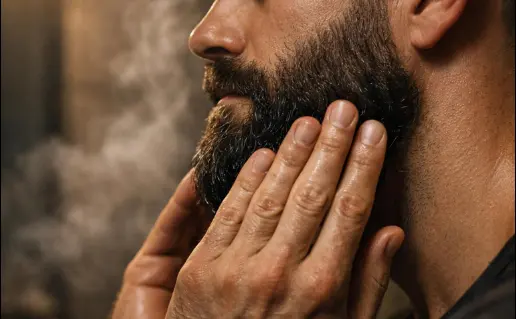
Makes Styling Easier
Softer, better-conditioned hair holds a trained direction more easily, which matters more as length increases. This becomes especially relevant once you’re shaping a specific look — our how to trim a beard guide covers technique alongside proper conditioning.
Beard Oil vs Balm vs Butter vs Wax
These products overlap in purpose but aren’t interchangeable, and picking the wrong one for your goal is a common mistake.
| Product | Texture | Best For | Hold |
| Beard Oil | Lightweight liquid | Daily conditioning, all lengths | None |
| Beard Balm | Semi-solid, waxy | Light shaping plus moisture | Light |
| Beard Butter | Thicker, creamy | Extra moisture for dry or longer beards | None to light |
| Beard Wax | Firm, solid | Precise shaping and taming flyaways | Strong |
Most men benefit from oil as a daily base layer, adding balm or wax on top only when actual shaping or stronger hold is needed. If you’re growing out a longer style, our long beard styles guide covers where balm or butter typically becomes more useful than oil alone.
How Often Should You Use Beard Oil?
Frequency depends more on beard length and skin type than any fixed rule, but here’s a reasonable starting point.
| Beard Stage | Recommended Frequency |
| Stubble (days 1–14) | Once daily, light application |
| Short beard (2–6 weeks) | Once or twice daily |
| Medium beard (6 weeks–3 months) | Twice daily, more if skin runs dry |
| Long beard (3+ months) | Twice daily, increase amount slightly with length |
Men with naturally oily skin may need less frequent application, while dry or flaky skin often benefits from consistent twice-daily use regardless of beard length. If you’re just starting out, our best beard styles for beginners guide pairs well with building this habit early.
How to Choose the Right Beard Oil for Your Skin and Hair Type
- Oily skin: Lighter oils like jojoba or grapeseed absorb quickly without adding extra shine.
- Dry skin: Richer oils such as argan or sweet almond provide longer-lasting moisture.
- Sensitive skin: Choose a short ingredient list with minimal added fragrance to reduce the chance of irritation.
- Coarse or curly hair: Heavier oils help control frizz and soften texture — see our curly beard styles guide for more on managing this hair type.
- Fine or thin facial hair: Lighter oils prevent hair from looking weighed down; pair with guidance from our thin beard styles page.
If you’re specifically interested in formulas marketed around supporting fuller-looking growth rather than general conditioning, our dedicated beard growth oil guide breaks down that category and its ingredients in more depth.
How to Apply Beard Oil the Right Way
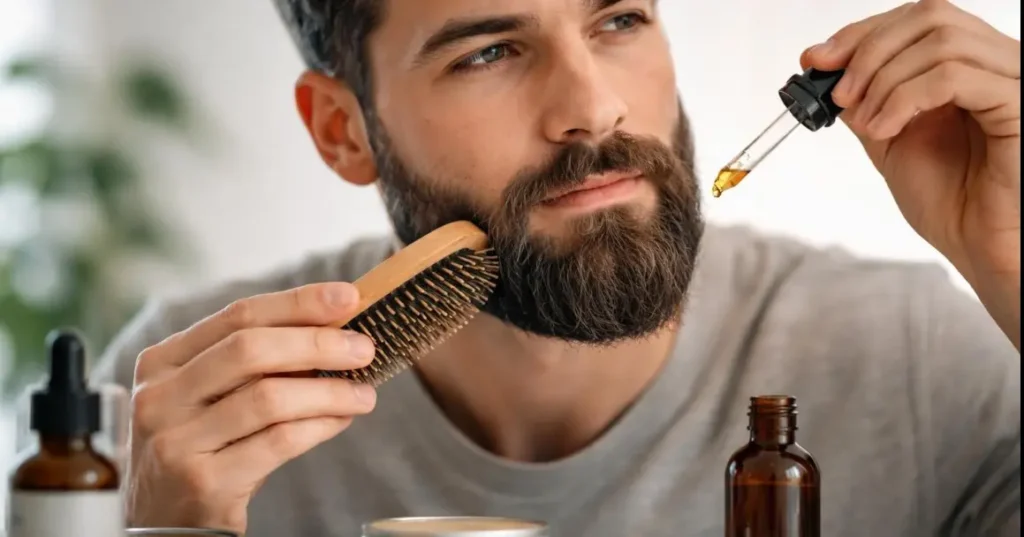
- Apply after washing, while skin is still slightly damp. This helps the oil absorb rather than sit on the surface.
- Start with three to five drops for shorter beards, more for longer growth. It’s easier to add more than to fix an over-application.
- Warm the oil between your palms first. This helps distribute it evenly before it touches your face.
- Work into the skin underneath before the visible hair. The skin benefits the most from consistent conditioning.
- Comb through afterward. This spreads the product fully and trains the hair to lie in one consistent direction.
- Apply once or twice daily depending on your skin type and beard length.
The goal is even, light coverage — a beard that looks conditioned, not visibly wet or slick.
Natural Beard Oil vs Synthetic: Does It Matter?
Natural beard oil, built from plant-based carrier oils without synthetic fragrance or preservatives, tends to be gentler on sensitive skin and carries a lower risk of irritation over long-term daily use. That said, “natural” isn’t automatically superior — formulation quality, ingredient freshness, and how well a specific oil suits your skin type matter more than the natural-versus-synthetic label alone.
Men with a history of skin sensitivity or conditions like eczema generally do better with simpler, natural formulas. Men without particular sensitivities may not notice a meaningful difference either way, as long as the product avoids heavy synthetic fragrance or alcohol-based fillers.
Can You Make Your Own Beard Oil?
Yes, and it’s a straightforward option if you want full control over ingredients. A simple, effective homemade blend typically includes:
- A primary carrier oil, such as jojoba or argan, as the base
- A smaller amount of a heavier oil like sweet almond or castor for added moisture
- A few drops of an essential oil such as sandalwood or cedarwood for scent, kept under roughly two percent of the total mix
- Optional vitamin E oil for added antioxidant benefit
Patch-test any homemade mix on your forearm before applying it to your face, and store it in a dark glass bottle away from direct heat to preserve the oils longer.
Common Myths About Beard Oil
- “Beard oil makes hair grow faster.” It conditions and supports the health of existing hair; it doesn’t accelerate the rate at which new hair grows from the follicle.
- “More oil means better results.” Over-application leaves a beard looking greasy rather than more conditioned. A small, consistent amount works better than a heavy application used occasionally.
- “All beard oils are basically the same.” Formulation quality, carrier oil choice, and ingredient freshness vary significantly between products, and not every oil suits every skin type equally.
- “You only need it once your beard is long.” Skin underneath short stubble benefits just as much, if not more, since the itching phase is often worst in the first few weeks.
Common Mistakes Men Make With Beard Oil
- Applying to fully dry skin. Oil absorbs better and works more effectively on slightly damp skin right after washing.
- Skipping the skin entirely and only oiling the visible hair. Most of the actual benefit happens at the skin level.
- Using it inconsistently. Skin and hair respond to a regular routine far better than sporadic use.
- Choosing a heavy oil for oily skin, or a light oil for very dry skin. Mismatching formula to skin type reduces effectiveness and comfort.
- Ignoring irritation. Persistent redness or breakouts after starting a new product are worth addressing rather than pushing through, particularly for men with a history of sensitive skin.
Who Should Be Using Beard Oil?
Beard oil for men suits nearly every stage of growth, from the earliest itchy stubble phase through fully established, longer beards. Teenagers and men newer to growing facial hair often benefit the most from starting early, since consistent use from the beginning prevents a lot of the discomfort that causes early trims — our beard styles for teenagers guide covers realistic expectations at that stage. Older men, including those transitioning through grey or salt-and-pepper growth, also benefit, since skin tends to run drier with age; see our grey beard styles and salt and pepper beard guides for styling through that phase.
Even men with short, low-maintenance styles like a stubble beard benefit from light, regular use, since skin underneath short growth still needs conditioning even without much visible hair to treat.
Expert Tips
- Keep a travel-size bottle with your grooming kit if you’re often away from home — consistency matters more than the specific brand.
- Reassess your oil choice seasonally. Skin often runs drier in winter, which may call for a slightly heavier formula than what works in summer.
- Pair oil with a boar-bristle brush for the most even distribution and the best styling results.
- If you’re deciding between oil, balm, or butter, start with oil as your daily base and only add a styling product once you actually need extra hold or shaping control.
- Give any new product at least two to three weeks before judging its effectiveness — skin needs time to respond to a consistent routine.
Used consistently and matched to your skin type, beard oil remains one of the simplest, most reliable additions to a grooming routine. It won’t change your genetic growth pattern, but it makes the entire process of growing and maintaining a beard noticeably more comfortable — and for most men, that alone is worth the two minutes it takes each morning.
FAQs
What does beard oil actually do? Beard oil moisturizes the skin underneath a beard and conditions the hair itself, reducing itchiness, softening coarse growth, and preventing dry, flaky skin known as beardruff.
What are the main benefits of beard oil? The core beard oil benefits include reduced itching during growth, softer and more manageable hair, less beardruff, healthier skin underneath, and a natural, non-greasy shine.
How often should I use beard oil? Most men benefit from applying beard oil once or twice daily, with drier skin or longer beards often needing more frequent application than oily skin or shorter stubble.
What’s the difference between beard oil and beard balm? Beard oil is a lightweight liquid focused purely on conditioning, while beard balm has a semi-solid texture that adds light hold and shaping alongside moisture.
Is natural beard oil better than synthetic beard oil? Natural formulas tend to be gentler on sensitive skin with a lower risk of irritation, though formulation quality matters more overall than whether an oil is labeled natural or synthetic.
Can beard oil help with a patchy beard? Beard oil can improve the appearance of thin patches by conditioning existing hair and reducing breakage, but it can’t create new hair in areas with naturally sparse follicle density.
Does beard oil make your beard grow faster? No. Beard oil conditions skin and hair but doesn’t accelerate the actual rate of hair growth from the follicle.
What is the best beard oil for sensitive skin? A short ingredient list with a gentle carrier oil like jojoba and minimal added fragrance is generally the safest choice for sensitive skin, alongside a patch test before full use.
Can I make my own natural beard oil at home? Yes. A simple mix of a carrier oil like jojoba or argan with a small amount of essential oil, kept under roughly two percent of the total blend, works well for most skin types.
Do I need beard oil if I have a short beard or stubble? Yes. Skin underneath short growth still needs conditioning, and the itching phase in the first few weeks is often the exact period where oil helps the most.
How much beard oil should I use each time? Three to five drops is typical for shorter beards, with slightly more for longer growth. It’s easier to add more than to correct an over-application.
Is there a difference between beard oil for men with coarse hair versus fine hair? Yes. Coarser or curlier hair generally benefits from heavier oils for better softening, while fine or thin facial hair does better with lighter formulas that won’t weigh it down.