 By Beard Style
How to Trim a Beard: Most men learn how to trim a beard the hard way — by trimming too much off one side trying to fix the other, or by setting a guard too short and watching weeks of growth disappear in seconds. It’s one of those skills that looks simple to watch a barber do and is genuinely easy to mess up the first few times you try it yourself. Learning the right trimming technique also helps you maintain different beard styles while keeping your beard neat, balanced, and well-groomed.
The good news is that beard trimming follows a logical sequence, and once you understand the order of operations — neckline first, then cheek lines, then overall shape, then detail work — most of the guesswork disappears. The technical part isn’t complicated; it’s the sequence and a few specific techniques around the neckline and cheek line that separate a clean, barbershop-quality trim from an uneven one.
This guide walks through the entire process step by step: the tools you need, exactly where to set your neckline and cheek line, how to shape different beard lengths, and the most common mistakes that turn a quick at-home trim into a frustrating one. By the end, you’ll know:
- The exact tools and setup needed for trimming a beard at home
- Where your neckline and cheek lines should actually sit
- A full step-by-step trimming sequence for any beard length
- How to adjust your approach for short, medium, and long beards
- Common mistakes and how to avoid or fix them
Let’s start with what you’ll need before you pick up a trimmer.
Table of Contents
1. Tools You Need Before You Start
Having the right tools ready before you begin makes a noticeable difference in the final result.
- Trimmer with multiple guard lengths — for overall length and consistency
- Detail trimmer or edger — for precise neckline and cheek-line work
- Beard comb — helps lift and separate hair for an even trim, and checks symmetry
- Scissors — useful for trimming stray, longer hairs that a guard might miss, particularly on medium-to-long beards
- Handheld mirror — for checking your neckline and the sides of your beard from angles your bathroom mirror won’t show
- Good lighting — uneven lighting is one of the most overlooked reasons for uneven trims
Barber tip: Two mirrors positioned at an angle, or a handheld mirror used alongside your main one, lets you check the back of your jawline and neckline — areas that are easy to miss with a single front-facing mirror.
Read More About Long Beard Styles: https://beardstyles.net/types-of-beard-styles/
2. How to Set Up Your Trimming Space
- Trim in good, even lighting, ideally natural daylight or a well-lit bathroom rather than dim or overhead-only lighting that creates shadows.
- Always trim dry hair. Wet hair appears longer than it actually is, which leads to over-trimming once it dries and shrinks back to its true length.
- Lay down a towel or trim over a sink to make cleanup easier, particularly for longer beards producing more clippings.
- Have your guard lengths organized and accessible before starting, so you’re not searching mid-trim.
Read More About Short Beard Styles: https://beardstyles.net/short-beard-styles/
3. Understanding Your Beard’s Key Lines
Before trimming anything, it helps to understand the three lines that define a clean beard shape.
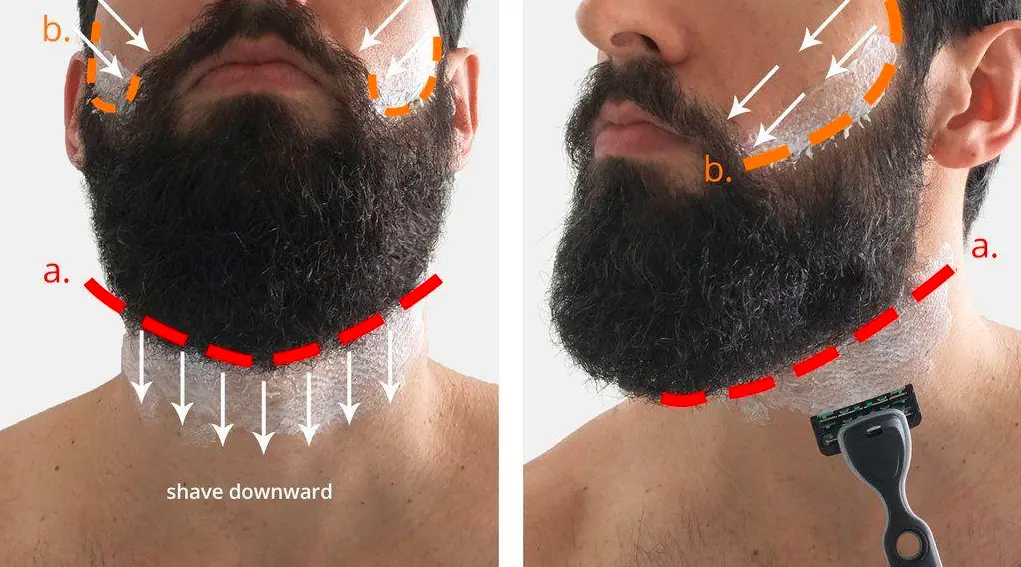
The Neckline
The boundary where your beard ends and your neck begins. This is one of the most commonly neglected lines, and an undefined neckline is the single most common reason an otherwise decent beard looks unkempt.
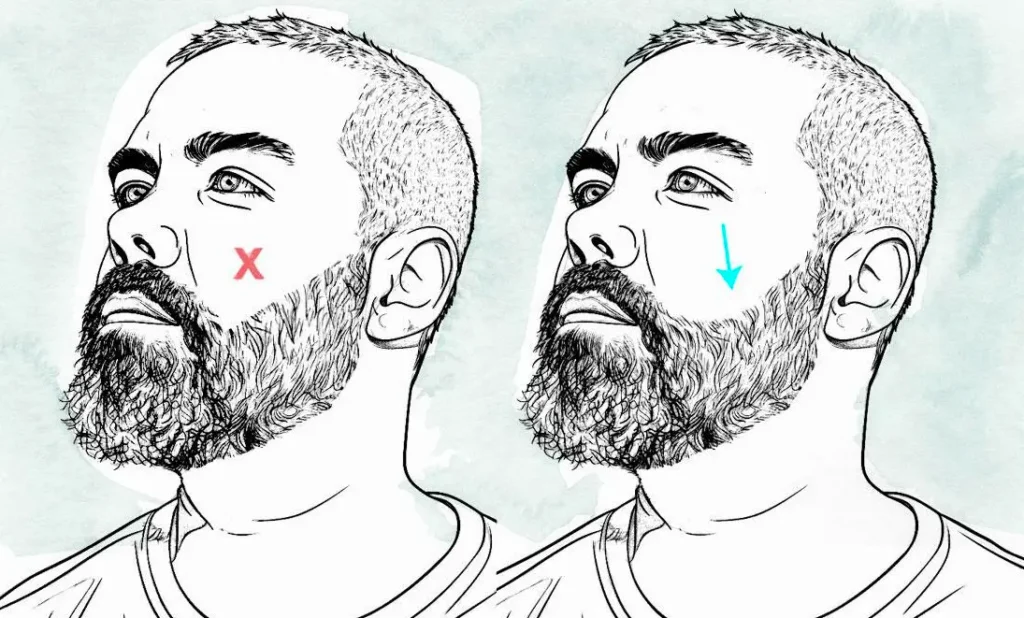
The Cheek Line
The boundary along your cheeks where beard hair stops and bare or stubbled skin begins. This line varies significantly depending on your chosen style — a full beard sits higher and fuller, while a goatee removes cheek hair entirely.
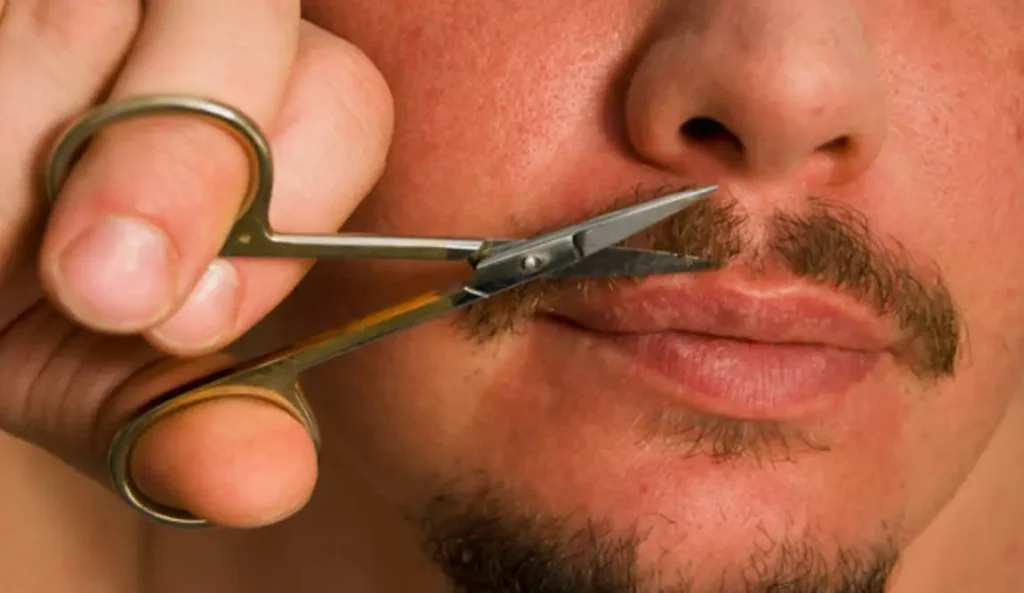
The Mustache Line
Where your mustache connects to or separates from the rest of your beard, relevant primarily for styles like the Van Dyke or Balbo that depend on a deliberate gap, or a classic full beard where the mustache blends smoothly into the cheek and chin hair.
Read More About Long Beard Styles: https://beardstyles.net/long-beard-styles/
4. How to Trim Your Neckline
- Find your natural neckline first. Place two fingers above your Adam’s apple — everything below this point is generally where your neckline should sit.
- Draw an imaginary U-shape or slight curve from one side of your jaw to the other, following your jawline rather than cutting straight across your neck.
- Use a detail trimmer without a guard, or a very short guard, to clean up everything below this line.
- Avoid setting your neckline too high. A neckline cut too close to the jaw makes the beard look shorter and less natural than intended.
- Check from the side and slightly below using a handheld mirror, since the neckline is one of the hardest areas to assess from a direct front-facing angle.
Common mistake: Setting the neckline too high, right at the jawline itself, which removes the natural transition space and makes the beard look unnaturally short from certain angles.
Read More About Goatee Styles: https://beardstyles.net/goatee-styles/
5. How to Trim Your Cheek Line
- Decide on your target style first, since the ideal cheek line varies significantly — high and full for a classic full beard, removed entirely for a goatee, or somewhere in between for a short boxed beard.
- Use your natural growth pattern as a starting guide, then adjust slightly higher for a cleaner, more deliberate boundary if your natural line looks soft or gradual.
- Trim with a detail trimmer for precise, straight lines, rather than trying to achieve sharp edges with a standard guarded trimmer alone.
- Keep both sides symmetrical by checking against each other frequently, rather than completing one side fully before starting the other.
- Start more conservative than you think you want, since it’s easier to raise a cheek line slightly than to fix one that’s been trimmed too high.
Common mistake: Letting the cheek line fade out gradually rather than creating a clean, defined boundary, which makes the beard look less intentional regardless of how well the rest is shaped.
Read More About Stubble Beard: https://beardstyles.net/stubble-beard/
6. Step-by-Step: How to Trim a Beard at Home
- Comb your beard thoroughly to remove tangles and lift hair to its natural length before trimming anything.
- Trim your neckline first, using the technique outlined above. This establishes your foundational boundary before working on the rest.
- Trim your cheek lines next, deciding on your target style and using a detail trimmer for precision.
- Set your guard length and trim the overall beard to your desired length, working in the direction of hair growth for the initial pass.
- Go over patchy or uneven areas with a slightly shorter guard if needed, to even out length across the whole beard.
- Trim the mustache separately, blending it into the rest of the beard for a classic style, or shaping it distinctly for styles like the Van Dyke or Balbo that depend on separation.
- Use scissors for any longer, stray hairs that the trimmer guard missed, particularly common around the corners of the mouth and jaw.
- Check the entire beard from multiple angles in good lighting, comparing both sides for symmetry before considering the trim complete.
- Apply beard oil once finished to soothe any minor irritation from trimming and keep the hair soft.
Read More About Best Beard For Round Race: https://beardstyles.net/best-beard-for-round-face/
7. How to Trim a Short Beard or Stubble
Short beards and stubble require a slightly different approach, since there’s minimal length to work with and precision matters more than dramatic shaping.
- Choose a single guard length appropriate for your target stubble or short beard look — typically 1–5mm depending on whether you want light or heavy stubble.
- Trim the entire face evenly with that guard, moving against the grain only if a closer, more uniform finish is specifically needed.
- Define the neckline and cheek lines with a detail trimmer, even at short lengths, since an undefined line is just as noticeable on short hair as on a longer beard.
- Touch up every 2–5 days depending on your specific stubble length, since short hair grows out of its intended look faster than people expect.
For a deeper breakdown of every stubble length and style, see our complete stubble beard guide.
Read More About Best Beard For Oval Race: https://beardstyles.net/best-beard-for-oval-face/
8. How to Trim a Medium Beard
Medium beards offer more shaping options, but also require more decisions about overall shape.
- Decide on your target shape first — a classic full beard, a tapered ducktail, or a looser, natural bushy look — since this determines how you approach length variation across the face.
- Trim the neckline and cheek lines first, as your foundational guides.
- For an even, classic shape, maintain consistent length throughout using a single guard setting, then blend transitions with scissors or a slightly different guard where needed.
- For a tapered shape like a ducktail, gradually reduce length from the fuller cheek area down toward a central chin point, checking symmetry frequently.
- Blend the mustache into the rest of the beard for a cohesive, unified shape.
For a full breakdown of medium-length styles and shaping techniques, see our complete medium beard styles guide and our dedicated ducktail beard guide.
Read More About Stubble Beard: https://beardstyles.net/patchy-beard/
9. How to Trim a Long Beard
Long beards require less frequent overall length trimming but more attention to detail maintenance.
- Trim split ends regularly, even if you’re not reducing overall length, since split ends make a long beard look thinner and frizzier than it actually is.
- Maintain the neckline and cheek lines consistently, since these can blur even on long, natural-looking styles like the Bandholz.
- Use scissors for precision work on stray hairs, since a guarded trimmer becomes less practical for fine detail at significant length.
- Condition before trimming if hair is prone to tangling, since detangled hair is easier to trim evenly than matted or knotted sections.
For a complete growth timeline and maintenance routine for long beard styles, see our long beard styles guide.
Read More About Balbo Beard: https://beardstyles.net/balbo-beard/
10. How to Shape a Beard for Your Face Shape
Trimming technique matters, but the actual shape you’re trimming toward should reflect your specific face shape.
| Face Shape | Shaping Priority |
| Round | Keep cheek lines slightly higher; add length or a taper at the chin |
| Square | Decide between rounded lines (softening) or sharp, straight lines (strengthening) |
| Oval | Minimal correction needed; most shapes and lines work well |
| Long/Narrow | Add width through the cheeks; avoid excessive length at the chin |
| Diamond | Add definition at the chin; balance a narrower forehead and jaw |
| Heart | Add width along the jawline to balance a narrower chin |
For detailed, face-shape-specific styling guidance, see our dedicated guides on the best beard for a round face, best beard for an oval face, and best beard for a square face.
Read More About Duktail Beard: https://beardstyles.net/ducktail-beard/
11. How Often Should You Trim?
| Beard Length | Recommended Trimming Frequency |
| Stubble | Every 2–5 days |
| Short beard | Weekly |
| Medium beard | Every 1–2 weeks for shape details; every 2–4 weeks for overall length |
| Long beard | Every 3–4 weeks for split ends and shape; overall length trimmed much less frequently |
Expert tip: Neckline and cheek line touch-ups generally need to happen more often than full trims, regardless of overall beard length, since these specific areas grow out of shape faster than the rest of the beard.
Read More About Van Dyke Beard: https://beardstyles.net/van-dyke-beard/
12. Common Beard Trimming Mistakes
- Trimming wet hair — leads to over-trimming once hair dries and appears shorter than expected
- Setting the neckline too high — removes the natural transition space and makes the beard look unnaturally short
- Letting the cheek line fade out gradually instead of creating a defined boundary — makes the whole beard look less intentional
- Trimming one side fully before starting the other — increases the risk of noticeable asymmetry by the time you compare both sides
- Using too short a guard on the first pass — it’s far easier to go shorter afterward than to fix hair that’s already been cut too short
- Skipping good lighting — shadows and dim lighting hide unevenness that becomes obvious later in better light
- Forgetting to check from multiple angles — a beard can look even from straight ahead and clearly uneven from the side.
Read More About Circle Beard: https://beardstyles.net/circle-beard/
13. Common Myths About Beard Trimming
Myth: Trimming your beard makes it grow back thicker. Trimming, like shaving, has no effect on hair follicle density or growth rate; it only affects the visible length and shape.
Myth: You need professional tools to trim a beard well at home. A reliable trimmer with multiple guard lengths and a detail trimmer cover most home trimming needs; expensive professional-grade tools aren’t necessary for most styles.
Myth: The neckline doesn’t matter as much as the rest of the beard. An undefined or poorly placed neckline is one of the most common reasons an otherwise well-grown beard looks unkempt, regardless of how the rest is shaped.
Myth: You should always trim with the grain only. While trimming with the grain first reduces irritation, a light pass against the grain is sometimes necessary for closer, more defined lines, particularly around the neckline and cheek line.
Read More About Beard Without Mustache: https://beardstyles.net/beard-without-mustache/
14. When to See a Barber Instead of Trimming at Home
Home trimming works well for routine maintenance, but a professional visit is worth considering when:
- You’re establishing a brand-new style for the first time, particularly more structured looks like a Van Dyke, Balbo, or ducktail beard
- You’ve made a noticeable trimming mistake and need a clean reset
- You want a second opinion on which lines and shape genuinely suit your face shape before committing to maintaining them yourself
- You’re working with a complex hair type, like very curly or coily hair, where technique matters more for avoiding irritation and uneven results
Professional barber advice: Even men who maintain their beard entirely at home often benefit from an occasional barber visit every few months, simply to reset lines that may have gradually drifted out of their original shape.
Read More About Medium Beard Styles: https://beardstyles.net/medium-beard-styles/
15. Conclusion
Trimming a beard well comes down to sequence and precision rather than any complicated technique: neckline first, then cheek lines, then overall length and shape, then detail work with scissors for anything a guard missed. Getting the neckline and cheek lines right matters more than people expect — these two lines do more to make a beard look deliberate than length or volume ever will.
Start with good lighting, dry hair, and a guard length slightly longer than your target, and work your way down rather than risking an overly aggressive first pass. With a bit of practice and the right sequence, a clean, barbershop-quality trim is entirely achievable at home.
Read More About Medium Beard Care Guide: https://beardstyles.net/beard-care-guide/
FAQ
1. How do I trim my beard at home for the first time? Start by trimming your neckline and cheek lines for foundational structure, then set an overall guard length, trim the rest of the beard evenly, and finish with scissors for any stray hairs a guard missed.
2. Where should my beard neckline be? Most barbers recommend placing the neckline just above the Adam’s apple, following a slight U-shaped curve along your jawline rather than cutting straight across the neck.
3. Should I trim my beard wet or dry? Always trim dry hair, since wet hair appears longer than it actually is and can lead to over-trimming once it dries and shrinks back to its true length.
4. How often should I trim my beard? Stubble needs trimming every 2–5 days, short beards weekly, medium beards every 1–2 weeks for details, and long beards every 3–4 weeks for split ends and shape maintenance.
5. What’s the best beard trimmer guard length to start with? Start with a guard length slightly longer than your actual target, since it’s much easier to trim shorter afterward than to fix hair that’s already been cut too short.
6. How do I trim my cheek line evenly? Decide on your target style first, use your natural growth pattern as a starting guide, and trim with a detail trimmer for precise, symmetrical lines, checking both sides frequently as you go.
7. Does trimming a beard make it grow back thicker? No — trimming has no effect on hair follicle density or growth rate, it only changes the visible length and shape.
8. Can I trim a beard without a trimmer? While possible with scissors alone, a trimmer with adjustable guards makes achieving even length significantly easier and more consistent, particularly for larger areas of the beard.
9. How do I trim a beard to match my face shape? Adjust your cheek line height, chin shape, and overall width based on your specific face shape — for example, adding length at the chin for a round face or choosing between rounded and sharp lines for a square face.
10. Why does my beard look uneven after I trim it? This is usually caused by trimming one side fully before starting the other, poor lighting that hides unevenness, or trimming wet hair that shrinks unevenly once dry.
11. How do I trim a ducktail beard’s point at home? Gradually taper the sides shorter toward a central chin point using a detail trimmer, checking symmetry frequently with a comb to ensure both sides taper evenly.
12. What tools do I need to trim a beard at home? A trimmer with multiple guard lengths, a detail trimmer or edger, a beard comb, scissors for stray hairs, and good lighting cover the essential setup for home trimming.
13. How do I know if I should see a barber instead of trimming at home? Consider a barber visit when establishing a new, more structured style for the first time, after a noticeable trimming mistake, or for a periodic reset if your lines have drifted out of shape.
14. How do I trim a long beard without losing length? Focus on trimming split ends and maintaining the neckline and cheek lines rather than reducing overall length, using scissors for precise detail work instead of a guarded trimmer.
15. What’s the most common beard trimming mistake? Setting the neckline too high or leaving the cheek line undefined are the two most common mistakes that make an otherwise well-grown beard look unkempt.Most men learn how to trim a beard the hard way — by trimming too much off one side trying to fix the other, or by setting a guard too short and watching weeks of growth disappear in seconds. It’s one of those skills that looks simple to watch a barber do and is genuinely easy to mess up the first few times you try it yourself.
The good news is that beard trimming follows a logical sequence, and once you understand the order of operations — neckline first, then cheek lines, then overall shape, then detail work — most of the guesswork disappears. The technical part isn’t complicated; it’s the sequence and a few specific techniques around the neckline and cheek line that separate a clean, barbershop-quality trim from an uneven one.
This guide walks through the entire process step by step: the tools you need, exactly where to set your neckline and cheek line, how to shape different beard lengths, and the most common mistakes that turn a quick at-home trim into a frustrating one. By the end, you’ll know:
- The exact tools and setup needed for trimming a beard at home
- Where your neckline and cheek lines should actually sit
- A full step-by-step trimming sequence for any beard length
- How to adjust your approach for short, medium, and long beards
- Common mistakes and how to avoid or fix them
Let’s start with what you’ll need before you pick up a trimmer.
Read More About Best Beard For Square Face: https://beardstyles.net/best-beard-for-square-face/
1. Tools You Need Before You Start
Having the right tools ready before you begin makes a noticeable difference in the final result.
- Trimmer with multiple guard lengths — for overall length and consistency
- Detail trimmer or edger — for precise neckline and cheek-line work
- Beard comb — helps lift and separate hair for an even trim, and checks symmetry
- Scissors — useful for trimming stray, longer hairs that a guard might miss, particularly on medium-to-long beards
- Handheld mirror — for checking your neckline and the sides of your beard from angles your bathroom mirror won’t show
- Good lighting — uneven lighting is one of the most overlooked reasons for uneven trims
Barber tip: Two mirrors positioned at an angle, or a handheld mirror used alongside your main one, lets you check the back of your jawline and neckline — areas that are easy to miss with a single front-facing mirror.
2. How to Set Up Your Trimming Space
- Trim in good, even lighting, ideally natural daylight or a well-lit bathroom rather than dim or overhead-only lighting that creates shadows.
- Always trim dry hair. Wet hair appears longer than it actually is, which leads to over-trimming once it dries and shrinks back to its true length.
- Lay down a towel or trim over a sink to make cleanup easier, particularly for longer beards producing more clippings.
- Have your guard lengths organized and accessible before starting, so you’re not searching mid-trim.
3. Understanding Your Beard’s Key Lines
Before trimming anything, it helps to understand the three lines that define a clean beard shape.
The Neckline
The boundary where your beard ends and your neck begins. This is one of the most commonly neglected lines, and an undefined neckline is the single most common reason an otherwise decent beard looks unkempt.
The Cheek Line
The boundary along your cheeks where beard hair stops and bare or stubbled skin begins. This line varies significantly depending on your chosen style — a full beard sits higher and fuller, while a goatee removes cheek hair entirely.
The Mustache Line
Where your mustache connects to or separates from the rest of your beard, relevant primarily for styles like the Van Dyke or Balbo that depend on a deliberate gap, or a classic full beard where the mustache blends smoothly into the cheek and chin hair.
4. How to Trim Your Neckline
- Find your natural neckline first. Place two fingers above your Adam’s apple — everything below this point is generally where your neckline should sit.
- Draw an imaginary U-shape or slight curve from one side of your jaw to the other, following your jawline rather than cutting straight across your neck.
- Use a detail trimmer without a guard, or a very short guard, to clean up everything below this line.
- Avoid setting your neckline too high. A neckline cut too close to the jaw makes the beard look shorter and less natural than intended.
- Check from the side and slightly below using a handheld mirror, since the neckline is one of the hardest areas to assess from a direct front-facing angle.
Common mistake: Setting the neckline too high, right at the jawline itself, which removes the natural transition space and makes the beard look unnaturally short from certain angles.
5. How to Trim Your Cheek Line
- Decide on your target style first, since the ideal cheek line varies significantly — high and full for a classic full beard, removed entirely for a goatee, or somewhere in between for a short boxed beard.
- Use your natural growth pattern as a starting guide, then adjust slightly higher for a cleaner, more deliberate boundary if your natural line looks soft or gradual.
- Trim with a detail trimmer for precise, straight lines, rather than trying to achieve sharp edges with a standard guarded trimmer alone.
- Keep both sides symmetrical by checking against each other frequently, rather than completing one side fully before starting the other.
- Start more conservative than you think you want, since it’s easier to raise a cheek line slightly than to fix one that’s been trimmed too high.
Common mistake: Letting the cheek line fade out gradually rather than creating a clean, defined boundary, which makes the beard look less intentional regardless of how well the rest is shaped.
6. Step-by-Step: How to Trim a Beard at Home
- Comb your beard thoroughly to remove tangles and lift hair to its natural length before trimming anything.
- Trim your neckline first, using the technique outlined above. This establishes your foundational boundary before working on the rest.
- Trim your cheek lines next, deciding on your target style and using a detail trimmer for precision.
- Set your guard length and trim the overall beard to your desired length, working in the direction of hair growth for the initial pass.
- Go over patchy or uneven areas with a slightly shorter guard if needed, to even out length across the whole beard.
- Trim the mustache separately, blending it into the rest of the beard for a classic style, or shaping it distinctly for styles like the Van Dyke or Balbo that depend on separation.
- Use scissors for any longer, stray hairs that the trimmer guard missed, particularly common around the corners of the mouth and jaw.
- Check the entire beard from multiple angles in good lighting, comparing both sides for symmetry before considering the trim complete.
- Apply beard oil once finished to soothe any minor irritation from trimming and keep the hair soft.
7. How to Trim a Short Beard or Stubble
Short beards and stubble require a slightly different approach, since there’s minimal length to work with and precision matters more than dramatic shaping.
- Choose a single guard length appropriate for your target stubble or short beard look — typically 1–5mm depending on whether you want light or heavy stubble.
- Trim the entire face evenly with that guard, moving against the grain only if a closer, more uniform finish is specifically needed.
- Define the neckline and cheek lines with a detail trimmer, even at short lengths, since an undefined line is just as noticeable on short hair as on a longer beard.
- Touch up every 2–5 days depending on your specific stubble length, since short hair grows out of its intended look faster than people expect.
For a deeper breakdown of every stubble length and style, see our complete stubble beard guide.
8. How to Trim a Medium Beard
Medium beards offer more shaping options, but also require more decisions about overall shape.
- Decide on your target shape first — a classic full beard, a tapered ducktail, or a looser, natural bushy look — since this determines how you approach length variation across the face.
- Trim the neckline and cheek lines first, as your foundational guides.
- For an even, classic shape, maintain consistent length throughout using a single guard setting, then blend transitions with scissors or a slightly different guard where needed.
- For a tapered shape like a ducktail, gradually reduce length from the fuller cheek area down toward a central chin point, checking symmetry frequently.
- Blend the mustache into the rest of the beard for a cohesive, unified shape.
For a full breakdown of medium-length styles and shaping techniques, see our complete medium beard styles guide and our dedicated ducktail beard guide.
9. How to Trim a Long Beard
Long beards require less frequent overall length trimming but more attention to detail maintenance.
- Trim split ends regularly, even if you’re not reducing overall length, since split ends make a long beard look thinner and frizzier than it actually is.
- Maintain the neckline and cheek lines consistently, since these can blur even on long, natural-looking styles like the Bandholz.
- Use scissors for precision work on stray hairs, since a guarded trimmer becomes less practical for fine detail at significant length.
- Condition before trimming if hair is prone to tangling, since detangled hair is easier to trim evenly than matted or knotted sections.
For a complete growth timeline and maintenance routine for long beard styles, see our long beard styles guide.
10. How to Shape a Beard for Your Face Shape
Trimming technique matters, but the actual shape you’re trimming toward should reflect your specific face shape.
| Face Shape | Shaping Priority |
| Round | Keep cheek lines slightly higher; add length or a taper at the chin |
| Square | Decide between rounded lines (softening) or sharp, straight lines (strengthening) |
| Oval | Minimal correction needed; most shapes and lines work well |
| Long/Narrow | Add width through the cheeks; avoid excessive length at the chin |
| Diamond | Add definition at the chin; balance a narrower forehead and jaw |
| Heart | Add width along the jawline to balance a narrower chin |
For detailed, face-shape-specific styling guidance, see our dedicated guides on the best beard for a round face, best beard for an oval face, and best beard for a square face.
11. How Often Should You Trim?
| Beard Length | Recommended Trimming Frequency |
| Stubble | Every 2–5 days |
| Short beard | Weekly |
| Medium beard | Every 1–2 weeks for shape details; every 2–4 weeks for overall length |
| Long beard | Every 3–4 weeks for split ends and shape; overall length trimmed much less frequently |
Expert tip: Neckline and cheek line touch-ups generally need to happen more often than full trims, regardless of overall beard length, since these specific areas grow out of shape faster than the rest of the beard.
12. Common Beard Trimming Mistakes
- Trimming wet hair — leads to over-trimming once hair dries and appears shorter than expected
- Setting the neckline too high — removes the natural transition space and makes the beard look unnaturally short
- Letting the cheek line fade out gradually instead of creating a defined boundary — makes the whole beard look less intentional
- Trimming one side fully before starting the other — increases the risk of noticeable asymmetry by the time you compare both sides
- Using too short a guard on the first pass — it’s far easier to go shorter afterward than to fix hair that’s already been cut too short
- Skipping good lighting — shadows and dim lighting hide unevenness that becomes obvious later in better light
- Forgetting to check from multiple angles — a beard can look even from straight ahead and clearly uneven from the side
13. Common Myths About Beard Trimming
Myth: Trimming your beard makes it grow back thicker. Trimming, like shaving, has no effect on hair follicle density or growth rate; it only affects the visible length and shape.
Myth: You need professional tools to trim a beard well at home. A reliable trimmer with multiple guard lengths and a detail trimmer cover most home trimming needs; expensive professional-grade tools aren’t necessary for most styles.
Myth: The neckline doesn’t matter as much as the rest of the beard. An undefined or poorly placed neckline is one of the most common reasons an otherwise well-grown beard looks unkempt, regardless of how the rest is shaped.
Myth: You should always trim with the grain only. While trimming with the grain first reduces irritation, a light pass against the grain is sometimes necessary for closer, more defined lines, particularly around the neckline and cheek line.
14. When to See a Barber Instead of Trimming at Home
Home trimming works well for routine maintenance, but a professional visit is worth considering when:
- You’re establishing a brand-new style for the first time, particularly more structured looks like a Van Dyke, Balbo, or ducktail beard
- You’ve made a noticeable trimming mistake and need a clean reset
- You want a second opinion on which lines and shape genuinely suit your face shape before committing to maintaining them yourself
- You’re working with a complex hair type, like very curly or coily hair, where technique matters more for avoiding irritation and uneven results
Professional barber advice: Even men who maintain their beard entirely at home often benefit from an occasional barber visit every few months, simply to reset lines that may have gradually drifted out of their original shape.
15. Conclusion How to Trim a Beard
Trimming a beard well comes down to sequence and precision rather than any complicated technique: neckline first, then cheek lines, then overall length and shape, then detail work with scissors for anything a guard missed. Getting the neckline and cheek lines right matters more than people expect — these two lines do more to make a beard look deliberate than length or volume ever will.
Start with good lighting, dry hair, and a guard length slightly longer than your target, and work your way down rather than risking an overly aggressive first pass. With a bit of practice and the right sequence, a clean, barbershop-quality trim is entirely achievable at home.
FAQ
1. How do I trim my beard at home for the first time? Start by trimming your neckline and cheek lines for foundational structure, then set an overall guard length, trim the rest of the beard evenly, and finish with scissors for any stray hairs a guard missed.
2. Where should my beard neckline be? Most barbers recommend placing the neckline just above the Adam’s apple, following a slight U-shaped curve along your jawline rather than cutting straight across the neck.
3. Should I trim my beard wet or dry? Always trim dry hair, since wet hair appears longer than it actually is and can lead to over-trimming once it dries and shrinks back to its true length.
4. How often should I trim my beard? Stubble needs trimming every 2–5 days, short beards weekly, medium beards every 1–2 weeks for details, and long beards every 3–4 weeks for split ends and shape maintenance.
5. What’s the best beard trimmer guard length to start with? Start with a guard length slightly longer than your actual target, since it’s much easier to trim shorter afterward than to fix hair that’s already been cut too short.
6. How do I trim my cheek line evenly? Decide on your target style first, use your natural growth pattern as a starting guide, and trim with a detail trimmer for precise, symmetrical lines, checking both sides frequently as you go.
7. Does trimming a beard make it grow back thicker? No — trimming has no effect on hair follicle density or growth rate, it only changes the visible length and shape.
8. Can I trim a beard without a trimmer? While possible with scissors alone, a trimmer with adjustable guards makes achieving even length significantly easier and more consistent, particularly for larger areas of the beard.
9. How do I trim a beard to match my face shape? Adjust your cheek line height, chin shape, and overall width based on your specific face shape — for example, adding length at the chin for a round face or choosing between rounded and sharp lines for a square face.
10. Why does my beard look uneven after I trim it? This is usually caused by trimming one side fully before starting the other, poor lighting that hides unevenness, or trimming wet hair that shrinks unevenly once dry.
11. How do I trim a ducktail beard’s point at home? Gradually taper the sides shorter toward a central chin point using a detail trimmer, checking symmetry frequently with a comb to ensure both sides taper evenly.
12. What tools do I need to trim a beard at home? A trimmer with multiple guard lengths, a detail trimmer or edger, a beard comb, scissors for stray hairs, and good lighting cover the essential setup for home trimming.
13. How do I know if I should see a barber instead of trimming at home? Consider a barber visit when establishing a new, more structured style for the first time, after a noticeable trimming mistake, or for a periodic reset if your lines have drifted out of shape.
14. How do I trim a long beard without losing length? Focus on trimming split ends and maintaining the neckline and cheek lines rather than reducing overall length, using scissors for precise detail work instead of a guarded trimmer.
15. What’s the most common beard trimming mistake? Setting the neckline too high or leaving the cheek line undefined are the two most common mistakes that make an otherwise well-grown beard look unkempt.