 By Bread Styles Team
If you’ve spent the last few weeks staring at uneven patches on your jawline, wondering whether your beard is ever going to fill in, you’re dealing with one of the most common frustrations in men’s grooming. A patchy beard isn’t a sign you’re doing something wrong — it’s almost always genetic, and it’s far more common than the smooth, even beards you see in barbershop posters would suggest.
The good news is that a patchy beard rarely means “no beard.” It usually means the wrong style for your specific growth pattern. Once you understand why patches show up where they do, you can either work toward minimizing them over the next few months or — often the faster, more realistic fix — choose a beard style specifically designed to work with uneven growth instead of fighting it.
This guide covers everything you need to know about a patchy beard: the real causes, what genuinely helps fill it in, the styles that hide patchiness most effectively, and the products and habits worth skipping because they oversell results they can’t actually deliver. By the end, you’ll know:
- Why your beard grows in patchy, and which causes are within your control
- Realistic timelines for patches to fill in (or not)
- The best beard styles to wear while dealing with a patchy beard
- What beard growth products can and can’t actually do
- When patchy growth might be worth mentioning to a doctor
Let’s start with the biology behind it.
Table of Contents
1. What Causes a Patchy Beard?
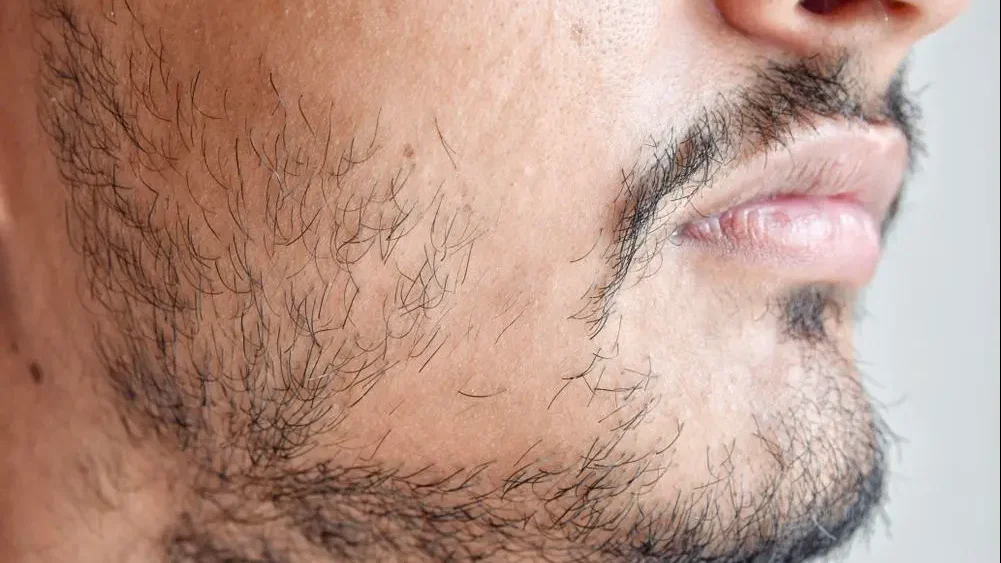
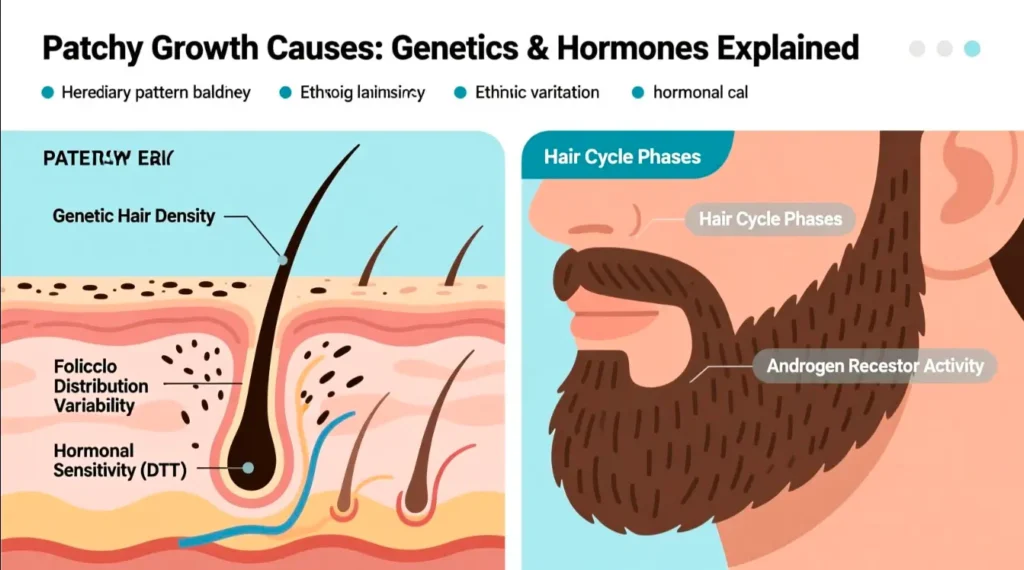
A patchy beard happens when hair follicle density varies across your face, leading to thicker growth in some areas (often the mustache and chin) and thinner or absent growth in others (commonly the cheeks, especially toward the ears).
Genetics
This is, by far, the leading cause. The number and distribution of hair follicles on your face is largely determined by genetics, similar to how scalp hair density and pattern are inherited. If your father or close male relatives have patchy beard growth, you’re more likely to experience the same pattern.
Age
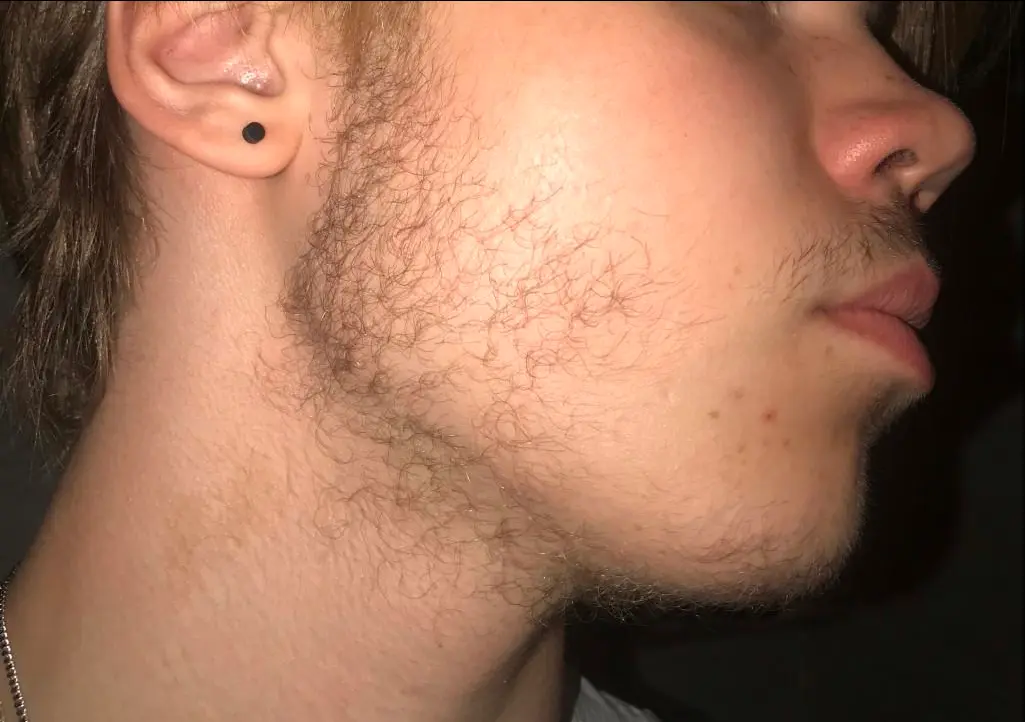
Facial hair follicles can continue maturing well into a man’s mid-to-late twenties, sometimes later. A patchy beard at 18 may fill in noticeably by 25, even without any specific intervention.
Hormones
Testosterone and dihydrotestosterone (DHT) both play a role in facial hair growth, but having “normal” patchy growth doesn’t necessarily indicate a hormone problem. Significant, sudden changes in beard growth pattern, combined with other symptoms, are a different matter and worth discussing with a doctor.
Skin Conditions and Scarring
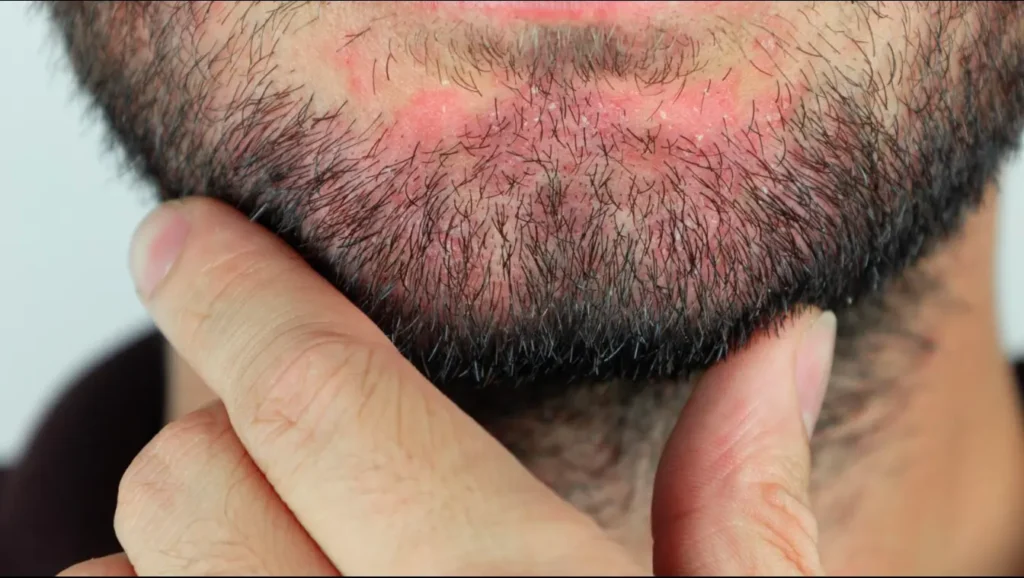
Old acne scarring, certain skin conditions, or scar tissue from injuries can disrupt hair follicles in specific areas, creating patches that are more structural than purely genetic.
Lifestyle Factors
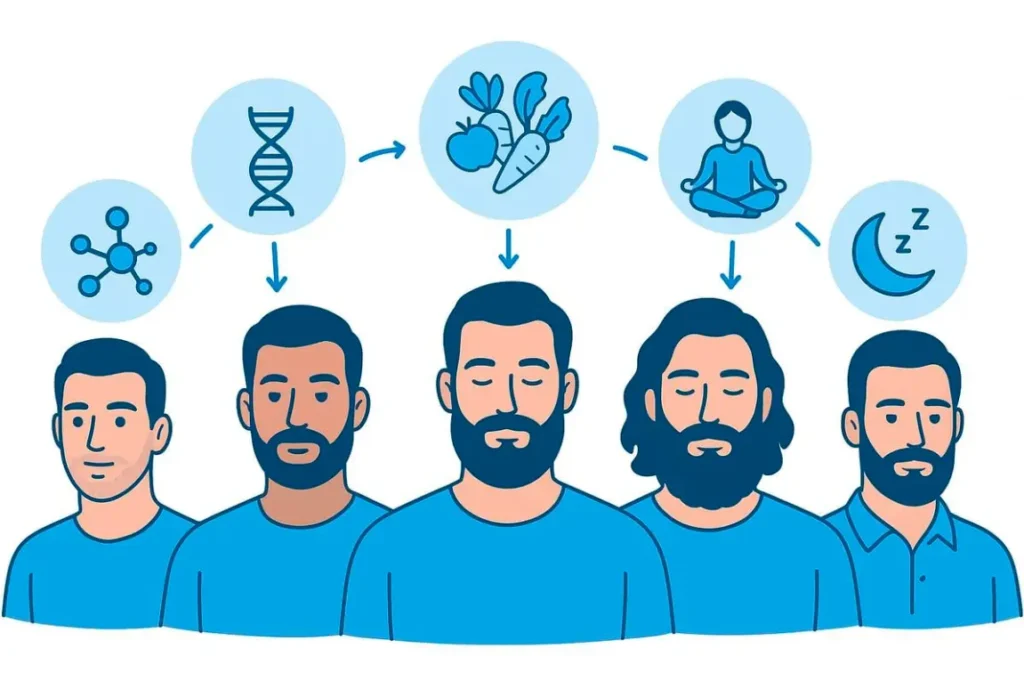
Poor sleep, high stress, and significant nutritional deficiencies can affect hair growth generally, including facial hair, though their impact is usually smaller than genetics and age.
2. Is a Patchy Beard Normal?
Yes — patchy beard growth is extremely common, and a fully even, dense beard is closer to the exception than the rule. Most men have at least some variation in density across the face, even if it’s subtle enough not to be noticeable at a glance.
Common patchy zones include:
- The area along the cheeks closest to the ears
- A gap directly under the lower lip
- Uneven density along the jawline, particularly near the chin corners
- A noticeably fuller mustache compared to thinner cheek growth, or vice versa
Recognizing that this is normal matters because it changes the question from “how do I fix this problem” to “how do I work with this pattern” — which is a much more realistic and achievable goal.
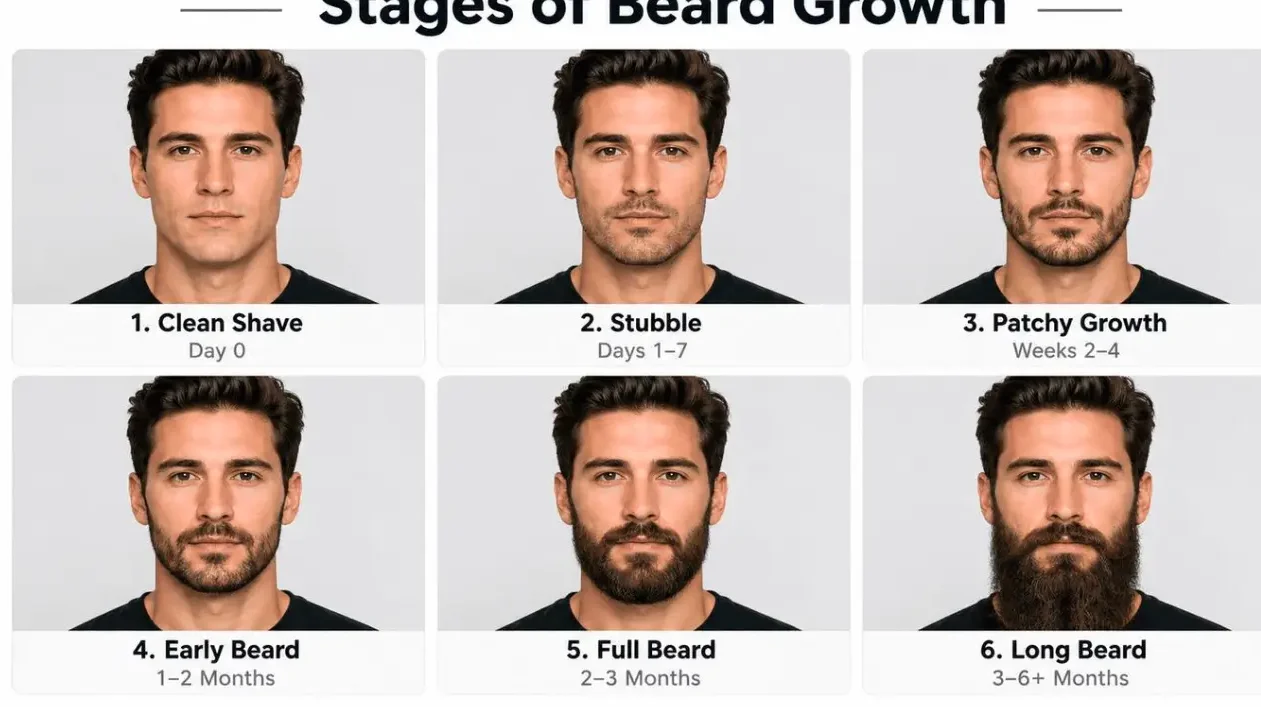
3. Realistic Beard Growth Timeline for Patchy Areas
| Timeframe | What Typically Happens |
| Weeks 1–2 | Patchy areas are most visible; this is the stage most men panic and shave |
| Weeks 3–4 | Some filling in begins for many men, though genetics determine how much |
| Months 2–3 | The beard’s true pattern becomes clearer; some patches improve, others remain |
| Months 4–6+ | Continued slow improvement is possible, but a beard that’s still significantly patchy at 3 months is unlikely to become fully even with more time alone |
Expert tip: Most barbers will tell you not to judge a beard’s potential before week four. A huge number of “permanently patchy” complaints are actually just normal early-growth unevenness that hasn’t had time to fill in yet.
4. What Actually Helps a Patchy Beard Fill In
Time and Patience
The single most reliable factor. Many patchy areas genuinely do improve between weeks 4 and 12, simply because hair grows at different rates across different follicles.
Consistent Skin Care
Healthy skin supports healthy hair growth. Regular gentle cleansing and moisturizing keep the skin underneath your beard in better condition, which can support more even growth over time.

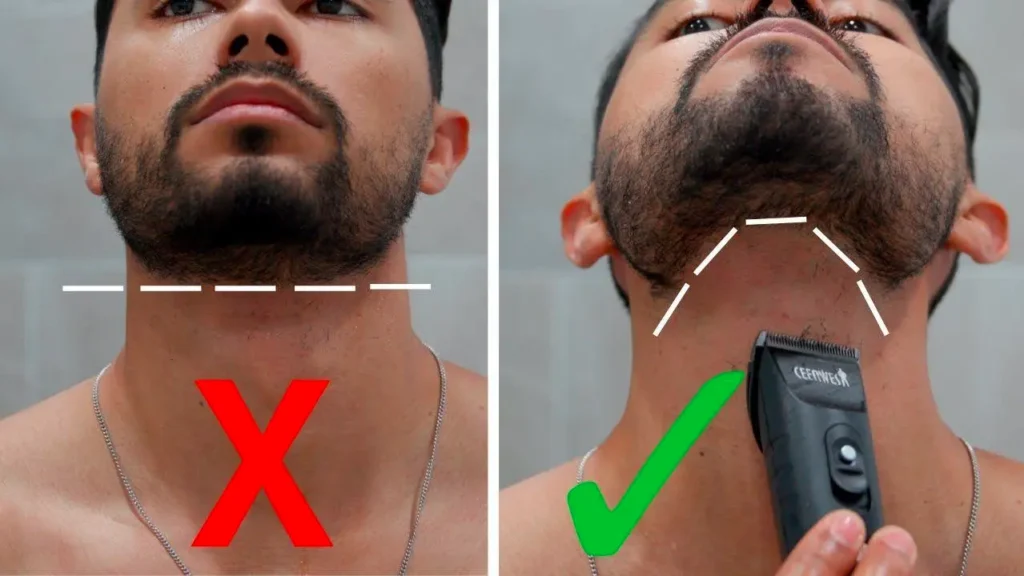
Avoiding Unnecessary Shaving During the Growth Phase
Shaving doesn’t make hair grow back thicker (more on that myth later), but repeatedly shaving off short growth before it’s had a chance to develop can make patches look worse than they’ll eventually be.
A Balanced Diet
There’s no special “beard growth food,” but general nutritional deficiencies (particularly in protein, iron, or certain vitamins) can affect hair growth broadly. If you suspect a deficiency, a conversation with a doctor and possible bloodwork is more useful than guessing with supplements.

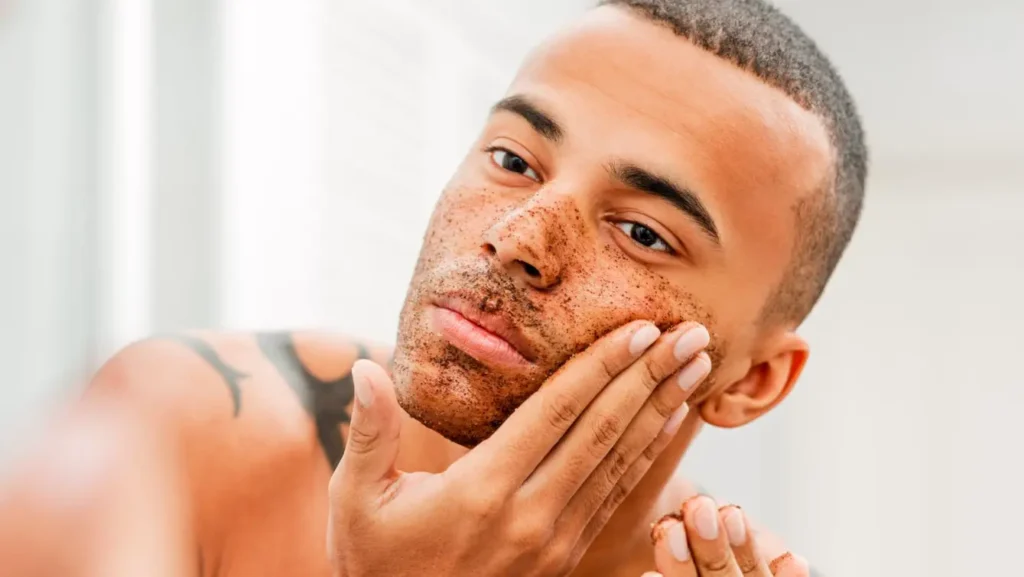
Gentle Exfoliation
Removing dead skin cells can help prevent ingrown hairs that sometimes mimic or worsen the appearance of patchiness, particularly in areas prone to curling hair growth.
5. What Doesn’t Work (Despite the Marketing)
It’s worth being direct here, since plenty of products oversell what they can realistically do.
- Beard growth oils and serums — These can improve the health, softness, and appearance of existing hair, and a healthy scalp-and-skin environment is genuinely useful, but no oil changes your underlying follicle density or genetic growth pattern.
- Beard growth vitamins/supplements — Helpful only if you have an actual deficiency; they won’t add follicles you don’t already have.
- Derma rollers/microneedling for beard growth — Some anecdotal interest exists, but solid clinical evidence specific to beard growth is limited; results vary significantly and shouldn’t be expected as a guaranteed fix.
- “Beard activator” creams — Marketing claims here frequently outpace what’s actually been studied; treat bold guarantees with skepticism.
If patchy growth is significantly affecting your confidence and you want to explore options beyond styling, a dermatologist can discuss evidence-based options and explain realistically what is and isn’t likely to help in your specific case.
6. Best Beard Styles for a Patchy Beard
This is where most men get the fastest, most reliable results — choosing a style designed around uneven growth instead of fighting it.
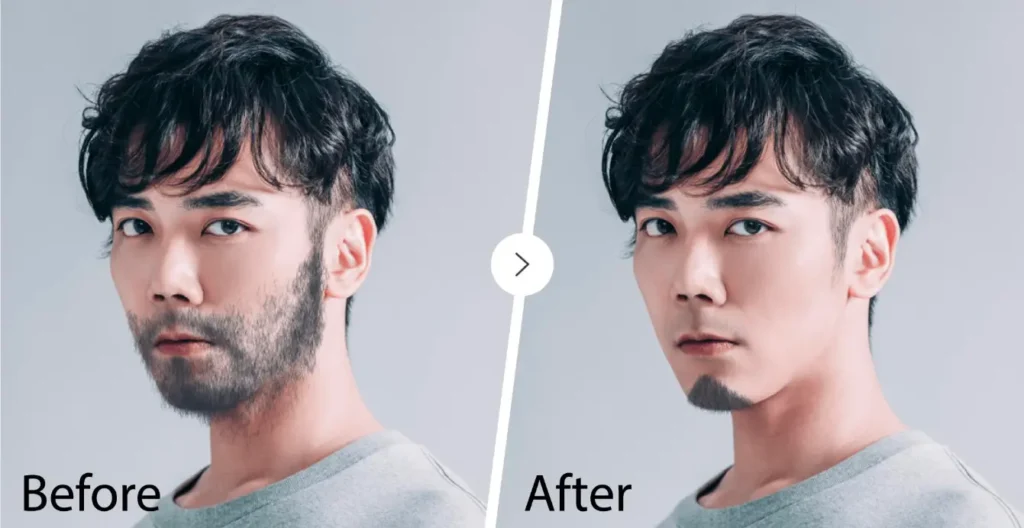
Goatee
Hair grown only on the chin, with the cheeks shaved clean.
Why it works: Sidesteps cheek patchiness entirely by removing the area from the equation altogether. Maintenance level: Medium — requires shaving the cheeks every 2–3 days to maintain the contrast.
Extended Goatee
A goatee connected by a thin line along the jaw to the sideburns, with the cheeks still kept bare or very lightly stubbled.
Why it works: Adds a bit more jawline structure than a classic goatee while still avoiding the patchiest cheek zones. Maintenance level: Medium-high.

Heavy Stubble
4–5 days of growth, which often disguises patchiness more effectively than very short, light stubble.
Why it works: Slightly longer length adds density and shadow that helps minimize the visual contrast between thicker and thinner areas. Maintenance level: Low-medium.
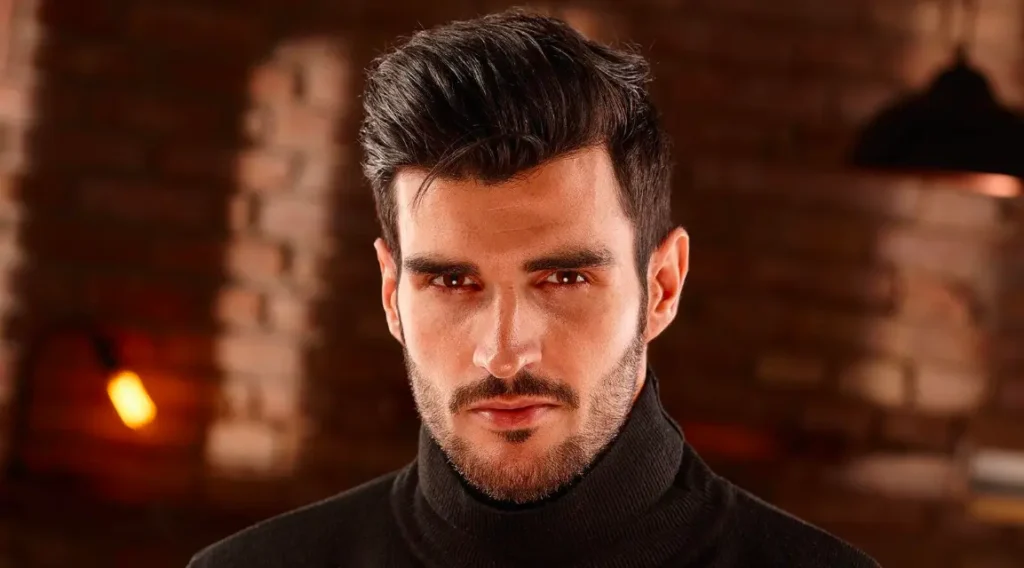
Corporate Beard or Short Boxed Beard (Carefully Shaped)
A tightly trimmed, clearly lined beard kept under half an inch.
Why it works: Sharp, intentional lines draw attention to the shape of the beard rather than the density underneath, making minor patchiness far less noticeable. Maintenance level: Medium.

Chin Strap
A thin line of hair tracing the jawline, with the chin and cheeks shaved.
Why it works: Works well if your jawline growth is fairly even, even if your cheeks are patchy, since the cheeks are removed from the style entirely. Common mistake: Making the strap too thick, which can re-expose any unevenness within the strap itself.
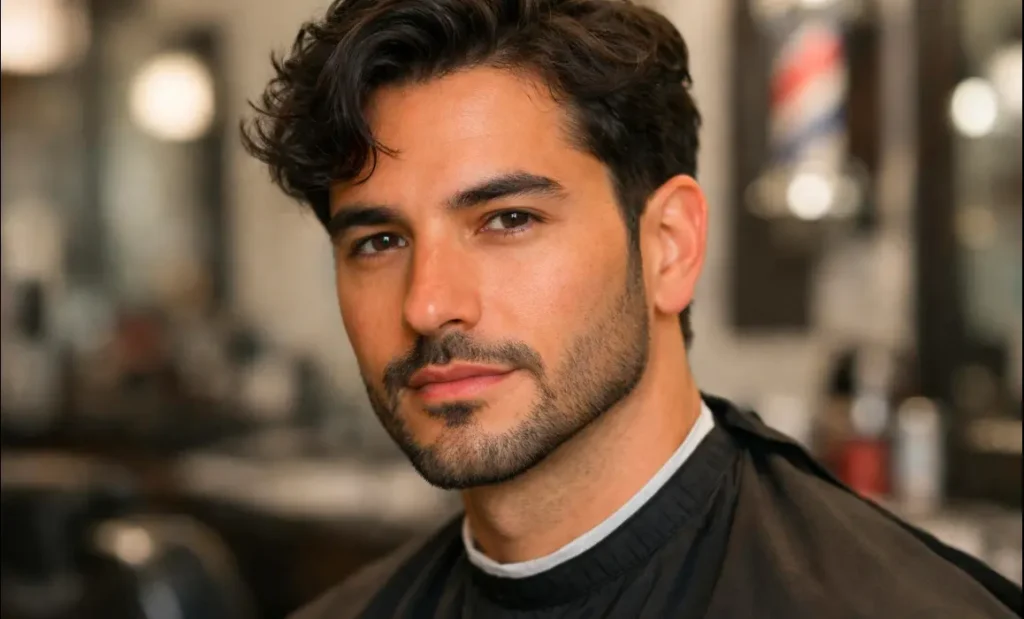
7. Styling Techniques to Minimize Patchiness
Even within a chosen style, a few techniques genuinely help:
- Brush hair across patchy areas, not just downward. Training hair to lie at a slight angle across thin patches can help cover small gaps.
- Use beard balm for light hold. A small amount of balm helps hair stay in a trained direction throughout the day rather than falling back to reveal gaps.
- Keep length slightly longer over patchy zones specifically. A barber can trim unevenly on purpose — slightly longer over thin areas, slightly shorter elsewhere — to create a more uniform appearance.
- Avoid trimming everything to one uniform short length. This is one of the most common mistakes; uniform shortness usually exposes patchiness rather than hiding it.
8. Patchy Beard by Hair Type
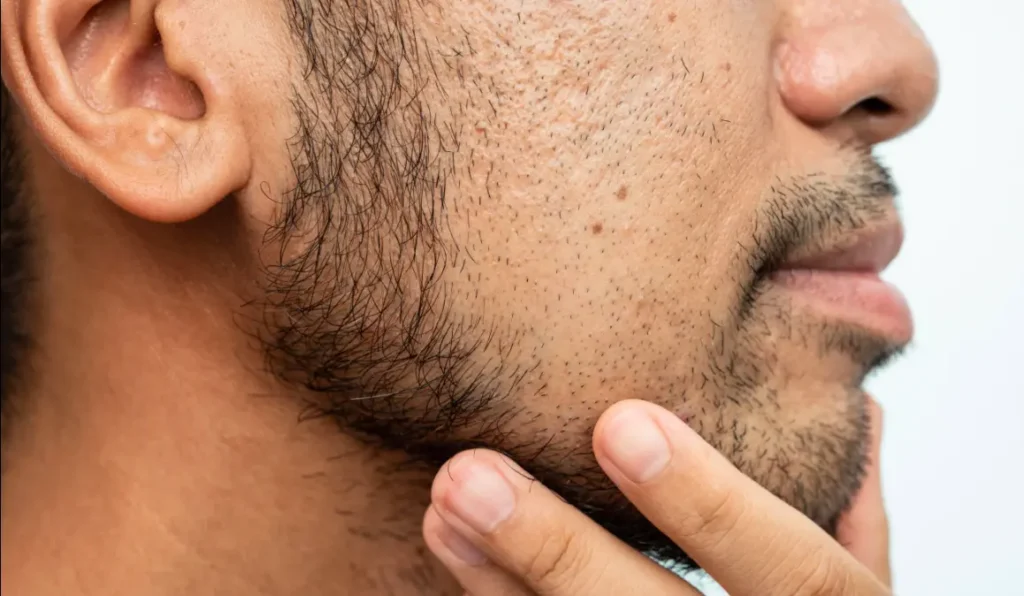
Straight, Fine Hair
Tends to show patchiness more clearly, since fine hair provides less coverage and shadow. Heavy stubble or slightly longer styles generally help more than very short ones.
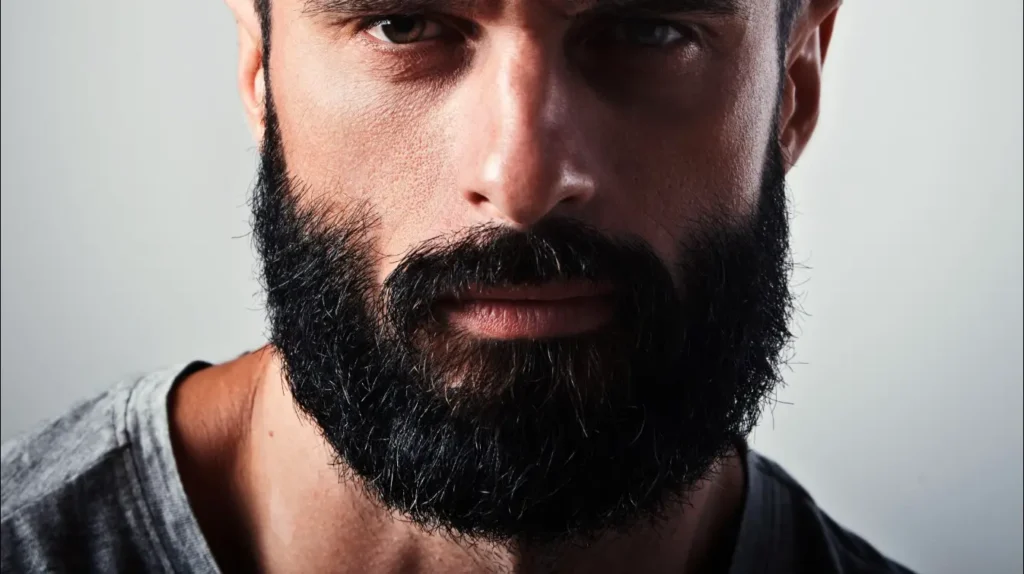
Thick, Coarse Hair
Often naturally disguises minor patchiness better, since coarse hair provides more visual density even with some gaps in coverage.
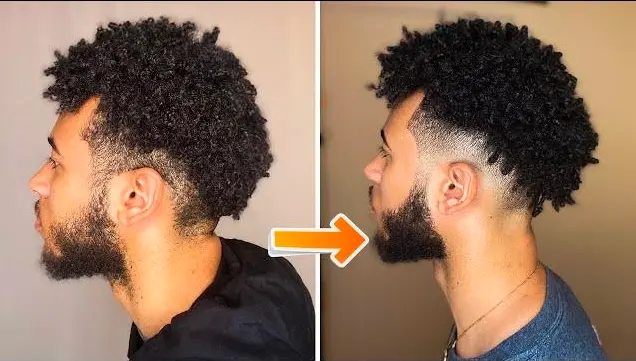
Curly or Coily Hair
Curl pattern adds volume that can help mask patchy areas, though uneven curl density in different zones can sometimes create its own version of a patchy appearance.
9. Patchy Beard Maintenance Routine
Daily
- Apply beard oil to keep all areas of growth — thick and thin — soft and healthy
- Brush in a direction that helps minimize visible gaps, adjusting slightly for your specific pattern
Weekly
- Trim with attention to length variation, keeping patchy zones slightly longer where appropriate
- Reassess your chosen style as growth progresses, particularly in the first two to three months
Skin Care
Healthy skin supports more even-looking growth. A gentle beard wash, regular moisturizing, and avoiding harsh over-exfoliation all contribute to a better growing environment.
Read More About Type Of Beard Styles: https://beardstyles.net/types-of-beard-styles/
10. Common Mistakes That Make Patchiness Worse
- Shaving in frustration before week 4 — restarts the growth cycle right when many patches would have started filling in
- Trimming everything to one uniform length — exposes thin areas instead of using length variation to help disguise them
- Choosing a full beard despite significant cheek patchiness — fighting your natural growth pattern instead of choosing a style designed around it, like a goatee
- Over-relying on growth products with unrealistic expectations — leads to disappointment and sometimes repeated product-switching instead of addressing styling
- Skipping skin care entirely — neglected, unhealthy skin underneath a beard can make any growth pattern look worse than it needs to
Read More About Short Beard Styles: https://beardstyles.net/short-beard-styles/
11. Common Myths About Patchy Beards
Myth: Shaving makes a patchy beard fill in thicker. Shaving has no effect on hair follicle density or growth rate — it only removes hair at the surface.
Myth: A patchy beard at 3 weeks will always be patchy. Many patchy zones improve noticeably between weeks 4 and 12; judging too early is one of the most common mistakes.
Myth: Beard growth oils can fix genetic patchiness. These products improve hair and skin health, not the underlying follicle density that determines patchy growth.
Myth: Only young men get patchy beards. While patchiness often improves with age into the mid-to-late twenties, plenty of older men retain naturally patchy growth patterns throughout their lives.
Myth: A patchy beard means low testosterone. Beard density is determined by a combination of genetics and localized hormone sensitivity at the follicle level, not simply overall testosterone levels; most men with patchy beards have entirely normal hormone levels.
Read More About Long Beard Styles: https://beardstyles.net/long-beard-styles/
12. When to See a Doctor About Patchy Growth
Most patchy beards are simply genetic and don’t require medical attention. However, it’s worth speaking with a doctor or dermatologist if you notice:
- Sudden, significant hair loss in a specific patch that wasn’t there before (this can sometimes indicate alopecia areata, a condition that causes round patches of hair loss)
- Patchy growth accompanied by other symptoms like unexplained fatigue, weight changes, or skin changes
- Scarring, redness, or scaling specifically in the patchy area, which could indicate an underlying skin condition affecting the follicles
A dermatologist can examine the area directly and rule out conditions distinct from ordinary, genetic patchy growth.
Read More About Goatee Styles: https://beardstyles.net/goatee-styles/
13. Realistic Expectations: What You Can and Can’t Change
What you can realistically influence:
- How visible patches appear, through style choice and length variation
- General hair and skin health, through proper care and nutrition
- Some degree of natural filling-in over time, especially if you’re under 25
What you generally can’t change:
- Your underlying genetic follicle density and distribution
- Permanent patches caused by significant scarring (without medical intervention)
- The fundamental growth pattern your face is built around
Accepting this distinction early saves a lot of frustration and money on products promising results that genetics simply won’t allow.
Read More About Stubble Beard: https://beardstyles.net/stubble-beard/
14. Conclusion
A patchy beard is one of the most common — and most over-corrected — issues in men’s grooming. Most of the time, it isn’t a problem to fix so much as a pattern to work with, and the fastest, most reliable path to a sharper-looking beard is choosing a style, like a goatee, extended goatee, or heavy stubble, that’s specifically designed around uneven growth rather than fighting it with a full beard that exposes every gap.
Give your beard at least four weeks before judging its potential, focus on genuine skin and hair health rather than products promising guaranteed thickness, and don’t be afraid to ask a barber for an honest read on which style will work best with your specific growth pattern.
FAQ
1. What causes a patchy beard? A patchy beard is primarily caused by genetics, which determine hair follicle density and distribution across the face; age, hormones, and skin conditions can also play a role.
2. Will my patchy beard ever fill in? Many patchy areas improve somewhat between weeks 4 and 12 of growth, and facial hair follicles can continue maturing into the mid-to-late twenties, though some degree of patchiness is often permanent and genetic.
3. What’s the best beard style for patchy growth? Goatees, extended goatees, and heavy stubble are generally the most effective styles for working around patchy or uneven facial hair.
4. Does shaving help fix a patchy beard? No — shaving doesn’t affect hair follicle density or growth rate; it only removes hair at the surface temporarily.
5. Do beard growth oils fix patchiness? Beard oils improve the health and appearance of existing hair but don’t change the underlying genetic follicle density that causes patchiness.
6. At what age does a patchy beard usually fill in? Facial hair follicles often continue maturing into the mid-to-late twenties, so many men see noticeable improvement in patchiness during that period, though results vary significantly.
7. Is a patchy beard a sign of low testosterone? Not necessarily — beard density depends on genetics and localized hormone sensitivity at the follicle level, and most men with patchy beards have normal testosterone levels.
8. How long should I wait before judging if my beard is patchy? Most barbers recommend waiting at least four weeks before making any real assessment, since early growth often looks more uneven than the beard’s eventual pattern.
9. Can diet affect beard patchiness? General nutritional deficiencies can affect hair growth broadly, but there’s no specific “beard food” that fixes genetic patchiness; addressing an actual deficiency, if present, is the more realistic path.
10. What beard style hides patchy cheeks best? A goatee or extended goatee, both of which keep the cheeks shaved entirely, are typically the most effective at hiding patchy cheek growth.
11. Does trimming everything short help or hurt a patchy beard? It usually hurts — uniform short length tends to expose patchiness more than slightly longer, intentionally varied length does.
12. Can microneedling fix a patchy beard? Evidence specific to beard growth is limited, and results vary significantly; it shouldn’t be treated as a guaranteed fix without realistic expectations.
13. Should I see a doctor about my patchy beard? Most patchy growth is simply genetic and doesn’t need medical attention, but sudden, distinct bald patches or accompanying symptoms like fatigue or skin changes are worth discussing with a doctor.
14. Is heavy stubble better than light stubble for patchy growth? Yes, generally — the added length and density of heavy stubble tends to disguise unevenness more effectively than very short, light stubble.
15. Can a barber help with a patchy beard? Yes — a barber can recommend a style suited to your specific growth pattern and use intentional length variation to minimize the visibility of patchy areas.
Read More About Best Beard For Round Face: https://beardstyles.net/best-beard-for-round-face/
Read More About Best Beard For Oval Face:https://beardstyles.net/best-beard-for-oval-face/