 By Bread Styles Team
A lot of men assume a beard only looks “finished” once it’s long enough to grab. That’s not true, and frankly, it’s the reason so many guys give up on growing one in the first place. Short beard styles — stubble, the short boxed beard, the corporate beard — are some of the most flattering, lowest-effort, and most universally accepted facial hair looks out there. You don’t need six months of patience or a jar of beard balm the size of a coffee mug. You need the right length, clean lines, and a routine that takes about five minutes a day.
This guide breaks down every major type of short beard styles, who it suits, how much upkeep it actually takes, and the small details — like neckline placement and cheek-line shaping — that separate a sharp, intentional look from one that just looks like you forgot to shave.
By the time you finish reading, you’ll know:
- The different short beard styles and what makes each one distinct
- Which short beard styles fits your face shape and hair growth pattern
- How to maintain a short beard properly, including tools and routine
- The most common mistakes that make a short beard look messy instead of clean
- Whether a short beard works for your workplace or industry
Let’s start with what actually counts as a “short beard.”
Table of Contents
1. What Counts as a Short Beard?
In barbering terms, a short beard generally refers to facial hair between 1 day and roughly half an inch (about 1–12mm) in length. This range covers everything from light stubble to a neatly trimmed short boxed beard.
Anything beyond half an inch starts moving into “medium beard” territory, where styles like the classic full beard or ducktail beard take over.
Short beard styles are popular for a simple reason: they require far less daily maintenance than long facial hair, while still looking deliberate and well-groomed — assuming the lines are clean.
Read More: Beard Acne: Why It Happens and How to Clear It Up for Good
2. Why Short Beard Styles Work for Almost Everyone
Short beards are forgiving in ways longer styles simply aren’t.
- They hide minor patchiness. Short hair doesn’t reveal uneven density the way three inches of beard does.
- They suit more face shapes. Length added by a longer beard can throw off proportions; short styles rarely do.
- They’re workplace-friendly. Most conservative dress codes accept stubble or a short boxed beard without question.
- They’re low-maintenance. A quick trim once a week and daily oil is usually enough.
- They grow in faster. You’ll see a finished look in 1–4 weeks instead of months.
That said, “low-maintenance” doesn’t mean “no maintenance.” A short beard with an undefined neckline or uneven cheek line can look messier than a longer, fuller beard that’s properly shaped.
Read More: Beard Acne: Why It Happens and How to Clear It Up for Good
3. Types of Short Beard Styles
Light Stubble
Roughly 1–3 days of growth. Barely-there but visible shadow across the jaw and cheeks.
Styling difficulty: Very low. Maintenance level: Low — a stubble trimmer on the lowest guard, every 2–3 days. Best for: Almost every face shape; especially flattering on square and oval faces. Who should avoid it: Men whose stubble grows in very blotchy or has clearly visible gaps, since short hair makes uneven density obvious.
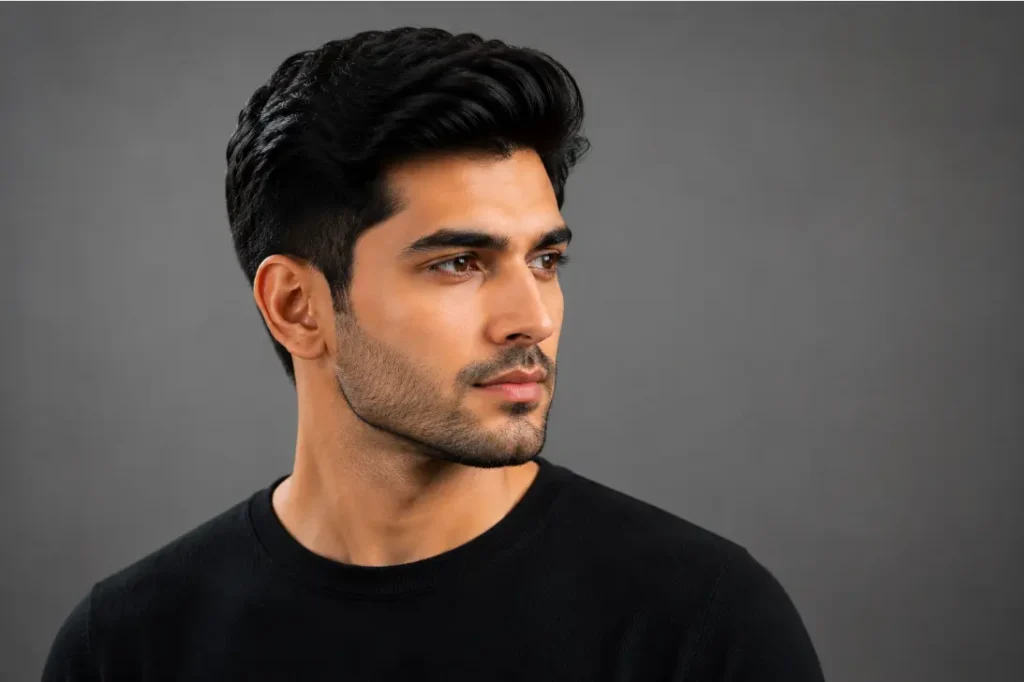
Heavy Stubble
Around 4–5 days of growth, with more visible density and slight length on the chin.
Styling difficulty: Low. Maintenance level: Low-medium — trim every 4–5 days with a slightly longer guard than light stubble. Best for: Round, oval, and diamond faces. Barber tip: Heavy stubble is one of the most universally flattering looks in barbering — it adds definition without requiring real styling skill.
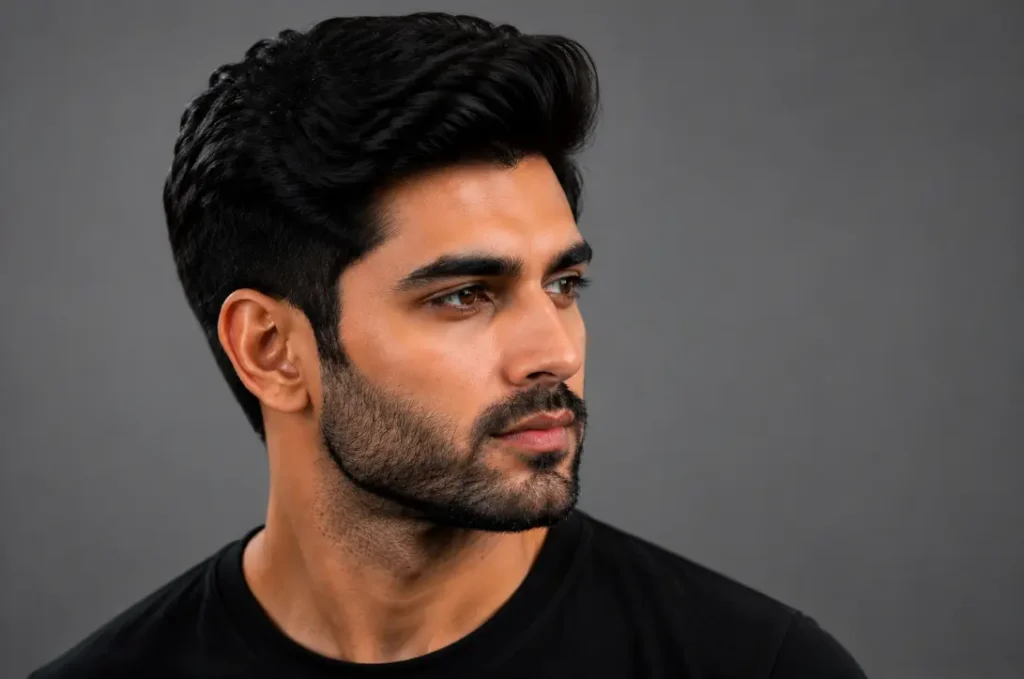
Short Boxed Beard
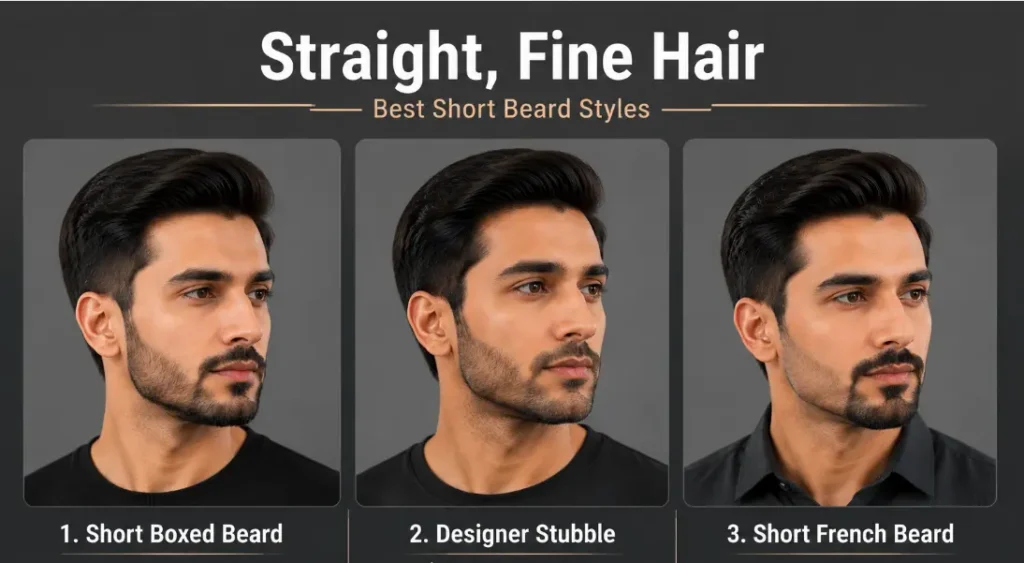
A clearly defined beard kept around a quarter to half an inch, with sharp lines along the cheeks, jaw, and neckline. This is the most requested “short beard” style at most barbershops.
Styling difficulty: Medium — requires regular line-ups. Maintenance level: Medium. Best for: Square, oval, and round face shapes. Common mistake: Letting the cheek line creep too high, which makes the beard look smaller and less intentional than it actually is.
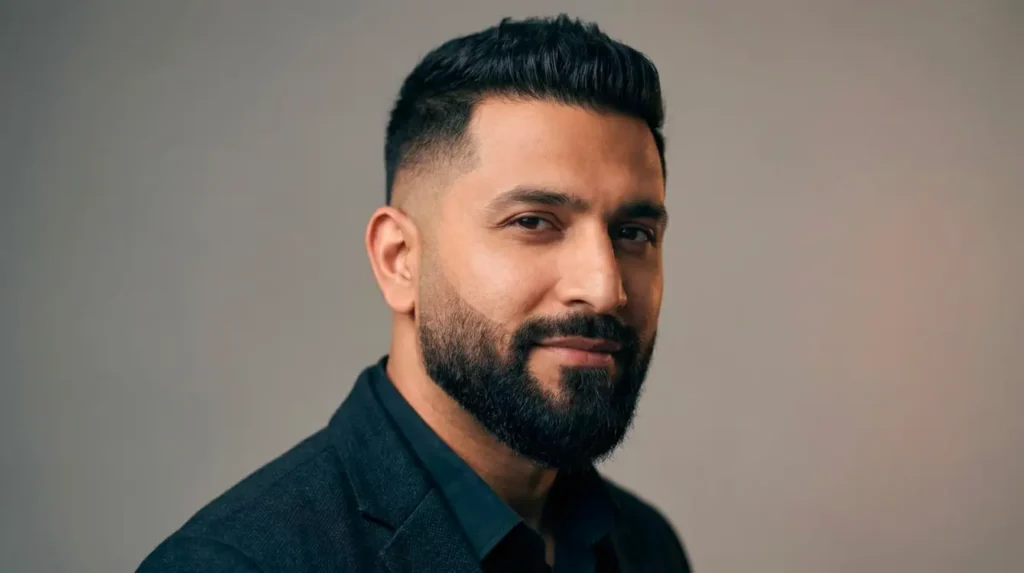
Corporate Beard
A tightly trimmed beard, almost always under half an inch, with crisp, straight lines and minimal length variation across the face.
Styling difficulty: Medium. Maintenance level: Medium-high — needs trimming roughly every 5–7 days to stay sharp. Best for: Client-facing roles, conservative offices, and formal industries like law, finance, and government.

Short French Beard
A thin, narrow strip of beard outlining the jaw and chin, connected to a closely trimmed mustache, with the cheeks kept very short or shaved.
Styling difficulty: High — needs precise edging. Maintenance level: High, due to the thin, exact lines required. Best for: Oval and long faces.

Anchor-Style Short Beard
A scaled-down version of the anchor beard, with a pointed chin section and connected mustache, kept short along the cheeks.
Styling difficulty: High. Maintenance level: High — needs frequent edging to maintain the pointed shape. Best for: Round and oval faces that benefit from added angularity.

Designer Stubble
Stubble with sharply defined, sometimes slightly geometric lines along the cheeks and neck, often paired with a fade haircut.
Styling difficulty: Medium. Maintenance level: Medium — needs frequent edging even though the length itself stays short. Best for: Younger, trend-conscious men with a modern haircut.

4. Short Beard Styles by Face Shape
| Face Shape | Best Short Beard Styles | Why It Works |
| Round | Short boxed beard, anchor-style short beard | Adds angularity and visual length |
| Square | Light/heavy stubble | Softens sharp jaw angles |
| Oval | Almost any short style | Already balanced; most styles suit it |
| Long | Short French beard, designer stubble (kept wide on cheeks) | Adds width without extending length |
| Diamond | Heavy stubble, corporate beard | Balances narrow chin and forehead |
| Heart | Short boxed beard | Adds width along a narrower jawline |
This is a starting guideline. A barber can fine-tune the exact line placement based on your bone structure and how your hair actually grows in.
Read More About Types of Beards: https://beardstyles.net/types-of-beard-styles/
5. Short Beard Styles for Different Hair Types
Straight, Fine Hair
Tends to show the skin underneath more at short lengths. Heavy stubble or a short boxed beard usually looks fuller than light stubble.
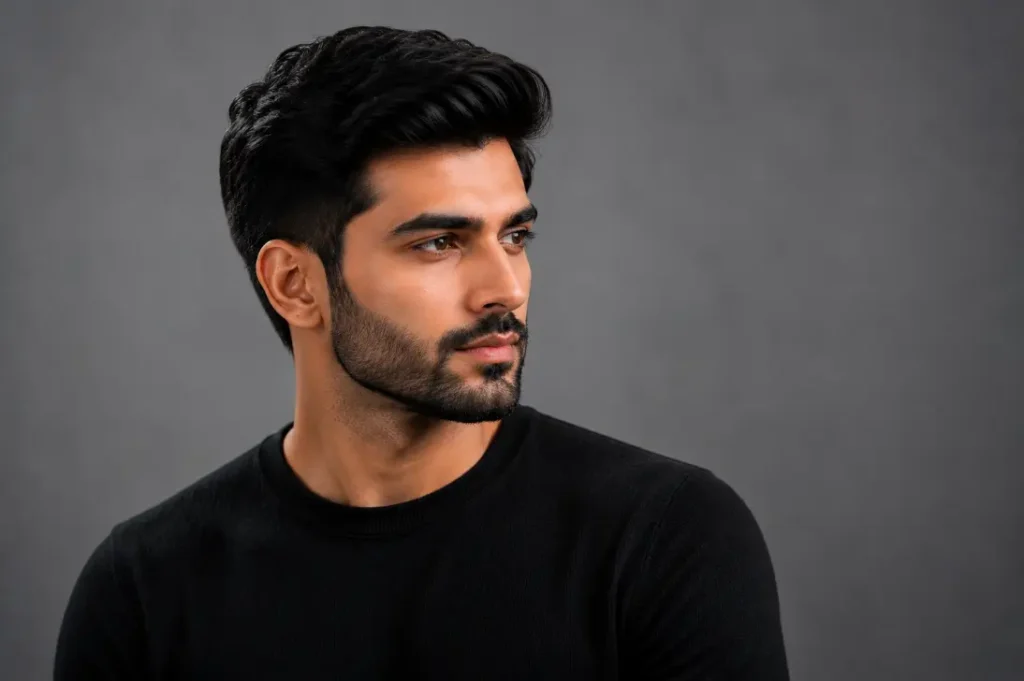
Thick, Coarse Hair
Naturally suits almost any short style. Be cautious with very short lengths (1–2 days), since coarse hair can look slightly wiry at minimal growth.
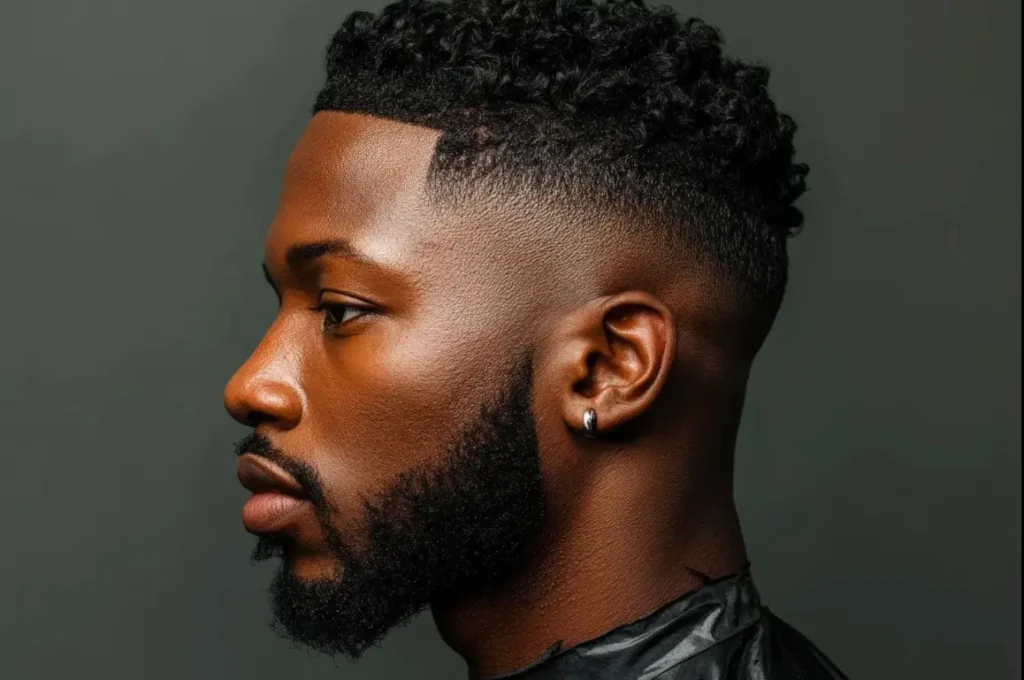
Curly or Coily Hair
Short styles often work exceptionally well, since the curl pattern adds visual density even at shorter lengths. Watch for ingrown hairs, which are more common with curly facial hair, and consider a single-blade trimmer pass instead of trimming against the grain.
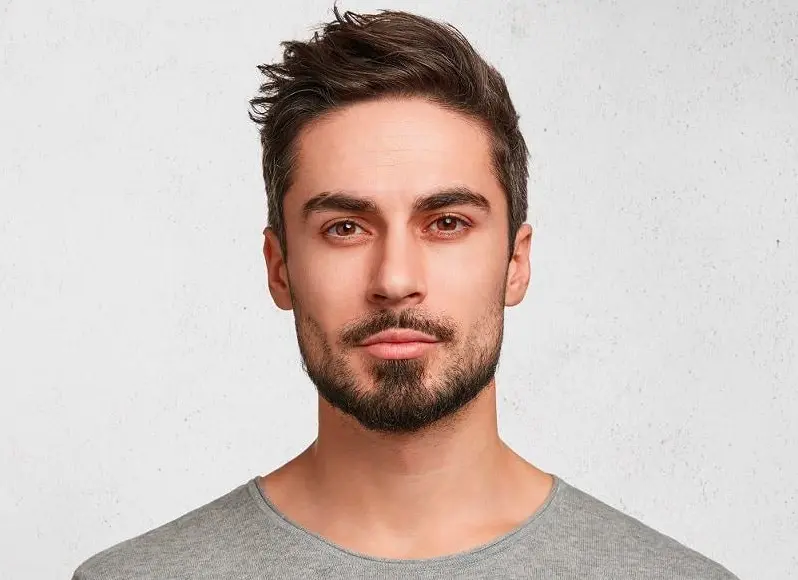
Patchy Growth
Heavy stubble and the corporate beard are usually the most forgiving, since slight unevenness is less visible at shorter lengths than it would be on a medium or long beard.
6. How to Grow a Short Beard the Right Way
It sounds backward, but the best way to get a clean short beard is to let it grow out slightly first.
- Stop shaving for 2–3 weeks. This lets you see your real growth pattern, density, and any patchy zones.
- Identify your natural lines. Note where your neck hair naturally stops and where your cheek line sits.
- Trim down to your target style. Once you understand your growth pattern, trim to the desired short length rather than guessing from day one.
- Maintain consistently. Short beards grow out of shape faster than long ones because there’s less room for error — a few extra millimeters can blur your lines.
Realistic expectation: A clean short boxed beard or corporate beard usually looks fully “finished” within 3–4 weeks, much faster than medium or long beard styles.
7. How to Maintain a Short Beard
Short beards need frequent but quick maintenance — short bursts of upkeep rather than long grooming sessions.
Daily Routine
- Apply a small amount of beard oil after washing your face, focusing on the skin underneath.
- Brush or comb briefly to train hair direction, even at short lengths.
- Check your neckline and cheek line in good lighting — short beards reveal stray hairs quickly.
Weekly Routine
- Trim to your guard length using a quality trimmer.
- Re-define the neckline just above the Adam’s apple.
- Clean up the cheek line, keeping it slightly higher than you think — it’s easier to lower it later than fix an overly high line.
Skin Care
The skin underneath short facial hair is still exposed to daily friction from clothing collars, masks, and touching. Use a gentle beard wash 2–3 times a week instead of regular shampoo, which can dry out both the hair and the skin underneath.
8. Tools You Need for a Short Beard
- Trimmer with multiple guard lengths — the single most important tool for any short beard styles
- Edger or detail trimmer — for precise neckline and cheek line work
- Beard comb — even short beards benefit from training hair direction
- Beard oil — reduces itchiness and keeps the skin underneath moisturized
- Beard wash — gentler than regular shampoo, helps prevent dryness and flaking
Unlike medium or long beards, short styles generally don’t need heavy balm or conditioner, since there’s less hair length to manage or tame.
9. Short Beard vs Medium Beard: Which Should You Choose?
| Factor | Short Beard | Medium Beard |
| Growth time | 1–4 weeks | 2–3 months |
| Daily maintenance | Low | Medium |
| Workplace acceptance | Very high | Moderate, depends on industry |
| Hides patchiness | Yes, well | Less effectively |
| Styling precision needed | High (lines matter more) | Moderate |
| Best for first-time growers | Yes | Only with patience |
Bottom line: If you’re new to growing facial hair, unsure about your growth pattern, or work in a conservative environment, a short beard styles is almost always the safer and smarter starting point.
10. Professional and Corporate Short Beard Styles
For client-facing roles, law, finance, healthcare, and similar industries, barbers generally recommend:
- Heavy stubble — the safest, most universally accepted option
- Corporate beard — sharp, short, and clearly intentional
- Short boxed beard — slightly bolder but still widely accepted
Professional barber advice: Length matters less than precision in professional settings. A half-inch beard with crisp lines reads as more polished than a quarter-inch beard with a fuzzy, undefined neckline.
11. Common Mistakes With Short Beards
- Skipping the neckline — the single biggest mistake; an undefined neckline makes any short beard look unfinished
- Trimming too short, too often — constantly resetting to the same guard length can stunt the appearance of density over time
- Using the wrong guard length — going too short can expose patchy zones that longer stubble would hide
- Ignoring the cheek line — letting cheek hair grow unchecked while keeping the rest short creates an inconsistent look
- Not moisturizing the skin underneath — short beards still trap dead skin and oil against the face, so skipping skin care can lead to irritation or breakouts
- Trimming against the grain aggressively — increases the risk of ingrown hairs, especially with curly facial hair
12. Common Myths About Short Beards
Myth: Short beards don’t need maintenance. They often need more frequent trims than long beards, since a few extra millimeters can blur the entire shape.
Myth: Stubble is just “not shaving.” Intentional stubble involves consistent guard lengths and defined lines — it’s a styled look, not simple neglect.
Myth: Short beards can’t suit round faces. Several short styles, like the short boxed beard, are specifically effective at adding definition to round faces.
Myth: You need expensive products for a short beard. A decent trimmer, basic beard oil, and a comb cover almost everything a short beard styles needs.
13. Who Should Avoid a Short Beard
Short beard styles aren’t universal. Consider a different approach if:
- You have very thin, sparse facial hair that looks better with slightly more length to add visual density
- You have significant scarring or skin conditions on the jawline, where slightly longer hair might offer more coverage
- Your industry specifically requires a clean-shaven look (some hospitality, military, and food-service roles have strict policies)
If you suspect a skin condition such as persistent acne, folliculitis, or eczema under your beard area, it’s worth speaking with a dermatologist before settling on any particular length or style, since some conditions respond differently to short versus longer facial hair.
14. Conclusion
Short beard styles get underrated because people assume “short” means “low effort” or “unfinished.” In reality, a well-maintained short boxed beard or sharp heavy stubble can look more polished than a longer beard that’s been left to grow without any real shaping.
If you’re deciding where to start, heavy stubble or a short boxed beard are the safest, most flattering choices for most face shapes and most workplaces. Give your beard 2–3 weeks of growth before shaping it, invest in a trimmer with multiple guard settings, and pay close attention to your neckline — that one detail does more for a short beard’s overall look than almost anything else.
FAQ
1. What is considered a short beard? A short beard generally refers to facial hair between light stubble and roughly half an inch in length, including styles like the short boxed beard and corporate beard.
2. What’s the best short beard styles for beginners? Heavy stubble is usually the easiest starting point, since it requires minimal shaping skill and suits most face shapes.
3. How long does it take to grow a short beard? Most short beard styles look fully developed within 1–4 weeks, far faster than medium or long beard styles.
4. Is a short beard professional? Yes — heavy stubble, the corporate beard, and the short boxed beard are widely accepted in conservative and client-facing workplaces.
5. Which short beard styles suits a round face? The short boxed beard and anchor-style short beard both add definition and visual length to a round face.
6. Do short beards hide patchy growth? Often yes — shorter lengths tend to disguise uneven density better than medium or long beard styles do.
7. How often should I trim a short beard? Most short styles need trimming every 5–7 days to maintain clean lines and consistent length.
8. What guard length should I use for stubble? Light stubble typically uses a 1–3mm guard, while heavy stubble sits closer to 4–5mm, though exact preferences vary by individual growth.
9. Do I need beard oil for a short beard? Yes — even short facial hair benefits from beard oil, which moisturizes the skin underneath and reduces itchiness.
10. What’s the difference between a short boxed beard and a corporate beard? A short boxed beard has slightly more visible length and shape, while a corporate beard is trimmed tighter with very straight, minimal lines for a more formal look.
11. Can I get a short beard with patchy facial hair? Yes — heavy stubble and the corporate beard are generally the most forgiving short styles for uneven or patchy growth.
12. Why does my short beard look messy even though it’s short? This is usually caused by an undefined neckline or uneven cheek line rather than the length itself — clean lines matter more than length for short beards.
13. What’s the easiest short beard styles to maintain? Light or heavy stubble requires the least daily effort, needing only a quick trim every few days with a single guard setting.
14. Should I wash my short beard daily? Washing 2–3 times a week with a dedicated beard wash is usually enough; daily washing with regular shampoo can dry out the skin underneath.
15. Is stubble considered a real beard style? Yes — intentional, consistently maintained stubble with defined lines is a recognized and popular beard style, not simply unshaven hair.