 By Bread Styles Team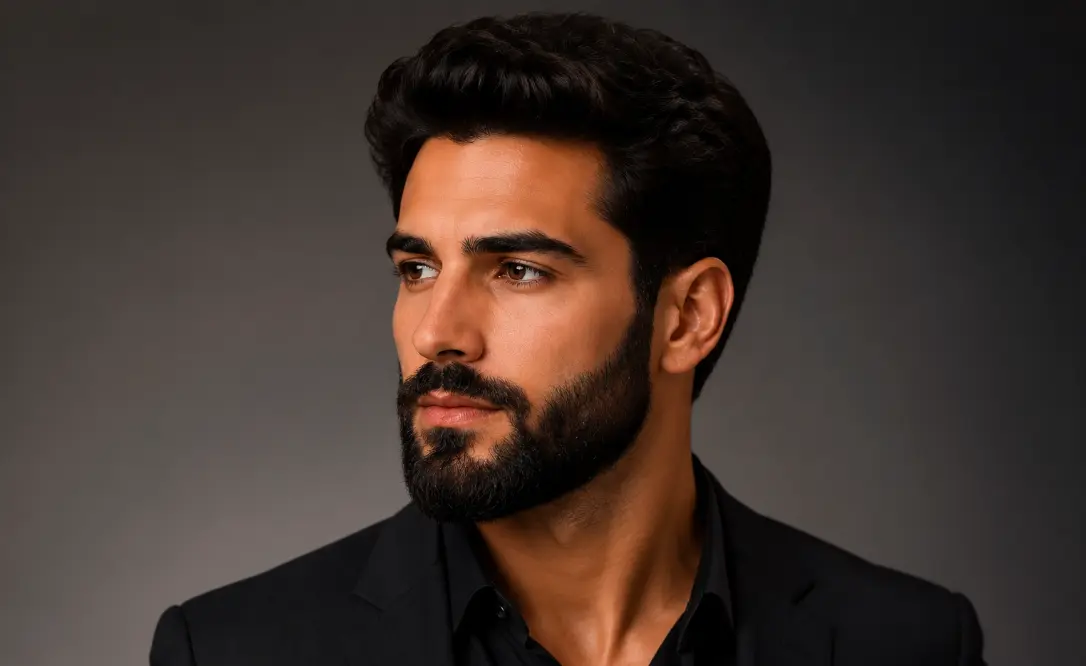
A heart-shaped face is one of the more flattering shapes to work with, but it’s also one of the most misunderstood when it comes to facial hair. Most men with this shape either grow whatever comes in naturally or copy a style they saw online without checking if it actually suits their bone structure. That’s usually where things go wrong.
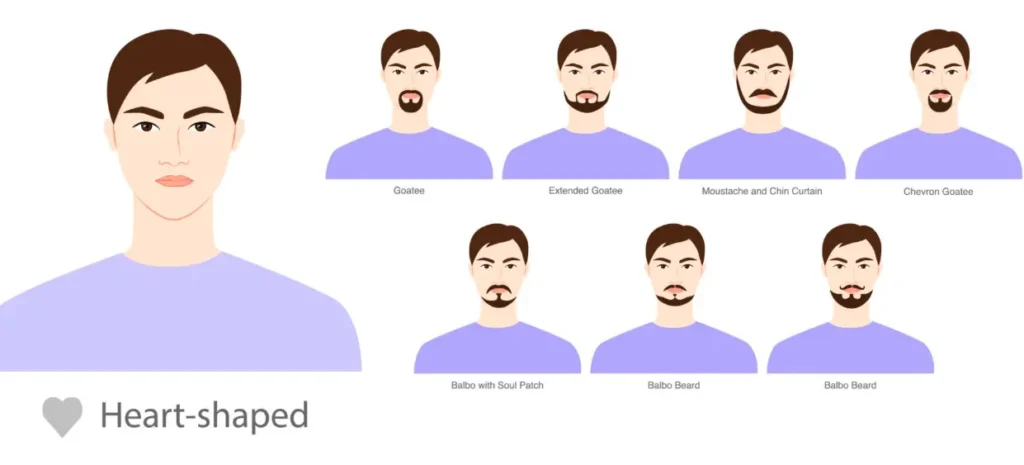
If you have a wider forehead, higher cheekbones, and a chin that narrows to a point, the goal of your beard isn’t to hide anything — it’s to add visual weight to the lower half of your face so your proportions look balanced from every angle. That’s the entire logic behind choosing the best beard for heart face shape, and once you understand it, picking the right style becomes a lot easier.
This guide breaks down exactly which beards work, which ones to skip, and how to grow and maintain the one you choose like someone who’s actually done it before.
Table of Contents
Quick Answer: The Best Beard for Heart Face Shape
If you want the short version before the details: the best beard for heart face shape is one that adds fullness and width around the jawline and chin while keeping the sides and cheeks relatively low-density. Styles like a full beard, a boxed beard, a balbo beard, and a well-shaped goatee tend to work best because they widen the lower jaw and soften the point of a narrow chin.
Thin styles that hug the chin tightly, like a circle beard grown too small or a barely-there chin strap, usually make the pointed chin more obvious instead of less.
How to Know If You Actually Have a Heart-Shaped Face
Before you pick a beard style, it’s worth confirming you’re actually working with a heart-shaped face and not something close to it, like an oval or diamond shape. A lot of men assume their face shape without ever checking, and that’s how mismatched beard advice happens.
A heart-shaped face typically has these traits:
- A broad forehead that’s the widest part of the face
- Cheekbones that are noticeably narrower than the forehead
- A chin that comes to a soft point or a narrow tip
- A jawline that tapers inward from the cheeks down to the chin
- A face that looks slightly longer than it is wide, but not dramatically so
Quick way to check: stand in front of a mirror, pull your hair back, and measure (or just visually compare) the width of your forehead, cheekbones, and jaw. If your forehead is clearly the widest measurement and your chin is the narrowest, you’re almost certainly dealing with a heart-shaped face.
If your jawline is actually the widest point instead, you’re probably looking at a square or diamond face, and the advice for a best beard for diamond face shape would suit you better than anything in this guide.
Why Beard Choice Matters So Much for This Face Shape
Facial hair works the same way a good haircut does — it redistributes visual weight. On a heart-shaped face, the natural imbalance is a wide top and a narrow bottom. A beard is one of the fastest, most permanent-feeling ways to correct that without touching your hairstyle at all.
Here’s what a well-chosen beard does for a heart face:
- Adds width at the jaw, which visually shortens the distance between a wide forehead and a narrow chin
- Softens the point of the chin, so the face reads as more oval or rounded from the front
- Balances the top-heavy look that comes from a broad forehead paired with a light beard or no beard at all
- Creates a straighter jawline illusion, even if your actual bone structure tapers inward
None of this is about disguising your face. It’s about proportion, the same principle a good tailor uses when picking a jacket cut for your shoulders. A poorly matched beard exaggerates the taper. A well-matched one balances it out.
The Best Beard Styles for Heart Face (Ranked and Explained)
Below are the styles that consistently work best for a heart-shaped face, based on how they distribute density and width across the jaw and chin. Each one has a slightly different look, so pick based on your lifestyle, hair growth pattern, and how much upkeep you’re willing to commit to.
1. The Full Beard
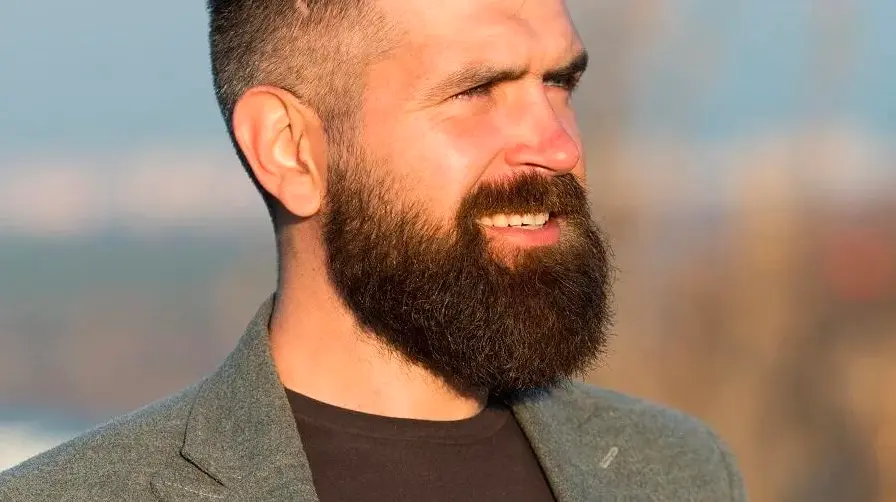
A full, moderately dense beard is the single most reliable option for a heart-shaped face. Letting the hair grow out along the jaw and chin adds real width exactly where a heart face needs it, and the added bulk at the bottom balances a wide forehead almost automatically.
Why it works: It fills out the narrow chin area and widens the jawline without needing much shaping. Best for: Men with medium-to-thick beard growth who don’t mind a few weeks of awkward in-between growth. Styling difficulty: Moderate — mostly about patience and occasional trims to keep the shape clean.
If you want the full range of options within this category, the types of beard styles guide breaks down variations you can adapt to your own density and length.
2. The Boxed Beard
A boxed beard keeps the length short-to-medium and gives you sharp, defined edges along the cheek line and jaw. That defined edge is what makes it so effective for a heart face — it creates a straighter visual boundary at the jaw instead of letting it taper naturally into the chin.
Why it works: The clean, boxed edges disguise the natural inward taper of the jawline. Best for: Men who want a groomed, corporate-friendly look with real shaping. Styling difficulty: Moderate to high — needs regular trimming to keep the box shape crisp.
This overlaps closely with what works for round or oval faces too. If you’re comparing options, the medium beard styles collection has several boxed and squared variations worth trying.
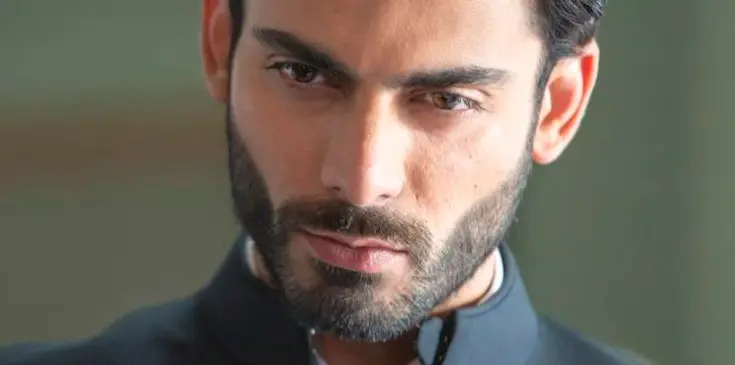
3. The Balbo Beard
The balbo is one of the most underrated choices for a heart-shaped face. It combines a floating mustache with a shaped chin patch that doesn’t connect fully to the sideburns, which lets you add density right at the chin and jawline while keeping the upper cheeks lighter.
Why it works: It builds width and shape exactly at the point of the face that needs it most — the chin — without adding bulk to the already-wide forehead area. Best for: Men who like a styled, slightly editorial look and don’t mind regular shaping with a trimmer. Styling difficulty: High — this is a precision style, not a “let it grow” one.
Full instructions on shaping this one properly are covered in the balbo beard guide.
4. The Corporate Beard
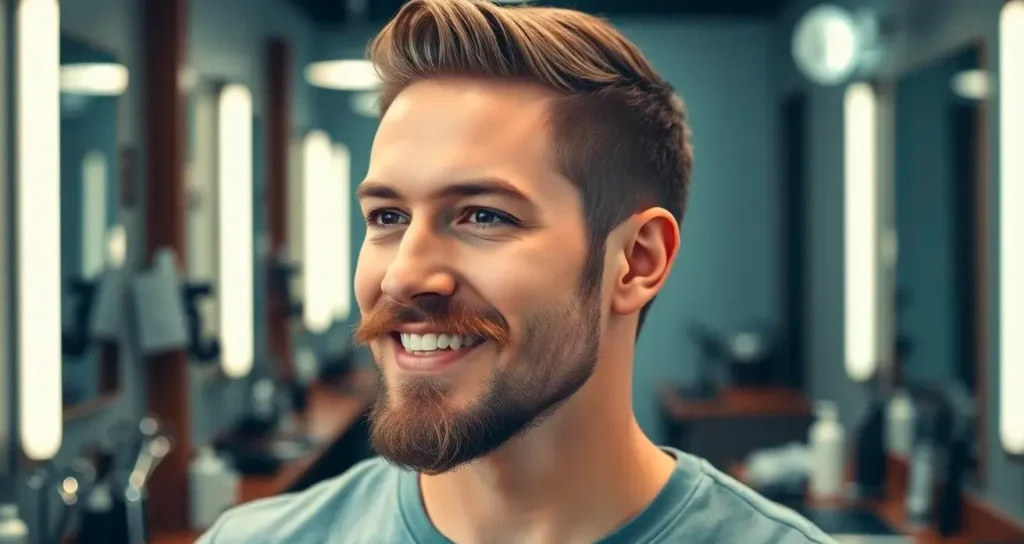
Short, tidy, and closely trimmed, the corporate beard adds just enough density to the jaw and chin to balance a heart-shaped face without looking heavy or unkempt. It’s a strong pick for anyone in a professional environment who still wants the balancing effect of a fuller style.
Why it works: Even a short, even length across the jaw adds enough visual width to soften a pointed chin. Best for: Office environments, client-facing roles, or anyone who prefers low-maintenance grooming. Styling difficulty: Low to moderate.
Details on lengths and edge-ups for this style are in the corporate beard guide.
5. The Circle Beard (Done Correctly)
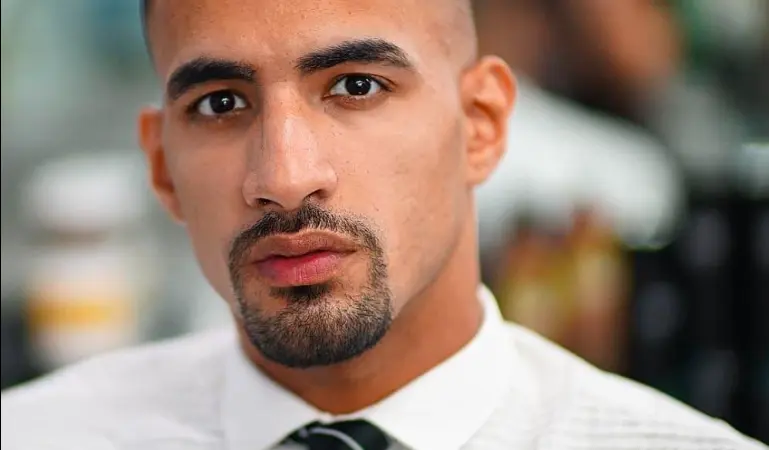
A circle beard can work for a heart face, but only if it’s grown slightly fuller than the classic tight version. A very thin, closely trimmed circle beard will actually emphasize a narrow chin instead of softening it, so the trick is keeping a bit more density around the mustache-to-chin connection.
Why it works: When grown with moderate fullness, it frames the mouth and adds shape to the chin without narrowing it further. Best for: Men with patchy jawline growth who still want facial hair with structure. Styling difficulty: High — this style depends entirely on clean, symmetrical trimming.
See the full breakdown in the circle beard guide before committing to it.
6. Thick Stubble
If you’re not ready for a full beard commitment, thick stubble (around 4–5mm) is a solid middle ground. It won’t add as much width as a full beard, but it softens the jawline enough to reduce the sharp taper toward the chin, especially when kept slightly fuller along the jaw than on the cheeks.
Why it works: Even short, dense hair growth adds texture and shadow that makes the jaw look less narrow. Best for: Men who want a quick grooming routine and don’t want to commit to a longer beard yet. Styling difficulty: Low.
The stubble beard guide covers the right length settings and trimmer guards to use.

7. The Goatee With Extended Jawline
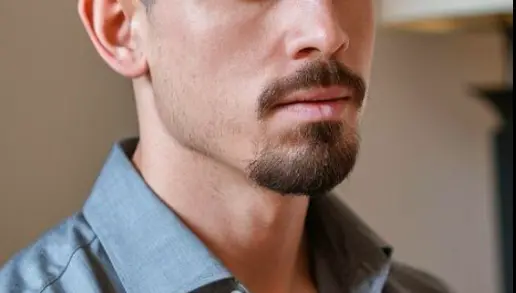
A goatee on its own tends to shrink the visual width of the chin, which isn’t ideal for a heart face. But when it’s extended slightly along the jawline instead of staying isolated at the chin, it adds the width a heart face needs while still keeping a defined, styled look.
Why it works: Extending the goatee outward compensates for the narrowing effect a standard goatee usually has. Best for: Men who like a shaped, deliberate style over a natural full beard. Styling difficulty: Moderate to high.
Style variations are covered in the goatee styles guide.
Quick Comparison Table
| Beard Style | Adds Jaw Width | Maintenance Level | Best Face Growth Type | Good for Beginners |
| Full Beard | High | Low-Moderate | Medium to thick | Yes |
| Boxed Beard | High | Moderate-High | Medium to thick | Somewhat |
| Balbo Beard | Moderate-High | High | Any, with shaping | No |
| Corporate Beard | Moderate | Low-Moderate | Medium | Yes |
| Circle Beard (fuller) | Moderate | High | Patchy to medium | No |
| Thick Stubble | Low-Moderate | Low | Any | Yes |
| Extended Goatee | Moderate | Moderate-High | Medium | Somewhat |
Beard Styles You Should Avoid (And Why)
Not every style flatters a heart-shaped face, and some genuinely work against it. These are the ones worth skipping or approaching with caution:
- Tight, narrow chin straps — they trace the natural taper of the chin instead of softening it, making the point more obvious.
- Very thin circle beards — a minimal circle beard shrinks the chin area even further.
- Beards with heavy cheek growth but a thin chin — this reverses the balance you actually want, adding width up top instead of down low.
- Long, narrow “pointed” beards — anything styled to a point at the chin exaggerates the shape you’re trying to soften.
If your beard grows in patchy along the jaw and you’re dealing with uneven density, it’s worth reading the patchy beard guide before choosing a style that depends on full, even coverage.
Heart Face vs. Other Face Shapes: A Quick Comparison
It helps to see how a heart face compares to shapes with different beard priorities, since some general beard advice online doesn’t actually specify a face shape at all.
| Face Shape | Main Goal | Best Style Direction |
| Heart | Add width and softness at the jaw/chin | Full, boxed, balbo, corporate |
| Round | Add length and angles to elongate the face | Best beard for round face styles with sharp edges |
| Oval | Maintain natural balance, most styles work | Best beard for oval face has more flexibility |
| Diamond | Soften sharp cheekbones, add jaw fullness | Best beard for diamond face shares some overlap with heart face advice |
If you’re unsure which category you actually fall into, comparing your measurements against a couple of these guides side by side is often more useful than relying on a single face shape quiz.
How to Grow and Shape Your Beard for a Heart Face
Once you’ve picked a direction, growing it out the right way makes a bigger difference than most men expect. Here’s a simple approach that works for most heart-shaped faces:
- Let it grow untouched for 4 weeks. Don’t trim the sides or shape anything during this period — you need to see your actual growth pattern before deciding on a final shape.
- Identify your density map. Check where your beard grows thickest and thinnest. Most heart faces need more fullness at the jaw and chin than at the cheeks, so work with what naturally fills in there.
- Define your neckline first. Set your neckline roughly one to two finger-widths above your Adam’s apple. This alone makes a huge difference in how balanced the beard looks.
- Shape the cheek line second. Keep cheek lines soft and slightly rounded rather than razor-sharp, unless you’re going for a boxed beard specifically.
- Build width at the jaw last. This is where you decide the final look — leave more length along the jawline and chin compared to the cheeks to create the width a heart face benefits from.
- Trim in small increments. Take off less than you think you need to. You can always trim more, but you can’t add length back.
Trimming and Maintenance Tips From a Barber’s Chair
Growing the right shape is half the job. Keeping it looking intentional is the other half, and this is where a lot of men lose the effect they worked for.
- Trim every 1–2 weeks once you’ve settled on a shape, using a comb attachment rather than freehanding it.
- Use a lower guard on the cheeks and a slightly higher guard along the jaw and chin to maintain the width effect.
- Wash your beard 2–3 times a week with a proper beard wash rather than regular shampoo, which tends to dry out facial hair over time.
- Apply beard oil daily, especially in the first few months, since new growth is often coarser and drier than the hair on your scalp.
- Comb before trimming, not after. Beard hair sits differently depending on direction, and combing first prevents uneven cuts.
- Get a professional shape-up every 4–6 weeks even if you maintain it yourself at home. A barber can catch asymmetry you won’t notice in a mirror.
For a broader maintenance routine covering washing, conditioning, and long-term beard health, the beard care guide is worth bookmarking alongside this one.
Common Mistakes Men With Heart Faces Make
- Copying a style without checking their own face shape first. A beard that works for a square jaw can look completely wrong on a tapered one.
- Keeping the cheeks too full. This adds width to the part of the face that’s already wide, working against the balance you want.
- Trimming too early. Shaping a beard before it’s fully grown in often leads to an uneven final result.
- Ignoring the mustache. A thin or poorly shaped mustache can throw off the whole balance, even if the beard itself is well-shaped.
- Skipping neckline maintenance. A messy neckline undercuts even a well-grown beard and makes the whole style look unintentional.
Realistic Expectations: What a Beard Can and Can’t Fix
A beard can shift the visual balance of your face significantly, but it won’t change your actual bone structure. If your forehead is considerably wider than your jaw, the goal is to reduce that contrast, not eliminate it completely. Most men see a noticeable improvement in perceived balance within 8–12 weeks of consistent growth and shaping, though exact timelines depend on your natural growth rate and density.
It’s also worth remembering that beard growth patterns are largely genetic. According to the American Academy of Dermatology, hair growth cycles and density are influenced by genetics, hormones, and age, which is why two men following the same routine can see different results. If you’re dealing with unusually slow or patchy growth, it’s reasonable to talk to a dermatologist rather than assume a product or routine is failing you.
Frequently Asked Questions
What is the best beard for heart face shape? The best beard for heart face shape is one that adds width and fullness around the jaw and chin, such as a full beard, boxed beard, balbo, or corporate beard. These styles balance a wider forehead with a fuller lower jaw.
Can a heart-shaped face grow a full beard? Yes. A full beard is actually one of the strongest options for a heart-shaped face because it adds the jaw and chin width that this face shape naturally lacks.
Does a goatee suit a heart face? A standard goatee can narrow the chin further, which isn’t ideal. Extending it slightly along the jawline works better for a heart-shaped face than a tight, isolated goatee.
Is a circle beard good for a heart-shaped face? Only if it’s grown slightly fuller than the classic tight version. A very thin circle beard tends to emphasize a narrow chin instead of softening it.
What beard styles should heart-shaped faces avoid? Avoid tight chin straps, very thin circle beards, and any style with heavy cheek growth paired with a thin chin, since these exaggerate the natural taper of a heart face.
How long does it take to grow a beard for a heart face shape? Most men need at least 4–6 weeks of uninterrupted growth to see their density pattern clearly, with a fully shaped result usually taking 8–12 weeks.
Does stubble work for a heart-shaped face? Thick stubble, especially kept slightly fuller along the jaw, can soften the taper of a heart face, though it won’t add as much width as a longer beard.
What’s the difference between styling a heart face and a diamond face? Both benefit from added jaw fullness, but a diamond face usually has a narrower forehead and wider cheekbones, while a heart face has the widest point at the forehead. The beard goal overlaps, but the starting proportions differ.
Should I trim my beard shorter on the cheeks for a heart face? Generally, yes. Keeping less density on the cheeks and more along the jaw and chin helps maintain the balancing effect that works best for this face shape.
Can facial hair actually change how my face looks? Facial hair changes the visual perception of proportion through added shadow, width, and shape, but it doesn’t alter your underlying bone structure. The effect is cosmetic, not physical.
What if my beard grows in patchy along the jawline? Patchy growth is common and often improves with time and proper care. In the meantime, styles that rely less on full jaw coverage, like a well-maintained stubble or corporate beard, tend to work better than styles needing dense, even growth.
Is a mustache necessary with a heart-face beard? Not necessary, but a well-shaped mustache adds balance to the upper lip area and complements most of the styles recommended here, especially the balbo and full beard.
How often should I get my beard professionally shaped? Every 4–6 weeks is a reasonable interval for most men, even if you’re maintaining the beard yourself at home between visits.
Does face shape change the way I should apply beard oil or balm? No, application technique stays the same regardless of face shape. What changes is the trimming and shaping approach, not the product routine itself.
What’s the quickest way to check if I have a heart-shaped face? Compare the width of your forehead, cheekbones, and jaw in a mirror. If your forehead is clearly the widest and your chin is the narrowest, you likely have a heart-shaped face.