 By Bread Styles Team
If short beards are the easy starting point and long beards are the big commitment, medium beard styles are where most men actually end up living long-term — and for good reason. Medium length gives you enough presence to look genuinely bearded rather than just unshaven, without demanding the daily conditioning routine and months of patience a long beard requires. It’s the length where most of the classic, instantly recognizable beard styles actually exist.
The tricky part with medium beard styles isn’t growing them — most men can get there in two to three months. It’s shaping and maintaining them well enough that they read as deliberate rather than simply “stopped trimming a while ago.” A medium beard sits in a length range where both volume and precision matter, which means the maintenance routine needs to do a bit more work than it would for short stubble or a low-effort long beard.
This guide covers every major medium beard styles, who each one suits, how to grow and shape them properly, and the maintenance habits that separate a sharp medium beard from a shapeless one. By the end, you’ll know:
- The defining length range and key types of medium beard styles
- Which medium beard styles suits your face shape and hair type
- A realistic growth timeline and shaping approach
- The exact tools and products needed for upkeep at this length
- Common mistakes that make medium beards look messy instead of styled
Let’s start with what actually counts as “medium” length.
Table of Contents
1. What Counts as a Medium Beard?
In barbering terms, a medium beard generally falls between roughly half an inch and three inches in length. Anything shorter sits in short beard or stubble territory, while anything beyond three to four inches typically moves into long beard styles like the Garibaldi or Bandholz.
This range covers most of the styles people picture when they think “classic beard” — the full beard, the ducktail, and the bushy beard all live comfortably within medium length, even though each has a distinct shape.
Read More About Types Of Beard Styles: https://beardstyles.net/types-of-beard-styles/
2. Why Medium Beard Styles Are the Most Popular Length
Medium length earns its popularity for a few practical reasons:
- Achievable growth time. Most men reach a fully filled-in medium beard within two to three months, far faster than the four-to-six-month commitment of a long beard.
- Enough volume to shape. Unlike stubble, there’s enough length to create real definition — a taper, a rounded full shape, or a more natural bushy look.
- Manageable daily maintenance. It requires more care than short stubble but significantly less conditioning and detangling than long, flowing styles.
- Broad face-shape compatibility. Most medium styles can be adjusted with shaping to suit a wide range of face shapes, more so than some short or long styles tied to a specific length.
The trade-off is that medium beards demand more shaping decisions than shorter styles — there’s enough hair to actually have a defined shape, which means neglecting it shows more clearly than neglecting stubble would.
Read More About Short Beard Styles: https://beardstyles.net/short-beard-styles/
3. Types of Medium Beard Styles
Classic Full Beard
An evenly grown beard covering the cheeks, jaw, and chin, blending into a mustache, typically kept between one and two inches.
Styling difficulty: Medium. Maintenance level: Medium — needs daily brushing and weekly shaping. Best for: Oval, diamond, and heart-shaped faces. Who should avoid it: Men with very patchy cheek growth, since a full beard’s even coverage exposes inconsistency more than a goatee or chin-focused style would.
Ducktail Beard
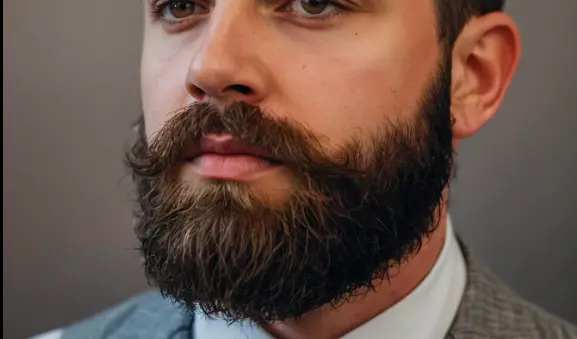
A beard that tapers to a defined point at the chin, with fuller width through the cheeks narrowing toward the bottom.
Styling difficulty: Medium-high. Maintenance level: Medium-high — the point needs trimming every 1–2 weeks to stay sharp. Best for: Square, round, and oval faces. See our full ducktail beard guide for a detailed trimming walkthrough.
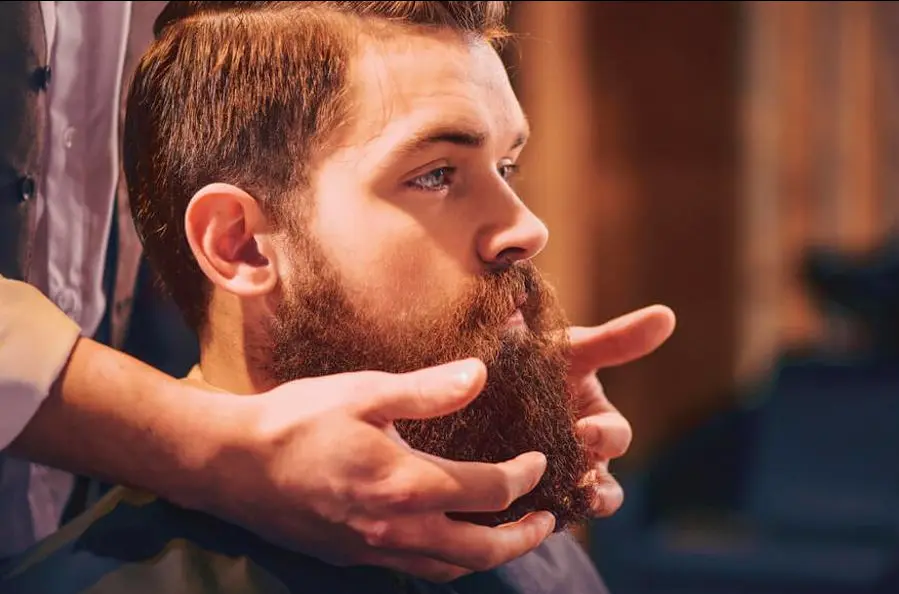
Bushy Beard
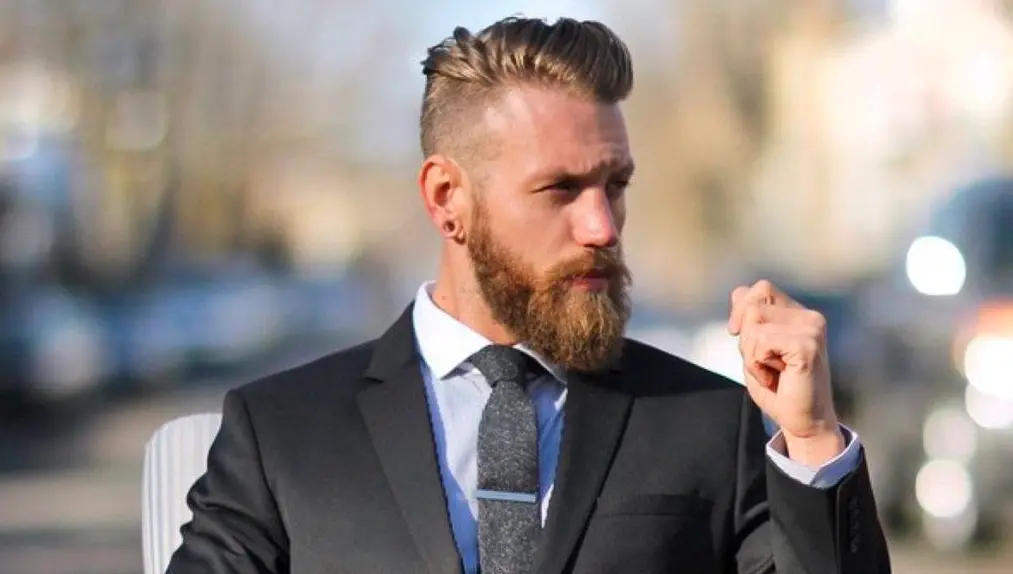
A fuller, less structured beard with minimal shaping and a more natural, voluminous appearance, generally kept in the one-and-a-half to two-and-a-half-inch range.
Styling difficulty: Low-shaping, but high-care. Maintenance level: Medium — needs conditioning to avoid frizz and tangling. Best for: Long or narrow faces that benefit from added width.
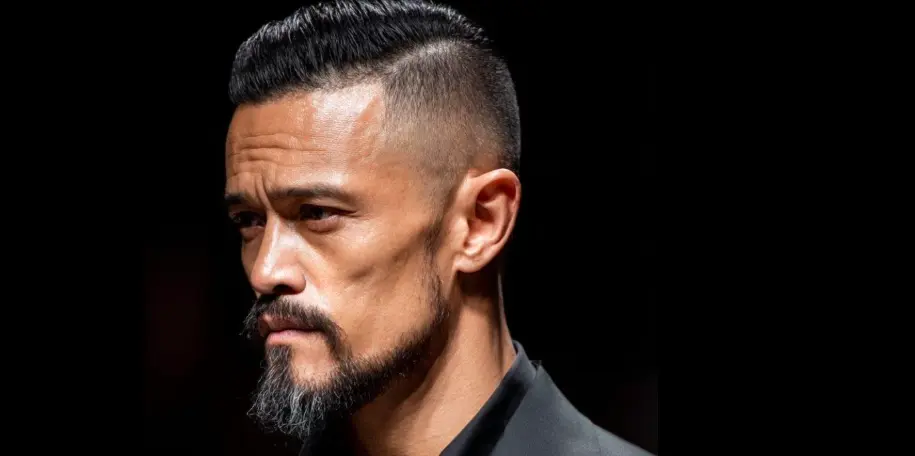
Extended Goatee
A goatee connected by a thin line along the jaw to the sideburns, with the cheeks themselves kept bare or very lightly stubbled, often grown to a slightly fuller medium length for extra presence.
Styling difficulty: Medium. Maintenance level: Medium-high — the connecting line needs frequent, precise trimming. Best for: Round and square faces.
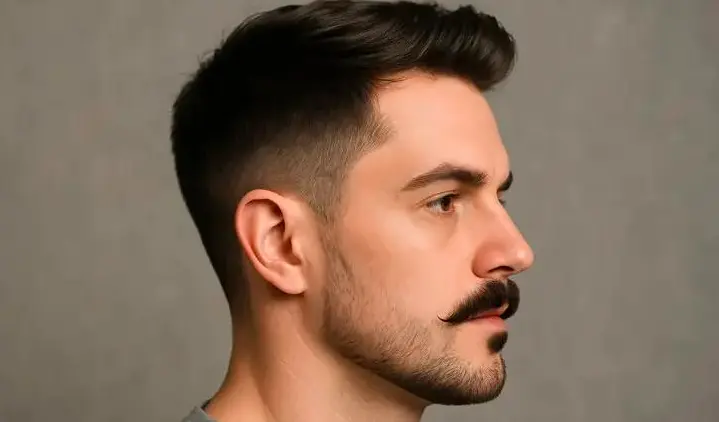
Hipster Beard (Short to Medium Variation)
A loosely shaped beard with soft, natural lines, generally kept in the lower medium range and often paired with a textured haircut.
Styling difficulty: Low-medium. Maintenance level: Medium — focuses more on conditioning than precise lines. Best for: Most face shapes, since the relaxed structure is forgiving of minor asymmetry.
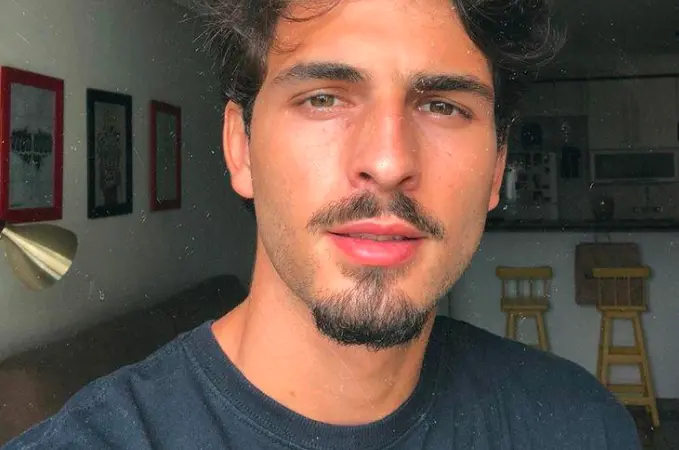
Short French Beard (Slightly Grown)
A narrow strip of beard outlining the jaw and chin, connected to a mustache, grown slightly past stubble length into the lower medium range for a bit more visible presence.
Styling difficulty: High. Maintenance level: High — thin lines need frequent, precise edging even as overall length increases. Best for: Oval and long faces.
Read More About Long Beard Styles: https://beardstyles.net/long-beard-styles/
4. Medium Beard Styles by Face Shape
| Face Shape | Best Medium Beard Styles | Why It Works |
| Round | Ducktail beard, extended goatee | Adds visual length and angularity, breaking up the natural curve of the jaw |
| Square | Classic full beard, ducktail beard | Strong jawline supports added volume without overwhelming proportions |
| Oval | Almost any medium style | Naturally balanced proportions suit most lengths and shapes |
| Long/Narrow | Bushy beard, hipster beard | Adds width through the cheeks without extending length further |
| Diamond | Classic full beard, short French beard | Balances a narrow chin and forehead |
| Heart | Classic full beard | Adds width at the jaw while tapering naturally below |
For more detailed, face-shape-specific recommendations, see our guides on the best beard for a round face and the best beard for an oval face.
Read More About Goatee Styles: https://beardstyles.net/goatee-styles/
5. Medium Beard Styles by Hair Type
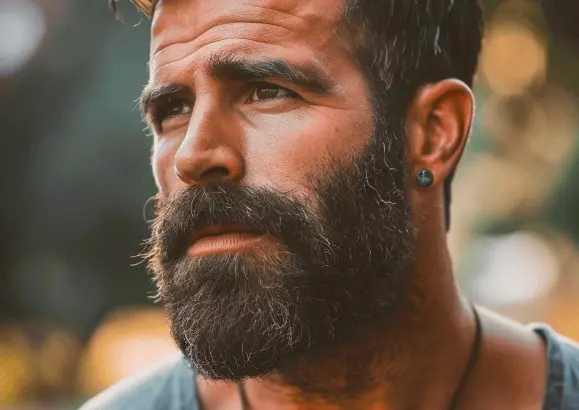
Thick, Coarse Hair
Suits nearly every medium style listed above, including the classic full beard and ducktail, since coarse hair holds both volume and defined lines well.
Fine, Straight Hair
Can look less full in volume-dependent styles like the bushy beard. A more structured option, like the classic full beard or ducktail, often reads as more deliberate on fine hair.

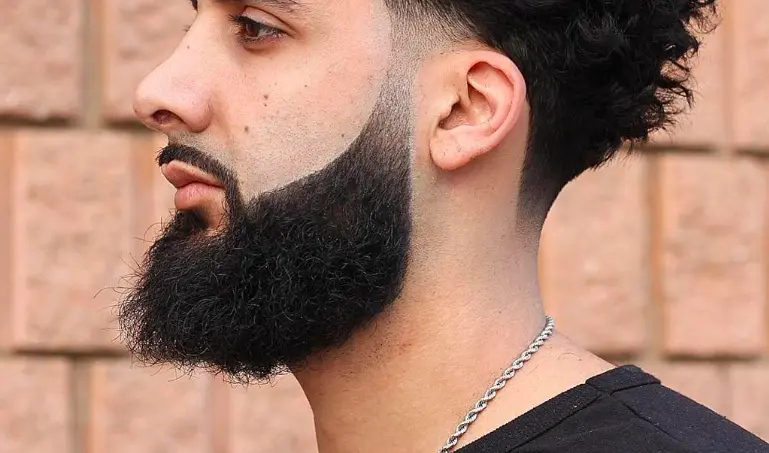
Curly or Coily Hair
Naturally adds density, suiting fuller styles like the bushy beard particularly well. Regular conditioning and a wide-tooth comb help manage tangling, which becomes more noticeable at medium length than at short stubble lengths.
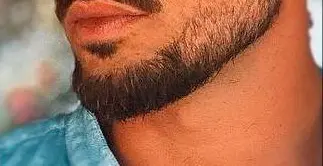
Patchy Growth
Heavy stubble-adjacent options like the extended goatee or a carefully shaped chin strap tend to be more forgiving than a fully connected classic full beard if your cheek growth is significantly uneven.
Read More About Stubble Beard: https://beardstyles.net/stubble-beard/
6. Medium Beard Growth Timeline
| Timeframe | What to Expect |
| Weeks 1–2 | Stubble to short-beard length; itchiness is common during this stage |
| Weeks 3–4 | Patchy zones may still be visible; avoid judging the beard’s final shape yet |
| Weeks 5–8 | Beard reaches the lower medium range; shape starts becoming visible |
| Months 2–3 | Full medium length achieved for most men; ideal time for final shaping decisions |
Expert tip: Most barbers recommend waiting until at least week four before any major shaping, since early growth often looks more uneven than the beard’s eventual settled pattern.
Read More About Best Beard For Round Face: https://beardstyles.net/best-beard-for-round-face/
7. How to Trim and Shape a Medium Beard
- Grow for at least 4–6 weeks before major shaping. You need enough length and density to properly assess your natural growth pattern.
- Identify your target style. Decide whether you want an even, classic full beard shape, a tapered ducktail point, or a looser, natural bushy look.
- Define your neckline first. Set it just above the Adam’s apple as a foundational guide before shaping the rest.
- Shape the cheek line next. Keep it slightly higher than your natural growth line for a cleaner, more intentional boundary.
- Trim for your specific shape. For a ducktail, taper the sides toward a central chin point; for a classic full beard, maintain even length throughout; for a bushy beard, focus on length control rather than precise tapering.
- Blend the mustache into the rest of the beard. A disconnected or unevenly trimmed mustache disrupts an otherwise unified medium beard shape.
Realistic expectation: Most medium beard styles look fully shaped and intentional within 6–10 weeks of consistent growth and trimming.
Read More About Best Beard For Oval Face: https://beardstyles.net/best-beard-for-oval-face/
8. How to Maintain a Medium Beard
Daily
- Apply beard oil to keep hair soft and reduce itchiness, particularly important as length increases past stubble range
- Brush or comb to train growth direction and reduce tangling
Weekly
- Trim and clean up the neckline and cheek lines
- Touch up any shape-defining details, like a ducktail’s point or an extended goatee’s jawline connection
Every 2–4 Weeks
- Trim overall length to maintain consistency
- Reassess shape and symmetry, since medium beards can drift slightly uneven over time without regular correction
Skin Care
The skin underneath a medium beard benefits from a gentle beard wash 2–3 times a week rather than daily washing with regular shampoo, which can dry out both the hair and the skin underneath, particularly as length increases.
Read More About PatchyBeard: https://beardstyles.net/patchy-beard/
9. Tools and Products for Medium Beard Care
- Trimmer with adjustable guards — for overall length maintenance
- Detail trimmer or edger — for precise neckline, cheek-line, and shape-specific details like a ducktail point
- Beard comb — trains growth direction and helps check symmetry
- Beard brush (boar bristle) — distributes natural oils and reduces frizz, particularly useful at medium length
- Beard oil — essential for softening hair and reducing itchiness throughout the growth process
- Beard balm — provides light hold for shaping, especially useful for tapered or structured styles
- Beard wash — gentler than regular shampoo, helps prevent dryness
Read More About Balbo Beard: https://beardstyles.net/balbo-beard/
10. Medium Beard vs Short Beard: Which Should You Choose?
| Factor | Medium Beard | Short Beard |
| Growth time | 2–3 months | 1–4 weeks |
| Daily maintenance | Medium | Low |
| Styling complexity | Medium-high | Low-medium |
| Hides patchiness | Less effectively than short styles | Yes, generally well |
| Visual presence | Strong, more distinctive shapes available | Subtle, low-key |
| Best for first-time growers | With moderate patience | Yes, easiest starting point |
Bottom line: If you want more visual presence and styling options than stubble or a short boxed beard offers, but aren’t ready for the months-long commitment of a long beard, medium length is the practical middle ground.
Read More About Duktail Beard: https://beardstyles.net/ducktail-beard/
11. Medium Beard vs Long Beard: Which Should You Choose?
| Factor | Medium Beard | Long Beard |
| Growth time | 2–3 months | 4–6+ months |
| Daily maintenance | Medium | High |
| Workplace acceptance | Generally moderate to high | Lower, industry-dependent |
| Conditioning needs | Moderate | High |
| Styling complexity | Medium-high | High |
Bottom line: A medium beard offers most of the visual presence and styling variety of a long beard, with significantly less growth time and daily conditioning required.
Read More About Van Dyke Beard: https://beardstyles.net/van-dyke-beard/
12. Is a Medium Beard Professional?
Most medium beard styles read as professional, provided they’re well-shaped and consistently maintained.
Generally accepted in: Most modern offices, client-facing roles, creative industries, and tech. Worth checking dress codes for: Very conservative law, finance, or government roles, where a shorter, more tightly controlled corporate beard style may be the safer default.
Professional barber advice: A classic full beard, kept neatly trimmed with clean lines, is generally the most universally professional-reading medium style, while more dramatic shapes like a sharply pointed ducktail may read as slightly more casual in very traditional settings.
Read More About Circle Beard: https://beardstyles.net/circle-beard/
13. Common Mistakes With Medium Beard Styles
- Shaping too early — trimming a defined style before 4–6 weeks of growth often results in an uneven final shape
- Skipping the neckline — an undefined neckline makes any medium beard look less intentional, regardless of how well the rest is shaped
- Letting the mustache go unblended — a disconnected or unevenly trimmed mustache disrupts an otherwise cohesive medium beard shape
- Neglecting conditioning — medium-length hair is more prone to dryness and frizz than short stubble, and skipping beard oil makes this more visible
- Choosing a fully connected style despite significant patchiness — a classic full beard exposes uneven density more than a goatee-based alternative would
- Inconsistent trimming intervals — medium beards drift out of shape faster than people expect; waiting too long between trims undoes careful initial shaping
Read More About Corporate Beard: https://beardstyles.net/corporate-beard/
14. Common Myths About Medium Beards
Myth: Medium beards don’t need much maintenance since they’re not long. They actually require regular shaping and conditioning — letting a medium beard simply grow without trimming often leads to a shapeless, unintentional look.
Myth: All medium beard styles suit every face shape equally. Each style has a different best-fit range; a ducktail and a bushy beard, for example, suit noticeably different face shapes and hair types.
Myth: You need products specifically marketed as “beard growth” to reach medium length. Reaching medium length is primarily a matter of time and genetics; products affect hair and skin health rather than growth speed itself.
Myth: Medium beards always look messier than short or long styles. A well-shaped medium beard, with a defined neckline, cheek line, and consistent trimming schedule, reads as just as polished as any other length.
Read More About Beard Without Mustache: https://beardstyles.net/beard-without-mustache/
15. Who Should Avoid a Medium Beard
A medium beard isn’t the ideal choice for everyone:
- If your cheek growth is significantly patchy, a fully connected classic full beard at medium length may expose more unevenness than a goatee-based alternative
- If you’re not willing to commit to regular shaping every 1–2 weeks, a medium beard can drift into a shapeless, unintentional look faster than a short style would
- If your workplace requires a very conservative, short facial hair policy, a medium beard may exceed what’s considered appropriate, even when well-maintained
16. Conclusion
Medium beard styles occupy the sweet spot between low commitment and real visual presence. The classic full beard, ducktail, and bushy beard all live within this length range, each offering a genuinely different look while requiring a manageable two-to-three-month growth period rather than the months of patience a long beard demands.
If you’re starting out, give your beard at least four to six weeks before attempting any major shaping, invest in both a standard trimmer and a detail trimmer for precise lines, and build a consistent weekly maintenance routine. Done well, a medium beard offers more styling range than almost any other length while staying realistic to maintain day to day.
FAQ
1. What is considered a medium beard? A medium beard generally falls between half an inch and three inches in length, covering styles like the classic full beard, ducktail, and bushy beard.
2. How long does it take to grow a medium beard? Most medium beard styles take two to three months to reach a fully filled-in, shapeable length.
3. What’s the best medium beard styles for beginners? The classic full beard is often the easiest starting point, since it requires even growth rather than the precise tapering or lines needed for styles like the ducktail.
4. Which medium beard styles suits a round face? The ducktail beard and extended goatee both work well on round faces, adding visual length and breaking up the face’s natural curves.
5. Do medium beards need daily maintenance? Yes, to some degree — daily beard oil and occasional brushing help manage itchiness and frizz, though full trimming sessions are typically weekly rather than daily.
6. What’s the difference between a medium beard and a short beard? A medium beard is longer, generally between half an inch and three inches, offering more shaping options but requiring more conditioning than a short beard.
7. Can a medium beard work with patchy growth? It depends on the specific style — a classic full beard can expose significant patchiness, while a goatee-based or chin-focused medium style tends to be more forgiving.
8. Is a medium beard professional? Generally yes, particularly a well-trimmed classic full beard, though very conservative industries may prefer a shorter, more tightly controlled corporate beard style.
9. How often should I trim a medium beard? Most medium beard styles need a full trimming session every 2–4 weeks, with weekly touch-ups to the neckline and cheek lines in between.
10. What’s the best medium beard styles for a long face? A bushy beard or hipster beard, both of which add width through the cheeks, tend to work well for long or narrow face shapes.
11. Why does my medium beard look shapeless? This is usually caused by skipping regular shaping, neglecting the neckline and cheek lines, or letting the mustache go unblended into the rest of the beard.
12. Do I need beard balm for a medium beard? It’s not mandatory, but beard balm helps with light hold and shaping, particularly useful for structured styles like the ducktail.
13. What’s the easiest medium beard styles to maintain? A classic full beard with simple, even shaping generally requires less precision than tapered styles like the ducktail or thin lines like the extended goatee.
14. Can fine hair grow a good medium beard? Yes, though fine hair may look less full in volume-dependent styles like the bushy beard; a more structured style, like a classic full beard, often reads as fuller on fine hair.
15. Should I see a barber for my first medium beard shaping? A first professional shaping session is generally recommended, since establishing the right lines and proportions from the start makes ongoing self-maintenance significantly easier.