 By Bread Styles Team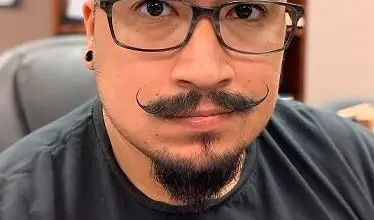
Van Dyke Beard Few beard styles carry as much history and instant recognizability as the Van Dyke beard. Named after the 17th-century Flemish painter Anthony van Dyck, whose self-portraits popularized the look, this style has survived centuries of changing facial hair trends largely because it does something most beards don’t: it adds sharp, deliberate definition through contrast rather than volume. A pointed chin beard, a disconnected mustache, and clean-shaven cheeks create a look that’s unmistakably stylized — closer to a fashion statement than a default growth pattern.
That same precision is exactly why the Van Dyke beard intimidates a lot of men who’d otherwise be drawn to it. Daily shaving of the cheeks, careful shaping of the chin point, and keeping the mustache visually separate from the beard all take more discipline than letting a beard grow naturally. Done right, though, it’s one of the most distinctive, face-flattering styles available, particularly for men with oval or diamond face shapes.
This guide covers everything: the exact definition of a Van Dyke beard, how it differs from a goatee, who it suits best, a full step-by-step trimming guide, and the small mistakes that make the difference between a sharp Van Dyke and one that looks like an unfinished goatee. By the end, you’ll know:
- What defines a classic Van Dyke beard versus modern variations
- Which face shapes and hair types it suits best
- How to grow and shape one from scratch
- The maintenance routine required to keep it looking sharp
- How it compares to similar styles like the goatee and Balbo
Let’s start with a clear definition.
Table of Contents
1. What Is a Van Dyke Beard?
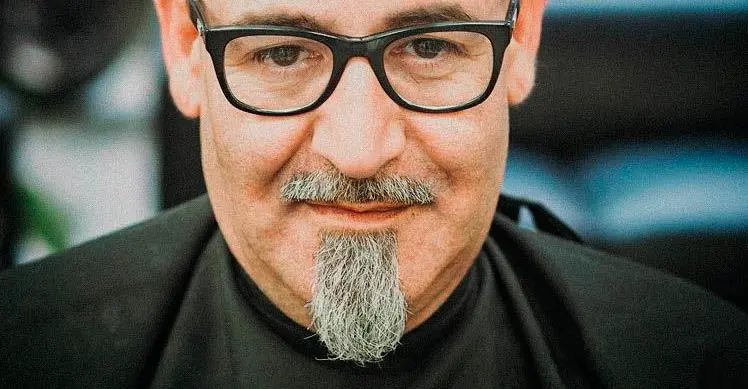
A Van Dyke beard is a style consisting of a pointed chin beard combined with a mustache that’s grown separately and not connected to the chin hair, while the cheeks are kept fully clean-shaven. The combination of a defined point, a distinct gap between the mustache and chin beard, and bare cheeks is what gives the Van Dyke its sharp, sculpted appearance.
Key defining features:
- A pointed, often narrow chin beard
- A mustache disconnected from the chin beard, typically with a visible gap
- Completely clean-shaven cheeks and jawline
- Sharp, precise lines throughout
This combination distinguishes the Van Dyke from a regular goatee, where the mustache and chin beard are often connected, and from a Balbo beard, which floats slightly higher off the jawline with a less pointed, more rounded or squared chin section.
Read More About Types Of Beard Styles: https://beardstyles.net/types-of-beard-styles/
2. The History Behind the Van Dyke Beard
The style takes its name from Anthony van Dyck, a Flemish Baroque painter known for portraits of European nobility in the 1600s, many of which depicted men wearing this distinctive pointed beard and disconnected mustache combination. The look became closely associated with the aristocracy and artistic circles of the period, and the name stuck within barbering well beyond its original era.
Knowing this history is useful for one practical reason: the Van Dyke is a well-established, internationally recognized style name. Walking into nearly any barbershop and asking for a “Van Dyke” will generally get you a clear, shared understanding of what you’re looking for, even if the exact proportions are adjusted to suit your face.
Read More About Short Beard Styles: https://beardstyles.net/short-beard-styles/
3. Van Dyke Beard Variations
Classic Van Dyke
The traditional version, featuring a narrow, pointed chin beard, a thin or moderately curled mustache, and a clear gap between the two sections.
Styling difficulty: High. Maintenance level: High — daily shaving of the cheeks is required. Best for: Oval and diamond face shapes.
Modern Van Dyke
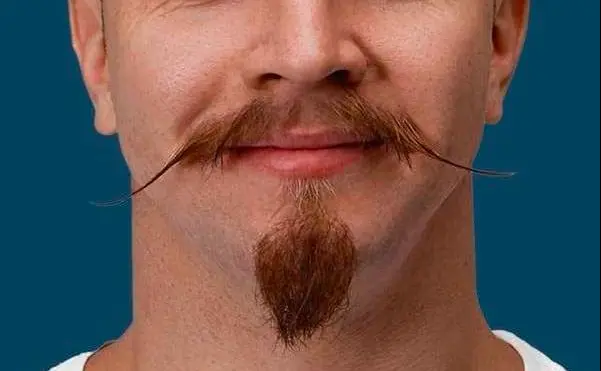
A slightly fuller take on the classic, often with a thicker mustache and a more squared or rounded chin section rather than a sharply narrow point.
Styling difficulty: Medium-high. Maintenance level: High. Best for: Square and oval faces; pairs well with contemporary haircuts.
Van Dyke Goatee
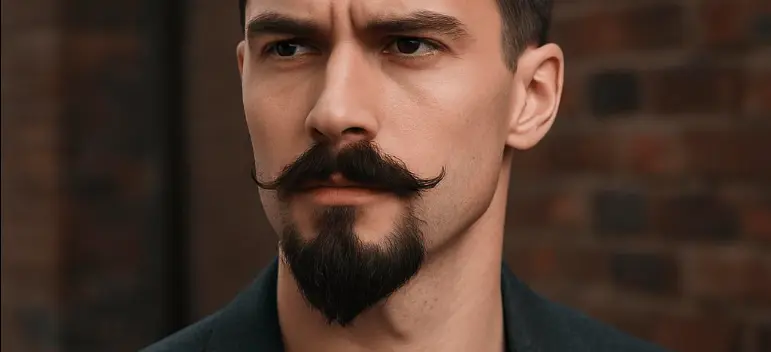
Sometimes used interchangeably with the standard Van Dyke, this term specifically emphasizes the goatee-like chin section combined with the signature disconnected mustache.
Styling difficulty: High. Maintenance level: High. Best for: Men who want a slightly more goatee-influenced shape while keeping the Van Dyke’s defining mustache gap.
Short Van Dyke
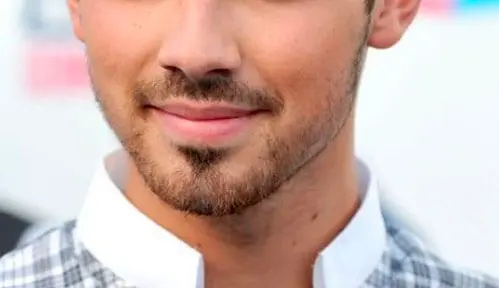
A scaled-down version with a smaller, tighter chin point and a closely trimmed mustache, reducing overall visual boldness.
Styling difficulty: Medium-high. Maintenance level: Medium-high. Best for: Men wanting a subtler take on the style, or those easing into facial hair styling for the first time.
Read More About Long Beard Styles: https://beardstyles.net/long-beard-styles/
4. Van Dyke Beard by Face Shape
| Face Shape | Suitability | Why |
| Oval | Excellent | Naturally balanced proportions suit the pointed, structured shape well |
| Diamond | Excellent | Adds definition and length to a narrow chin and forehead |
| Square | Good (modern variation) | A slightly fuller, less sharply pointed version complements strong jaw angles |
| Round | Use with caution | The pointed chin adds helpful length, but the overall sparse coverage can look slightly disconnected without careful shaping |
| Long/Narrow | Use with caution | The pointed taper can over-elongate an already long face |
| Heart | Good | Adds definition at the chin while balancing a narrower jawline |
A barber’s input is particularly valuable for round and long face shapes, since the Van Dyke’s structure needs more careful proportion balancing than more forgiving, fuller styles.
Read More About Goatee Styles: https://beardstyles.net/goatee-styles/
5. Van Dyke Beard by Hair Type
Thick, Coarse Hair
Holds the Van Dyke’s sharp lines and defined point especially well, since coarse hair resists drifting out of shape between trims.
Fine, Straight Hair
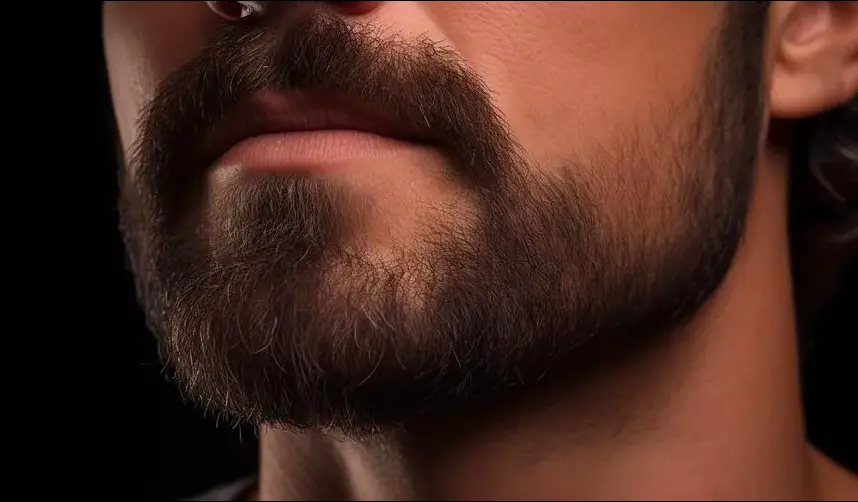
Can make the chin point and mustache look thinner or less deliberate. A modern, slightly fuller variation generally reads better on fine hair than an extremely narrow classic version.

Curly or Coily Hair
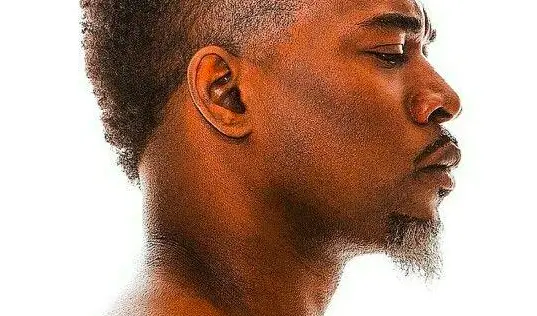
Can work well, though curl pattern sometimes blurs the sharpness the style depends on. More frequent trimming helps maintain the defined point and mustache shape.
Patchy Growth
The Van Dyke is moderately forgiving of cheek patchiness, since the cheeks are shaved anyway. However, it depends on reasonably even growth specifically in the chin and mustache areas — significant patchiness there is much more noticeable than it would be in a fuller, less structured beard style.
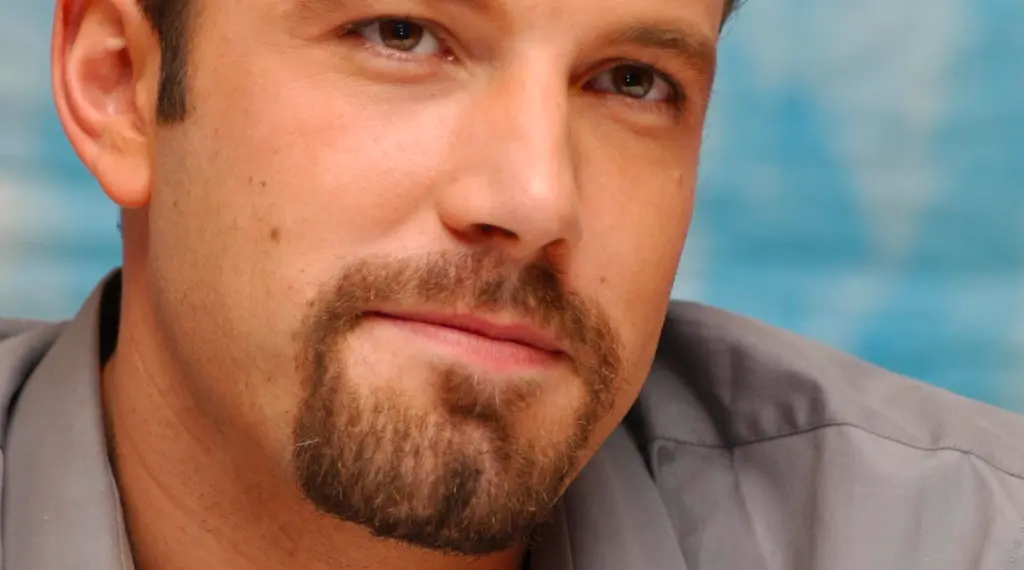
Read More About Stubble Beard: https://beardstyles.net/stubble-beard/
6. How to Grow and Trim a Van Dyke Beard (Step by Step)
- Grow everything out for 3–4 weeks. You need enough length and density across the chin, mustache, and cheeks to properly assess your shape options.
- Shave the cheeks and jawline first. Removing this hair immediately reveals the basic shape you’ll be working with.
- Shape the chin into a point. Trim the sides of the chin beard progressively shorter, working toward a narrow or moderately rounded point depending on your chosen variation.
- Create a clean gap beneath the nose. Trim a clear space between the mustache and chin beard — this disconnection is the single most defining feature of the style.
- Shape the mustache separately. Depending on your preference, this can range from a thin, closely trimmed line to a fuller, slightly curled shape.
- Refine all edges with a detail trimmer or razor. Precision here is what separates a sharp Van Dyke from a half-grown, unintentional-looking beard.
- Check symmetry from multiple angles. Asymmetry is far more noticeable on a structured, pointed style like this than on a fuller, more natural beard.
Realistic expectation: A well-shaped Van Dyke typically takes 4–6 weeks to look fully intentional, with ongoing precision trimming required indefinitely to maintain the shape.
Read More About Best Beard For Round Face: https://beardstyles.net/best-beard-for-round-face/
7. Van Dyke vs Goatee: What’s the Difference?
| Factor | Van Dyke Beard | Goatee |
| Mustache connection | Disconnected, with a visible gap | Often connected directly to the chin beard |
| Chin shape | Pointed | Rounded or pointed, depending on variation |
| Cheek treatment | Always shaved clean | Always shaved clean |
| Styling difficulty | High | Low-medium |
| Maintenance frequency | High | Medium |
| Best for | Men wanting a sharply defined, historic look | Men wanting a simpler, lower-maintenance chin-focused style |
Bottom line: A goatee is generally the easier, lower-maintenance entry point into chin-focused facial hair, while the Van Dyke offers a more dramatic, historically distinctive look at the cost of significantly more daily upkeep.
Read More About Best Beard For Oval Face: https://beardstyles.net/best-beard-for-oval-face/
8. Van Dyke vs Balbo: What’s the Difference?
| Factor | Van Dyke Beard | Balbo Beard |
| Chin shape | Sharply pointed | Rounded or squared, floating above the jaw |
| Mustache | Disconnected, narrow gap | Disconnected, often slightly wider gap |
| Jawline coverage | None — cheeks fully shaved | None — cheeks fully shaved, but the chin section sits slightly higher off the jaw |
| Overall impression | Sharp, historic, pointed | Structured, modern, geometric |
Bottom line: Both styles share the disconnected mustache concept, but the Van Dyke leans into a sharp point while the Balbo favors a more squared, floating chin section — the choice often comes down to personal preference and face shape.
Read More About Balbo Beard: https://beardstyles.net/balbo-beard/
9. How to Maintain a Van Dyke Beard
Daily
- Shave the cheeks and jawline to maintain the clean, disconnected look central to the style
- Apply a small amount of beard oil to the chin point and mustache to keep them soft
Every 1–2 Days
- Touch up the gap between the mustache and chin beard, which blurs quickly even with minimal regrowth
- Check the chin point for any drift in shape
Weekly
- Trim the chin point to maintain its defined shape
- Reassess and refine the mustache shape and length
Skin Care
Frequent shaving close to the same lines increases the risk of irritation and ingrown hairs, particularly with coarse or curly hair. A proper pre-shave routine and shaving with the grain significantly reduce this risk.
Read More About Patchy Beard: https://beardstyles.net/patchy-beard/
10. Tools You Need for a Van Dyke Beard
- Detail trimmer or edger — essential for the chin point and the gap beneath the mustache
- Razor — needed for keeping the cheeks and jawline completely clean
- Mustache scissors or comb — for shaping the mustache independently of the chin beard
- Beard oil — softens chin hair and keeps it manageable
- Shaving cream or gel — reduces irritation on frequently shaved skin
- Mirror with strong, even lighting — critical for checking the symmetry of the chin point and mustache gap
11. Is the Van Dyke Beard Professional?
The Van Dyke beard is bold and historically distinctive, which means it reads as more stylized than a simple corporate beard or short boxed beard.
Generally accepted in: Creative industries, academic and artistic professions, modern or relaxed corporate environments. Worth checking dress codes for: Conservative law, finance, government, or client-facing roles in traditional industries, where simpler styles are often the safer default.
Professional barber advice: A modern, slightly fuller Van Dyke variation tends to read as more contemporary and less costume-like than an extremely narrow, sharply pointed classic version, which can help it fit more comfortably into professional settings.
12. Common Mistakes With the Van Dyke Beard
- Letting the cheeks grow out between shaves — undermines the clean, disconnected look that defines the entire style
- Making the mustache-to-chin gap too narrow — risks the style looking like an incomplete goatee rather than an intentional Van Dyke
- Over-narrowing the chin point — can look costume-like or unnatural rather than deliberately styled
- Asymmetrical shaping — far more visible on a Van Dyke than on fuller, less structured beard styles
- Skipping daily shaving upkeep — this is a high-maintenance style, and treating it casually quickly leads to a blurred, unintentional result
- Choosing a Van Dyke despite significant chin or mustache patchiness — the style depends on reasonably even density in those specific zones to look deliberate
Read More About Ducktail Beard: https://beardstyles.net/ducktail-beard/
13. Common Myths About the Van Dyke Beard
Myth: The Van Dyke is the same as a regular goatee. While related, the Van Dyke’s defining disconnection between the mustache and chin beard, along with its pointed shape, sets it apart from most standard goatee variations.
Myth: The Van Dyke is easy to maintain because it’s not a full beard. It’s actually one of the higher-maintenance styles on this site, requiring near-daily shaving and precise edging.
Myth: A Van Dyke only works with a thin, narrow mustache. Modern variations often use a fuller mustache shape, which can suit a broader range of faces than the historically narrow classic version.
Myth: The Van Dyke only suits artistic or eccentric personal styles. While historically associated with painters and aristocracy, the modern version is worn across a wide range of professions and personal styles today.
14. Who Should Avoid a Van Dyke Beard
The Van Dyke isn’t the easiest entry point into facial hair styling. Consider a simpler style first if:
- You’re new to precise beard grooming and not yet comfortable with detail trimming
- Your chin or mustache growth is significantly patchy, since the style depends on reasonably even density in those areas
- You’re not prepared for near-daily shaving of the cheeks and jawline
- Your workplace has a conservative dress code that favors simpler facial hair styles over bold, historically distinctive ones
15. Conclusion
The Van Dyke beard has held its place across centuries of facial hair trends for a good reason: the combination of a pointed chin, a disconnected mustache, and clean-shaven cheeks creates a genuinely distinctive, sharp look that few other styles replicate. It rewards precision and daily upkeep far more than it rewards simply letting hair grow.
If the maintenance commitment feels like a lot to start with, a classic goatee shares some of the same chin-focused appeal with considerably less daily shaving required. If you’re ready to commit to the Van Dyke itself, invest in a reliable detail trimmer, get a barber’s input on your first shaping session, and expect a few extra minutes of upkeep each day to keep the lines as sharp as the style demands.
FAQ
1. What is a Van Dyke beard? A Van Dyke beard is a style featuring a pointed chin beard, a mustache disconnected from the chin hair, and completely clean-shaven cheeks.
2. Is a Van Dyke beard the same as a goatee? No — while related, a Van Dyke specifically features a disconnected mustache with a visible gap and a pointed chin shape, whereas many goatee styles connect the mustache directly to the chin hair.
3. Where does the Van Dyke beard name come from? It’s named after Anthony van Dyck, a 17th-century Flemish painter whose portraits popularized this distinctive pointed beard and mustache combination.
4. Is the Van Dyke beard hard to maintain? Yes, relatively — it requires near-daily shaving of the cheeks and jawline, along with precise, frequent edging of the chin point and mustache gap.
5. What face shape suits a Van Dyke beard best? Oval and diamond face shapes suit the classic Van Dyke particularly well, though a fuller, modern variation can also work on square faces.
6. How long does it take to grow a Van Dyke beard? Most men need 3–4 weeks of growth before shaping, with a fully intentional-looking result typically achieved within 4–6 weeks.
7. What’s the difference between a Van Dyke and a Balbo beard? A Van Dyke features a sharply pointed chin shape, while a Balbo typically has a more rounded or squared chin section that floats slightly higher above the jawline.
8. Is a Van Dyke beard professional enough for work? It’s generally accepted in creative and modern professional environments, but very conservative industries may prefer simpler styles like a corporate beard or classic goatee.
9. How do I trim a Van Dyke beard myself? Shave the cheeks and jawline first, shape the chin into a point, create a clear gap beneath the nose, shape the mustache separately, and refine all edges with a detail trimmer.
10. Can a Van Dyke beard work with patchy facial hair? It’s moderately forgiving of cheek patchiness since the cheeks are shaved, but it requires fairly even growth specifically within the chin and mustache sections.
11. What tools do I need for a Van Dyke beard? A detail trimmer, a razor, mustache scissors or a comb, beard oil, and a mirror with strong lighting are the essential tools for maintaining a Van Dyke.
12. How often should I shave around a Van Dyke beard? Most men need to shave the cheeks and jawline daily or near-daily to maintain the clean, disconnected look that defines the style.
13. Is the Van Dyke beard suited to thick or fine hair? It generally works best with thick, coarse hair, which holds sharp lines well; fine hair can still work but may benefit from a fuller, modern variation to avoid looking thin.
14. What’s the modern version of the Van Dyke beard called? Often simply referred to as the “modern Van Dyke,” it features a fuller mustache and a less sharply pointed, sometimes more squared chin shape compared to the classic version.
15. Why does my Van Dyke beard look messy even when I trim it? This is usually caused by an inconsistent gap between the mustache and chin beard, regrowth on the cheeks between shaves, or asymmetrical shaping of the chin point.