 By Bread Styles Team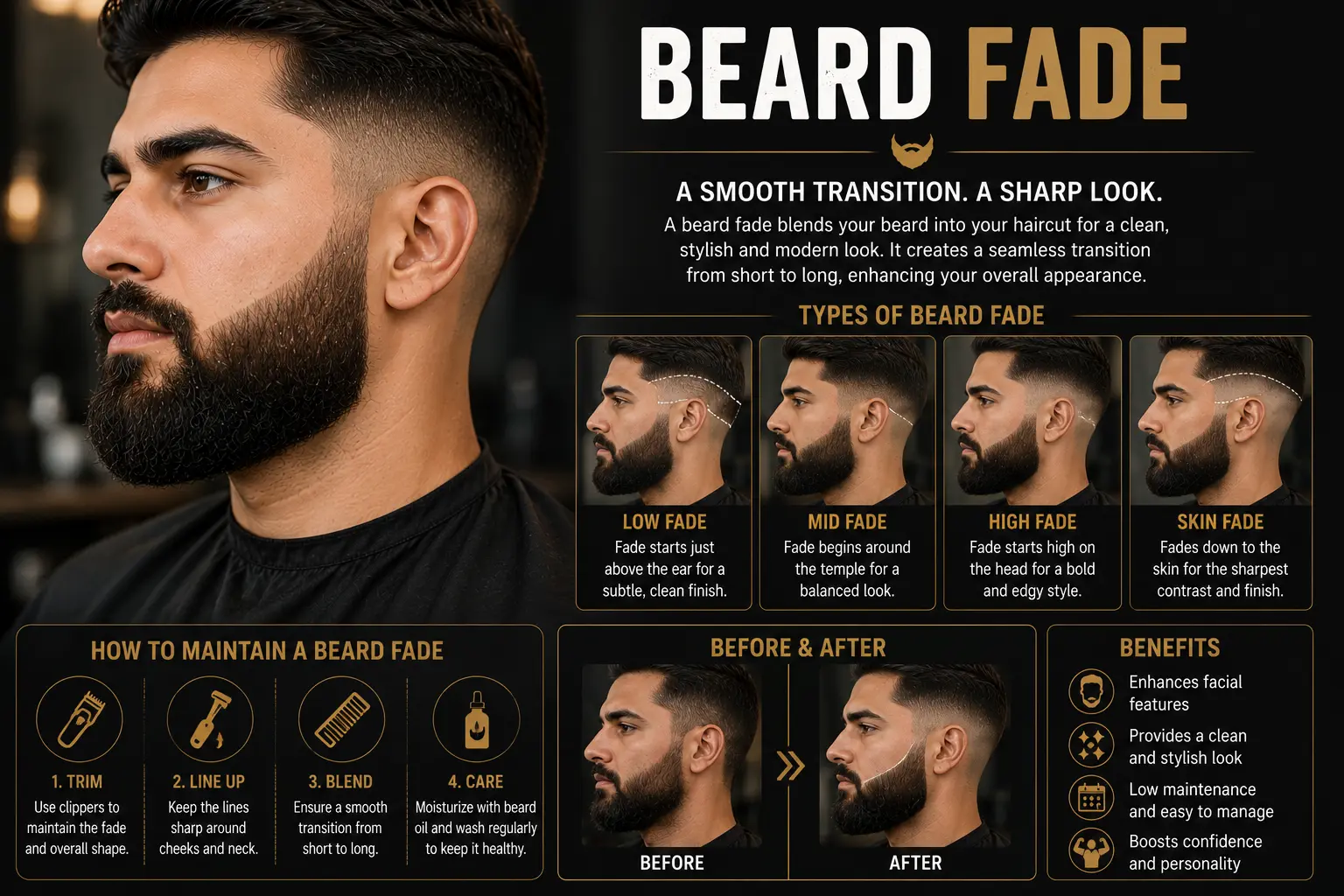
A beard fade is a completely different skill from a beard line up, even though people mix the two up constantly. A line up is about sharp edges. A fade is about graduated length — hair that transitions smoothly from short at the edges to fuller toward the chin, without any visible line where one guard length stops and another starts. Done right, it looks seamless. Done wrong, it looks like someone gave up halfway through a haircut.
This guide breaks down the different types of beard fades, the actual clipper guard numbers barbers use, and the blending technique that makes a fade beard look intentional instead of choppy. It’s written the way a barber would talk you through it chairside, not as a vague style overview.
Table of Contents
What a Beard Fade Actually Is
Quick answer: A beard fade is a gradual transition in facial hair length, typically shortest at the sideburns or cheekbones and gradually longer toward the chin and jawline, created by blending several clipper guard lengths together so there’s no visible line between them.
The key word is gradual. A basic trim changes length; a fade changes length in graduated steps that blend into each other. This is also why a fade takes noticeably more time and skill than a standard beard trim — you’re not making one cut, you’re making several overlapping ones that read as a single smooth transition.
Types of Beard Fades
Not every fade beard looks the same, and where the fade starts changes the whole effect.
| Fade Type | Where It Starts | Best For |
| Low Fade | Just above the ear, close to the jawline | Subtle, professional look; works well for office beard styles |
| Mid Fade | Roughly mid-sideburn height | Balanced, versatile; the most commonly requested option |
| High Fade | Higher up near the temple | Bold, modern contrast; popular in hipster beard looks |
| Drop Fade | Curves downward behind the ear | Softer transition into longer beard length at the back |
| Skin/Bald Fade | Fades down to bare skin before the beard begins | Sharpest possible contrast; needs frequent upkeep |
Choosing between these is mostly personal preference and how much contrast you want between short and long sections. A low fade reads as understated. A skin fade reads as deliberate and sharp, but it grows out fastest and needs the most frequent touch-ups.
Clipper Guard Numbers Explained
Fade trimming depends on understanding guard numbers, since the whole technique is about blending several lengths together.
| Guard Number | Approximate Length | Common Use in a Beard Fade |
| 0 (no guard) | Skin level | Starting point for a skin fade |
| 0.5–1 | 1.5–3mm | Shortest fade section, closest to the ear |
| 2 | 6mm | Transition zone |
| 3 | 10mm | Mid-length blending zone |
| 4 | 13mm | Approaching full beard length |
| 5+ | 16mm+ | Full beard length the fade blends into |
A basic beard fade typically uses three to four guard lengths in sequence, working from shortest to longest, with each transition overlapped slightly so no hard line is visible. Trying to jump from a 0 guard straight to a 4 without any steps in between is the fastest way to end up with a visible line instead of a fade.
Tools You Need for a Beard Fade
- A clipper with multiple guard attachments — the actual engine of a fade; without varied guard lengths, blending isn’t possible.
- A trimmer for detail work — useful for cleaning up the neckline and cheek line once the fade is blended.
- A fine-tooth or flat-top comb — helps check for visible lines and guide even blending.
- A spray bottle with water — lightly dampened hair shows unevenness more clearly than dry hair during the blending stage.
- A good mirror setup — fades are judged from multiple angles, and a single front mirror hides most blending errors.
If you already own a trimmer for a beard line up, note that fading needs a clipper with swappable guards, which is a different tool than most detail edgers.
How to Fade a Beard Step by Step
Step 1: Map the Zones
Decide where the fade starts (low, mid, or high) and mentally divide the area into three or four length zones before touching the clippers.
Step 2: Cut the Shortest Section First
Using the shortest guard (or no guard for a skin fade), trim the starting zone closest to the ear or sideburn.
Step 3: Move to the Next Guard Length
Switch to the next guard up and cut slightly overlapping the previous section, blending the two lengths where they meet rather than creating a hard stop.
Step 4: Repeat Through Each Zone
Continue through each guard length in sequence, always overlapping the previous cut by a small margin, until you reach full beard length near the chin.
Step 5: Blend With Upward Strokes
Once all zones are cut, go back over the transition points using light, upward flicking motions with the clippers, which softens any remaining visible lines between lengths.
Step 6: Check From Multiple Angles
Step back and check the fade from the front, both sides, and slightly from below, since lighting and angle can hide unevenness a straight-on mirror check misses.
Step 7: Clean Up the Details
Finish with a trimmer to sharpen the cheek line and neckline, which is a separate step covered in more depth in a dedicated beard line up guide.
Fading by Hair Type
- Straight hair fades relatively predictably, since length reads accurately at every guard setting — a good place for beginners to start, alongside the general straight beard care routine that keeps it manageable.
- Curly hair can be trickier, since curl makes hair look shorter than its actual length; comb it out fully before each cut and consider using slightly higher guard numbers than you would on straight hair to compensate. The curly beard care guide pairs well with fade maintenance for this hair type.
- Thick or dense hair holds a fade’s shape well but needs more frequent blending passes to avoid visible stepping, especially with a proper thick beard care routine to keep volume manageable between fades.
- Coarse hair may need a slightly slower clipper pass and sharp blades, since dull blades drag and create an uneven transition line more easily on wiry textures.
Choosing a Fade for Your Face Shape
A beard fade interacts with face shape mostly through where you set the starting point and how high the contrast runs.
- Round faces generally benefit from a higher fade with more length retained at the chin, which adds visual length to the face — see the best beard for round face guide.
- Square faces can handle a low to mid fade well, since the strong jawline doesn’t need extra definition from height contrast — covered further in the best beard for square face guide.
- Oval faces have the most flexibility and can wear low, mid, or high fades without issue, as noted in the best beard for oval face guide.
- Diamond faces, with narrower foreheads and jaws, often look most balanced with a fade that keeps fuller width along the jaw — worth checking the best beard for diamond face guide before choosing a start height.
Beard Blend: Connecting the Fade to a Haircut
A beard blend refers specifically to how the beard fade connects with a head haircut, particularly when both are faded. This matters more than people expect — a sharp head fade paired with an unfaded, abrupt beard edge looks disconnected, even if each one looks good individually.
- If your haircut includes a fade at the sides, extending that same gradual blend down into the beard around the sideburn creates a continuous look rather than two separate styles competing for attention.
- Barbers typically handle the head fade and beard fade in the same session specifically to match the blend points and guard transitions.
- If you’re growing out a fade beard between visits, maintain the connection point around the sideburn most carefully, since that’s where the disconnect becomes visible first.
Styles like the beard styles with fade page show how this blend typically looks across different overall beard shapes.
Common Beard Fade Mistakes
- Skipping guard lengths. Jumping from a 0 straight to a 3 or 4 leaves a visible line instead of a gradual fade.
- Cutting dry, uncombed hair. Unruly or tangled hair hides the true length, leading to uneven results once it’s combed out.
- Not overlapping transition zones. Each guard length needs to blend into the next, not stop abruptly where the previous one ended.
- Ignoring the back and side angles. A fade that looks clean from the front can still have a visible line that’s only obvious from the side.
- Using a dull clipper blade. This drags rather than cuts cleanly, creating patchy, uneven transitions especially on coarse or curly hair.
- Forgetting to blend into the cheek line and neckline. A fade that looks great on the sideburn but stops sharply at the jaw looks unfinished.
DIY vs Barber: What Makes Sense
| Factor | DIY Beard Fade | Barber Fade |
| Precision | Takes practice to get smooth transitions | Consistent, professional blending |
| Tools required | Multiple guards, sharp clippers, patience | Provided by the barber |
| Time investment | Longer, especially early attempts | Faster, done in one session |
| Best for | Maintenance touch-ups between visits | Initial shaping, connecting to a haircut fade |
| Risk of visible lines | Higher, especially for beginners | Low |
The most practical approach for most men: get the first beard fade shaped by a barber, particularly if it needs to connect with a haircut fade, then maintain the guard transitions yourself between appointments using their work as the template.
How Often to Maintain a Beard Fade
A beard fade typically needs a refresh every one to three weeks, depending on how fast your hair grows and how sharp you want the contrast to stay. Skin fades and high fades grow out fastest and show unevenness sooner, often needing touch-ups closer to the one-week mark, while low fades with less dramatic contrast can go longer between full sessions.
Styles That Pair Well With a Fade
- A corporate beard with a low fade keeps things sharp but understated for professional settings.
- A hipster beard, fuller and more textured, pairs naturally with a mid or high fade for contrast.
- Medium beard styles often show off a fade’s gradual blending better than very short stubble, since there’s more length range for the transition to work across.
- For men wanting the boldest possible contrast, a skin fade paired with a fuller chin beard creates one of the sharpest looks in modern men’s grooming.
Browsing the broader types of beard styles page can help you settle on an overall shape before deciding exactly where the fade should start.
Safety and Skin Tips
- Never fade over irritated or broken skin — wait for it to heal fully first.
- Watch for razor burn or bumps along the fade zone, particularly with skin fades that bring the blade close to sensitive areas near the ear and jaw.
- Clean and oil clipper blades regularly to prevent dragging, which causes both uneven fading and skin irritation.
- Apply a soothing, alcohol-free balm after fading, especially the first few times while your skin adjusts to more direct contact than a standard trim involves.
- Persistent bumps or ingrown hairs along the fade line are worth mentioning to a dermatologist if basic aftercare doesn’t resolve them — the American Academy of Dermatology has reliable, non-commercial guidance on this if needed.
Final Thoughts
A beard fade rewards patience more than any other trimming technique on this site. The difference between a rough attempt and a genuinely sharp fade beard usually comes down to how many guard lengths you use and how carefully you overlap each transition, not the specific clipper brand or how expensive the tools are. Get the first one shaped by a barber if you can, learn the guard sequence they used, and maintaining a clean beard fade at home becomes far more manageable after that.
FAQs
1. What is a beard fade? A beard fade is a gradual transition in facial hair length, typically shorter near the sideburns or cheeks and progressively longer toward the chin, created by blending several clipper guard lengths so there’s no visible line between them.
2. What guard numbers should I use for a beard fade? Most fades use three to four guard lengths in sequence, often starting around a 0.5 or 1 near the shortest point and working up to a 3 or 4 near full beard length, with each transition overlapped for a smooth blend.
3. How is a beard fade different from a beard line up? A beard fade blends multiple lengths together for a gradual transition, while a beard line up focuses on sharp, defined edges along the cheek line, neckline, and mustache border. Many men use both techniques together.
4. Can I do a beard fade at home? Yes, with a clipper that has multiple guard attachments and some patience for blending each transition. It typically takes a few attempts to get smooth results, so starting with a barber-shaped fade as a reference helps.
5. How often does a beard fade need to be maintained? Most fades need a refresh every one to three weeks, with skin and high fades typically needing more frequent touch-ups since they show regrowth and unevenness faster than low fades.
6. What’s the difference between a low, mid, and high beard fade? The difference is where the fade begins — a low fade starts near the jawline for a subtle look, a mid fade starts around the sideburn for balance, and a high fade starts near the temple for bolder contrast.
7. Does a beard fade work with curly hair? Yes, though curly hair can look shorter than its actual length, so it helps to comb thoroughly before cutting and use slightly higher guard numbers to account for how the curl springs back.
8. What is a beard blend? A beard blend refers to how a beard fade connects smoothly with a haircut fade, particularly around the sideburn, so both look like one continuous style rather than two separate, disconnected cuts.
9. Why does my beard fade look choppy instead of smooth? Choppy fades usually come from skipping guard lengths between cuts, not overlapping transition zones, or cutting dry, uncombed hair that hides the true length until it’s brushed out.
10. Is a skin fade better than a low fade for a beard? Neither is objectively better — a skin fade gives the sharpest possible contrast but grows out and shows unevenness faster, while a low fade is more subtle and requires less frequent maintenance.
11. What tools do I need for fade trimming at home? A clipper with multiple guard attachments is essential, along with a comb for checking evenness and a detail trimmer for cleaning up the neckline and cheek line after the main fade is blended.
12. Can I fade my beard without fading my haircut too? Yes, a beard fade can be done independently of a head fade, though if both areas are faded, connecting them at the sideburn tends to look more intentional than two unmatched styles.
13. What beard styles look best with a fade? Corporate beards, hipster beards, and medium-length beard styles all show off a fade’s gradual blending well, since each offers enough length range for the transition to read clearly.
14. Does fading a beard damage the hair? No, fading is a cutting technique, not a chemical or heat process, so it doesn’t cause the kind of damage associated with over-styling or excessive heat exposure.
15. How long does it take to learn to fade your own beard well? Most men see noticeably smoother results after three to five attempts, once they get a feel for guard spacing and overlapping transitions rather than cutting each zone as a separate, hard-edged section.