 By Bread Styles Team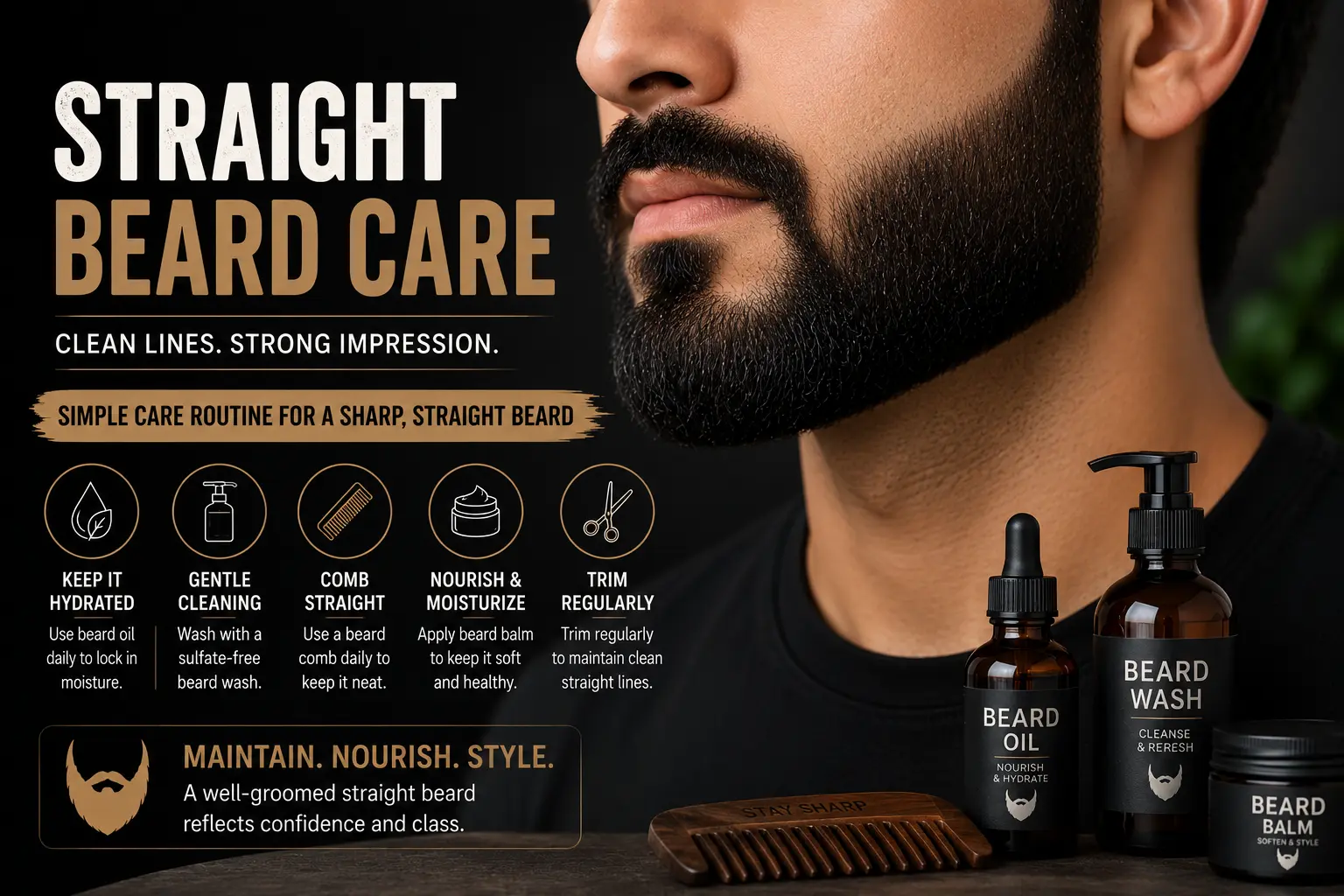
If your beard puffs out, curls at the ends, or looks more like a bush than a beard, you’re not doing anything wrong — your hair is just built that way. Straight beard care is the set of habits, tools, and products that train coarse or curly facial hair to lie flatter and look tidier without frying it with heat every single day. Barbers see this request constantly, and the fix is almost never one product. It’s a routine.
This guide walks through why beards curl, which straightening methods are worth your time, and how to build a routine that keeps a smooth beard looking sharp between trims — without damaging the hair or your skin underneath it.
Table of Contents
What Straight Beard Care Actually Involves
Quick answer: Straight beard care means moisturizing, training, and occasionally heat-styling facial hair so it lies flatter and smoother, instead of curling, frizzing, or growing in every direction. It combines daily conditioning (oil or balm), directional combing, and controlled use of heat tools like a beard straightener.
It’s not the same as permanently changing your hair’s natural texture. Genetics decide whether your beard grows straight, wavy, or tightly curled — care and styling just work with what you’ve got. Think of it less like “fixing” a curly beard and more like managing it, the same way people manage curly head hair with the right products instead of trying to force it into something it isn’t.
Why Your Beard Won’t Lie Straight in the First Place
Before reaching for a straightener, it helps to know what you’re actually dealing with. There are usually four culprits.
Hair Follicle Shape
The shape of the follicle under your skin determines the shape of the strand. Round follicles usually produce straighter hair. Oval or flattened follicles produce wavy or curly hair. This is inherited, and no product changes it permanently — heat and moisture only change the hair’s shape temporarily, until it gets wet again.
Dryness
Dry facial hair is rough on the outside (the cuticle layer sits raised instead of flat), which makes it catch on itself, frizz, and spring outward. This is the single biggest fixable cause of an unruly beard, and it’s why a beard oil or beard conditioner does more heavy lifting than people expect.
Product Buildup
Too much wax, balm, or unwashed sweat and skin oil weighs hair down unevenly, leaving some sections flat and others puffed out. A proper beard wash routine two to three times a week clears this without stripping the hair completely.
Uneven Trimming
If the beard was never shaped with clean lines, longer and shorter sections pull in different directions as they grow, which reads as “messy” even on hair that isn’t especially curly. A clean beard neckline and beard cheek line make a bigger visual difference than most men expect.
Curly, Wavy, or Straight: Know What You’re Working With
Not every beard needs the same approach. Here’s a quick breakdown of what actually helps each type.
| Beard Type | Common Issue | Best Straight Beard Care Approach |
| Naturally straight but coarse | Sticks out, feels wiry | Daily oil, soft-bristle brush, light comb-through |
| Wavy | Uneven texture, flyaways | Balm for hold, comb while damp, occasional low-heat styling |
| Curly | Frizz, shrinkage, tangling | Curly beard care routine with heavier conditioning, wide-tooth comb, straightener used sparingly |
| Patchy or thin | Straightening highlights gaps | Focus on even growth first — check the patchy beard guide before styling |
If your beard leans curly, don’t try to force it flat every day. It’s harder on the hair and the results don’t last. A few sessions a week with proper prep will look better than daily heat with none.
The Daily Straight Beard Care Routine
A smooth beard is built in the shower and at the sink, not just with a straightening tool. Here’s what a realistic daily routine looks like.
Morning:
- Wash your face as normal (beard doesn’t need washing every day).
- Apply 3–5 drops of beard oil to damp or dry hair, working it to the skin first, then through the length.
- Comb downward and outward from the center to train direction.
- If styling for the day, apply a small amount of balm and shape with a brush.
Evening:
- Rinse off any product with warm water.
- On wash days (2–3 times weekly), use a sulfate-free beard shampoo.
- Pat dry — don’t rub, which roughs up the cuticle and encourages frizz.
- Apply a light layer of beard balm or beard butter overnight for longer beards.
Consistency matters more than any single product here. Skipping oil for a week undoes more progress than one bad hair day ever will.
Beard Straightening Methods: Heat vs No-Heat
This is where most men want a shortcut, so let’s compare the real options honestly.
| Method | How It Works | Best For | Downside |
| Beard straightener (heated) | Flat plates smooth hair with direct heat | Coarse or curly beards needing a sharp, styled look | Heat damage if overused or used without protectant |
| Blow-dry with comb | Warm air + tension from a comb | Medium beards, everyday smoothing | Slower, less dramatic result than a flat iron |
| Straightening balm or cream | Polymers and oils coat the hair to reduce frizz | Light daily maintenance | Doesn’t fully flatten very curly beards |
| Beard straightening brush | Heated bristles comb through as they smooth | Shorter beards, quick touch-ups | Less control on very long or dense beards |
| Beard roller | Massages the skin, distributes product | Supports growth and product absorption, not true straightening | Often oversold as a straightening tool |
A beard straightener gives the most dramatic, camera-ready result, but it’s also the method most likely to cause damage if you skip a heat protectant or use it on soaking-wet hair. Barbers generally recommend saving the flat iron for two to three uses a week and relying on oil, balm, and combing for the rest.
Products That Actually Help With Smooth Beard Results
You don’t need a ten-step routine. You need the right three or four things, used consistently.
- Beard oil — softens hair and skin, reduces the frizz that causes curling. Use it daily.
- Beard balm or butter — adds light hold and weight, useful for training hair to lie flat as it dries.
- Leave-in conditioner — for coarser or curlier beards, this cuts down drying time and detangling struggle.
- Wide-tooth comb — distributes product evenly and trains direction without snapping hairs.
- Heat protectant spray — non-negotiable if you’re using any heated tool.
- Beard vitamins or biotin (optional) — some men use biotin for beard growth support, though it won’t change hair texture, only growth speed and thickness.
Skip anything promising to “permanently straighten” facial hair overnight. Nothing sold over the counter changes follicle shape — only heat, chemical relaxers (not recommended for beards, given how thin facial skin is), or genetics do that.
How to Straighten Your Beard at Home (Step-by-Step)
If you’re using a heated straightener or brush, follow this order to avoid damage:
- Wash and fully dry the beard. Never run a hot iron through wet hair — the moisture turns to steam and damages the strand from the inside.
- Apply a heat protectant evenly through the beard.
- Comb it out so there are no tangles the iron will catch on.
- Section the beard — chin, cheeks, and mustache separately — for even results.
- Set the tool to a low-medium heat. Facial hair is finer than head hair and burns faster. 300–350°F (150–175°C) is usually enough.
- Clamp small sections and pull the straightener down slowly, once or twice per section. Repeated passes cause more damage than they fix.
- Let it cool before combing again — this is when the shape actually sets.
- Finish with a small amount of balm to lock in smoothness and add shine.
The whole process takes 5–10 minutes once you’ve done it a few times. Rushing it is the main reason people end up with singed hair or an uneven finish.
Mistakes That Wreck Straight Beard Care Efforts
A few habits undo everything above, even with good products:
- Straightening a wet or damp beard — leads to breakage and won’t hold anyway.
- Using head-hair heat settings — facial hair is thinner and burns at lower temperatures than scalp hair.
- Skipping heat protectant to save time.
- Over-washing — daily shampooing strips natural oils and makes the beard frizz more, not less.
- Ignoring the skin underneath — dry, flaky skin (beardruff) pushes hairs in random directions and makes the whole beard look messier, straightened or not.
- Using a fine-tooth comb on curly or coarse hair — it snags and creates more frizz than it smooths.
- Skipping regular trims — a straight beard care routine can’t compensate for split, overgrown ends.
If you’ve been doing everything “right” and still aren’t seeing results, check the shape and trim line first with a proper how to trim a beard guide before blaming your products.
Matching Straight Facial Hair to Your Beard Length and Face Shape
A smoother beard shows off shape more clearly, which means face shape and length matter more once you start straightening.
- Shorter, straightened beards suit round faces by adding definition along the jaw.
- Fuller, straight-styled beards work well on oval faces, which can handle almost any length.
- For square faces, keeping the sides slightly rounded (even when straightened) softens strong angles.
- Longer straight beards look sharpest when they’ve had time to grow past the awkward stage — check medium beard styles or long beard styles for shape ideas once length allows for it.
If you’re earlier in the growth process and dealing with flyaways more than curl, browsing general types of beard styles can help you pick a shape that hides awkward growth while your straight beard care routine catches up.
A Realistic Maintenance Schedule
| Task | Frequency |
| Beard oil | Daily |
| Combing/brushing | Daily |
| Balm or leave-in conditioner | Daily to every other day |
| Beard wash | 2–3 times per week |
| Heated straightening | 2–3 times per week max |
| Trim and line-up | Every 2–4 weeks |
| Deep conditioning treatment | Weekly |
This isn’t a rigid rulebook — thicker or curlier beards may need washing and conditioning slightly more often, while straighter, finer beards can get away with less.
Myths About Beard Straightening You Can Ignore
“Straightening damages every beard equally.” Not true — damage depends on heat level, frequency, and whether protectant is used, not the tool itself.
“You can permanently straighten a curly beard.” No topical product changes follicle shape. Results from heat styling are temporary and reset once the beard gets wet.
“Beard rollers straighten hair.” A beard roller mainly stimulates the skin and helps product absorb better — it doesn’t flatten hair the way an iron does.
“Oil makes a beard greasy, not smooth.” Using too much does. A few drops, worked in properly, reduce frizz without leaving a shine.
“Straight beards need less maintenance than curly ones.” Both need daily care — straighter beards just need less detangling and slightly less conditioning.
Safety Tips and When to Talk to a Dermatologist
Facial skin is thinner and more sensitive than the scalp, so a few precautions matter:
- Always test a heated tool on a low setting first, especially if you have sensitive skin.
- Watch for redness, ingrown hairs, or persistent itching — these usually point to a skin issue, not a hair one.
- If you notice bald patches, unusual shedding, or skin irritation that doesn’t improve with basic care, it’s worth checking in with a dermatologist rather than adjusting your routine further on your own. Organizations like the American Academy of Dermatology publish reliable, non-commercial guidance on facial hair and skin health if you want a second opinion beyond a barber’s advice.
- Never use a straightener on broken, sunburned, or irritated skin.
Final Thoughts
Straight beard care isn’t about forcing your facial hair into something it was never going to be naturally — it’s about softening, training, and occasionally heat-styling it so it looks its best consistently. Get the daily basics right — oil, the occasional wash, combing in one direction — and a heated straightener becomes a finishing touch instead of a daily repair job. Stick with a routine for a few weeks before judging results; hair habits change slower than we’d like, but they do change.
FAQs
1. What is the best way to straighten a beard without heat? Regular conditioning with beard oil or balm, combined with daily combing in one direction while the beard is slightly damp, is the most effective non-heat approach. Results build gradually rather than instantly.
2. Can straight beard care make a curly beard permanently straight? No. Genetics determine your hair’s natural shape. Care and styling can smooth and manage curl, but the effect from heat tools resets once the beard is washed or gets wet again.
3. How often should I use a beard straightener? Two to three times a week is generally safe with a heat protectant. Daily heat styling increases the risk of dryness and breakage over time.
4. What temperature should I use on a beard straightener? Around 300–350°F (150–175°C) is usually enough for facial hair, which is finer than scalp hair and burns at lower temperatures.
5. Does beard oil help with straightening? Yes. Beard oil smooths the hair cuticle, which reduces the roughness and frizz that cause hair to curl and stick out. It’s one of the most effective tools for a smoother beard.
6. Why does my beard curl even after I brush it? Curling is usually driven by follicle shape and dryness, not lack of brushing. Brushing helps direct hair but doesn’t change its underlying texture — pair it with daily oil for better results.
7. Is it bad to straighten a wet beard? Yes. Applying heat to wet hair causes the water inside the strand to turn to steam, which can damage the hair from the inside. Always dry the beard fully before using a heated tool.
8. What’s the difference between a beard straightener and a beard straightening brush? A straightener uses flat heated plates for a more dramatic, sleek result, while a straightening brush uses heated bristles for lighter, quicker touch-ups, usually on shorter beards.
9. Can I use my head hair straightener on my beard? It’s not ideal. Facial hair is thinner and more heat-sensitive than scalp hair, and most head straighteners run hotter than what a beard needs, increasing the risk of burns or damage.
10. How long does it take to see results from a straight beard care routine? Most men notice softer, more manageable hair within two to three weeks of consistent daily oil and proper washing, with heat styling adding an immediate but temporary smoothing effect.
11. Does trimming help with a straighter-looking beard? Yes. Uneven length is one of the most overlooked causes of a messy-looking beard. A clean shape and regular trims make hair lie flatter even before any styling product is applied.
12. Are beard straightening creams worth using? For light daily frizz control, yes. They won’t fully flatten a very curly beard on their own, but they work well alongside oil and occasional heat styling.
13. Can vitamins or biotin straighten a beard? No. Biotin and beard vitamins may support growth and thickness over time, but they don’t change hair texture or shape.
14. Why does my straightened beard curl back up by the next day? Heat styling is temporary by nature, and humidity, sweat, or washing will reverse it. This is normal and not a sign you’re doing something wrong.
15. Is straight beard care different for curly versus wavy beards? Yes, slightly. Curlier beards typically need more conditioning and a wide-tooth comb to prevent tangling, while wavy or straight beards need less intensive detangling but similar daily moisture.