 By Bread Styles Team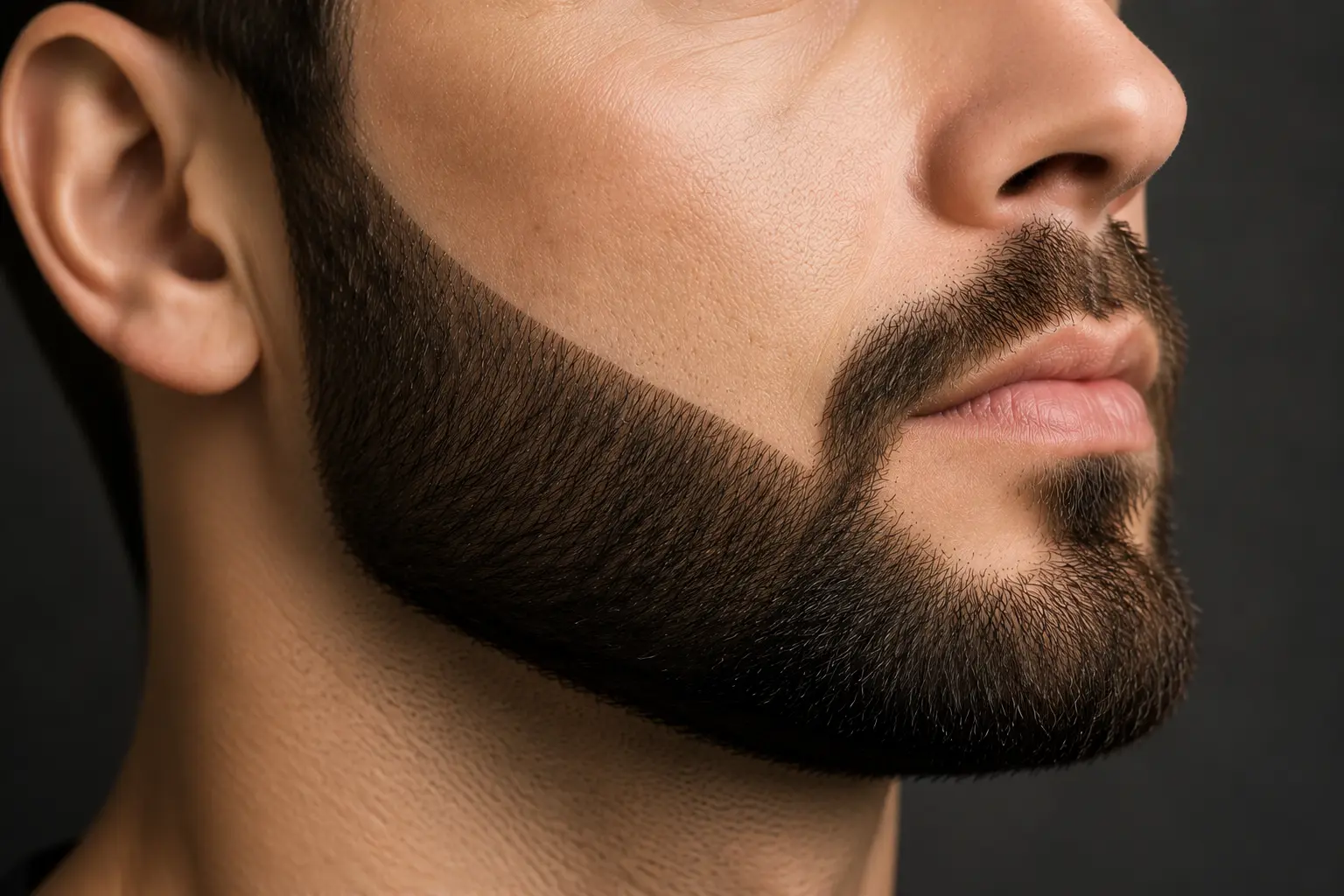
Table of Contents
What Is a Beard Cheek Line?
A beard cheek line is the upper border where your beard growth stops and bare cheek skin begins. It runs from your sideburns, curves along your cheekbone, and connects toward the corner of your mouth. This line, more than any other part of grooming, decides whether a beard looks intentional or simply unshaven.
Most men grow beard hair naturally up toward the eyes, and if left alone, it spreads unevenly across the cheeks. A defined cheek line brings order to that natural spread. It’s not about growing less beard — it’s about deciding exactly where the beard should stop.
If you’re still deciding on an overall style before worrying about the cheek line, it helps to look at the different types of beard styles first, since the ideal cheek line height changes depending on which style you’re building toward.
Beard Cheek Line vs. Beard Neckline: What’s the Difference?
People often lump these together, but they’re two separate borders that work as a pair.
| Feature | Cheek Line | Neckline |
| Location | Top of the beard, along the cheekbone | Bottom of the beard, under the jaw |
| Purpose | Controls beard height and cheek coverage | Controls where beard meets neck skin |
| Shape | Slight curve following cheekbone | Curve that follows jaw, not throat |
| Trimmed with | Trimmer guard or razor | Trimmer, razor, or clippers |
| Mistake risk | Trimming too high, looking patchy | Trimming too high, shrinking the jaw |
A clean beard neckline guide and a well-shaped cheek line work together. Get one right and ignore the other, and the whole beard still looks unfinished. For a broader walkthrough on trimming basics, our guide on how to trim a beard covers the full outline, not just these two edges.
Why the Beard Cheek Line Matters More Than Most Men Think
A sharp cheek line changes three things at once:
- It frames the face. The eyes and cheekbones become the focal point instead of stray hair.
- It signals grooming intent. A defined edge tells people the beard is a choice, not neglect.
- It corrects proportions. Raising or lowering the line slightly can make a round face look leaner or a narrow face look fuller.
Barbers use this edge the same way a tailor uses hemlines — small adjustments, large visual effect. This is also why the cheek line matters just as much on a short beard as it does on a long one. Whether you’re maintaining short beard styles or working toward fuller growth like long beard styles, the cheek line stays the anchor point.
Tools You Need Before You Touch Your Cheeks
Skipping proper tools is the fastest way to end up with an uneven line. Here’s what a professional setup looks like:
- A trimmer with adjustable guards (0.5mm to 3mm range covers most needs)
- A straight razor or safety razor for sharp edging
- A fine-tooth comb to lift and separate hair before cutting
- A magnifying mirror, ideally with strong, even lighting
- Beard oil or balm to soften hair before edging
- A white eyebrow pencil or barber’s chalk (optional, for marking the line first)
Cheap, dull blades pull hair instead of cutting it. That single detail causes more razor bumps and uneven lines than technique ever does.
How to Find Your Natural Beard Cheek Line
Before cutting anything, find where your beard naturally wants to sit. This avoids the classic mistake of shaving too high and creating a gap that takes weeks to fill back in.
Step 1: Let it grow first. Give your beard at least two to three weeks of undisturbed growth. You cannot shape a line you can’t see yet.
Step 2: Locate your natural stopping point. Run a finger along your cheekbone. Most men’s beard hair naturally thins out about half an inch below the bottom of the eye socket. That thinning point is usually the safest place to build your line.
Step 3: Mark it before you cut. Use a comb to trace a line from the top of your sideburn to a point just above the corner of your mouth. This is your working guide, not your final cut.
Step 4: Check both sides in good light. Faces are rarely symmetrical. Compare left and right in a well-lit mirror before making any pass with a blade.
Featured Snippet Answer: A beard cheek line is the upper edge of a beard, running from the sideburn to the corner of the mouth. It should follow the natural thinning point of cheek hair, usually just below the cheekbone, rather than being shaved artificially high.
How to Trim a Beard Cheek Line, Step by Step
Once the natural line is marked, follow this sequence for a clean result.
- Comb the beard downward and outward so every hair sits in its natural direction.
- Set your trimmer to a slightly longer guard than you think you need. You can always go shorter, not longer.
- Trim above the marked line first, working from sideburn toward the mouth in short, controlled strokes.
- Switch to a razor for the final edge. This gives a crisp, defined border that a trimmer alone can’t achieve.
- Blend the top edge slightly with a comb-and-scissor pass so it doesn’t look like a hard shaved strip.
- Rinse and check under different lighting, since bathroom lighting often hides unevenness.
- Apply a soothing balm or aftershave to calm the skin, especially if you used a razor.
A trimmed cheek line should look like it happened naturally, not like a shaved patch was added on top of a beard.
How to Trim Beard Neckline: A Complete Neckline Beard Guide
The neckline finishes the job the cheek line starts. Here’s the process for a proper neckline beard shape.
Step 1: Find your natural neckline point. Tilt your head back slightly and look for the crease where your neck meets your jaw. This crease, not your Adam’s apple, is your guide.
Step 2: Draw an imaginary U-shape, not a straight line. A straight-across neckline flattens the jaw and looks unnatural. The line should curve gently upward at the edges.
Step 3: Trim below the jawline, never on it. Cutting too high shrinks the visual size of the jaw and makes the beard look shorter than it is.
Step 4: Use a shorter guard for the neck than the cheeks. Neck hair often grows in a different direction and density, so a tighter fade here creates a smoother transition.
Step 5: Clean the edge with a razor for sharpness, then blend upward into the beard with scissors so there’s no visible line of separation.
This process answers most of what people search for under how to trim beard neckline, and pairing it with our dedicated beard neckline breakdown gives you reference photos for common jaw shapes.
Beard Neck Shape: Matching the Line to Your Jaw and Face
Not every jaw carries a neckline the same way. Beard neck shape depends on three things: jaw angle, neck length, and how much loose skin sits under the chin.
- Sharp, angular jaws can carry a slightly higher, tighter neckline without looking cramped.
- Softer or rounder jaws need a slightly lower neckline to avoid squeezing the face visually.
- Shorter necks benefit from keeping the line closer to the jaw rather than dropping it too far down.
- Longer necks have more room to lower the line without it looking odd.
There’s no universal measurement that works for everyone, which is why barbers eyeball the crease point on each individual rather than using a fixed ruler distance.
Cheek Line Styles for Different Face Shapes
| Face Shape | Recommended Cheek Line | Effect |
| Round | Slightly higher, angled line | Adds length and structure |
| Square | Softer, rounded curve | Softens strong jaw angles |
| Oval | Natural line, minimal shaping | Already balanced, low maintenance |
| Long | Fuller cheek coverage, lower line | Reduces face length visually |
| Diamond | Moderate curve, avoid sharp angles | Balances wide cheekbones |
| Heart | Fuller at jaw, tapered at cheek | Balances a wider forehead |
For a deeper breakdown by shape, see our guides for best beard for round face, best beard for oval face, best beard for square face, best beard for diamond face, and best beard for heart face.
Common Mistakes That Ruin a Cheek Line
- Shaving too high, too soon. This is the single most common error. It takes weeks to grow back and forces an awkward patchy phase.
- Making it perfectly straight. Faces curve. A rigid, ruler-straight line looks fake against natural bone structure.
- Skipping the mark-first step. Freehanding a first cut without a guide almost always ends in asymmetry.
- Using a dull blade. Pulled hair, redness, and razor bumps usually trace back to this.
- Trimming under bad lighting. Bathroom lights often cast shadows that hide unevenness until you’re outside.
- Ignoring the blend. A sharp cheek line without any softening at the top edge looks stenciled on rather than grown.
Maintenance Schedule: How Often to Clean It Up
| Beard Length | Cheek Line Touch-Up | Neckline Touch-Up |
| Stubble | Every 3–4 days | Every 3–4 days |
| Short beard | Every 5–7 days | Every 5–7 days |
| Medium beard | Every 10–14 days | Every 7–10 days |
| Long beard | Every 2–3 weeks | Every 7–10 days |
Necklines tend to need attention more often than cheek lines because neck hair grows faster and the skin there is more visible day to day. If you’re maintaining a fuller shape, our medium beard styles guide has length-specific upkeep notes worth pairing with this schedule.
Growing Out a Patchy or Uneven Cheek Line
If your cheek line looks thin or gappy, resist the urge to shave it clean and start over. Instead:
- Let the whole beard grow untouched for four to six weeks.
- Apply beard oil daily to support healthier growth and reduce itch during the awkward stage.
- Comb hair upward occasionally to train it toward covering thin patches.
- Reassess your line only after the growth period, not during it.
Patchiness at the cheek is common and usually improves with time and consistent care rather than aggressive trimming. If patches persist beyond a few months, our dedicated patchy beard guide covers growth patterns and realistic expectations in more detail.
When to See a Barber Instead of DIY
Handling your own cheek line at home works fine for touch-ups, but a first-time shape-up is worth getting done professionally at least once. A barber can:
- Set an accurate baseline you can replicate at home afterward
- Correct asymmetry you might not notice yourself
- Show you exactly where your natural line sits before you start cutting
According to grooming guidance from the American Academy of Dermatology, proper trimming technique and clean tools also reduce the risk of ingrown hairs and skin irritation, which matters just as much as the shape itself.
Expert Tips From Working Barbers
- Trim beards when dry. Wet hair appears longer than it is and leads to over-cutting.
- Step back from the mirror between passes. Close-up trimming hides the overall shape.
- Keep both cheek lines a mirror of each other by checking symmetry every two or three strokes, not just at the end.
- Never rush the first cut on a new cheek line. Small, patient passes beat one aggressive sweep every time.
- Moisturize after every razor pass. Dry skin along the cheek line is where irritation starts.
Conclusion
A well-shaped beard cheek line is what separates a groomed beard from one that just grew there. It takes patience to find your natural edge, the right tools to trim it cleanly, and a bit of ongoing upkeep to keep both the cheek line and neckline sharp. Get this pair of edges right, and almost any beard style holds its shape and looks deliberate, whether you’re rocking heavy stubble or a full corporate beard.
FAQs
1. What is a beard cheek line? A beard cheek line is the upper boundary of a beard, running from the sideburn to near the corner of the mouth, marking where beard growth stops and bare cheek skin begins.
2. How high should my beard cheek line be? It should follow your natural hair thinning point, usually just below the cheekbone. Going higher than that often creates a patchy gap that takes weeks to grow back.
3. Should a cheek line be straight or curved? It should follow a gentle curve, not a straight line. Faces are naturally curved, so a rigid straight edge tends to look artificial.
4. How do I trim a beard neckline correctly? Find the natural crease where your neck meets your jaw, trim in a soft U-shape below that crease, and blend the edge upward with scissors so there’s no harsh line.
5. Where exactly does a beard neckline go? The neckline sits just above the natural crease between your jaw and neck, never on the jawline itself, since cutting too high shrinks the jaw visually.
6. Can I shape my cheek line before my beard fully grows in? It’s better to wait two to three weeks. Shaping too early usually means guessing at a line you can’t fully see yet.
7. Why does my cheek line look patchy? Patchiness is often genetic and related to hair density in that area. Time, consistent beard oil use, and avoiding early over-trimming usually improve the appearance.
8. What tools do I need to trim a beard cheek line? An adjustable trimmer, a sharp razor for edging, a comb, good lighting, and beard oil or balm cover nearly every situation.
9. How often should I touch up my beard neck shape? Most men need neckline touch-ups every five to ten days, since neck hair tends to grow faster and show unevenness sooner than cheek hair.
10. Does face shape affect how I should trim my cheek line? Yes. Rounder faces often benefit from a slightly higher, angled line, while longer faces look better with fuller cheek coverage and a lower line.
11. Is it better to use a trimmer or razor for the cheek line? Use a trimmer for the initial rough shape and a razor for the final sharp edge. Razors alone on unshaped hair make mistakes harder to fix.
12. What’s the difference between a beard neckline and a beard cheek line? The cheek line is the top border of the beard along the cheekbone, while the neckline is the bottom border under the jaw. Both need shaping for a finished look.
13. Can a barber fix an uneven cheek line? Yes, and it’s often worth one professional visit to set an accurate baseline, especially if you’ve never shaped your own cheek line before.
14. Will trimming my cheek line too often slow beard growth? No. Trimming the cheek line only removes hair above your natural growth zone, so it doesn’t affect how the rest of the beard grows.
15. What’s a common mistake when shaping beard neck shape? Cutting the neckline too high, directly on the jawline, is the most common error. It makes the jaw look smaller and the beard look shorter overall.