 By Bread Styles Team
Table of Contents
What Makes a Beard Business-Ready? (Quick Answer)
A business beard is a short to medium style with crisp, symmetrical lines and consistent density, built to project authority rather than casual style. The best beard styles for businessmen avoid extremes in either direction — nothing so trimmed it looks accidental, and nothing so long it distracts from the face during a conversation or a handshake. Precision is the defining feature, not length.
That’s the short version. The longer answer depends on your role, your face shape, and how much time you’re realistically willing to spend on upkeep, which is what the rest of this covers.
Why Facial Hair Reads Differently at Senior Levels
There’s a reason a junior associate and a managing director rarely get judged by the same grooming standard. The higher up the ladder someone sits, the more their appearance gets treated as a reflection of judgment, not just personal taste. A beard that looks slightly rough on a 24-year-old analyst can read as careless on a department head — fair or not, that’s how perception tends to work in rooms where trust and first impressions carry real weight.
This doesn’t mean senior professionals need to shave every gray hair or avoid facial hair altogether. If anything, a well-kept beard at that level often reads as more deliberate and self-assured than a clean shave, since it signals someone who’s confident enough in their position not to default to the safest possible look. The difference between a beard that helps a leader’s image and one that quietly undermines it almost always comes down to precision, not the presence of facial hair itself.
If you’re still weighing your options broadly before narrowing things down, our overview of types of beard styles is a solid starting point.
The 3 Traits Every Professional Beard Needs
Regardless of which specific style you land on, these three things separate a genuinely professional beard from one that just happens to be short.
- A defined neckline. It should sit just above the Adam’s apple, following your jaw’s natural curve. Get this wrong and even a perfectly trimmed beard looks unfinished. Our beard neckline guide covers the exact placement.
- A clean cheek line. Loose cheek hair softens the whole shape and reads as neglected rather than intentional. See our beard cheek line guide for the technique.
- Even density throughout. Patchy or uneven sections draw attention in exactly the wrong way during meetings and presentations. Consistent trimming and a good conditioning routine both help here.
Best Beard Styles for Businessmen by Career Stage
Not every professional needs the same beard. What works for someone building a personal brand as a founder is often too casual for someone managing a traditional corporate hierarchy, and vice versa. Here’s a general framework.
| Career Stage | Recommended Approach | Reasoning |
| Early career (analyst, associate) | Stubble or a tightly kept corporate beard | Low risk, easy to maintain, signals attention to detail without drawing focus |
| Mid-level management | Corporate beard or short boxed beard | Slightly more presence while staying conservative for client and internal meetings |
| Senior leadership, director level | French beard, Verdi beard, or a well-shaped medium beard | More individual character, still tightly controlled |
| Founders, C-suite, entrepreneurs | Bandholz or fuller styles, if industry allows | Often used to project confidence and a distinct personal brand, especially outside traditional finance or law |
This isn’t a strict rulebook — a founder in a creative industry has far more room to experiment than a compliance officer at a bank — but it’s a reasonable starting point if you’re unsure where your role sits on the spectrum.
7 Top Beard Styles for Businessmen
These are the styles that consistently show up when barbers talk about executive beard styles, each suited to a slightly different look and level of formality.
Corporate Beard
The safest, most universally accepted option. Short, fully connected, with hard edges on the neckline and cheeks. It works in nearly every industry and every seniority level. Full details in our corporate beard guide.
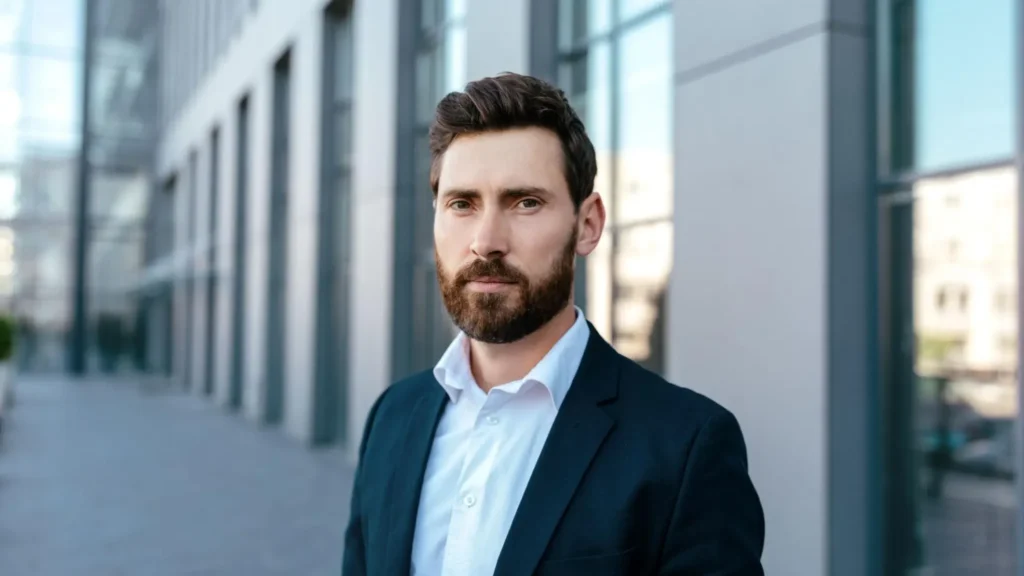
French Beard
A close, tightly cropped style that hugs the jaw and chin. It has slightly more shape around the mouth than a corporate beard, giving it a touch more personality while staying firmly professional. See our French beard guide.
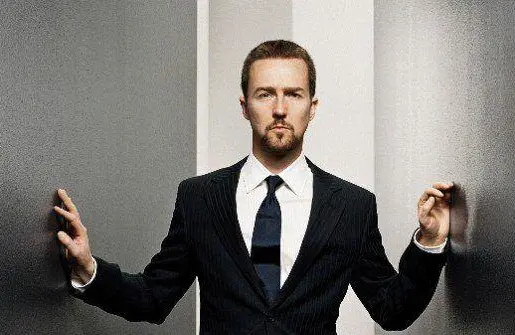
Short Boxed Beard
Straight, defined lines along the sides and bottom instead of a natural taper. It gives more visual structure than a corporate beard, which can suit men who want their beard to read as more deliberate in photos and video calls. Our short beard styles page covers variations at this length.

Verdi Beard
A fuller, rounder shape that still keeps disciplined lines at the edges. It suits businessmen who want more volume without losing the tidy silhouette expected in client-facing roles. Full guide: Verdi beard.
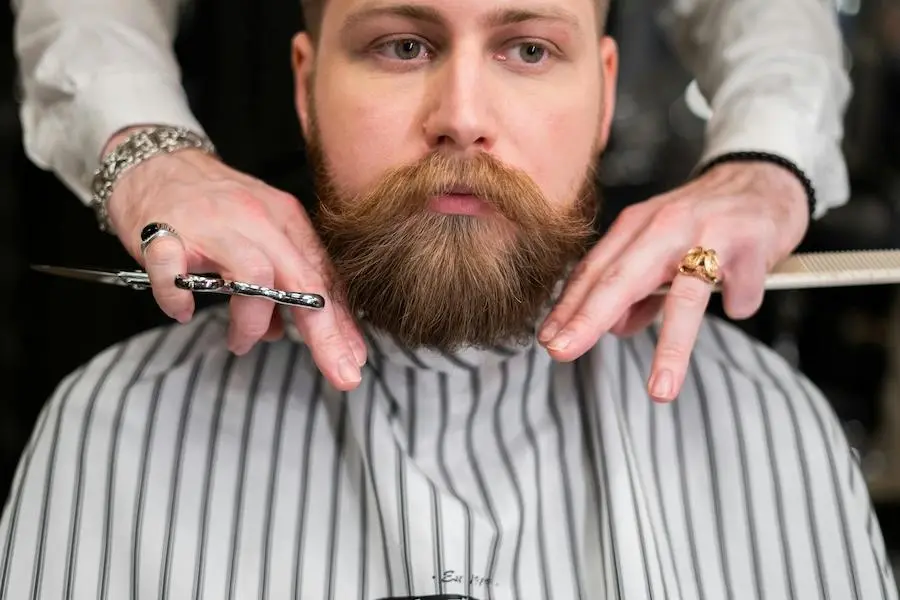
Imperial Beard
A style with more shape around the mustache and a slightly fuller chin, historically associated with a commanding, old-world presence. It works well for senior professionals who want a beard with genuine character rather than a purely conservative shape. See our Imperial beard guide.
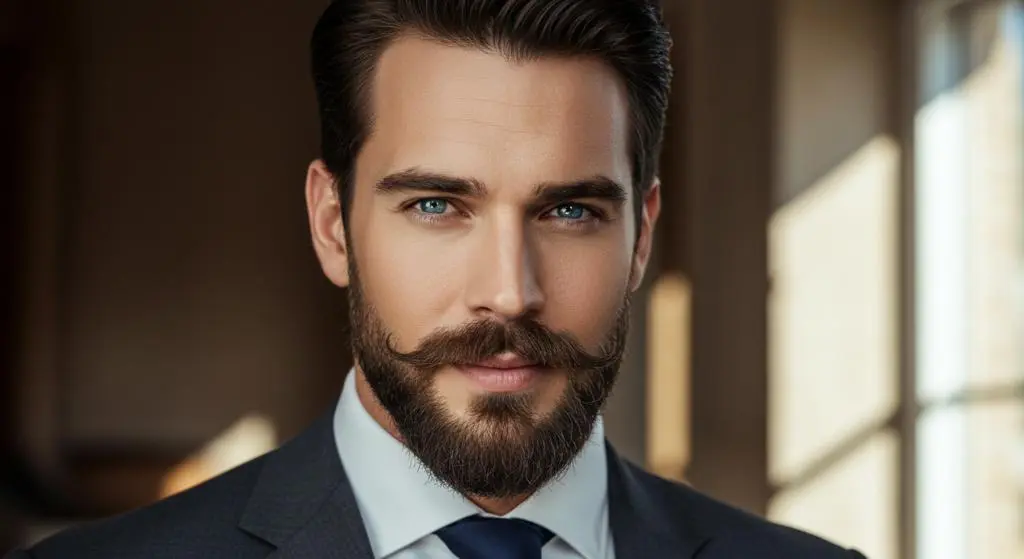
Balbo Beard
A sculpted style with the mustache and chin beard kept separate from the sideburns. It has a tailored, intentional look that suits formal settings and client meetings particularly well. Full technique in our Balbo beard guide.

Bandholz
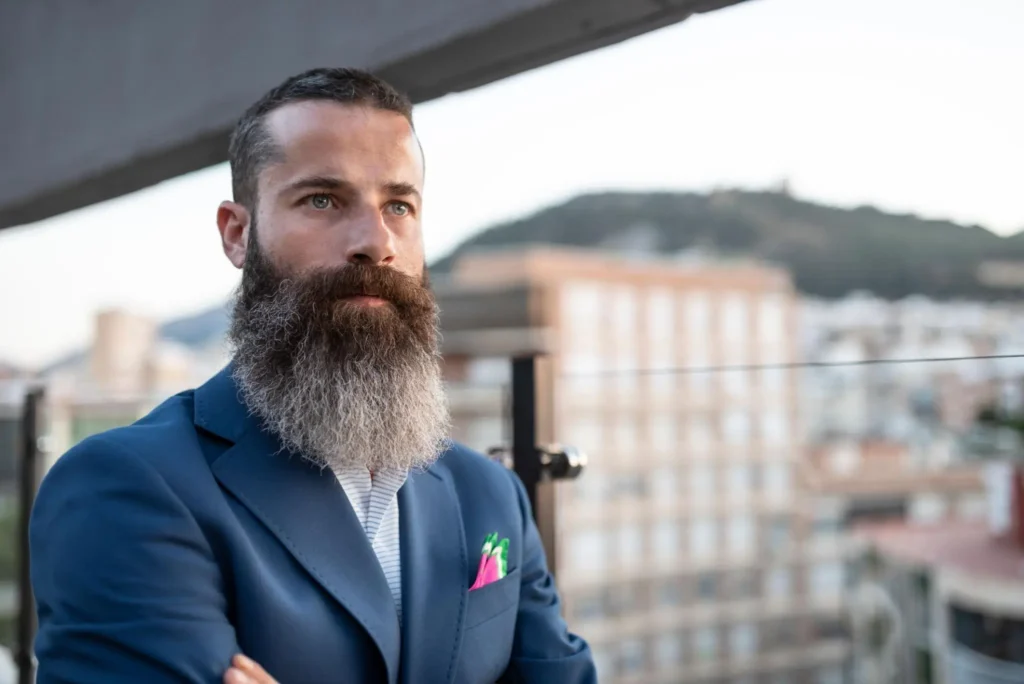
A fuller, longer style that’s more common among founders and entrepreneurs than traditional corporate employees, especially in industries like tech, media, or consulting where personal brand carries more weight. It needs real commitment to keep looking sharp rather than overgrown. See our Bandholz beard guide.
Choosing a Style by Face Shape
Face shape matters just as much in a boardroom as anywhere else. Here’s a quick reference.
| Face Shape | Best Beard Styles for Businessmen | Why It Works |
| Round | Verdi Beard, Balbo | Adds vertical length and structure |
| Square | Corporate Beard, French Beard | Softens strong angles while keeping definition |
| Oval | Most styles, including Short Boxed Beard | Balanced proportions suit nearly any shape |
| Diamond | French Beard, Balbo | Adds width at a narrower jawline |
| Heart | Corporate Beard, Verdi Beard | Balances a wider forehead with chin weight |
| Oblong | Short Boxed Beard, Corporate Beard | Adds width instead of extra length |
For more detail on your specific shape, see our guides on the best beard for round face, best beard for square face, best beard for oval face, best beard for diamond face, and best beard for heart face.
Choosing a Style by Age
Age changes how facial hair grows in, how it sits with skin texture, and what actually reads as sharp versus dated. Here’s a general breakdown by decade.
| Age Range | What Tends to Work Well | Notes |
| 20s–early 30s | Stubble, corporate beard | Beard often still filling in, shorter styles minimize patchiness |
| Mid 30s–40s | French beard, Verdi beard, short boxed beard | Fuller growth by this stage supports more defined shapes |
| 50s and up | Corporate beard, well-groomed medium beard | Texture and growth pattern often change; consistent trimming matters more than ever |
If you’re specifically researching options for later career stages, our guides on beard styles for men over 40 and beard styles for men over 50 go into more detail.
Grooming Routine for a Busy Schedule
Most executives and professionals don’t have unlimited time for grooming, so here’s a routine built for efficiency without cutting corners.
- Every 5–7 days: Full trim to your chosen guard length.
- Every 3–4 days: Quick touch-up on the neckline and cheek line, ideally before an important meeting week.
- Daily, 30 seconds: Comb through in the direction of growth to keep it looking trained and even.
- 2–3 times a week: Wash with a dedicated beard wash rather than regular shampoo.
- Daily: A small amount of beard oil or balm after washing keeps the texture soft and prevents the dry, wiry look that reads as neglected under office lighting.
For the actual trimming technique, our how to trim a beard guide covers it step by step.
Mistakes That Undercut an Executive Image
These issues come up constantly among professionals who otherwise dress and present themselves well:
- An uneven or overly high neckline — makes an otherwise sharp beard look oddly shaped.
- Skipping the cheek line entirely — softens the whole silhouette and looks unfinished on camera.
- Letting patchy areas grow long instead of shaping around them — draws more attention to gaps rather than hiding them. Our patchy beard guide has specific fixes.
- Dry, brittle facial hair — common in men who trim regularly but skip conditioning entirely.
- A beard that doesn’t match the formality of the role — a style that suits a creative agency founder might not land the same way in a more traditional corporate setting.
- Inconsistent trim schedules — a beard that looks sharp one week and overgrown the next signals inconsistency more broadly.
Grey and Salt-and-Pepper Beards in Leadership Roles
Grey hair in a beard is frequently seen as an asset rather than a drawback in senior roles, often associated with experience and steady judgment rather than age alone. The key is contrast and shape — a well-maintained grey or salt-and-pepper beard reads as distinguished, while an unkempt one can look tired regardless of color. If your beard is transitioning, our guides on grey beard styles and salt and pepper beard cover styling and maintenance specific to that stage of growth.
Common Myths About Executive Beards
Myth: A beard automatically looks less professional than a clean shave. Not accurate. What determines perception is grooming quality, not the presence of facial hair. A precisely shaped beard often reads as more deliberate than a rushed daily shave.
Myth: CEO beard styles need to be longer to project authority. Length has little to do with it. Sharp lines, even density, and consistent maintenance carry far more weight than how much hair is actually there.
Myth: Once you find a style, you can stop adjusting it. Hair texture, growth pattern, and even face shape perception can shift with age and weight changes. Revisiting your style every year or two with a barber is worth the conversation.
Realistic expectation: A smart beard look for business settings takes roughly 10–15 minutes a week to maintain once the initial shape is established. If you notice persistent skin irritation, ingrown hairs, or unusual patchiness that doesn’t improve with a consistent routine, a dermatologist visit is a reasonable next step — the American Academy of Dermatology publishes general guidance on facial hair and skin care worth reviewing if problems continue. For general upkeep beyond the professional context, our beard care guide covers the fundamentals, and our office beard styles guide is a useful companion if your role involves a more traditional office environment day to day.
The right choice among beard styles for businessmen almost always comes down to matching the shape to your role, your face, and how much upkeep you can realistically commit to each week. Get the fundamentals right — a clean neckline, a defined cheek line, and consistent trimming — and nearly any style on this list will hold up in a boardroom, a client meeting, or a video call.
FAQs
1. What is the best beard style for a businessman? The corporate beard is generally the safest and most widely accepted beard style for businessmen, since it’s short, fully connected, and works across nearly every industry and seniority level.
2. Do CEOs and executives usually keep beards? Many do, particularly in industries like tech, consulting, and entrepreneurship, where a well-groomed beard is often seen as part of a confident personal brand rather than a distraction.
3. Is a beard acceptable in conservative industries like finance or law? Yes, as long as it’s short, evenly trimmed, and follows a clean, symmetrical shape. The corporate beard and French beard are the safest choices in these settings.
4. How short should an executive beard be? Most professional settings accept lengths from heavy stubble up to around 1–2cm, provided the neckline and cheek lines are sharply defined.
5. What’s the difference between an executive beard style and a regular beard? There’s often little difference in the underlying shape — the distinction usually comes down to a higher standard of grooming, sharper edges, and more consistent maintenance.
6. Can a fuller beard like the Bandholz work in a business setting? It can, particularly for founders and entrepreneurs in less traditional industries, but it requires more disciplined shaping and upkeep to avoid looking unkempt.
7. Does a grey beard look unprofessional in leadership roles? No, a well-maintained grey or salt-and-pepper beard is frequently associated with experience and authority rather than looking dated, provided it’s kept sharp and conditioned.
8. How often should a professional beard be trimmed? A full trim every 5–7 days, with quick neckline and cheek line touch-ups every 3–4 days, keeps most executive beard styles looking consistently sharp.
9. What beard style suits a round face for a business setting? The Verdi beard and Balbo tend to work well on round faces, since both add vertical structure and definition around the jaw.
10. Is stubble considered professional enough for a business environment? Yes, provided it’s even and deliberate rather than patchy or inconsistent. A defined neckline still matters even at stubble length.
11. What age is best to start growing a beard for a business role? There’s no fixed age, though most men see fuller, more even growth by their mid-to-late 20s, which makes shaping more defined styles easier.
12. Do beard oils make a real difference for a professional look? Yes, they keep facial hair soft and reduce the dry, wiry texture that can make an otherwise well-shaped beard look neglected under office lighting.
13. Can a patchy beard still work for a professional beard style? Yes, shorter and tighter styles like the corporate beard or French beard tend to minimize the appearance of patchiness better than longer, fuller styles.
14. What’s a smart beard look for video calls and presentations? A short, evenly trimmed style with a sharp neckline and cheek line tends to photograph and film best, since it holds its shape under close-up camera angles.
15. Should a professional beard style change with age? Often yes, since growth patterns, texture, and density can shift over time. Revisiting your style with a barber every year or two helps it stay well suited to your current growth.