 By Beard Style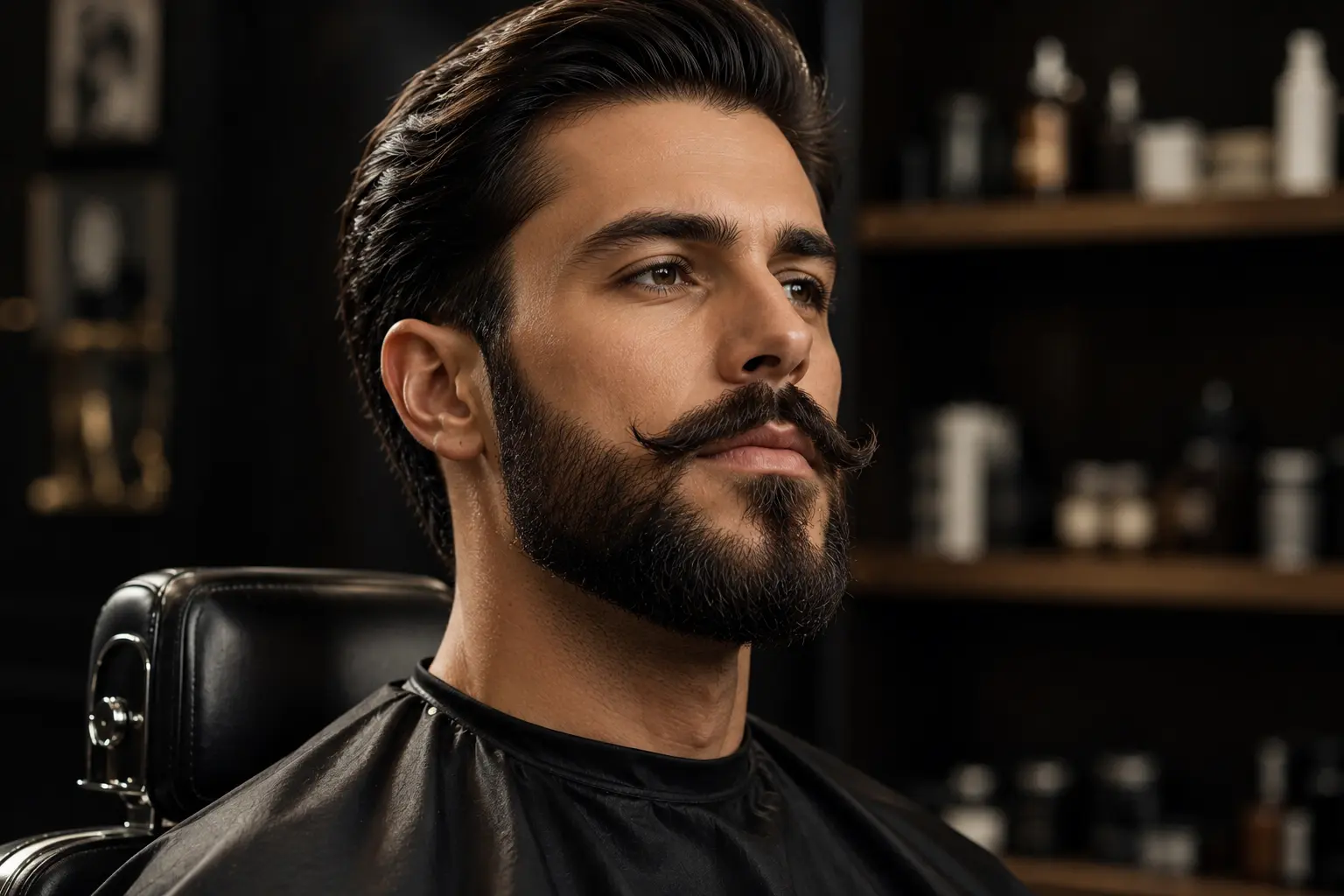
An Imperial beard is one of the sharpest, most distinguished facial hair styles a man can wear, pairing a full, rounded beard with a bold, upward-curled mustache. It’s a style built on precision rather than volume, which is exactly why so many men struggle with it. This guide breaks down what the Imperial beard actually is, who it flatters, how long it takes to grow, and how to keep it looking as clean on day sixty as it did on day one.
Table of Contents
What Is an Imperial Beard? {#what-is-an-imperial-beard}
An Imperial beard is a full beard grown out along the jaw and cheeks and combined with a thick mustache that’s trained and waxed to curl upward at the corners, away from the mouth. The name comes from 19th-century European royalty and military officers, who wore the style as a symbol of rank and authority.
What separates an Imperial beard from a standard full beard is the mustache. It isn’t left to sit naturally — it’s shaped, waxed, and trained into sweeping points, sometimes reaching toward the temples on more extreme versions. The beard itself is usually kept moderate in length, rounded at the bottom, and tidy along the cheek line, so all the visual attention lands on the mustache.
If you’re comparing your options, it helps to see where this sits among other classic beard styles — most modern beards prioritize the cheeks and chin, while the Imperial beard is built around the upper lip.
The History Behind the Imperial Beard Style {#history}
The Imperial beard takes its name from Napoleon III, Emperor of France, whose facial hair became a fashion reference point across Europe in the mid-1800s. Military officers, aristocrats, and eventually working professionals adopted variations of the look, and it became closely associated with status and discipline.
The style faded through the 20th century as clean-shaven faces dominated business and military codes, but it never disappeared entirely. Barbershops that specialize in traditional grooming — particularly straight-razor shops — kept the Imperial beard alive, and it’s now seeing a genuine comeback among men who want a beard style with real character instead of a generic scruffy look.
Imperial Beard vs Other Classic Beard Styles {#comparison}
Because the term “Imperial” gets used loosely online, it’s worth seeing exactly how it compares to other well-known styles.
| Style | Mustache | Cheek Coverage | Maintenance Level | Best For |
| Imperial Beard | Curled, waxed, upward points | Full, rounded | High | Formal, distinguished look |
| Garibaldi Beard | Full, natural, untrained | Full, rounded, wide | Low–Medium | Rugged, relaxed style |
| Van Dyke Beard | Separate, often waxed | No cheek hair | High | Angular, defined faces |
| Bandholz Beard | Full, natural | Very full, long | Medium | Maximum coverage |
| Handlebar Mustache | Curled tips, no beard | None | High | Mustache-only styles |
The quickest way to describe it: a Garibaldi beard is wide and wild, a Van Dyke isolates the chin, and an Imperial beard is defined almost entirely by what happens above the lip.
Who Should Try an Imperial Beard {#who-should-try}
Best Face Shapes
An Imperial beard works especially well on men with oval, square, and long face shapes, because the horizontal sweep of the mustache adds width to the sides of the face without adding extra bulk to the jaw.
- Oval faces — nearly any variation works; this is the easiest face shape for the style.
- Square faces — the curled mustache softens strong jaw angles.
- Long/oblong faces — the horizontal mustache line breaks up vertical length. Worth cross-checking with a guide on the best beard for oblong face shapes if you’re unsure.
- Round faces — can work, but the beard should be kept slightly shorter on the sides to avoid adding more width. Compare with options in the best beard for round face guide.
- Diamond faces — works well since the beard fills out narrow jaw width; see the best beard for diamond face breakdown.
Best Hair Type and Growth Pattern
Thick, straight-to-wavy facial hair holds a wax curl best. Very curly or coily beards can still wear the style, but the mustache will need more product and more frequent re-training throughout the day.
Age and Lifestyle Fit
The Imperial beard tends to suit men in their late 20s and up, mainly because it takes time to grow enough length to shape properly. It also fits professional and formal settings well — closer in spirit to a corporate beard than a casual weekend look — but it does require daily upkeep, so it’s not the lowest-effort choice on the list.
How to Grow an Imperial Beard {#how-to-grow}
Growing an Imperial beard happens in three distinct phases. Rushing any of them is the most common reason the style ends up looking messy instead of sharp.
Phase 1: The Growth-Out Period (Weeks 1–4)
Stop trimming completely. Let the beard and mustache grow without shaping. This phase is uncomfortable — the beard will look uneven and the mustache will cover the lip — but it’s necessary to get enough length to work with.
Tip: Resist the urge to shape the cheek line early. Cleaning it up too soon while the beard is still patchy can leave permanent gaps in the outline.
Phase 2: The Shaping Period (Weeks 4–8)
Once you have at least an inch of growth, start defining the boundaries:
- Set a clean beard neckline roughly one to one and a half fingers above the Adam’s apple.
- Define the beard cheek line, following your natural growth pattern rather than cutting a hard, artificial edge.
- Trim the beard length to a uniform 1–1.5 inches using a guard.
- Leave the mustache untouched — it needs more length before it can be trained.
Phase 3: The Mustache Training Period (Weeks 8+)
This is where the Imperial beard actually takes shape. Once the mustache hair extends past the corners of the mouth, begin combing it outward and upward daily, applying wax to hold the direction. Consistent training over several weeks teaches the hair to grow in the curled position naturally, reducing how much product you’ll need later.
How to Style the Imperial Mustache {#how-to-style}
The Imperial mustache is the single most important element of the whole look, and it’s worth treating as its own project rather than an afterthought.
Step-by-Step Styling
- Wash and dry the mustache completely — wax doesn’t hold well on damp hair.
- Comb outward from the center part toward each corner of the mouth.
- Apply a pea-sized amount of strong-hold mustache wax, working it between your fingers first to warm it.
- Twist the tips upward and outward into a point, curling away from the mouth.
- Set with light heat from a hairdryer on low for a few seconds to help the curl hold through the day.
- Comb the beard downward and outward, keeping the rounded shape clean underneath the mustache.
Styling Difficulty
Realistically, this is a high-maintenance style. Expect a five-to-ten-minute grooming routine every morning once the beard is fully grown in. Humidity, sweat, and rain will soften the wax hold faster than in a dry climate, so touch-ups during the day are normal, not a sign you’re doing it wrong.
Imperial Beard Maintenance Routine {#maintenance}
| Task | Frequency |
| Wash with beard shampoo | 2–3 times per week |
| Apply beard oil | Daily |
| Re-wax and re-train mustache | Daily |
| Trim beard length | Every 2–3 weeks |
| Clean up neckline and cheek line | Every 1–2 weeks |
| Comb/brush beard | Twice daily |
Consistency matters more than intensity here. A quick daily comb-through and wax application will keep an Imperial beard looking sharp far more effectively than an occasional deep grooming session once a week. For a broader maintenance framework beyond this style specifically, the beard care guide covers washing frequency, oils, and product order in more depth.
Tools You Need for an Imperial Facial Hair Style {#tools}
Getting the right Imperial facial hair setup means investing in a few specific tools, not just a standard trimmer:
- Strong-hold mustache wax — the single most important product for this style.
- A fine-tooth mustache comb — for training and separating hair before waxing.
- A boar-bristle beard brush — distributes oil and keeps the beard shape rounded.
- Precision beard trimmer with multiple guard lengths — for even beard length.
- Straight razor or edger — for a crisp neckline and cheek line.
- Beard oil — softens hair and reduces the itch during the growth-out phase.
- Small round brush or blow dryer — helps set the mustache curl.
Skipping the mustache wax is the single most common reason this style fails to hold shape by midday, so it’s not an optional extra here.
Common Mistakes to Avoid {#mistakes}
- Shaping the beard too early. Cutting the outline before the beard fills in leads to patchy, uneven edges. If your growth is inconsistent, the patchy beard guide has specific fixes.
- Using too little wax. A thin layer won’t survive more than an hour; use enough to fully coat and hold the tips.
- Ignoring the cheek line. Without a defined boundary, the beard blends into an unstructured mess instead of a rounded, deliberate shape.
- Over-trimming the mustache. The mustache needs length to curl — trimming it short defeats the entire point of the style.
- Skipping heat setting. A quick blast of low heat after waxing locks the curl in place far longer than wax alone.
- Neglecting the neckline. Letting neck hair grow unchecked makes even a well-groomed beard look unfinished.
Pros and Cons of the Imperial Beard {#pros-cons}
Pros
- Distinctive, memorable look that stands out from generic beard styles
- Works well in both formal and creative professional settings
- Flatters several face shapes, especially oval and square
- Builds real barbering and grooming skill over time
Cons
- Requires daily styling once fully grown in
- Needs consistent product — wax, oil, comb
- Takes 8+ weeks minimum before the mustache can be trained
- Not ideal for very active lifestyles or humid climates without touch-ups
Common Myths About the Imperial Beard {#myths}
Myth: You need a huge, bushy beard to pull off the style. False. The beard itself stays moderate — it’s the mustache doing most of the visual work, not overall volume.
Myth: Any mustache wax will hold the curl. Not quite. Soft or light-hold waxes won’t survive several hours, especially in humidity. A firm, high-hold formula is essential.
Myth: The Imperial beard only suits older men. The style works on any adult who can grow enough facial hair to shape it properly — age isn’t the deciding factor, growth density is.
Expert Barber Tips {#expert-tips}
- Train the mustache in the same direction every single day during the early weeks — inconsistent training confuses the growth pattern and makes styling harder long-term.
- Warm wax between your fingertips before application; cold wax clumps and doesn’t distribute evenly through the hair.
- If your beard grows unevenly, a barber-assisted trim every few weeks during the shaping phase prevents small asymmetries from becoming permanent problems.
- For dermatological concerns like ingrown hairs or persistent irritation during the growth phase, guidance from a source like the American Academy of Dermatology is a reliable reference point beyond general grooming advice.
Frequently Asked Questions {#faqs}
What is an Imperial beard? An Imperial beard is a full, rounded beard paired with a thick mustache trained and waxed into upward-curling points, originally popularized by 19th-century European military and aristocratic figures.
How long does it take to grow an Imperial beard? Most men need 8 to 12 weeks of uninterrupted growth before there’s enough length on the mustache to train and shape properly.
Is the Imperial beard the same as a Garibaldi beard? No. A Garibaldi beard has a full, natural, untrained mustache, while an Imperial beard specifically features a waxed, curled mustache with defined points.
What face shapes suit an Imperial beard best? Oval, square, and long face shapes generally suit the Imperial beard best, since the horizontal mustache line balances jaw angles and vertical face length.
Do I need mustache wax for an Imperial beard? Yes. Without a strong-hold wax, the mustache won’t hold its curled shape for more than an hour or two, especially in humid conditions.
How often should I trim an Imperial beard? Trim the beard length every 2–3 weeks and clean up the neckline and cheek line every 1–2 weeks, while leaving the mustache to grow for training.
Can beginners grow an Imperial beard? Yes, but it requires patience through an awkward growth-out phase and daily commitment to mustache training once the style is shaped.
What’s the difference between an Imperial mustache and a handlebar mustache? An Imperial mustache is paired with a full beard, while a handlebar mustache is typically worn on its own or with minimal beard growth, with tighter, more coiled curls.
Does the Imperial beard work with curly facial hair? Yes, though curly hair usually needs more wax and more frequent re-training throughout the day compared to straight or wavy hair.
Is the Imperial beard appropriate for the workplace? In most professional settings, yes — a well-groomed Imperial beard reads as polished and intentional rather than casual, similar to a corporate beard style.
What products are essential for maintaining an Imperial beard? Strong-hold mustache wax, beard oil, a mustache comb, and a boar-bristle brush cover the core daily maintenance needs.
Can I combine an Imperial beard with a fade? Yes, pairing the cheek and neckline with a tapered fade is common; the beard fade styles guide covers how to blend the two.
Why does my mustache droop instead of curl? Usually insufficient wax, wax with too soft a hold, or hair that hasn’t been trained long enough in the curled direction yet.
Is the Imperial beard high maintenance? Yes, it’s considered one of the higher-maintenance classic beard styles, requiring daily mustache styling once fully grown.
What’s a good beginner alternative if the Imperial beard feels too advanced? A medium beard styles approach or a natural Garibaldi beard offers similar coverage with far less daily styling effort.
The Imperial beard rewards patience more than any other classic beard style — the growth phase is slow and the daily upkeep is real, but the payoff is a look that genuinely stands apart from the usual full-beard crowd. Get the neckline and cheek line right first, let the mustache grow long enough to train properly, and keep a strong-hold wax within reach, and the Imperial beard will hold its shape as well as it holds its reputation.