 By Bread Styles Team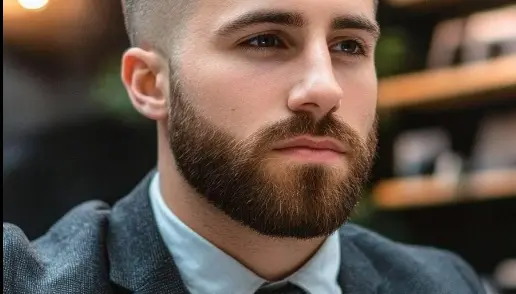
Table of Contents
What Is an Office Beard? (Quick Answer)
An office beard is any facial hair style that’s kept short, clean-edged, and evenly shaped so it reads as intentional rather than unkempt. Most office beard styles fall between heavy stubble and a short boxed beard, with crisp cheek lines, a trimmed neckline, and consistent length throughout. The goal isn’t to hide your facial hair — it’s to make it look like part of your grooming routine, not an accident.
That one sentence covers what most men actually want to know before they scroll further, but there’s a lot more to get right if you want a beard that helps your image instead of working against it.
Why Your Beard Says More at Work Than You Realize
Like it or not, facial hair still gets read as a signal in professional settings. A patchy, uneven beard can make someone look tired or careless even if that’s the furthest thing from the truth. A well-shaped beard, on the other hand, often reads as confident and put-together — which is exactly why so many men search for beard for office advice before a job interview, a promotion review, or a first week at a new company.
This isn’t about conforming for the sake of it. It’s about understanding that facial hair sits in the same category as a haircut or a clean shirt: it’s part of how people size you up in the first ten seconds, fair or not. The barbers and stylists who work with corporate clients every week will tell you the same thing — it’s rarely the presence of a beard that causes a problem. It’s the lack of shape.
If you’re new to facial hair altogether and want the full picture of what’s out there before narrowing things down, our guide to types of beard styles is a good place to start.
The 4 Grooming Rules Every Office Beard Has to Follow
Before picking a specific style, get these fundamentals right. Every style below depends on them.
- Define your neckline. The line should sit just above your Adam’s apple, following the natural curve of your jaw rather than a straight shelf. A poorly placed neckline is the single most common reason a beard looks messy in an office setting. Our full breakdown on the beard neckline walks through exactly where to trim.
- Clean up the cheek line. Loose, wandering cheek hair softens the whole shape of a beard. A straight or gently curved cheek line — not shaved too high — keeps things sharp. See our guide to the beard cheek line for the technique.
- Keep the length consistent. Uneven patches of longer and shorter hair are what separate a “growing it out” look from a finished one. A weekly trim with a guard keeps things level.
- Wash and condition it. Dry, frizzy facial hair looks unkempt no matter how well it’s shaped. A beard wash two to three times a week, followed by a light oil or balm, keeps it soft and manageable.
Get these four things right and almost any length of beard will pass as office-appropriate.
5 Best Office Beard Styles (Organized by Length)
Below are the styles that consistently work in professional environments, grouped from lowest maintenance to more involved. Each one is built around the grooming rules above.
Heavy Stubble and Short Stubble
Stubble is the easiest entry point into clean beard styles for work. It requires almost no shaping decisions — just a consistent guard length (usually 3–5mm) and a tidy neckline. It reads as deliberate rather than lazy, which is the whole trick. For the full range of stubble lengths and how to maintain each one, check our dedicated stubble beard guide.

The Corporate Beard
This is the style most barbers reach for when a client specifically asks for something boardroom-safe. It’s a short, fully connected beard — usually 1–2cm — with a hard-edged neckline and cheek line. It’s tidy without looking overly styled, which is exactly the balance an office setting rewards. We cover it in detail in our corporate beard guide.
Short Boxed Beard
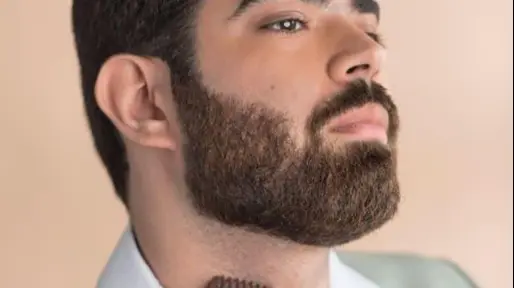
A boxed beard keeps the sides and bottom trimmed into clean, straight lines rather than tapering naturally. It gives more definition than a corporate beard while staying firmly in work beard styles territory. It suits men who want a bit more presence without moving into a longer, more casual look. Our short beard styles page has more variations at this length.
Van Dyke
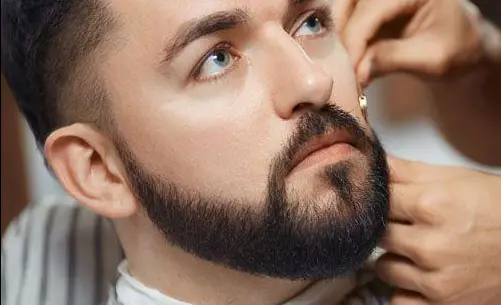
A Van Dyke pairs a trimmed goatee with a separate, well-groomed mustache, with the cheeks kept clean-shaven. It’s sharp, deliberate, and works especially well for men who grow patchy hair on their cheeks but full hair on the chin. Full technique notes are in our Van Dyke beard guide.

Circle Beard
A tighter, more compact cousin of the Van Dyke, the circle beard connects the mustache to a rounded chin beard. It’s low-profile enough for conservative offices but still gives definition to a rounder or softer jawline. See the circle beard guide for shaping tips.

Office Beard Styles by Face Shape
Picking the right shape for your face matters as much as picking a length. Here’s a quick reference table.
| Face Shape | Best Office Beard Styles | Why It Works |
| Round | Ducktail, Corporate Beard, Balbo | Adds vertical length and sharpens a soft jawline |
| Square | Stubble, Circle Beard, Van Dyke | Softens strong angles without hiding them |
| Oval | Almost any style, including Short Boxed Beard | Balanced proportions suit most shapes |
| Diamond | Chin Strap, French Beard | Adds width at the jaw where the face narrows |
| Heart | Full Stubble, Balbo | Balances a wider forehead with added chin weight |
| Oblong | Short Boxed Beard, Corporate Beard | Adds width instead of extra length |
| Triangle | Van Dyke, Extended Goatee | Draws attention upward and balances a narrow forehead |
For a deeper dive into any of these, we’ve written individual guides: best beard for round face, best beard for square face, best beard for oval face, best beard for diamond face, best beard for heart face, best beard for oblong face, and best beard for triangle face.
Does Your Industry Change the Rules? A Quick Comparison
Not every office has the same tolerance for facial hair. Here’s a general guide based on what barbers who work with corporate clients see most often.
| Industry Type | Typical Expectation | Recommended Styles |
| Finance, Law, Banking | Conservative, tightly groomed | Stubble, Corporate Beard, Short Boxed Beard |
| Tech and Startups | Flexible, style-friendly | Medium Beard, Balbo, Ducktail |
| Healthcare, Hospitality | Practical, hygiene-focused | Stubble, Corporate Beard (shorter lengths preferred) |
| Creative Industries (Design, Media) | Very flexible | Any well-groomed style, including longer options |
| Sales and Client-Facing Roles | Polished but approachable | Van Dyke, Circle Beard, Corporate Beard |
These are general patterns, not fixed rules — always check your specific workplace’s grooming policy, since some industries, particularly healthcare, have hygiene guidelines that go beyond style preference.
How to Maintain an Office Beard: Weekly Routine
A style only looks professional if it’s maintained consistently. Here’s a simple weekly routine that keeps most office grooming standards in check.
- Every 5–7 days: Trim to your chosen guard length using clippers, working with the grain first, then lightly against it for evenness.
- Every 3–4 days: Touch up the neckline and cheek line with a trimmer or razor to prevent stray hairs from creeping outward.
- Daily: Comb the beard in the direction of growth to train it and spot any uneven sections early.
- 2–3 times a week: Wash with a dedicated beard wash rather than regular shampoo, which can dry out facial hair.
- Daily, after washing: Apply a small amount of beard oil or balm to keep hair soft and skin underneath healthy.
If you’re unsure how to handle the actual trimming technique, our how to trim a beard guide walks through it step by step with tool recommendations.
Mistakes That Make a Beard Look Unprofessional
These are the issues that come up most often when a beard reads as messy rather than intentional:
- Uneven neckline height — trimming too high makes the beard look shaved into an odd shape; too low and it looks untrimmed.
- Ignoring the cheek line — letting cheek hair grow unchecked softens the entire outline of the beard.
- Skipping moisture — dry, wiry facial hair looks unkempt even when it’s the right length.
- Letting patchy spots grow long — this draws more attention to gaps rather than hiding them. If this is a recurring issue, our patchy beard guide has specific fixes.
- Inconsistent length — trimming different sections on different schedules leads to a lopsided shape over time.
- Ignoring your industry’s norms — a style that works in a creative studio might not land the same way in a courtroom.
Styling Difficulty and Time Commitment Chart
| Style | Maintenance Difficulty | Weekly Time Needed | Best For |
| Stubble | Easy | 5–10 minutes | First-time beard growers, minimal effort |
| Corporate Beard | Easy–Moderate | 10–15 minutes | Conservative offices |
| Short Boxed Beard | Moderate | 15–20 minutes | Men wanting more shape |
| Circle Beard / Van Dyke | Moderate–High | 15–20 minutes | Defined, sharp aesthetics |
| Balbo / Chin Strap | High | 20–25 minutes | Detail-oriented grooming routines |
| Medium Beard | Moderate | 15–20 minutes | Flexible workplaces |
Realistic Expectations and Common Myths
Myth: A beard automatically looks unprofessional. Not true. The research and observation from professional barbers consistently point to grooming, not the presence of facial hair itself, as the deciding factor in how a beard is perceived at work.
Myth: Thinner or patchy beards can’t work in an office. They can — shorter, well-defined styles like stubble or a tight corporate beard often suit thinner growth better than longer styles, since there’s less length for gaps to show. If growth is your main concern, our thin beard styles guide has specific direction.
Myth: You need expensive products to keep a beard office-ready. A trimmer, a basic beard wash, and an oil or balm cover almost everyone’s needs. Consistency matters far more than the price of what’s in your grooming kit.
Realistic expectation: A beard trimmed and shaped once a week, with quick neckline touch-ups in between, will hold a professional look for most of that week without extra effort. If you’re dealing with persistent skin irritation, ingrown hairs, or unusual patchiness, it’s worth a quick consultation with a dermatologist — the American Academy of Dermatology publishes general guidance on beard skin care that’s worth a look if problems persist beyond normal adjustment.
For anyone still building general beard knowledge before settling on a style, our beard care guide covers the basics from a wider angle.
Whatever length or shape you land on, the core idea behind every one of these office beard styles stays the same: sharp lines, even length, and a routine you can actually stick to. A beard that looks deliberate will read as professional far more reliably than a longer or shorter length chosen just because it’s trending.
FAQs
1. What beard length is considered office-appropriate? Most workplaces consider anything from heavy stubble (around 3–5mm) up to a short, well-defined beard of 1–2cm to be office-appropriate, as long as the neckline and cheek lines are trimmed and the length stays even.
2. Can I keep a full beard and still look professional at work? Yes, provided it’s kept clean, evenly trimmed, and well-shaped. A longer beard can look just as polished as a short one when the edges are sharp and it’s washed and conditioned regularly.
3. What’s the easiest office beard style to maintain? Stubble is generally the easiest, since it doesn’t require precise shaping — just a consistent trim length and a tidy neckline once or twice a week.
4. How often should I trim an office beard? Most styles hold their shape with a full trim every 5–7 days, plus quick neckline and cheek line touch-ups every 3–4 days.
5. Is a beard acceptable in conservative industries like finance or law? Generally yes, as long as it’s short, tightly groomed, and follows a clean, symmetrical shape. Stubble and the corporate beard are the safest choices in these settings.
6. What’s the difference between a corporate beard and a regular short beard? A corporate beard specifically emphasizes hard, clean edges and a fully connected, even length, while a general short beard can have a slightly softer or more natural taper.
7. Do beard oils actually make a difference for office grooming? Yes. Beard oil softens coarse hair, reduces itchiness during the growing-in phase, and keeps the skin underneath from getting flaky, which contributes to a tidier overall appearance.
8. Can I have a patchy beard and still keep it office-appropriate? Yes, shorter styles like stubble or a tightly trimmed corporate beard tend to minimize the appearance of patchiness better than longer styles, where gaps become more noticeable.
9. What face shape suits a Van Dyke beard best for work? Triangle and square face shapes generally suit a Van Dyke well, since it draws attention toward the chin and mustache rather than the jaw’s width.
10. Are goatees considered professional in most workplaces? Yes, a well-trimmed classic goatee is one of the more universally accepted styles across industries, since it’s compact, symmetrical, and easy to keep neat.
11. How do I fix an uneven neckline on my own? Tilt your chin up, find the natural crease just above your Adam’s apple, and trim along that curve rather than a straight horizontal line, checking both sides in a mirror as you go.
12. What’s the best way to grow out a beard while still working in an office? Keep it trimmed short and tidy at every stage of growth rather than letting it go unmanaged, since a beard that’s shaped throughout the growing process transitions more smoothly into a longer office-appropriate style.
13. Do different offices really have different beard expectations? Yes, client-facing, conservative industries like law and finance tend to favor shorter, tighter styles, while creative and tech workplaces are generally more flexible about length and shape.
14. Is stubble considered unprofessional in an office setting? Not when it’s deliberate and consistent. A patchy or uneven five o’clock shadow can look unintentional, but a maintained, even stubble length reads as a styled choice.
15. What tools do I need to maintain an office beard at home? A quality trimmer with multiple guard lengths, a small pair of detail scissors, a beard comb, and a beard wash and oil combination cover most maintenance needs at home.