 By Bread Styles Team
A triangle face is the one shape most beard guides get backwards. Instead of a wide forehead and narrow chin, it’s the opposite — a narrower forehead sitting above a jawline that’s clearly the widest part of the face. That single reversal changes almost everything about which beard actually works.
If you’ve tried a full, bushy beard and felt like it made your jaw look even heavier, that’s not your imagination. The best beard for triangle face shapes isn’t about adding bulk everywhere. It’s about controlling width at the jaw while drawing more visual attention upward, toward the mustache and cheek area, so the face reads as more balanced from forehead to chin.
This guide walks through exactly which styles do that, which ones backfire, and how to shape and maintain the beard once you’ve picked one.
Table of Contents
What Makes Triangle Faces Different From Every Other Shape
Most face-shape beard advice assumes the jaw is the part that needs help. Triangle faces flip that assumption. Here’s what typically defines the shape:
- A forehead that’s noticeably narrower than the jawline
- A jawline that’s the widest measurement on the face, often with visible angles
- Cheekbones that sit somewhere between the forehead and jaw in width
- A chin that’s usually broad rather than pointed
- A face that can look bottom-heavy, especially from the front
This is sometimes called a “pear” face shape in barbering circles, and it’s genuinely one of the less common shapes, which is part of why there’s so little accurate advice about it compared to oval or round faces.
Confirming Your Face Shape Before You Commit to a Style
Before growing anything out for weeks, it’s worth double-checking you’re actually dealing with a triangle face and not a square or diamond shape, since the beard strategy for each is different.
Quick check: stand in front of a mirror and compare three widths — your forehead, your cheekbones, and your jaw. If your jaw is clearly the widest of the three and your forehead is the narrowest, you’re looking at a triangle face.
If your jaw and forehead are closer in width with sharp, straight sides, the best beard for square face guide will serve you better. If your cheekbones are actually the widest point rather than your jaw, the best beard for diamond face shape guide is worth reading instead.
The Real Challenge With Beard Advice for Triangle Faces
Here’s the honest problem with most generic beard content: it treats every face like it needs more fullness everywhere. That works fine for a heart-shaped or oblong face, but it actively works against a triangle face.
A beard can’t narrow your jaw or widen your forehead. What it can do is shift where the eye lands first. Facial hair that’s fuller through the mustache and upper cheek area, with tighter, closer trimming along the jawline, pulls visual attention upward and reduces how dominant the jaw appears in comparison. That’s the mechanism behind every recommendation in this guide.
Choosing by Beard Density: Thick, Medium, or Patchy Growth
Not every man with a triangle face has the same beard growth, and that changes which styles are realistic. Here’s how to think about it based on what you’re actually working with.
If You Have Thick, Even Growth
You have the most flexibility. Styles like a shaped full beard or a boxed beard trimmed shorter at the jawline and fuller near the mustache will work well, since you have enough density to control shape precisely.
If You Have Medium Growth
Medium density suits styles that don’t rely on heavy volume, like a van dyke, a balbo, or a well-maintained circle beard. These add definition without needing the beard to be uniformly thick everywhere.
If You Have Patchy Growth
Patchy growth along the jaw actually works in your favor here, since you don’t want heavy fullness at the jaw anyway. Focus on strengthening mustache growth and keeping the jawline area as stubble or very short growth rather than fighting to fill it in completely. If patchiness is a long-term pattern rather than something that improves with growth time, the patchy beard guide has specific advice for working with uneven density.
The Best Beard for Triangle Face Shape, Explained
1. The Van Dyke Beard
A van dyke, with its detached mustache and pointed chin beard, is one of the strongest options for a triangle face. It draws the eye toward the mouth and chin center rather than the width of the jaw, and the detached mustache adds visual interest above the jawline instead of below it.
Why it works: It concentrates visual detail in the center of the face, away from the jaw’s outer width. Best for: Medium growth, men comfortable with regular detailed trimming. Styling difficulty: High.
Full shaping steps are in the van dyke beard guide.
2. The Balbo Beard
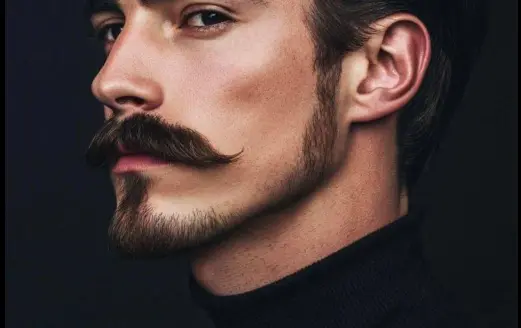
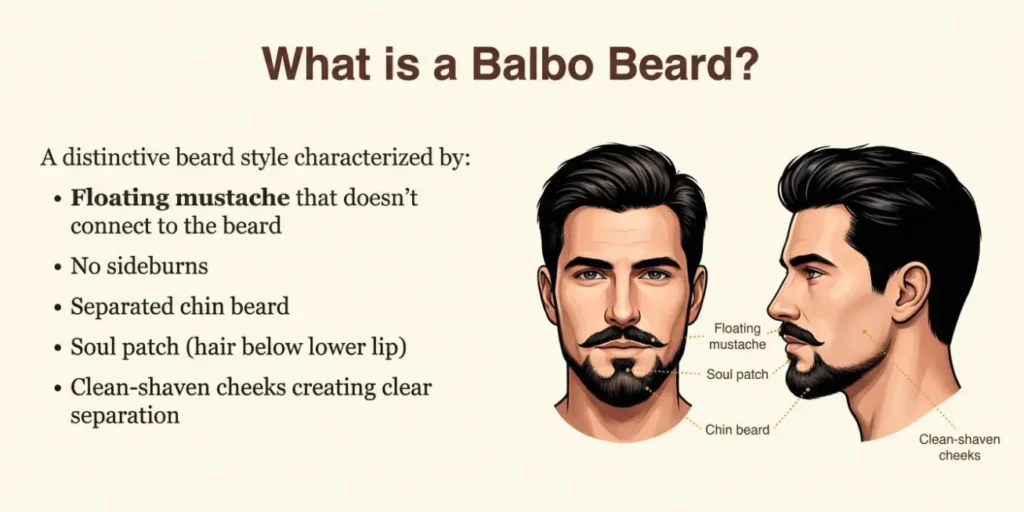
The balbo keeps a floating mustache and a shaped chin patch that doesn’t connect to full sideburns, which limits growth at the jaw corners exactly where a triangle face doesn’t need more width.
Why it works: It adds shape at the chin and mustache without extending fullness out toward the jaw corners. Best for: Medium to patchy growth with a strong mustache area. Styling difficulty: High.
Shaping instructions are covered in the balbo beard guide.
3. Circle Beard
A circle beard frames the mouth with a connected mustache and chin beard, keeping the cheeks and jaw corners clear. For a triangle face, that means attention stays centered rather than spreading out toward the widest part of the jaw.
Why it works: It’s naturally contained to the center of the face, which suits a face shape that doesn’t benefit from wide jaw coverage. Best for: Men with decent mustache and chin growth but lighter cheek density. Styling difficulty: High — precision trimming is non-negotiable with this style.
See the circle beard guide for the full shaping process.
4. Short Boxed Beard (Trimmed Tighter at the Jaw)
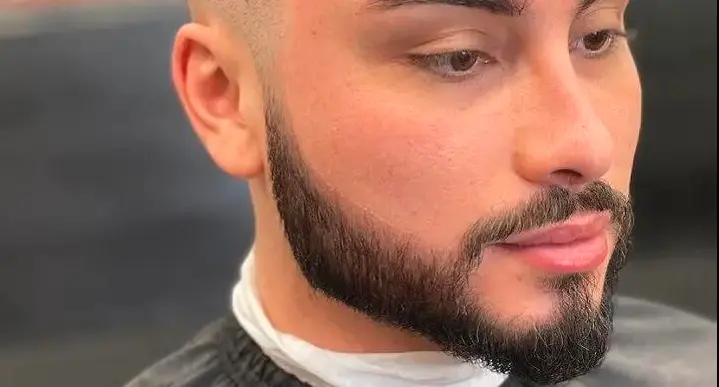
A boxed beard can work for a triangle face, but only with a deliberate adjustment: trim it noticeably shorter along the jawline and jaw corners while keeping slightly more length near the mustache and chin.
Why it works: The uneven trim length reduces the jaw’s visual dominance instead of reinforcing it. Best for: Thick, even growth that can handle this kind of length variation. Styling difficulty: Moderate to high.
More boxed variations are covered in the medium beard styles collection.
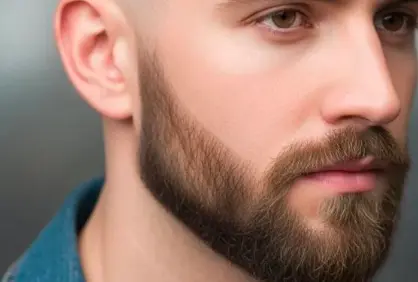
5. Corporate Beard (Kept Short and Even)
A short, closely trimmed corporate beard, kept even and tight rather than full, is a safe, low-risk option for triangle faces in professional settings. It doesn’t add jaw width, and it still gives the lower face a bit more definition.
Why it works: Minimal length means minimal added width, which suits a jaw that’s already the widest part of the face. Best for: Any growth type, especially in office environments. Styling difficulty: Low to moderate.
Trimming lengths for this style are in the corporate beard guide.

6. Thick Stubble
Stubble kept short and even across the whole face, rather than styled into a specific shape, works well for triangle faces because it adds texture without adding real width or bulk anywhere.
Why it works: It’s the lowest-impact option in terms of altering jaw appearance, which makes it a safe default. Best for: Any density, especially first-time beard growers. Styling difficulty: Low.
Trimmer settings are covered in the stubble beard guide.

Styles That Work Against a Triangle Face
A few popular styles actively work against the goal here, and they’re worth flagging directly:
- Full, bushy beards left untrimmed at the jaw — this adds bulk exactly where the face is already widest.
- Wide, connected sideburn-to-beard styles — these extend the width of the jaw visually rather than containing it.
- Long beards that hang well below the chin, since the added width and weight lower down exaggerate the bottom-heavy look a triangle face already has. If you’re drawn to a fuller, longer look regardless, at least review the long beard styles guide first to find shapes that taper rather than widen.
- Any style grown without a mustache — beard without mustache styles remove one of the few tools that helps rebalance a triangle face, since the mustache is what draws attention upward.
Quick Comparison Table
| Style | Adds Jaw Width | Draws Focus Upward | Verdict |
| Van Dyke | Low | High | Excellent |
| Balbo | Low | High | Excellent |
| Circle Beard | Low | Moderate-High | Excellent |
| Boxed (tighter at jaw) | Low-Moderate | Moderate | Good |
| Corporate (short) | Low | Low-Moderate | Good |
| Thick Stubble | Very Low | Low | Good |
| Full Bushy Beard | High | Low | Avoid |
| Long, Wide Beard | High | Low | Avoid |
Pairing Your Beard With the Right Haircut
A beard alone can only do so much for a triangle face. Since the actual imbalance is between a narrow forehead and a wide jaw, the haircut matters almost as much as the facial hair. A style with more volume or texture on top, like a textured crop or a longer fringe, adds visual width to the forehead area, which works together with a jaw-conscious beard to balance the whole face rather than fixing only half the problem.
If your barber suggests a haircut with more height and texture at the crown alongside a van dyke or balbo, that’s not a coincidence — it’s the same width-redistribution principle applied to two different areas of the face at once.
How to Shape It Yourself, Step by Step
- Let it grow untouched for 4 weeks so you can see your actual density pattern across the mustache, chin, and jaw before shaping anything.
- Identify your mustache strength. Since most triangle-face styles rely on mustache detail, this is the area worth paying closest attention to.
- Set a conservative jawline. Trim the sides and jaw corners shorter than you initially want to, since even a small amount of added length there works against the goal.
- Build detail at the chin and mustache. This is where length and shape should be more generous compared to the jaw corners.
- Check the balance from a mirror at eye level, not looking down, since that angle exaggerates jaw width and can lead to over-correcting.
- Adjust gradually. Take small amounts off the jaw sides rather than committing to a dramatic trim right away.
Maintenance That Keeps the Balance Looking Intentional
- Trim the jaw and cheek area every 7–10 days to prevent it from growing past the length that keeps the jaw controlled.
- Let the mustache and chin section go slightly longer between trims, since more length there supports the upward-focus effect.
- Use a beard brush daily on styles like the van dyke or circle beard to keep the defined shape from looking messy between trims.
- Apply beard oil to the mustache and chin area specifically, since this is the part of the beard doing the most visual work and benefits from staying soft and well-shaped.
- Book a professional shape-up every 3–4 weeks, since styles like the van dyke and balbo lose their precision quickly without regular maintenance.
The beard care guide covers washing, conditioning, and general beard health if you want a complete routine beyond shaping alone.
Mistakes Triangle-Faced Men Make Without Realizing It
- Going for a full, bushy beard because it looks strong on someone else. On a triangle face, it usually adds bulk to the part of the face that’s already the widest.
- Neglecting the mustache. Since the mustache does most of the visual balancing here, a thin or poorly shaped one undercuts the whole strategy.
- Letting the jaw sides grow longer than the chin. This is the reverse of what actually helps and tends to happen from inconsistent trimming.
- Skipping the haircut conversation. Fixing only the lower half of the face while ignoring the narrower forehead limits how balanced the final look can be.
- Copying styles built for square or oval faces. Those shapes need width added at the jaw, which is the opposite of what a triangle face needs.
Myths Worth Ignoring
Myth: A beard can’t help a triangle face at all, so it doesn’t matter what style you pick. Not true. While a beard can’t reshape your bone structure, controlled jaw width and increased upper-face focus create a real, visible difference in perceived balance.
Myth: You need thick, even growth to pull off any of these styles. Several options here, especially the van dyke, balbo, and circle beard, work well even with medium or slightly uneven density, since they don’t depend on full jaw coverage.
Myth: The jaw is the problem, so the fix is trimming it as short as possible everywhere. Extremely short jaw trimming can look unnatural if it’s not paired with intentional length near the mustache and chin. Balance matters more than simply minimizing length.
What to Actually Expect
A well-chosen beard changes how proportional your face looks through shadow, shape, and where attention lands first, but it won’t alter your actual bone structure. Most men see a noticeable improvement in balance within 8 to 12 weeks of consistent, focused shaping, though results vary based on natural growth rate and density. According to the American Academy of Dermatology, hair growth is shaped by genetic and hormonal factors, which is part of why identical routines can produce different timelines for different men. If your beard grows unusually slowly or unevenly despite consistent care, it’s worth speaking with a dermatologist rather than assuming your routine is at fault.
Frequently Asked Questions
What is the best beard for triangle face shapes? The best beard for triangle face shapes limits width at the jaw while adding detail and fullness near the mustache and chin. Styles like the van dyke, balbo, and circle beard work particularly well because they keep the jaw corners controlled.
Can a full beard work on a triangle face? A full beard can work, but only if it’s trimmed shorter at the jaw corners and kept fuller near the mustache and chin. Left to grow evenly, it tends to add bulk exactly where a triangle face is already widest.
Why does a triangle face need different beard advice than other shapes? Most face shapes have a narrower jaw that benefits from added width. A triangle face has the opposite problem, with a jaw that’s already the widest point, so the beard strategy needs to control width rather than add it.
Is a goatee good for a triangle face? A goatee can work well since it concentrates growth around the chin and mustache rather than the jaw corners, which suits the upward-focus strategy that works best for this face shape.
Does a mustache matter for a triangle face beard? Yes, significantly. A well-shaped mustache draws attention upward and away from the jaw’s width, making it one of the more important details in any triangle face beard style.
What beard styles should triangle faces avoid? Avoid full, bushy beards left untrimmed at the jaw, wide sideburn-to-beard connections, and long beards that add extra width and weight to an already dominant jawline.
Does haircut choice matter for a triangle face along with the beard? Yes. Since a triangle face has a narrower forehead, a haircut with more volume or texture at the crown helps balance the face alongside a jaw-conscious beard style.
How long does it take to see results from a beard chosen for a triangle face? Most men notice a visible improvement in facial balance within 8 to 12 weeks of consistent growth and shaping, though this varies based on individual growth rate.
Can patchy growth still work with triangle face beard styles? Yes. Styles like the van dyke, balbo, and circle beard don’t require full jaw coverage, so patchy jawline growth is less of an obstacle than it would be for a full, even beard.
How often should a triangle face beard be trimmed? The jaw and cheek area typically needs trimming every 7 to 10 days, while the mustache and chin area can go slightly longer between trims to maintain the upward-focus effect.
Is stubble a good option for a triangle face? Yes, particularly for men who want a low-maintenance option. Even, short stubble adds minimal width anywhere on the face, which keeps the jaw from looking heavier.
What’s the difference between styling a triangle face and a diamond face? A diamond face has cheekbones as the widest point, while a triangle face has the jaw as the widest point. Both benefit from controlled width, but the specific area needing attention is different.
Does beard oil help with shaping a triangle face beard? Beard oil keeps hair soft and manageable, which helps maintain precise shapes like a van dyke or circle beard, though the oil itself doesn’t influence face shape balance directly.
Can a triangle-shaped face still grow a long beard? It’s possible, but a long beard needs to taper rather than widen toward the bottom to avoid exaggerating the jaw’s natural width and weight.
Should I consult a barber before choosing a beard style for a triangle face? It’s a good idea. A barber can assess your actual density pattern and jaw width in person, which gives more accurate guidance than judging face shape from a mirror alone.