 By Beard Style
Table of Contents
Turning 40 doesn’t mean your beard has to look tired. It means your beard needs a different plan than the one you used at 25. Hair grows in slower, greys start showing up in patches, and the skin underneath needs more attention than it used to. None of that is a problem — it’s just new information, and once you work with it instead of against it, the right beard styles for men over 40 can genuinely take years off your look.
I’ve cut, shaped, and advised on hundreds of mature beards over the years, and the pattern is always the same. The men who look their best aren’t fighting the grey or forcing a style built for a twenty-something’s face. They’re choosing shapes that suit their bone structure, their growth pattern, and the amount of time they’re realistically willing to spend on upkeep. That’s what this guide is built around.
What Changes About Your Beard After 40 (And Why It Matters)
Before picking a style, it helps to understand what’s actually happening on your face, because it explains why some styles that used to work now look patchy or flat.
Growth slows down. Testosterone and DHT levels shift with age, and hair follicles that once pumped out thick growth start producing finer strands. This is completely normal and doesn’t mean anything is wrong with you.
Grey comes in unevenly. Facial hair usually greys before the hair on your head, and it rarely comes in all at once. You’ll often see grey concentrated on the chin or sideburns first, while the mustache stays darker for years. This is one reason grey beard styles need a slightly different shaping approach than a solid-color beard.
Skin texture changes. Collagen production drops with age, so the skin under a beard can look drier and less elastic. A scruffy, unkempt beard tends to draw attention to this, while a well-defined, neatly edged beard does the opposite.
Density can thin at the cheek line. Even men who never had patchy beards in their 20s sometimes notice thinner coverage along the upper cheeks after 40. A style with a slightly lower <a href=”https://beardstyles.net/beard-cheek-line/”>cheek line</a> often looks fuller and more deliberate than one that tries to climb too high.
None of this is bad news. It just means the beard styles for men over 40 that work best are usually a bit more structured than the loose, all-over fullness that suits younger faces.
What Makes a Beard Style Actually Work on a Mature Face
A good mature beard style does three things at once: it adds definition to the jaw, it works with your natural grey rather than against it, and it doesn’t require more daily effort than you’re prepared to give it.
Here’s the quick criteria I use with clients:
- Structure over volume. Clean lines along the neck and cheek do more for a mature face than sheer bushiness.
- Length that suits your growth rate. If your beard grows in slowly, a shorter, well-shaped style will look better, faster, than trying to force length.
- A style that flatters your face shape, not just one you liked in a magazine at 22.
- Realistic maintenance. A style that needs daily precision trimming will look worse than a simpler one if you don’t actually have time for it.
Keep those four points in mind as you go through the options below.
The Best Beard Styles for Men Over 40
These are the styles that consistently work well for mature faces, based on what actually holds up in the chair and in daily life — not just in photos.
1. The Short Boxed Beard
This is the single most reliable option among <a href=”https://beardstyles.net/short-beard-styles/”>short beard styles</a> for men in their 40s, 50s, and beyond. It’s kept close to the face, with crisp lines along the cheeks and neck, and it doesn’t demand much length to look intentional.
Why it works: It hides the earliest signs of thinning density while still reading as full and deliberate. It also suits almost every face shape and hair type, including finer or slower-growing hair.
Best for: Rounder or square faces that benefit from added angularity. Styling difficulty: Low. A trimmer on a guard, plus a straight edge along the neckline, keeps it sharp.

2. The Corporate Beard
If you spend your week in meetings, the <a href=”https://beardstyles.net/corporate-beard/”>corporate beard</a> is built exactly for that. It’s short, tightly edged, and never looks unkempt, which makes it one of the most dependable professional beard options for men who need to look polished without seeming overly styled.
Why it works: It signals authority and self-discipline — two things that read well in a leadership setting — without looking like you’re trying too hard. Best for: Oval, square, and rectangular faces. Styling difficulty: Low to moderate. Requires consistent edging, roughly every 5–7 days.

3. The Balbo Beard
The <a href=”https://beardstyles.net/balbo-beard/”>Balbo beard</a> disconnects the mustache slightly from the chin beard and skips the sideburns and cheek hair entirely. It’s a smart pick for men whose cheek growth has thinned with age, since it simply removes that area from the equation rather than trying to hide it.
Why it works: It adds strong jaw definition and works particularly well if you’re dealing with patchy or uneven cheek coverage. Best for: Round or oval faces that need more jaw structure. Styling difficulty: Moderate. Precise shaping is what makes or breaks this one.
4. The Van Dyke
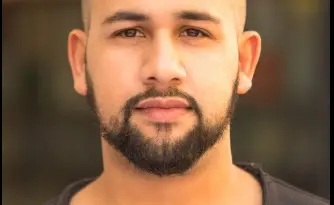
For men who’ve always had a stronger mustache than beard, or the reverse, the <a href=”https://beardstyles.net/van-dyke-beard/”>Van Dyke</a> pairs a full mustache with a pointed, separated chin beard. It’s a distinguished, slightly old-world look that tends to suit men over 40 more naturally than it suits younger faces.
Why it works: It draws the eye to the chin and mouth, which can balance out a softening jawline. Best for: Round and oval faces. Styling difficulty: Moderate to high. Needs regular shaping to keep the disconnect crisp.
5. The Full Classic Beard (Slightly Shorter Than You’d Wear at 30)
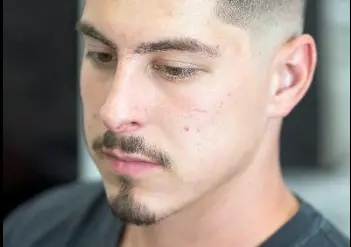
A full beard still works after 40 — it just tends to look better a notch shorter and denser than the flowing styles popular among younger men. Think substantial coverage with a rounded, controlled shape rather than untamed length.
Why it works: It projects maturity and confidence, and a well-oiled full beard photographs and reads as healthier than a longer, wispier one. Best for: Narrow, oblong, or triangular faces that benefit from added width. Styling difficulty: Moderate. Needs regular conditioning to avoid a dry, frizzy look.
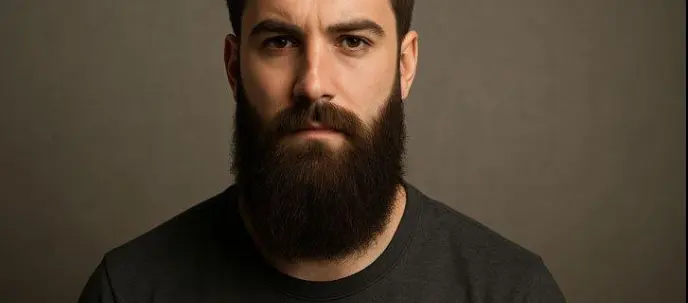
6. Grey Stubble
Not every man over 40 wants a full beard, and that’s fine — heavy <a href=”https://beardstyles.net/stubble-beard/”>stubble</a>, left at 4–6mm, can look sharp and low-maintenance, especially once grey starts coming through. Salt-and-pepper stubble often reads as rugged rather than unkempt, which is a nice bonus of ageing that few people mention.
Best for: Almost every face shape. Styling difficulty: Very low. A single trimmer guard length, maintained every few days.
7. The Ducktail Beard
The <a href=”https://beardstyles.net/ducktail-beard/”>ducktail beard</a> tapers to a point at the chin, which naturally elongates a rounder face and adds a touch of old-school elegance. It works well over a fuller growth base and suits men who want length without looking scruffy.
Best for: Round and square faces. Styling difficulty: Moderate. The point needs regular trimming to hold its shape.
Grey Beard Styles: Working With What You’ve Got
Grey hair in a beard isn’t something to fight — it’s texture, and texture can be styled. Grey beard styles that work best usually keep the length shorter and the edges cleaner, because grey hair tends to look coarser and can appear messy if it’s left too long or loose.
A few practical notes from years of trimming grey beards:
- Grey hair is often drier than pigmented hair, so a beard oil or balm with added moisture matters more here than it did in your 20s.
- Uneven greying is completely normal. If your chin is greying faster than your cheeks, a style like the Balbo or short boxed beard, which keeps the chin as the visual focus, tends to look more intentional than a style that tries to blend an uneven pattern.
- Skip the dye unless you’re doing it properly. A rushed at-home dye job is one of the fastest ways to make a mature beard look artificial. If you want to soften the grey rather than hide it, ask a barber about a subtle beard tint rather than a full-color change.
- Trim slightly shorter than you think. Grey hair reflects light differently and can look bulkier at the same length as darker hair, so many men find grey beards look cleaner half a centimeter shorter than their old length.
If you’re growing into your first genuinely grey beard, give it a minimum of four to six weeks before judging the pattern. Grey often comes in patchy at first and evens out with time.
Professional Beard Styles for the Office and Boardroom
If your work environment leans conservative, a professional beard needs to walk a line between personality and polish. The safest bets are the corporate beard, a tight short boxed beard, or well-maintained stubble — all of which read as deliberate rather than casual.
A few rules that keep any beard “boardroom safe”:
- Keep the neckline trimmed above the Adam’s apple, following a clean <a href=”https://beardstyles.net/beard-neckline/”>beard neckline</a>.
- Avoid letting the mustache grow over the lip.
- Trim at least once a week, even if the style itself is low-maintenance.
- Keep the cheek line crisp rather than letting it fade into stray hairs.
If your office culture allows more expression, a Van Dyke or Balbo can still look sharp, provided the edges stay tight.
Matching Beard Styles for Men Over 40 to Your Face Shape
Face shape matters more with age, since jawlines soften slightly and a well-chosen beard can restore definition. Here’s a quick reference table.
| Face Shape | Best Beard Styles | Why It Works |
| Round | <a href=”https://beardstyles.net/best-beard-for-round-face/”>Balbo, ducktail, short boxed</a> | Adds length and angularity to soften roundness |
| Square | Corporate beard, light stubble | Beard shouldn’t add extra bulk to an already strong jaw |
| Oval | <a href=”https://beardstyles.net/best-beard-for-oval-face/”>Almost any style works</a> | Balanced proportions suit most shapes |
| Oblong | <a href=”https://beardstyles.net/best-beard-for-oblong-face/”>Fuller, wider beard styles</a> | Adds width to balance a longer face |
| Triangle | <a href=”https://beardstyles.net/best-beard-for-triangle-face/”>Full classic beard, wider styles</a> | Balances a narrower jaw with a broader chin |
| Diamond | <a href=”https://beardstyles.net/best-beard-for-diamond-face/”>Van Dyke, short boxed beard</a> | Softens sharp cheekbones |
| Heart | <a href=”https://beardstyles.net/best-beard-for-heart-face/”>Full beard, ducktail</a> | Adds weight to a narrower chin |
| Square-jawed corporate | Corporate beard | Reinforces structure without overwhelming it |
If you’re unsure which category you fall into, stand in front of a mirror and compare the width of your forehead, cheekbones, and jaw. The widest of those three usually tells you the shape you’re working with.
Common Beard Problems After 40 (and How to Fix Them)
Patchy Growth
Patchiness gets more common with age, particularly along the cheeks. Rather than fighting it, a <a href=”https://beardstyles.net/patchy-beard/”>patchy beard</a> style like the Balbo, chin strap, or a lower cheek line can work with the pattern instead of exposing it.
Slower Growth
If your beard takes longer to fill in than it used to, resist the urge to over-trim while you wait. Give it four full weeks before deciding a style isn’t working — the first few weeks of any new beard almost always look uneven.
Dryness and Itchiness
Older skin produces less natural oil, so a beard oil or balm isn’t optional at this stage — it’s basic upkeep. Apply it to a towel-dried beard, working from skin to tip, once daily.
Coarse or Wiry Texture
Grey and ageing hair often grows in coarser. A boar-bristle brush after applying oil helps train the direction of growth and keeps flyaways under control.
Thinning Neck Coverage
If neck hair grows in thinner than it used to, keep the neckline slightly higher than the traditional guideline (just above the Adam’s apple) so thin patches aren’t on display.
A Realistic Maintenance Routine for Mature Beards
You don’t need a ten-step routine. You need consistency. Here’s what actually holds up:
- Wash 2–3 times a week with a dedicated beard wash — daily shampoo strips natural oils your skin is already producing less of.
- Apply beard oil daily, focusing on the skin underneath, not just the visible hair.
- Trim every 1–2 weeks to maintain shape, even for shorter styles.
- Brush or comb daily to train growth direction and distribute oil evenly.
- Moisturize the skin underneath, especially in dry or cold climates.
- See a barber every 4–6 weeks for professional line-ups, even if you maintain length yourself at home.
Mistakes Men Over 40 Make With Their Beards
- Copying a style built for a younger face. A beard that suited you at 25 may not suit your bone structure or growth pattern now.
- Growing it too long too fast. Length without shape reads as neglect, not style.
- Ignoring the neckline. This is the single fastest way to make any beard look sloppy, regardless of age.
- Skipping moisturizer. Dry, ageing skin under a beard shows through faster than people expect.
- Trying to dye grey away completely. A subtle tint can work; a full, obvious dye job rarely does.
- Not consulting a barber at all. A quick professional consultation can identify which of the many <a href=”https://beardstyles.net/types-of-beard-styles/”>types of beard styles</a> actually suits your face, rather than guessing.
Final Thoughts
The right beard styles for men over 40 aren’t about chasing youth — they’re about working with the face and growth pattern you actually have now. A cleaner, shorter, more structured beard almost always reads as more mature beard styles for men over 40 category. Beard for older men doesn’t mean fading into the background; it means picking a shape that adds definition, respects your natural grey, and fits into a maintenance routine you’ll genuinely keep up with. Get the shape right, keep the edges tight, and the grey stops being something to hide and starts being part of the look.
For more on getting the details right, check our full <a href=”https://beardstyles.net/beard-care-guide/”>beard care guide</a> or learn <a href=”https://beardstyles.net/how-to-trim-a-beard/”>how to trim a beard</a> properly at home.
FAQs
1. What is the best beard style for a man over 40? The short boxed beard and corporate beard are generally the most reliable beard styles for men over 40, since both offer structure and definition without demanding heavy maintenance or fast growth.
2. Do beard styles need to change as you get older? Yes. Slower growth, uneven greying, and drier skin mean that shorter, more structured mature beard styles usually look better than the looser, fuller styles common in your 20s.
3. What’s the best way to style a grey beard? Keep grey beard styles slightly shorter than you would a pigmented beard, use a moisturizing oil daily, and choose a defined shape like a Balbo or short boxed beard rather than letting length go unchecked.
4. Should I dye my beard to hide the grey? It’s optional, not necessary. A subtle professional tint can soften harsh grey patches, but a full at-home dye job often looks unnatural. Many men find grey looks sharper when it’s simply well-groomed.
5. What beard style is best for a receding hairline? A fuller beard, such as a Bandholz or classic full beard, can help balance facial proportions when hair is thinning on top, drawing attention downward toward a well-groomed jaw.
6. Is stubble appropriate for men over 40? Yes. Well-maintained grey or salt-and-pepper stubble, kept between 4–6mm, often looks rugged and deliberate rather than unkempt, and requires very little daily upkeep.
7. What’s the most professional beard style for older men? The corporate beard is the standard choice for a professional beard, since it’s short, tightly edged, and reads as polished in office or client-facing settings.
8. How often should a beard be trimmed after 40? Every 1–2 weeks for shape maintenance, with a professional barber visit every 4–6 weeks for precise line-ups along the neck and cheeks.
9. Why is my beard growing in patchy after 40? Hormonal shifts and slower follicle activity can cause thinner patches, especially along the cheeks. Styles like the Balbo or chin strap work with this pattern rather than exposing it.
10. What face shape suits a full beard best? Oblong, triangle, and heart-shaped faces generally benefit most from a fuller beard, since it adds width and balances narrower jawlines.
11. Does beard oil actually help with ageing skin? Yes. As natural oil production slows with age, beard oil helps replace lost moisture, reduce itchiness, and keep both the hair and the skin underneath healthier.
12. Can you have a long beard after 40? Absolutely, though it tends to look best kept dense and well-shaped rather than left to grow unchecked. A slightly shorter, tidier version of a long beard usually reads as more deliberate.
13. What’s the easiest low-maintenance beard for older men? Grey stubble or a short boxed beard are the two easiest options, both needing only a single trimmer guard length and occasional edging.
14. Should older men see a dermatologist about beard skin issues? If you notice persistent redness, flaking, or irritation under the beard, it’s worth consulting a source like the American Academy of Dermatology or a qualified dermatologist rather than guessing at a fix.
15. What beard styles work best with a professional beard for a corporate job? The corporate beard, short boxed beard, and tidy stubble are the safest professional beard choices, since all three stay neat with minimal daily effort and suit most office dress codes.