 By Beard Style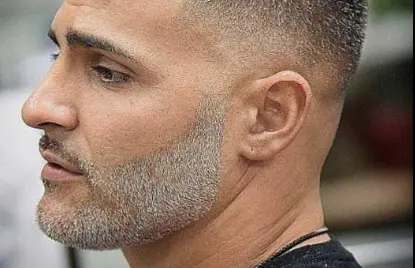
Table of Contents
What a Salt and Pepper Beard Actually Is
A salt and pepper beard is a beard where dark and grey or silver hairs grow mixed together rather than the whole beard converting to one uniform shade. Most men move through this stage at some point, usually somewhere between their late twenties and mid-fifties, as pigment production slows down at different rates across individual follicles.
It’s not the same as a fully grey or white beard, and it’s not something you can force by shaving more or trimming a certain way. The pattern is set follicle by follicle, which is why one man’s salt and pepper beard might be evenly speckled across the whole face, while another’s shows up as a solid grey patch on the chin with dark hair everywhere else.
What’s changed in recent years is how this look is perceived. A salt and pepper beard used to be treated as something to dye away or tolerate. Now it’s one of the more requested looks in barbershops, associated with a mature beard that reads as experienced rather than aging. This guide covers the actual styling and grooming choices that make the difference between a salt and pepper beard that looks intentional and one that just looks unkempt.
Is It Genetics, Aging, or Both?
Quick answer: A salt and pepper beard is caused primarily by genetics, not lifestyle. Melanin production in facial hair follicles typically declines earlier and more unevenly than scalp hair, and the age this starts, along with how patchy or even the pattern looks, is largely inherited.
A few things worth knowing:
- Facial hair often turns salt and pepper years before scalp hair shows any grey, because beard follicles are more sensitive to pigment changes
- Stress may play a small role in accelerating the process for some men, though the research on this is limited and genetics remain the dominant factor
- There’s no reliable way to speed up or reverse the transition through diet, supplements, or grooming habits
- The pattern can keep shifting for years before settling into a fully grey or white beard later in life
If your salt and pepper pattern appeared suddenly, in an unusual shape, or came with other symptoms like patchy hair loss, it’s worth mentioning to a doctor or dermatologist, since sudden pigment loss can occasionally be linked to a treatable condition. For the vast majority of men, though, this is just a normal stage of getting older.
Why Men Are Growing Into This Look on Purpose
The shift in attitude toward the salt and pepper beard has a lot to do with how it reads visually. Mixed dark and silver tones add texture and depth to a beard in a way flat, single-color hair doesn’t. It also tends to draw attention to jawline structure, since the contrast between shades naturally highlights shape.
There’s also a practical side. Men who’ve spent years dyeing a fully grey beard, or shaving off patches they didn’t like, often find that once they stop fighting the pattern and instead choose a style built around it, the beard requires far less upkeep and looks more natural in every kind of lighting, not just the flattering kind.
The 11 Best Salt and Pepper Beard Styles
Each of these works with a mixed-tone pattern rather than trying to disguise it, and all of them are realistic for barbers to recreate without needing perfectly even growth to start.
1. Salt and Pepper Stubble
Kept between 2 and 5mm, stubble blends dark and grey hairs into a single textured shadow rather than a scattered pattern. It’s the lowest-maintenance salt and pepper beard style and one of the most universally flattering, regardless of face shape or density.
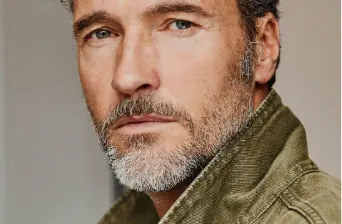
2. Full Bandholz
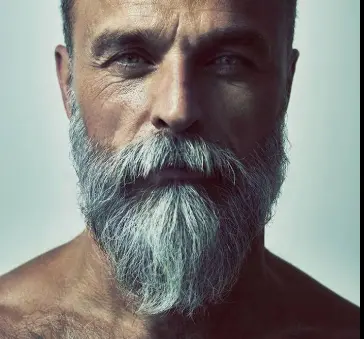
A long, natural, mostly unshaped beard. On mixed-tone hair, a Bandholz beard has real visual presence, since the length gives the salt and pepper pattern room to actually show its texture instead of getting lost in a short trim.
3. Short Boxed Beard
Straight, defined lines with length under an inch. The crisp geometry gives the eye a clear shape to follow, which balances out any unevenness in how the dark and grey hairs are distributed.
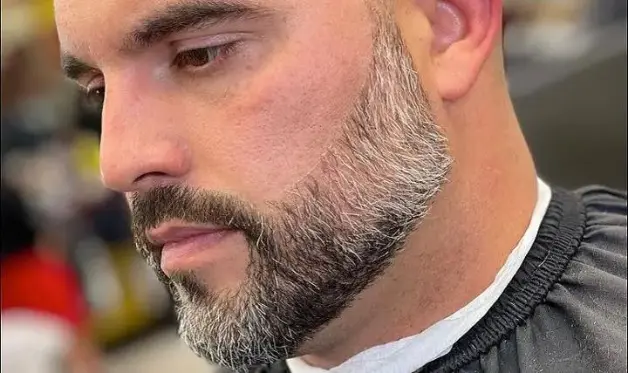
4. Corporate Beard
A tight, professional corporate beard that barely rises above stubble length. This is the safest, most versatile salt and pepper beard style for client-facing or formal work environments.
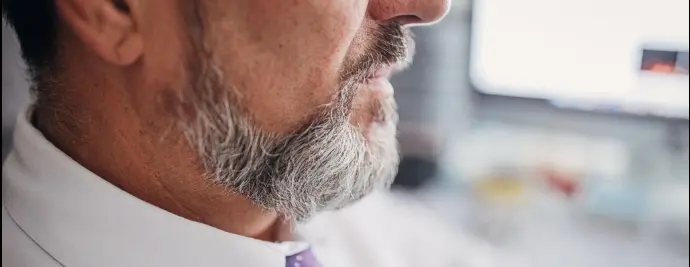
5. Garibaldi
Rounded, full, and slightly textured at the edges, the Garibaldi beard suits salt and pepper growth that’s naturally a bit coarse, since the rounded shape works with the texture rather than fighting it.
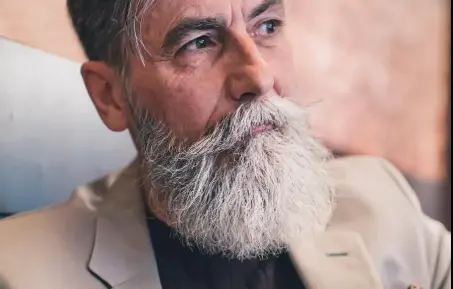
6. Van Dyke
Isolating the chin and mustache while shaving the cheeks clean works especially well if your cheek hair has gone more grey than your chin, or the other way around. The Van Dyke format turns that contrast into a deliberate design choice.
7. Medium Length Beard
A medium beard style around 1–2 inches, slightly tapered at the edges. Long enough to show real depth of tone, short enough to stay easy to manage day to day.
8. Circle Beard
A tighter circle beard connecting the mustache and chin. Works well on men whose density is more concentrated around the mouth, and keeps grooming time to a few minutes a week.
9. Chin Strap With Cheek Stubble
A clean chin strap line paired with light stubble across the cheeks creates natural depth, especially useful if your jawline has gone noticeably more silver than the rest of your face.
10. Extended Goatee
An extended goatee connects a thin jaw strip to the mustache and chin. On mixed-tone hair, the thinner shape keeps the whole look modern rather than heavy, which suits narrower faces particularly well.
11. Balbo
A floating mustache and chin patch with clean-shaven cheeks. The Balbo beard is geometric and detached, which makes it a strong option if your cheek pattern is uneven and you’d rather not deal with blending it at all.
| Style | Best Salt and Pepper Pattern | Maintenance |
| Stubble | Even, mixed all over | Very Low |
| Bandholz | Coarse, thick, well-distributed | High |
| Short Boxed | Slightly uneven | Medium |
| Corporate | Any pattern | Low |
| Garibaldi | Coarse, dense | Medium-High |
| Van Dyke | Uneven cheeks vs. chin | Medium |
| Medium Length | Balanced, moderate density | Medium |
| Circle Beard | Concentrated near mouth | Low |
| Chin Strap + Stubble | Silver jaw, darker cheeks | Medium |
| Extended Goatee | Narrow face, uneven cheeks | Medium |
| Balbo | Very uneven cheek pattern | Medium |
How to Get a More Balanced, Blended Pattern
You can’t change where the grey shows up, but you can control how noticeable the unevenness looks day to day.
- Keep length consistent. A uniform length across the whole beard blends mixed tones far better than a beard with random longer and shorter sections.
- Brush daily with a boar-bristle brush. This lifts hair away from the skin and distributes it more evenly, which softens the appearance of patchy contrast.
- Trim slightly shorter during the most uneven phase. As the pattern shifts over the years, keeping things a touch shorter helps disguise transitional unevenness until it settles.
- Use a matte, non-shiny beard balm. Glossy products can make grey strands catch more light than dark ones, exaggerating the contrast. A matte finish keeps the tone looking more unified.
- Get edges professionally defined every few weeks. A sharp cheek line and neckline pull attention toward the shape of the beard rather than the color variation inside it. Our guides on beard cheek line and beard neckline cover exact placement for different face shapes.
Best Face Shapes for a Salt and Pepper Beard
The mixed tone itself doesn’t change proportion rules, but the added texture makes shape choice slightly more forgiving than with flat, single-color hair.
- Round face: Angular styles like the Van Dyke or a tapered short boxed beard add structure. See best beard for round face
- Oval face: Nearly any style works, though a medium length beard keeps the natural balance oval faces already have. Full guide: best beard for oval face
- Square face: A Garibaldi or circle beard softens strong jaw angles.
- Heart-shaped face: Fuller chin coverage, like an extended goatee, balances a wider forehead. See best beard for heart face
- Diamond face: A chin strap with stubble fill balances a narrower forehead and chin. More detail here: best beard for diamond face
Grooming a Mature Beard: What Changes
A mature beard with mixed grey and dark hair behaves differently than it did in your twenties, and the routine should shift with it.
Texture usually gets coarser. Grey hair strands have a different internal structure than pigmented ones, often making them wirier and less able to hold moisture. A heavier oil or balm helps more than the lightweight formulas that worked fine on younger, darker hair.
Grey strands can yellow. UV exposure, smoking, and hard water can all give grey and white hairs a dull, brassy tint over time. A purple-toned beard wash used once a week helps counter this before it becomes noticeable.
Growth can slow slightly. This is a normal part of aging and not usually a sign of a problem, but it does mean a mature beard may take a little longer to reach a given length than it used to.
Skin sensitivity can increase. Older skin is often more prone to dryness underneath a beard, so a gentle, fragrance-light wash and regular exfoliation matter more than they did at twenty-five.
Our beard care guide covers full routine building, and if you want deeper detail on styling fully converted grey and white beards specifically, our grey beard styles guide picks up where this one leaves off.
Mistakes That Make the Look Read as Messy Instead of Sharp
- Letting length go unchecked. An overgrown salt and pepper beard reads as neglected fast, since the mixed tone already draws the eye, and untrimmed length adds visual noise on top of it.
- Ignoring the neckline. A clean jawline paired with an overgrown neck looks unfinished from any angle but straight ahead.
- Using heavy, glossy products. These weigh hair down and make grey strands shine more than dark ones, exaggerating unevenness instead of softening it.
- Trying to dye only the grey sections. Partial dye jobs almost always look patchy and artificial. If you’re going to dye, commit to the whole beard or don’t do it at all.
- Comparing your pattern to filtered photos online. Many “salt and pepper beard” reference photos online are edited or shot under studio lighting. Your own beard under normal daylight will look different, and that’s expected.
Salt and Pepper vs. Fully Grey vs. Dyed: Which Should You Pick?
| Salt and Pepper (Natural) | Fully Grey/Silver | Dyed | |
| Maintenance | Low | Low | Ongoing touch-ups every 3–4 weeks |
| Best for | Men still transitioning, wanting a textured look | Men whose beard has fully converted | Men wanting a uniform, specific tone |
| Risk | None | None | Skin irritation, unnatural regrowth lines |
| Cost over time | None | None | Recurring product and salon cost |
There’s no objectively “better” choice here. A lot of men who start out planning to dye their salt and pepper beard end up sticking with the natural pattern once they see how it looks with the right style and grooming routine. Others prefer full control over the tone and are happy to maintain a dye schedule. Either is a reasonable decision, and neither is a grooming mistake.
FAQs
What is a salt and pepper beard? A salt and pepper beard is facial hair that has a mix of dark and grey or silver strands rather than being uniformly one color, usually as part of the natural transition toward a fully grey beard over time.
At what age do men typically get a salt and pepper beard? It varies significantly by genetics, but many men start noticing mixed grey and dark strands in their late twenties to mid-thirties, with the pattern becoming more pronounced through their forties and fifties.
Can you make a beard go salt and pepper on purpose? No. The timing and pattern are determined by genetics and natural pigment loss in the hair follicles. There’s no product or grooming technique that reliably speeds up or triggers the process.
What’s the best beard style for a salt and pepper look? Stubble, a short boxed beard, and a corporate beard are among the most reliable choices, since shorter, well-defined shapes blend mixed tones evenly and require minimal daily upkeep.
Should I dye a salt and pepper beard or leave it natural? Both are valid. Dyeing gives you a uniform, consistent tone but needs regular touch-ups, while leaving it natural is lower maintenance and often reads as distinguished once styled well.
Does a salt and pepper beard make you look older? Not inherently. Shape and grooming have a far bigger impact on perceived age than hair color. A well-trimmed, sharply edged salt and pepper beard often reads as mature and put-together rather than old.
Why is my beard salt and pepper but my hair isn’t grey yet? Facial hair follicles often lose pigment earlier and faster than scalp hair follicles, which is a normal and common pattern, not a sign of anything unusual.
Is a salt and pepper beard style different from a fully grey beard style? Yes. Salt and pepper styling focuses on blending uneven dark and silver strands, while fully grey styling focuses more on shape and edge definition since the tone is already consistent throughout.
What products help a salt and pepper beard look its best? A matte, non-shiny beard balm keeps mixed tones looking unified, while a heavier moisturizing oil helps with the coarser texture that often comes with greying hair.
Can stress cause a salt and pepper beard? Stress may play a minor role for some men, but genetics remain the primary factor in when and how facial hair starts turning grey.
Is it normal for a salt and pepper beard to be patchy? Yes. Uneven distribution of grey and dark strands is common during the transition phase and typically becomes less noticeable, or simply less relevant, once the beard converts more fully to grey later on.
What face shapes suit a salt and pepper beard best? Oval and square face shapes tend to pair especially well with mixed-tone beards, though most shapes work fine as long as the style is matched to the individual’s jawline and proportions rather than chosen at random.
Final Thoughts
A salt and pepper beard isn’t a phase to rush through or a pattern to fight. Once you choose a style built around the mixed tone rather than trying to hide it, the look tends to settle into something that reads as deliberate and mature rather than accidental. Keep the length consistent, stay on top of the edges, and adjust your products for coarser, drier hair, and a salt and pepper beard will do more work for your appearance than a flat, single-color beard ever could.
If your pattern has mostly converted to silver or white already, our grey beard styles guide goes deeper into styling and care for that stage, and the full types of beard styles library is worth browsing if you’re still deciding on shape.
Suggested Image ALT Text: “Man with a well-groomed salt and pepper beard and defined jawline”