 By Bread Styles Team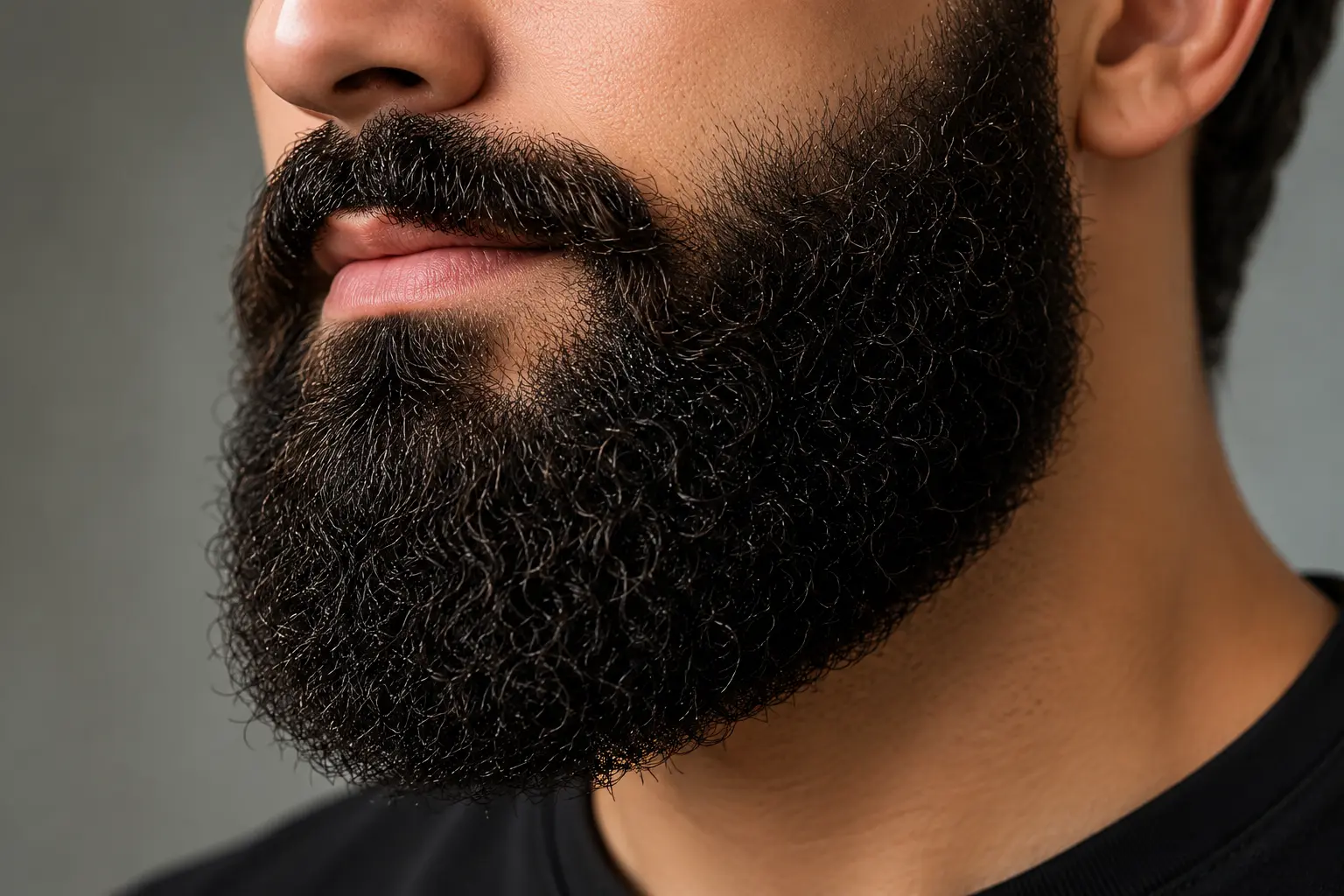
Table of Contents
Why Curly Beard Care Needs a Different Approach
Curly beard care differs from standard beard care because curly strands have more twists and bends along their length, which trap less natural oil, tangle more easily, and are more prone to ingrown hairs than straight facial hair. Following a generic routine built for straight hair usually leaves curly beards dry, frizzy, and harder to shape than they need to be.
The curl itself isn’t the problem. Curly facial hair can look sharp, full, and well-defined with the right approach — the issue is that most general grooming advice assumes straight or wavy hair, which behaves very differently. Curl pattern affects how oil travels down the strand, how tangling happens, and even how trimming direction impacts ingrown hair risk.
This guide focuses specifically on what curly hair needs differently, rather than repeating general upkeep already covered in our beard care guide.
Understanding Your Curl Pattern
Facial hair curl typically falls into a few loose categories, and knowing where yours sits helps you choose the right products and techniques.
| Pattern | Description | Care Priority |
| Wavy | Loose S-shaped bends, minimal tangling | Light conditioning, easiest to manage |
| Curly | Defined loops or spirals | Moderate conditioning, detangling needed |
| Coily/Kinky | Tight, dense curls close to the skin | Heaviest conditioning, most prone to tangling and ingrowns |
Most men fall somewhere on this spectrum rather than fitting neatly into one category, and curl pattern can even vary across different parts of the same beard — tighter near the jawline, looser toward the chin, for example.
The Biggest Challenges With Curly Facial Hair
Curly beards deal with a specific set of issues more often than straight ones:
- Dryness – Natural oils struggle to travel down a twisting strand the way they do on straight hair, making curly beards more prone to dryness by default
- Tangling – Curl loops catch on each other, leading to knots that straight hair rarely develops
- Frizz – Humidity and dryness both cause the cuticle to lift, creating that fuzzy, undefined look
- Ingrown hairs – Curly hair re-enters the skin more easily after trimming or shaving, especially along the neckline
- Uneven shape – Curl pattern can make length look inconsistent even when it’s technically even, since curls shrink hair’s visual length compared to its actual length
Recognizing which of these apply to you shapes which parts of the routine below matter most.
A Curly Beard Care Routine That Actually Works
- Wash two to three times weekly with a moisturizing beard wash, since curly hair tolerates less frequent washing better than straight hair.
- Detangle before washing, not after. Curly hair is more prone to breakage when detangled while wet and swollen.
- Apply conditioner while damp, focusing on mid-length to ends where dryness concentrates most.
- Apply beard oil to fully damp hair, working it through with fingers rather than just combing it on top.
- Add balm or butter for hold and extra moisture, especially for beards past short length.
- Scrunch or shape curls with fingers rather than brushing through when curl definition is the goal.
- Deep condition weekly, since curly and coily hair loses moisture faster than straighter textures.
Curly Beard Care Checklist
- [ ] Wash 2–3 times weekly with moisturizing wash
- [ ] Detangle before washing
- [ ] Condition while damp
- [ ] Oil applied to fully damp hair
- [ ] Balm/butter added for longer lengths
- [ ] Weekly deep conditioning treatment
How to Detangle Without Causing Breakage
Curly hair tangles more, and detangling it the wrong way causes more breakage than any other single habit.
- Start with a wide-tooth comb, never a fine-tooth comb or brush on dry curls.
- Detangle from the ends first, working upward. Starting at the roots pushes knots downward and makes them worse.
- Add slip with conditioner or oil before detangling — dry curls resist combing and snap more easily.
- Be patient with stubborn knots. Gently work them apart with fingers rather than forcing a comb through.
- Detangle before drying, since curls tighten and tangle further as they dry without guidance.
Taming Frizz vs Enhancing Curl Definition
These two goals sometimes pull in different directions, so it helps to decide which one matters more to you.
| Goal | Approach |
| Taming frizz | Lightweight oil, minimal touching once styled, avoid over-brushing after product is applied |
| Enhancing curl definition | Apply product to soaking-wet hair, scrunch upward, let air dry without disturbing |
| Balanced look | Light balm for hold plus occasional finger-styling rather than heavy brushing |
Brushing tends to break up curl pattern and increase frizz, while finger-styling on damp hair preserves natural curl shape better. Choose based on whether you want a defined curly look or a smoother, less textured appearance.
Preventing Ingrown Hairs in Curly Beards
Curly and coily hair is more prone to ingrown hairs because the curved growth pattern makes it easier for a trimmed tip to curl back into the skin.
- Trim in the direction of growth, not against it, to reduce sharp-angled tips that re-enter skin easily
- Avoid shaving too close in ingrown-prone areas like the neckline; a slightly longer length reduces risk
- Exfoliate gently once or twice weekly to prevent dead skin from trapping hair as it grows
- Use a clean, sharp trimmer, since dull blades tug and increase irritation
- Apply a soothing product after trimming, especially around the neckline, where ingrowns are most common
Our beard neckline guide covers technique specifically for reducing irritation in this high-risk area, which matters more for curly beards than straight ones.
Best Beard Styles for Curly Hair
Curly texture works well with certain styles more naturally than others:
- Hipster beard – Embraces natural texture and volume rather than fighting it
- Viking beard styles – Longer, fuller shapes that suit curl volume well
- Medium-length rounded shapes – Work with curl bounce rather than requiring sharp, straight lines
- Bandholz beard – A fuller, natural growth style that pairs well with curl texture and volume
Sharply geometric styles like a precise Van Dyke beard or crisp goatee styles tend to require more daily effort with curly hair, since curl pattern naturally resists holding tight, straight lines.
Styling Tools Worth Using
- Wide-tooth comb – essential for gentle detangling
- Fingers – often better than a brush for defining curl without disrupting pattern
- Beard straightener – useful occasionally for a smoother look, though overuse can cause heat damage; see our beard straightener guide for safe technique
- Boar-bristle brush – better suited for wavy patterns than tight curls, where it can increase frizz if overused
Curly Beard Care by Length
Short curly beards: Lower maintenance overall, but still prone to dryness and require regular conditioning despite the shorter length.
Medium curly beards: This is where tangling and shape control become more noticeable, making weekly deep conditioning and consistent detangling more important. Our medium beard styles guide covers shaping considerations at this stage.
Long curly beards: Needs the most consistent moisture and detangling effort, since curl pattern combined with length increases tangling risk significantly. Check our long beard styles guide for length-specific maintenance notes.
Common Mistakes That Make Curly Beards Harder to Manage
- Brushing dry curls. This breaks up natural curl pattern and increases frizz rather than smoothing it.
- Detangling from the roots down. This pushes knots together instead of working them out.
- Overwashing. Curly hair needs oil to stay along its length more than straight hair does, and daily washing strips that faster than it can replenish.
- Skipping conditioner. Curly hair generally needs more conditioning than straight hair to manage dryness and tangling.
- Trimming against the direction of curl growth. This increases the chance of ingrown hairs significantly.
Myths About Curly Facial Hair
Myth: Curly beards are always harder to grow than straight ones. Not accurate. Curl pattern affects texture and manageability, not the underlying rate or density of hair growth.
Myth: You need to brush a curly beard daily to keep it neat. Not true. Brushing often disrupts curl pattern and increases frizz — finger-styling or a wide-tooth comb usually works better.
Myth: Curly facial hair can’t hold a sharp, defined shape. Not entirely accurate. Curly beards can hold defined shapes with the right products and trimming technique, though it typically takes more consistent effort than straight hair.
Myth: Shaving is the only way to avoid ingrown hairs with curly hair. Not true. Trimming in the direction of growth, avoiding overly close cuts, and gentle exfoliation reduce ingrown hair risk significantly without needing to shave.
Barber’s Take
Curly beard clients almost always improve fastest by changing two habits: switching from a brush to a wide-tooth comb or fingers, and adding a proper conditioning step they’d been skipping. Curly hair simply behaves differently under a brush than straight hair does, and most men apply the same tools and expectations across both without realizing why their results don’t match what works for someone with straighter facial hair.
Patience with detangling also matters more here than with any other hair type. Rushing through knots with a fine-tooth comb on dry hair causes more breakage over a few months than almost any other single habit.
Final Thoughts
Curly beard care isn’t about fighting your natural texture — it’s about working with it using the right tools and technique. Wash a little less, condition a lot more, detangle gently from the ends up, and choose styles that complement curl and volume rather than resisting them. With the right routine, curly facial hair holds up just as well as any other texture, and often looks fuller and more distinctive once it’s properly cared for.
FAQs
How is curly beard care different from regular beard care? Curly beard care requires more conditioning, gentler detangling, and different trimming techniques to prevent ingrown hairs, since curl pattern traps less natural oil and tangles more easily than straight hair.
Why is my curly beard always dry? Curly hair strands have a twisting shape that makes it harder for natural oils to travel down the length, which is why curly beards tend to dry out faster than straight ones without extra conditioning.
Should I brush or comb a curly beard? A wide-tooth comb or fingers generally work better than a brush, since brushing tends to break up curl pattern and increase frizz.
How often should I wash a curly beard? Two to three times a week with a moisturizing beard wash is typically ideal, since curly hair needs to retain natural oils more than straight hair does.
Why does my curly beard get so many ingrown hairs? Curly hair curves back into the skin more easily after trimming, especially if cut against the direction of growth or shaved too closely.
What’s the best way to detangle a curly beard? Start from the ends and work upward with a wide-tooth comb, using conditioner or oil for slip, rather than starting at the roots or combing dry hair.
Can a curly beard hold a sharp, defined shape? Yes, with consistent trimming and the right products, though it generally takes more regular maintenance than a straight beard to hold crisp lines.
Is beard oil enough for curly facial hair, or do I need more? Oil alone often isn’t enough for curlier textures. Adding a leave-in conditioner and, for longer beards, a balm or butter typically gives better, longer-lasting results.
What beard styles work best with curly hair? Fuller, natural-volume styles like a hipster or Viking-inspired beard tend to suit curly texture better than sharply geometric shapes that require constant straight-line upkeep.
Does trimming direction matter for curly beards? Yes. Trimming in the direction of natural growth reduces the risk of hair curling back into the skin and causing ingrown hairs, which is more common with curly texture.
Can heat styling damage a curly beard? Overusing a beard straightener can dry out and weaken curly hair over time, so occasional use with a heat-protectant product is safer than daily styling.
Why does my curly beard look shorter than it actually is? Curl pattern causes hair to shrink visually compared to its true length, which is a normal characteristic of curly and coily hair rather than uneven growth.