 By Bread Styles Team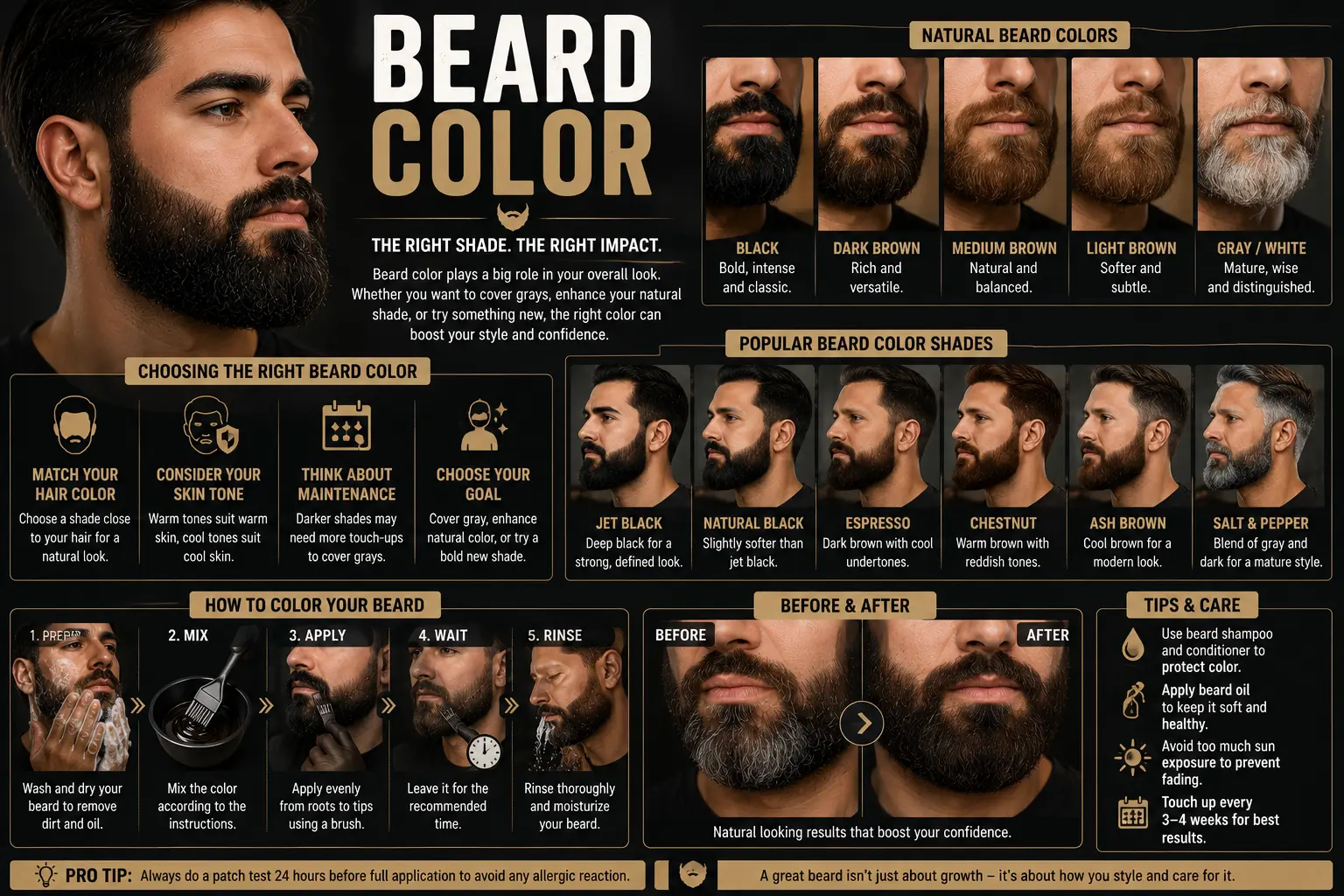
Beard color confuses a lot of men, mostly because it so often doesn’t match the hair on their head the way they’d expect. A guy with dark brown hair grows in a reddish beard. A blonde-haired man ends up with beard hair three shades darker. This isn’t a fluke or a sign anything’s wrong — it’s genetics working slightly differently on facial hair than on scalp hair, and it’s more common than most people realize.
This guide covers what actually determines beard color, why the mismatch with head hair happens, and a practical rundown of the main color categories — black, brown, red, blonde, and grey — including what tends to differ in care and styling for each. If you’re specifically looking to change your color rather than understand it, the dedicated beard dye guide covers that process step by step.
Table of Contents
What Determines Natural Beard Color
Quick answer: Beard color is determined by genetics, specifically the type and amount of melanin your hair follicles produce. Two types of melanin — eumelanin (black/brown) and pheomelanin (red/yellow) — combine in different ratios to create the full range of natural hair color, including facial hair.
The gene most associated with red and lighter tones, often called MC1R, can behave differently in facial hair follicles than in scalp follicles, even within the same person. That’s the core reason beard color and head hair color can genuinely diverge — it’s not one master gene controlling all hair on your body uniformly, but multiple follicle populations that can express pigment somewhat independently.
Why Your Beard Is a Different Color Than the Hair on Your Head
This is one of the most searched beard color questions, so it deserves a direct answer.
Quick answer: Facial hair follicles often have a different density of pigment-producing cells than scalp follicles, even in the same person, which is why many men see reddish, lighter, or darker tones in their beard compared to their head hair. This is a normal genetic variation, not a sign of anything unusual.
It’s especially common to see red or auburn tones show up in a beard when head hair is brown or even black, since red pigment can be present in smaller, less visible amounts throughout the genome and shows up more concentrated in certain follicle groups. Blonde-haired men frequently develop noticeably darker beards for a similar reason — different follicle populations, different pigment expression.
The Main Beard Color Types
Beard coloring generally falls into a handful of broad categories, though most real beards are a blend rather than one uniform tone.
| Color Type | What Causes It | Common Traits |
| Black Beard | High eumelanin, low pheomelanin | Often the most uniform in tone; can show blue undertones in certain light |
| Brown Beard | Balanced eumelanin dominant, some pheomelanin | The most common beard color globally; wide range of shades |
| Red/Ginger Beard | High pheomelanin relative to eumelanin | Frequently more patchy in growth pattern; can appear even with darker head hair |
| Blonde Beard | Low overall melanin concentration | Often changes noticeably with sun exposure; less common as a solid beard color in adulthood |
| Grey/White Beard | Reduced or absent melanin production (age-related) | Coarser texture; more prone to visible yellowing without proper care |
Most beards aren’t a single flat color under close inspection — they’re usually a mix of two or three of these tones, which is completely normal and often adds visual texture rather than looking inconsistent.
Black Beard: What to Know
A black beard typically comes from high eumelanin production with very little pheomelanin present. It tends to read as the most visually uniform color type, though close inspection often reveals subtle brown or even blue undertones depending on lighting.
Styling notes: Black beard hair shows shape and line work more sharply than lighter colors, since the contrast against skin makes any unevenness in a beard line up or beard fade more visible. This is a case where clean edging pays off more noticeably than with lighter tones.
Care notes: Because dark hair reflects light differently, black beards can look dry or dull faster than lighter beards even with the same moisture level, simply because dryness shows up as a loss of shine rather than a color change.
Brown Beard: What to Know
Brown is the most common natural beard color worldwide, ranging from light chestnut to deep, near-black brown depending on the balance between eumelanin and pheomelanin.
Styling notes: Brown beards generally have the most flexibility for styles and lengths, since the tone doesn’t create as much contrast pressure on shape precision as black or very light colors do. Most beard styles photograph well on brown facial hair specifically because it’s the baseline most people expect.
Care notes: Sun exposure can lighten brown beard hair over time, sometimes unevenly, which is worth knowing before assuming a patchy lightening pattern means something else is going on.
Red or Ginger Beard: What to Know
A red or ginger beard comes from a higher ratio of pheomelanin to eumelanin, and it’s one of the more misunderstood beard color types, largely because it so often shows up in men without red head hair at all.
Styling notes: Red beards are statistically more likely to show patchy or uneven density, which isn’t a styling failure — it’s simply a common trait of this pigment type. Shapes that work with lower density, like a well-defined goatee or balbo, often suit a patchier red beard better than styles requiring uniform, heavy coverage. The patchy beard guide is worth a look if this describes your growth pattern.
Care notes: Red beard hair can be finer in texture than darker beard colors for some men, so lighter conditioning products sometimes work better than heavier balms that can weigh down thinner strands.
Grey Beard: What to Know
A grey beard develops as melanin production slows or stops in individual follicles, typically starting with a few strands and gradually increasing in proportion over years. It’s one of the only beard colors that changes meaningfully over a man’s lifetime rather than staying fixed from adulthood onward.
Styling notes: Grey beard hair is usually coarser and slightly wirier than the pigmented hair it replaces, so styles that work well at shorter to medium lengths often manage that texture more easily than very long growth. The grey beard styles guide covers this in more depth.
Care notes: Grey and white hair is prone to yellowing from sun, nicotine, and product buildup in a way pigmented hair simply doesn’t show. If yellowing or dullness is the main concern rather than the grey itself, the white beard care guide covers prevention and fixes specifically for this.
Multi-Toned or Patchy Beard Color: Is It Normal?
Yes, and it’s worth stating plainly since a lot of men worry unnecessarily about this. Most natural beards contain more than one underlying tone — a brown beard with red or blonde highlights at the jawline, or a black beard with a few lighter strands near the chin, is common rather than unusual.
This variation typically becomes more visible with:
- Sun exposure, which can lighten the outer layer of hair unevenly
- Length, since older hair at the tips has had more time to fade or oxidize than newer growth near the skin
- Natural genetic variation across different follicle groups on the same face
None of this indicates a health problem on its own. It’s the same reason a “solid brown” beard often looks like it has subtle red or gold tones once it catches direct sunlight.
Beard Color Ideas: Work With It or Change It
For men exploring beard color ideas, there are really two directions to take this.
Working with your natural color:
- Let contrast and tone variation show rather than fighting it — a beard with visible reddish or lighter strands often looks more textured and natural than a flat, uniform block of color.
- Choose styles that complement your specific tone rather than fighting it, using the color-specific notes above as a starting point.
- Use grooming products that enhance natural shine rather than mask it, particularly for darker beard colors where dullness is more visible than color change.
Changing your beard color:
- A full beard dye changes the base tone significantly and needs ongoing maintenance as roots grow in — the beard dye guide walks through types, shade-matching, and the actual application process in detail.
- A lighter touch, like a color-depositing conditioner, can subtly shift tone or reduce the appearance of grey without a full commitment.
- Matching a new beard color to your eyebrows generally looks more natural than matching to head hair alone, especially for men whose head hair has changed more than their brows.
Choosing Beard Styles That Complement Your Color
Color interacts with style more than most grooming guides mention. A few practical patterns barbers notice:
- Darker beards (black, deep brown) show sharp shapes and clean line work most clearly, making styles like a corporate beard or defined van dyke beard especially effective.
- Lighter or red-toned beards often look fuller and more deliberate with slightly longer, less severely shaped styles, since sharp, high-contrast lines show less definition against lighter hair.
- Grey and salt-and-pepper beards generally photograph best at shorter to medium lengths, where the coarser texture stays more controlled — the salt and pepper beard guide has specific shape recommendations for this transitional color stage.
Myths About Beard Color
“Beard color always matches head hair color.” It frequently doesn’t, due to how differently pigment can express across separate follicle groups on the same person.
“A red beard means you have red hair genetics somewhere obvious in your family.” Red pigment can be present in small, non-visible amounts across a broader gene pool than people assume, which is why it can appear in a beard without an obvious family history of red hair.
“Patchy or multi-toned beard color means poor beard health.” In most cases, it’s simply natural genetic and environmental variation, not a sign of damage or a problem.
“You can’t change your natural beard color safely.” With proper technique, patch testing, and a well-matched shade, beard dye is a safe, common practice — full details are covered in the dedicated beard dye guide.
“Grey beard hair is a sign of poor health.” Greying is primarily driven by age and genetics, not an indicator of overall health status on its own.
When a Beard Color Change Signals Something Else
Most beard color variation, patchiness, and multi-toning is entirely normal. That said, a few situations are worth mentioning to a doctor rather than assuming it’s ordinary variation:
- Sudden, patchy loss of pigment in specific spots (as opposed to gradual, even greying) can sometimes indicate a condition called vitiligo, which affects pigment cells rather than hair growth directly.
- Rapid, unexplained greying at a young age alongside other symptoms is occasionally worth discussing with a doctor, though age-related greying alone is not a medical concern.
- Color changes accompanied by skin changes, unusual patches, or hair loss (rather than just color shift) are worth a dermatologist visit. The American Academy of Dermatology and British Association of Dermatologists both publish reliable, non-commercial information distinguishing normal pigment variation from medical causes.
Final Thoughts
Beard color is one of the more genetically interesting parts of facial hair, and the mismatch between a man’s beard and his head hair is far more common than most people expect walking in with questions about it. Whether you’ve got a black beard, a brown beard, a red beard, or one that’s started turning grey, the color itself is rarely something to fix — it’s something to understand and style around. If you do want to change it, do it deliberately, with the right shade and proper technique, rather than assuming your natural beard color needs correcting in the first place.
FAQs
1. Why is my beard a different color than my hair? This happens because facial hair follicles can produce different amounts and types of melanin than scalp follicles, even in the same person, leading to a beard color that doesn’t match head hair. It’s a normal genetic variation.
2. What causes a red beard if I don’t have red hair? Red pigment (pheomelanin) can be present in smaller, less visible amounts across a broader gene pool than people expect, and it often shows up concentrated in facial hair follicles even when head hair appears solidly brown or black.
3. Is it normal for a beard to have more than one color? Yes. Most natural beards contain some variation in tone, especially with length or sun exposure, and multi-toned beard color is common rather than a sign of damage or poor health.
4. Can I change my natural beard color safely? Yes, with a properly matched shade, patch testing, and correct application technique, beard dye is a widely used and generally safe way to change beard color. Full application steps are covered in a dedicated beard dye guide.
5. Does sun exposure change beard color over time? Yes, prolonged sun exposure can lighten and sometimes unevenly fade beard hair, particularly at the tips of longer beards, which is a normal environmental effect rather than a sign of a problem.
6. What beard styles suit a black beard best? Sharper, more defined styles like a corporate beard or van dyke tend to look especially clean on black beard hair, since the strong color contrast highlights precise line work well.
7. Why does my beard look patchy and a different color in certain areas? This is often related to natural variation in follicle pigment production combined with density differences across the face, both of which are common and not necessarily linked to each other as a single problem.
8. Does grey beard hair have a different texture than pigmented hair? Yes, grey and white hair is typically coarser and drier than pigmented hair, due to reduced natural oil production and structural changes that come with the loss of melanin.
9. What’s the most common natural beard color? Brown, in various shades from light to deep, is the most common natural beard color worldwide, offering the most flexibility across different beard styles and lengths.
10. Can stress or diet change beard color? Beard color is primarily determined by genetics and age-related melanin changes rather than diet or everyday stress, though severe, prolonged stress has occasionally been linked to accelerated greying in some research.
11. Is a patchy red beard less healthy than a solid-colored beard? No. Patchier growth is a common trait associated with red and ginger beard genetics specifically, not an indication that the beard itself is unhealthy.
12. How do I pick beard color ideas if I want to dye it? Matching a new shade closely to your natural eyebrow color, rather than head hair alone, generally produces the most natural-looking result, especially for men whose head hair has changed more than their brows.
13. Does beard color affect how a beard should be styled? Yes, to some degree. Darker beards show sharp shaping and clean lines more clearly, while lighter or red-toned beards often look fuller with slightly less severe, more relaxed shapes.
14. At what age does a beard typically start turning grey? This varies significantly by individual and genetics, though many men notice the first grey beard hairs appearing sometime in their thirties, with the proportion increasing gradually over time.
15. When should I be concerned about a change in beard color? Sudden, patchy pigment loss in defined spots, rather than gradual overall greying, or color changes paired with skin changes or hair loss, are worth discussing with a dermatologist rather than assuming they’re ordinary variation.