 By Bread Styles Team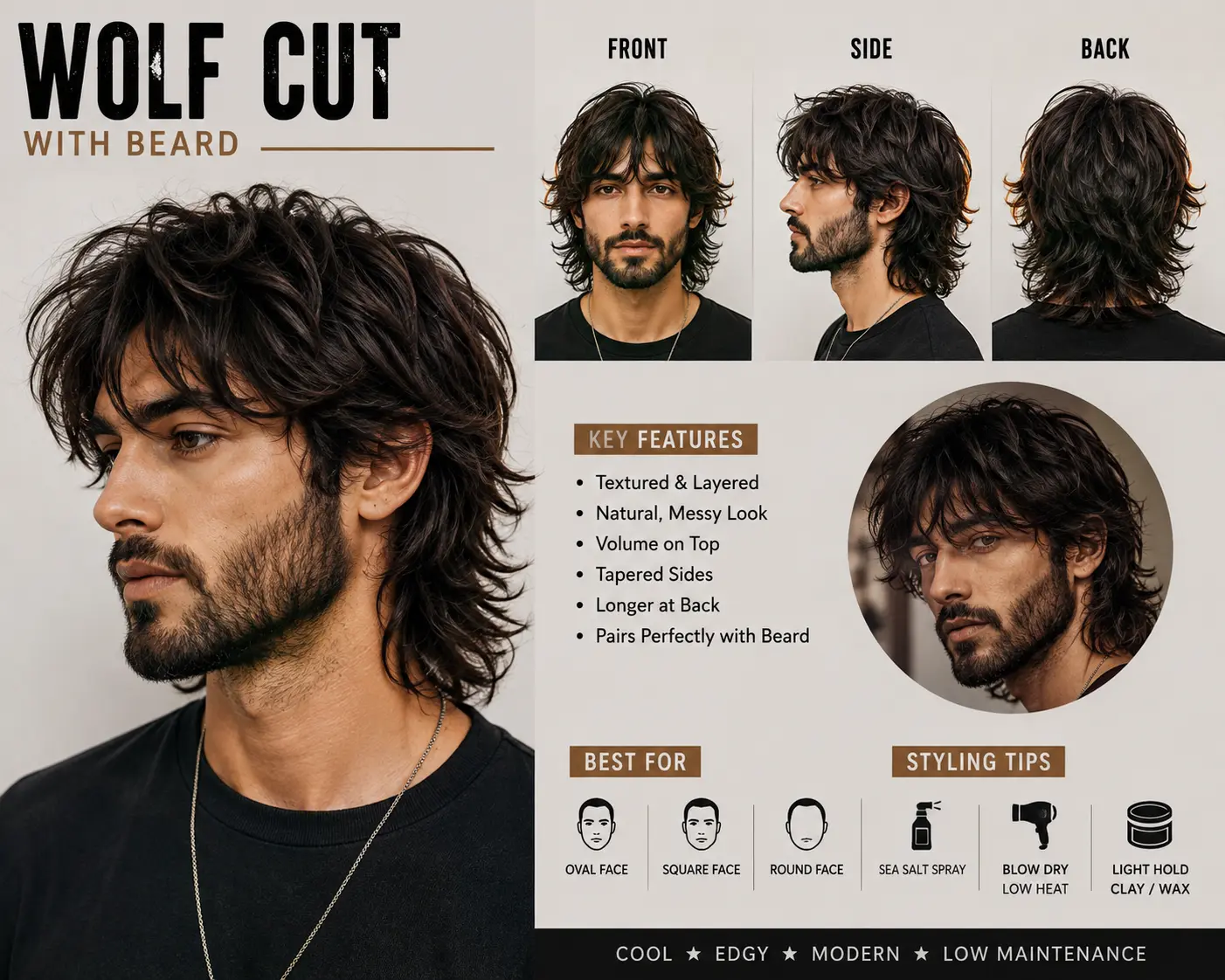
A wolf cut with beard layers hair heavily throughout the entire head, not just at the front or back, creating a shaggy, voluminous shape that’s shorter on top and gradually longer toward the ends, then pairs it with a groomed beard for structure. It gained most of its popularity through short-form video trends, but the version barbers are cutting today has evolved into something genuinely wearable rather than a purely online fad.
This guide clears up how a wolf cut actually differs from a mullet or a shag, breaks down the specific layering technique that gives it its texture, and covers which beards and products bring it together.
Table of Contents
What Is a Wolf Cut with Beard
A wolf cut is a heavily layered haircut, typically medium length overall, that combines shorter, choppier layers on top with longer pieces cascading down toward the back and sides. Unlike a simple length gradient, the layering happens throughout the entire head, creating volume at the crown and movement everywhere else.
A wolf cut with beard pairs that voluminous, textured shape with facial hair, usually short to medium length, to add definition at the jaw that matches the intentional messiness on top. Because the haircut already carries a lot of texture and movement, the beard tends to work best when it feels equally relaxed rather than sharply structured.
Wolf Cut vs Mullet vs Shag
These three get grouped together constantly, and the differences are worth understanding before you sit in the chair.
| Style | Layering | Length Pattern | Overall Shape |
| Wolf Cut | Heavy, throughout | Short crown, longer ends | Rounded, voluminous |
| Mullet | Minimal | Short front, long back only | Clear front-to-back split |
| Shag | Moderate | Even length with feathered layers | Flatter, more uniform |
A mullet with beard creates its contrast almost entirely between the front and back, with the sides and top staying relatively simple. A shag uses lighter layering across a more even overall length. A wolf cut goes further than both, with heavy layering at the crown that builds real volume and choppy texture that continues throughout the whole head rather than concentrating in one zone.
How the Layering Actually Works
This is the technical piece that separates a genuine wolf cut from hair that’s simply grown out and a bit messy.
Crown layering: The barber cuts shorter layers at the very top of the head, which is what creates the lifted, voluminous silhouette the style is known for.
Face-framing layers: Shorter pieces are cut around the front to frame the face, adding movement without the defined, straight-line fringe you’d see on a French crop.
Graduated length toward the ends: Rather than a single length at the back, hair is layered so it gradually gets longer, creating the shaggy, cascading effect that gives the cut its texture.
Point cutting or razor work at the tips: Similar to a textured crop, many barbers finish with point cutting or a razor to soften the ends and enhance the choppy, undone look.
Because this involves layering across the entire head rather than a single length transition, a wolf cut typically takes longer to cut properly than a mullet and requires a barber comfortable working with scissors and thinning shears rather than just clippers.
Best Face Shapes for a Wolf Cut with Beard
| Face Shape | Layering Focus | Beard Pairing |
| Round | Height at the crown, layers framing the jaw | Boxed beard with sharp angles for extra length |
| Square | Softer, looser layers throughout | Short beard or stubble, avoid excess bulk |
| Oval | Flexible, most layering styles work | Wide range of beard lengths suit it |
| Long | Fuller volume at the sides, less height | Fuller sides, shorter chin to add width |
| Diamond | Moderate volume, softened at the crown | Fuller jawline beard to balance a narrow chin |
For more detail on pairing beard length to face shape, see best beard for round face, best beard for square face, and best beard for diamond face.
Beard Styles That Pair Best
Because a wolf cut already leans shaggy and relaxed, the beard generally works best when it shares that same casual, undone energy rather than looking overly precise.
- Stubble — the most natural pairing, matching the low-key, textured feel of the haircut. See the stubble beard guide.
- Short beard — adds a bit more definition while staying compatible with the shaggy top. Covered in short beard styles.
- Medium beard — works well with the fuller, more voluminous versions of the cut. See medium beard styles.
- Circle beard — a more minimalist option for men who want the haircut’s texture to remain the main focus.
A sharply lined, structured beard, like a Van Dyke beard, can look slightly at odds with the loose, layered nature of this haircut, though the contrast isn’t off-limits if that’s the specific look you want.
Product Guide
| Product | Finish | Best For |
| Sea salt spray | Textured, tousled | Adding movement and a beachy finish |
| Matte clay | No shine, strong hold | Everyday, controlled texture |
| Texturizing powder | Adds grip and volume | Fine hair needing extra lift at the crown |
| Light styling cream | Low shine, soft hold | Taming frizz without flattening layers |
Sea salt spray tends to be the most popular choice for a wolf cut specifically, since it enhances the natural texture the layering already creates rather than fighting against it.
How to Style It Step by Step
- Towel-dry hair to about 80%. Slightly damp hair holds texture better than fully dry or soaking wet hair.
- Apply sea salt spray or matte clay throughout, focusing extra product at the crown. This is where you want the most volume and lift.
- Use your fingers, not a comb, to scrunch and separate the layers. This preserves the choppy, undone texture that defines the style.
- Let it air dry or use a diffuser on low heat if you have curly or wavy hair. Direct heat with a regular dryer can flatten the layers you’re trying to preserve.
- Finish the beard to match. A quick pass with a beard comb keeps the whole look feeling coordinated.
Most versions take two to three minutes once you’re familiar with how your specific hair responds to the product.
Hair Type Considerations
| Hair Type | Fit for a Wolf Cut |
| Straight | Needs texturizing product and possibly a diffuser to build volume; can look flat without it |
| Wavy | Excellent natural fit, one of the best hair types for this cut |
| Curly | Works exceptionally well, since natural curl pattern supports the shaggy, layered look with minimal effort; check the curly beard care guide if the beard is curly too |
| Thick | Handles heavy layering particularly well, gives strong volume |
| Fine | Benefits from texturizing powder at the roots to build the crown volume the style relies on |
How to Ask Your Barber for It
- Ask for heavy layering throughout, with shorter layers at the crown and gradually longer pieces toward the ends, rather than a simple length gradient.
- Bring reference photos, since a wolf cut can range from subtle to dramatic depending on how aggressive the layering is.
- Mention if you want face-framing layers at the front, similar to softer bangs, or a cleaner front section.
- Ask for the beard to be shaped in the same visit for a coordinated finish.
- If your hair is straight or fine, mention that too, since your barber may adjust the layering technique to build in more apparent volume.
Maintenance and Daily Upkeep
Hair:
- Trim every 6–8 weeks to maintain the layered shape without it growing out of proportion
- Apply texturizing product daily for the fullest, most defined version of the style
- Air-dry when possible rather than brushing smooth, which flattens the intentional layering
Beard:
- Trim every 1–2 weeks with a reliable beard trimmer to keep pace with the haircut
- Apply beard oil daily to prevent dryness
- Wash with a dedicated beard wash rather than regular shampoo
- Keep the beard neckline and beard cheek line tidy, ideally weekly
The beard care guide has a full routine breakdown if you’re setting one up from scratch.
Suitable for Work and Casual Settings
A wolf cut with beard leans casual and creative rather than formal, which makes it a strong fit for artistic industries, hospitality, and relaxed workplaces. For more traditional office beard styles settings, keeping the layering slightly more controlled and the beard closer to a corporate beard length helps it read as more polished without losing the texture entirely.
For weddings or formal events, this style tends to photograph best with a bit more definition than the fully undone, everyday version. The wedding beard styles guide has broader timing advice for pairing haircuts and beard trims around a big event.
Best Age Groups
- Teens and 20s: Where this style is most popular, often paired with stubble or an early short beard for a low-effort, trend-driven look.
- 30s and 40s: Frequently a slightly more controlled version, paired with a fuller, well-groomed short beard for a balance of casual and put-together.
- 50s and beyond: Works well in a more restrained form, particularly alongside greying facial hair. The beard styles for men over 50 guide has more specific advice for pairing textured, layered cuts with grey hair.
Common Mistakes
- Getting a standard layered cut instead of true wolf cut layering. The crown volume and graduated ends are specific techniques, not just any layered haircut.
- Combing the style smooth instead of using fingers. This flattens the texture that defines the look.
- Using heat styling tools that flatten rather than enhance the layers. Air-drying or diffusing tends to preserve the shape better than a flat brush and blow dryer.
- Neglecting the beard. A voluminous, textured top next to an ungroomed beard looks unbalanced.
- Skipping regular trims. Heavy layering needs maintenance to keep its proportions, even though it forgives some growth better than sharper cuts.
Myths About the Wolf Cut
Myth: It’s just a mullet with a new name. A wolf cut layers throughout the entire head rather than creating contrast only between the front and back, giving it a distinctly different, more voluminous shape.
Myth: It only works with thick or curly hair. Straight and fine hair can achieve real volume and texture with the right layering technique and texturizing products, though it takes more daily effort than naturally textured hair.
Myth: It’s purely a social media trend with no real staying power. While it gained visibility through short-form video, the underlying layering technique is a legitimate barbering approach that predates the trend by decades.
FAQs
What is a wolf cut with beard? A wolf cut with beard combines heavily layered hair throughout the head, with shorter layers at the crown and longer, graduated ends, paired with a groomed beard, usually stubble to medium length.
What’s the difference between a wolf cut and a mullet? A wolf cut layers hair throughout the entire head for a voluminous, shaggy shape, while a mullet creates contrast mainly between a shorter front and a longer back section.
What’s the difference between a wolf cut and a shag? A wolf cut uses heavier, more dramatic layering with more crown volume, while a shag applies lighter, more even layering across a flatter overall shape.
Is a wolf cut with beard high maintenance? It’s low to moderate maintenance day to day, taking a few minutes to style with texturizing product, though it needs a proper layered haircut from a barber to look right.
What beard length works best with a wolf cut? Stubble or a short beard tends to work best, matching the casual, textured energy of the haircut without overwhelming it.
Does a wolf cut with beard suit round faces? Yes, particularly with volume built at the crown and layers framing the jaw, paired with a beard shaped to add further length to the face.
What product should I use for a wolf cut beard style? Sea salt spray is especially popular for enhancing natural texture, while matte clay offers more everyday control.
Can I get a wolf cut with curly hair? Yes, curly hair suits this style particularly well, since the natural curl pattern already provides much of the shaggy texture the cut is designed to create.
Is a wolf cut with beard appropriate for the office? A more controlled version, paired with a tidy beard, works reasonably well professionally, though it leans more casual than styles like a Caesar cut or side part.
How often should I trim a wolf cut with beard? Trim the hair every 6–8 weeks and the beard every 1–2 weeks to keep the layered shape and proportions looking intentional.
How do I ask my barber for a wolf cut? Ask specifically for heavy layering throughout, with shorter layers at the crown and gradually longer pieces toward the ends, and bring reference photos to clarify how dramatic you want it.
Does a wolf cut work with a fade? Yes, some versions pair a taper or low fade at the sides with the heavily layered top, though many wolf cuts keep the sides less dramatically short than other layered styles.
Can teenagers wear a wolf cut with beard? Yes, it’s one of the more popular haircuts among younger men, usually paired with stubble or a light, developing beard.
Does a wolf cut suit thinning hair? It can help somewhat, since the layering builds the appearance of volume, though significant thinning at the crown may limit how much lift the style can realistically achieve.
What’s the quickest way to style a wolf cut with beard? Apply sea salt spray or matte clay to damp hair, scrunch and separate with your fingers rather than a comb, and finish the beard with a quick comb-through.
A wolf cut with beard rewards a properly layered haircut more than a complicated daily routine — once the crown volume and graduated ends are cut correctly, styling becomes mostly about enhancing texture rather than creating it from scratch. Pair it with a beard that matches the shaggy, relaxed energy of the cut, keep both trimmed on a reasonable schedule, and it holds up well across hair types and most casual to creative settings. For more ways to pair facial hair with textured haircuts, the types of beard styles page is worth a look before your next barber visit.