
 By Bread Styles Team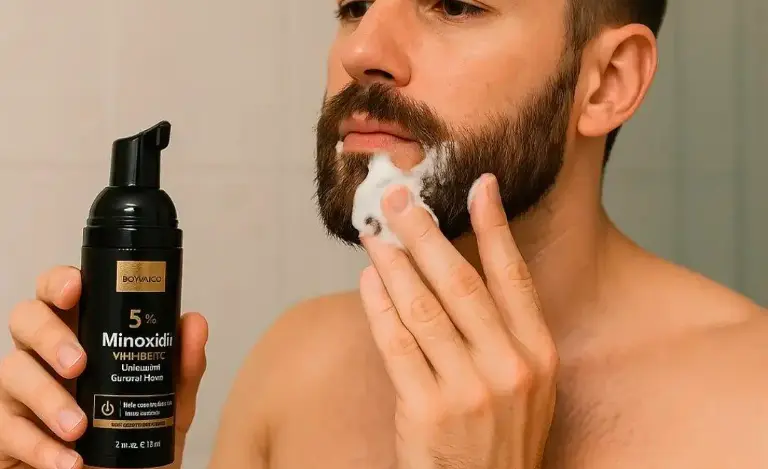
Of everything covered on this site, minoxidil is the one product that genuinely deserves more caution than enthusiasm. It’s a real medication, not a cosmetic product, and the version of the story you’ll find on most grooming forums tends to leave out the parts a doctor would actually want you to know before starting. This isn’t a reason to avoid the topic — it’s a reason to cover it properly.
This guide explains what minoxidil for beard use actually involves, what the evidence supports, the real side effects worth knowing, and why a conversation with a doctor belongs at the start of this decision, not as an afterthought.
Table of Contents
What Is Minoxidil and Why Men Use It for Beards
Minoxidil is a topical medication originally developed to treat high blood pressure, later approved for treating scalp hair loss, and now used off-label by some men hoping to stimulate facial hair growth. It’s applied directly to the skin and is available over the counter in many countries in liquid or foam form, typically marketed for scalp use.
The appeal for beard growth comes largely from its established track record with scalp hair loss combined with anecdotal reports from men who’ve applied it to patchy areas of their beard. That said, “used off-label” is an important detail — it means minoxidil hasn’t gone through the same formal approval process for facial hair that it has for the scalp.
Is Minoxidil for Beard Growth Actually Approved for This?
In most countries, including the United States, minoxidil is approved specifically for treating androgenetic alopecia on the scalp, not for facial hair growth. Using it on a beard is considered off-label use, meaning it’s outside the product’s officially studied and approved purpose, even though it remains legally accessible and is commonly used this way.
This distinction matters for informed decision-making. Off-label use isn’t inherently unsafe, and doctors prescribe medications off-label regularly across many fields of medicine, but it does mean the safety and effectiveness data specific to facial application is considerably thinner than the data supporting its approved scalp use.
How Minoxidil Is Thought to Work
The exact mechanism isn’t fully understood, even for its approved scalp use, but minoxidil is believed to widen blood vessels near hair follicles and extend the growth phase of the hair cycle. For scalp hair loss caused by androgenetic alopecia, this can help maintain and sometimes partially restore hair in areas experiencing miniaturization.
Whether this same mechanism translates meaningfully to facial hair follicles, which behave somewhat differently from scalp follicles, is less established. Some men do report increased density in patchy areas after consistent use, but the underlying biological explanation for facial hair specifically remains less thoroughly researched than the scalp application.
What the Evidence Shows About Minoxidil Beard Results
Evidence specifically studying minoxidil beard results is limited compared to the extensive body of research on scalp use. A small number of studies and a larger volume of anecdotal reports suggest some men experience increased facial hair density with consistent use, but results vary significantly, and there’s no reliable way to predict who will respond well versus who won’t see meaningful change.
This is worth being direct about, in the same way this site has covered beard growth oil and biotin for beard growth: existing evidence doesn’t support guaranteed results, and genetics still plays a significant role in how any individual responds to treatment, including minoxidil.
Concentrations: 2% vs 5%
| Concentration | Common Use | Notes |
| 2% | Originally the standard formulation | Less commonly used now that 5% is widely available |
| 5% | More commonly used and studied for scalp application | Generally associated with more noticeable results in scalp studies, though facial-specific data is limited |
Men researching minoxidil beard treatment often default to the 5% concentration based on scalp research, but facial skin can react differently than scalp skin, and a doctor is better positioned to advise on an appropriate starting point than product marketing alone.
Common Side Effects and Risks
- Skin irritation, redness, or dryness. The most commonly reported side effect at the application site.
- Unwanted hair growth spreading beyond the treated area. Minoxidil can migrate to adjacent skin, potentially causing hair growth in areas like the upper cheeks or neck where it wasn’t intended.
- Contact dermatitis. Some users develop an allergic or irritant reaction, particularly with certain formulations containing propylene glycol.
- Systemic absorption effects, though uncommon. Because minoxidil was originally a blood pressure medication, absorption through the skin can, in rare cases, cause effects like dizziness, rapid heartbeat, or lightheadedness, particularly in people who are more sensitive to the drug or use excessive amounts.
- Initial shedding. Some men experience a temporary increase in shedding when first starting, which is a recognized, usually temporary response rather than a sign of worsening hair loss.
None of these risks make minoxidil inappropriate to consider, but they do make it a genuinely different category of product than an oil, balm, or comb, and worth treating with proportionate caution.
Who Shouldn’t Use Minoxidil Without Medical Guidance
- Anyone with a history of heart conditions, low blood pressure, or cardiovascular disease
- Men currently taking other medications that affect blood pressure
- Anyone with broken, irritated, or sunburned skin in the area they intend to treat
- Men with known allergies to minoxidil or related ingredients in specific formulations
- Anyone unsure whether facial application is appropriate for their individual health situation
The American Academy of Dermatology and similar professional bodies generally recommend consulting a doctor before starting minoxidil for any use outside its approved application, and that guidance applies directly here. This isn’t overcautious advice for a topical cosmetic product — minoxidil is a medication with documented systemic effects in some users, and a brief conversation with a doctor is a reasonable step before starting, not an optional one.
What Happens If You Stop Using It
Any beard growth gained through consistent minoxidil use is generally understood to reverse once use stops, with hair gradually returning to its pre-treatment pattern over the following months. This mirrors what’s documented with scalp use, where discontinuing minoxidil typically leads to a loss of any gains made during treatment.
This is an important piece of realistic expectation-setting that’s often left out of enthusiastic before-and-after posts. Minoxidil beard regrowth, if it occurs, generally requires ongoing, indefinite use to maintain — not a fixed course of treatment with permanent results.
Realistic Timeline and Expectations
Men who do respond to minoxidil for facial hair typically don’t see visible change for at least two to four months of consistent daily use, consistent with the general hair growth cycle timelines discussed in our beard growth guide. Results, where they occur, tend to build gradually rather than appearing suddenly.
What minoxidil might realistically do, based on limited evidence and anecdotal reports:
- Potentially increase density in some men with patchy or thin facial hair
- Extend the growth phase of existing follicles in some cases
What it won’t reliably do:
- Guarantee results for every user, since individual response varies significantly and can’t be predicted in advance
- Create meaningful growth in an area with no existing hair follicles at all
- Provide permanent results without continued, ongoing use
Minoxidil vs Other Beard Growth Treatments
| Treatment | Evidence Level for Beard Use | Ongoing Commitment Required |
| Minoxidil | Limited, mixed, mostly anecdotal | Yes, indefinitely to maintain results |
| Beard Growth Oil | Conditioning benefit well established, growth-specific evidence limited | Ongoing for conditioning benefit |
| Biotin (without deficiency) | Weak evidence for non-deficient individuals | Not typically necessary without a deficiency |
| Beard Roller | Limited, mixed evidence specific to facial hair | Ongoing, moderate frequency |
None of these treatments, minoxidil included, override genetics entirely. They sit on a spectrum of evidence quality and commitment required, and minoxidil is the one with the most established scalp-specific research but the least beard-specific certainty.
Common Mistakes and Myths
- “Minoxidil guarantees a full, even beard.” Results vary significantly between individuals, and some men see little to no change despite consistent use.
- “It’s completely safe because it’s available without a prescription in some places.” Over-the-counter availability doesn’t eliminate the real, documented side effects and interactions that exist with this medication.
- “You can stop once you’ve reached your desired density.” Any gains typically reverse without continued use, based on what’s documented with scalp application.
- “More product means faster or better results.” Using more than the recommended amount doesn’t accelerate results and increases the risk of side effects, including systemic absorption issues.
- “It’s the same as beard oil, just stronger.” Minoxidil is a medication with a distinct mechanism and risk profile, fundamentally different from a cosmetic conditioning product like oil or balm.
Talking to a Doctor Before Starting
A short conversation with a doctor or dermatologist before starting minoxidil for beard use can clarify whether it’s appropriate for your health history, confirm you’re not on any conflicting medications, and set realistic expectations based on your specific situation. This step is genuinely more important with minoxidil than with any other product covered on this site, given its history as a systemic blood pressure medication and its off-label status for facial application.
If cost or access to a dermatologist is a barrier, many general practitioners can also have this conversation and help you weigh the decision appropriately.
Expert Tips
- Treat the decision to use minoxidil with the same seriousness as starting any other medication, not as a simple grooming product purchase.
- Start with a lower concentration if a doctor recommends it, rather than defaulting to the highest strength available.
- Apply only to the intended area and wash your hands thoroughly afterward to avoid unintentional spread to other parts of the face or body.
- Track any side effects honestly, and stop use and consult a doctor if you notice dizziness, rapid heartbeat, or significant skin irritation.
- Pair realistic expectations with patience. If minoxidil is going to show any effect, it typically takes months of consistent use, not weeks.
Minoxidil for beard growth sits in a different category from nearly everything else on this site — it’s a real medication with real risks, used here in a way it wasn’t originally approved for. That doesn’t mean it’s off the table as an option, but it does mean the decision deserves a doctor’s input, not just a product review.
FAQs
Does minoxidil actually work for beard growth? Some men report increased density with consistent use, but evidence specific to facial hair is limited compared to scalp research, and results vary significantly between individuals.
Is minoxidil approved for beard growth? No. Minoxidil is approved for treating scalp hair loss in most countries. Using it on facial hair is considered off-label use, meaning it falls outside its officially studied and approved purpose.
What are the side effects of minoxidil for beard use? Common side effects include skin irritation, dryness, and unwanted hair growth spreading to nearby skin. Less common but more serious effects can include dizziness or rapid heartbeat due to systemic absorption.
How long does it take to see minoxidil beard results? Men who respond to treatment typically don’t see visible change for at least two to four months of consistent daily use, with results building gradually over that period.
What happens if I stop using minoxidil on my beard? Any facial hair gains achieved through use generally reverse once treatment stops, with hair returning to its pre-treatment pattern over the following months, similar to what’s documented with scalp use.
Should I use 2% or 5% minoxidil for my beard? Most men researching beard use default to 5% based on scalp research, but facial skin can react differently, and a doctor is better positioned to recommend an appropriate concentration for your situation.
Is minoxidil safe to use without talking to a doctor first? It’s strongly recommended to consult a doctor first, particularly given minoxidil’s history as a blood pressure medication and its off-label status for facial application.
Can minoxidil cause unwanted hair growth in other areas? Yes. Minoxidil can spread to adjacent skin if not applied carefully, potentially causing hair growth in areas like the upper cheeks or neck where it wasn’t intended.
Who shouldn’t use minoxidil for beard growth? Anyone with a history of heart conditions, low blood pressure, known allergies to the medication, or who is on other blood pressure-affecting medications should consult a doctor before considering use.
Is minoxidil better than beard growth oil for facial hair? They serve different purposes. Minoxidil is a medication with a distinct mechanism and more established scalp-specific evidence, while beard growth oil primarily conditions existing hair and skin rather than targeting follicle stimulation directly.
Can minoxidil fix a completely bald patch on my beard? It’s unlikely to create meaningful growth in an area with no existing hair follicles at all, and results tend to be more noticeable in areas with existing thin or patchy growth rather than complete absence of hair.
Do I need a prescription for minoxidil beard treatment? Availability varies by country and concentration, with many formulations available over the counter, though consulting a doctor before use is recommended regardless of whether a prescription is legally required.