 By Bread Styles Team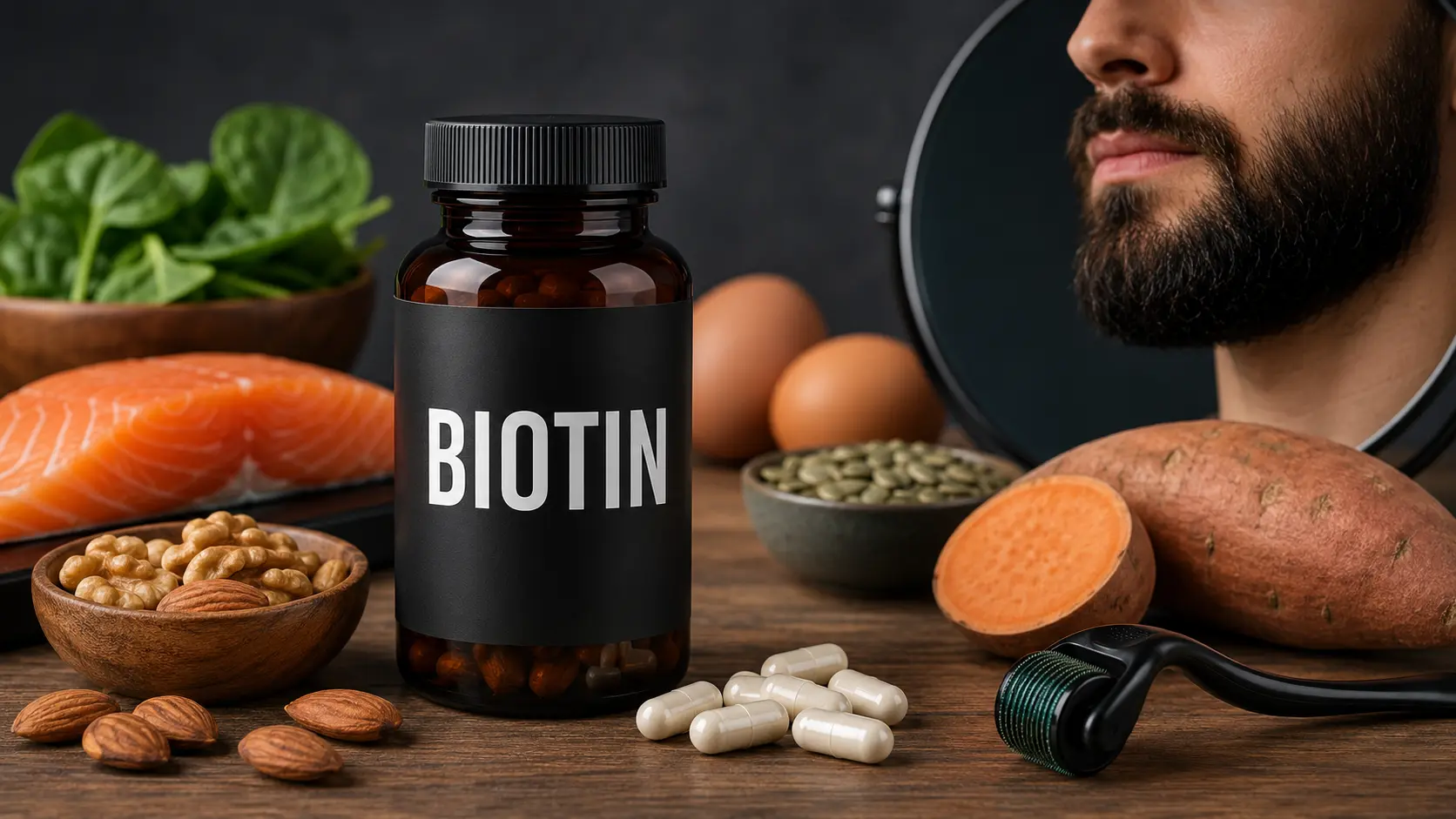
Biotin has become the default answer whenever someone asks what to take for a fuller beard, largely because it’s cheap, widely available, and shows up constantly in grooming forums as the go-to fix. The honest picture is more limited than the marketing suggests. Biotin plays a real role in hair health, but using biotin for beard growth only makes a meaningful difference for a specific group of men, not everyone with a patchy or slow-growing beard.
This guide covers what biotin actually does, what the evidence supports and doesn’t, and how to figure out whether supplementing is likely to help your situation at all.
Table of Contents
Does Biotin Help Beard Growth? The Direct Answer
Biotin supports keratin production, a protein that hair is largely made of, but it only meaningfully improves hair growth in people who have an actual biotin deficiency. For men who already get adequate biotin through diet, which is most people, additional supplementation hasn’t been shown to accelerate beard growth beyond their genetic baseline.
That’s the core distinction most beard vitamins marketing skips over entirely. Biotin isn’t useless — it’s conditionally useful, and the condition is a deficiency that fewer men actually have than the supplement industry implies.
What Biotin Actually Does in the Body
Biotin, also known as vitamin B7, is a water-soluble vitamin involved in converting food into energy and supporting the structure of keratin, the protein that makes up hair, skin, and nails. Because keratin is so central to hair structure, a genuine deficiency in biotin can lead to visibly weaker, more brittle hair, including facial hair.
The body doesn’t store water-soluble vitamins like biotin the way it stores fat-soluble ones, so consistent dietary intake matters more than occasional high doses. Most people get enough through a normal, varied diet without ever thinking about it.
What the Evidence Shows for Beard Growth Specifically
Research on biotin and hair growth exists, but very little of it focuses specifically on facial hair, and most existing studies involve people with a diagnosed deficiency rather than healthy individuals looking for extra density. In deficient individuals, supplementation has shown improvement in hair strength and reduced brittleness. In non-deficient individuals, the evidence for additional benefit is weak.
This matters for anyone specifically researching biotin beard growth claims online, since a lot of that content conflates “helps in deficient people” with “helps everyone,” which isn’t an accurate representation of what the research actually supports.
Signs You Might Actually Be Biotin Deficient
True biotin deficiency is relatively uncommon in people eating a varied diet, but certain factors increase the likelihood:
- Long-term use of certain anti-seizure medications
- Chronic alcohol use
- Certain digestive conditions that affect nutrient absorption
- Pregnancy, which increases biotin needs
- Consuming large amounts of raw egg whites regularly, which contain a protein that binds biotin and blocks absorption
Common signs of an actual deficiency include brittle hair and nails, skin rashes, and fatigue. If you’re experiencing several of these together, it’s worth discussing with a doctor rather than assuming a beard-focused supplement alone will resolve it.
Food Sources of Biotin vs Supplements
| Food Source | Approximate Biotin Content |
| Eggs (cooked) | Good source, particularly the yolk |
| Almonds and other nuts | Moderate source |
| Salmon | Moderate source |
| Sweet potatoes | Moderate source |
| Organ meats (liver) | High source |
For most men without a diagnosed deficiency, getting biotin through a varied diet is generally sufficient, and it comes packaged with other nutrients that also matter for overall hair and skin health. Supplements make more sense as a targeted solution for a confirmed gap, not a default first step. If your interest is broader support for beard growth, diet is one piece of a larger picture that also includes sleep, stress management, and consistent care.
Beard Vitamins and Supplements: What Else Gets Included
Biotin rarely appears alone in commercial beard vitamins. Common companion ingredients include:
- Zinc — supports normal hair follicle function; deficiency can affect hair health broadly
- Vitamin D — some research links low levels to hair thinning, though evidence for facial hair specifically is limited
- Vitamin B12 — supports red blood cell production, which affects how well oxygen and nutrients reach hair follicles
- Collagen or keratin protein blends — provide building blocks for hair structure, similar in principle to biotin’s role
- Saw palmetto — sometimes included based on a theory about blocking DHT, though evidence specific to beard growth is limited
As with biotin alone, these beard supplements are most likely to help someone with an actual deficiency in one or more of these nutrients, rather than providing added benefit to someone already eating a balanced diet.
How Much Biotin Is Generally Considered Safe?
There’s no single universally mandated dosage for biotin, and requirements vary by individual health status. General dietary guidance commonly cited by health organizations suggests an adequate intake in the range of 30 micrograms per day for most adults through diet alone, while many commercial hair and beard supplements contain doses many times higher than that, often in the thousands of micrograms.
Biotin is water-soluble, meaning excess amounts are typically excreted rather than stored, and it’s generally considered to have low toxicity risk at commonly available supplement doses. That said, “generally safe” isn’t the same as “more is better” — higher doses haven’t been shown to provide additional benefit beyond what’s needed to correct an actual deficiency, and there’s a specific safety consideration worth understanding before taking a high-dose supplement.
Important Safety Note: Biotin and Lab Test Interference
High-dose biotin supplementation can interfere with certain blood test results, including some thyroid function tests, by affecting the lab methods used to measure them. This can potentially lead to inaccurate results being reported to a doctor without either of you realizing biotin is the cause.
If you’re taking a biotin supplement, particularly at higher doses common in beard vitamin products, mention this to your doctor before any blood work, and consider pausing supplementation for a few days beforehand if advised to do so. This is a genuinely important, often-overlooked safety detail that gets left out of most grooming-focused content on the topic.
Who Should Talk to a Doctor Before Supplementing
- Anyone with symptoms suggesting an actual deficiency, rather than simply wanting faster growth
- Men on regular medication, particularly anti-seizure drugs or anything affecting nutrient absorption
- Anyone with an upcoming blood test, especially thyroid-related panels
- Pregnant partners or men managing a chronic digestive condition affecting absorption
- Anyone considering a high-dose supplement rather than a standard multivitamin-level amount
A quick conversation with a doctor costs far less time than months spent taking a supplement that either isn’t needed or is skewing an unrelated medical test.
Realistic Expectations and Timeline
If you do have an actual deficiency and begin supplementing appropriately, most improvements in hair strength and brittleness become noticeable over a period of months rather than weeks, in line with normal hair growth cycles. If you don’t have a deficiency, supplementing is unlikely to produce any noticeable difference in your beard’s density or growth rate, regardless of how long you continue taking it.
This lines up with the broader picture covered in our how to grow a beard faster guide — genetics set the primary limit on facial hair growth, and correcting an actual nutritional gap is the scenario where a supplement like biotin can genuinely help close that gap toward your natural potential.
Common Mistakes and Myths
- “More biotin means faster growth.” Beyond correcting a deficiency, additional biotin hasn’t been shown to accelerate growth further.
- “Everyone with a patchy beard is biotin deficient.” Patchiness is far more commonly related to genetics and follicle distribution than to a nutrient deficiency.
- “Biotin supplements have no downsides.” While generally low-risk, high doses can interfere with certain lab tests, which is a real, practical concern.
- “Beard vitamins work the same for everyone.” Results depend heavily on whether an actual deficiency exists; a supplement can’t create improvement where there’s no gap to correct.
- “You need a specialized ‘beard’ supplement rather than a standard multivitamin.” In most cases, a standard multivitamin covering the same nutrients works just as well as a beard-branded version at a similar dose.
Expert Tips
- Consider your diet honestly before assuming you need a supplement — most men eating eggs, nuts, and a varied diet already get sufficient biotin.
- If you suspect a deficiency, get it confirmed rather than guessing, particularly since symptoms like brittle hair can have other causes too.
- Always mention biotin supplementation to your doctor before blood work, especially thyroid panels.
- Pair any nutritional approach with the fundamentals that more reliably support growth — consistent sleep, stress management, and a proper beard care routine.
- Don’t expect a beard supplement to compensate for skipping the basics; nutrition is one supporting factor among several, not a replacement for the rest.
Biotin for beard growth isn’t a myth exactly, but it’s also not the universal fix a lot of product marketing implies. It genuinely helps when there’s a real deficiency to correct, and it does very little beyond that. Figure out which category you’re actually in before spending money on another bottle of supplements.
FAQs
Does biotin help beard growth? Biotin supports hair structure and can improve growth in people with an actual biotin deficiency, but it hasn’t been shown to accelerate beard growth in people who already get adequate biotin through diet.
How long does it take to see biotin beard growth results? If a genuine deficiency exists, improvements in hair strength typically become noticeable over several months, in line with normal hair growth cycles. Without a deficiency, meaningful results are unlikely regardless of duration.
What foods are high in biotin for beard health? Eggs, almonds, salmon, sweet potatoes, and organ meats like liver are all solid dietary sources of biotin, generally sufficient for most people without needing a supplement.
Are beard vitamins worth buying? They’re most worth it if you have a confirmed deficiency in one of the included nutrients. For men already eating a balanced diet, beard vitamins are unlikely to provide noticeable additional benefit.
How much biotin is safe to take daily? There’s no single universal dosage, but general dietary guidance suggests adequate intake around 30 micrograms per day through food, while supplements often contain significantly higher amounts. Consult a doctor for personalized guidance.
Can biotin supplements cause side effects? Biotin is generally considered low-risk since it’s water-soluble, but high doses can interfere with certain lab test results, including some thyroid tests, which is worth discussing with a doctor.
Is biotin the best supplement for beard growth? Biotin is one of several nutrients, alongside zinc, vitamin D, and B12, that support hair health. No single supplement guarantees beard growth, and effectiveness depends on whether an actual deficiency exists.
Does biotin work faster than beard growth oil? Neither works faster than your natural growth cycle allows. Biotin addresses potential nutritional gaps internally, while beard growth oil conditions skin and hair externally — they support different aspects of the same process.
Can too much biotin be harmful? Excess biotin is generally excreted since it’s water-soluble, making toxicity uncommon at typical supplement doses, though high amounts can still interfere with certain medical lab tests.
How do I know if I’m actually biotin deficient? Common signs include brittle hair and nails, skin rashes, and fatigue. A doctor can confirm an actual deficiency through testing rather than relying on guesswork based on beard density alone.
Should I take biotin before a blood test? It’s best to mention any biotin supplementation to your doctor before blood work, particularly thyroid tests, since high doses can interfere with certain lab results.
Can biotin fix a patchy beard? Only if patchiness is related to an actual nutritional deficiency, which is uncommon. Most patchy growth is related to genetics and follicle distribution, which biotin supplementation doesn’t address.