 By Bread Styles Team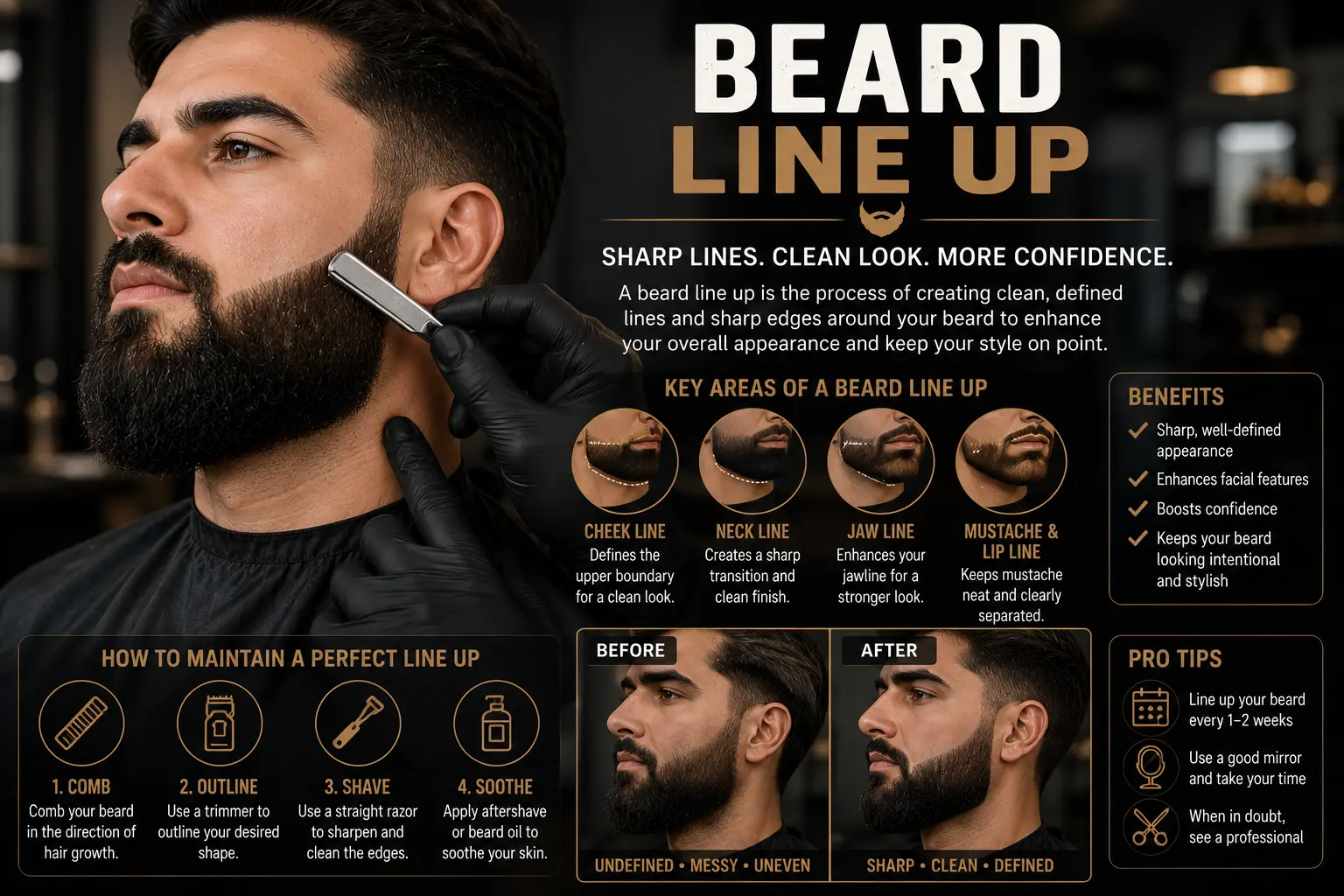
A good beard line up is the difference between a beard that looks intentional and one that just looks grown. You can have great length, solid density, and still look unkempt if the edges are soft, uneven, or drifting past where they should be. This is one of the most requested services at any barbershop for a reason — it’s a small, precise job that changes the entire impression of a beard.
This guide walks through the actual technique barbers use, the tools worth owning if you’re doing it yourself, and the mistakes that turn a clean beard outline into a choppy one. Whether you’re maintaining a barber’s work between visits or doing the whole thing at home, the process is the same.
Table of Contents
What a Beard Line Up Actually Is
Quick answer: A beard line up is the process of trimming and shaping the edges of a beard — typically the cheek line, neckline, and mustache border — into crisp, defined lines. It’s the detail work that frames a beard, separate from trimming length or thinning density.
Some men use “line up” and “edge up” interchangeably, and in practice they mean the same thing. The goal is a beard outline with clear, deliberate borders instead of hair that fades unevenly into bare skin. It’s detail work, not a full trim, and it’s usually the last step in a grooming session rather than the first.
Tools You Need Before You Start
A clean beard line up depends more on the right tools than on skill alone, especially the first few times.
- A trimmer with a T-blade or detail attachment — essential for straight, controlled lines.
- An edger or straight razor — for the crispest possible finish along the outline.
- A wide-tooth beard comb — to lay hair flat and reveal the true edge before cutting.
- A well-lit mirror, ideally two — a front mirror alone hides asymmetry that a side mirror catches.
- A washable eyebrow or beard pencil (optional) — useful for beginners mapping the line before committing to a cut.
- Aftershave or a soothing balm — skin along the jaw and neck takes more direct contact during edging than anywhere else in a grooming routine.
If you already have a general trimmer for length, check whether it includes a dedicated edging attachment — most quality kits do, and using the wrong blade is one of the fastest ways to get a rough, uneven beard outline.
Prep Steps That Make the Difference
Skipping prep is the most common reason a beard line up looks worse than expected.
- Wash and fully dry the beard. Wet or damp hair looks longer and sits differently, which throws off where the true edge actually is.
- Comb thoroughly so every hair is lying in its natural direction — flyaways and tangled sections make lines look jagged.
- Trim overall length and bulk first, if needed, before touching the edges. A line up defines a shape; it shouldn’t be the step that also handles overall length.
- Identify your natural hairline at the neck and cheeks before cutting anything — this becomes your reference point for how far the new line should sit.
How to Do a Beard Line Up Step by Step
This is the core technique, broken into the three zones that make up a full beard line up.
Step 1: Set the Cheek Line
- Comb the beard hair on the cheek upward and outward to see its natural upper boundary.
- Decide how high you want the line — closer to the natural growth line usually looks more balanced than an artificially high, sharp cheek line.
- Using the trimmer’s edge, cut along a smooth, gently curved path following your natural cheekbone, not a harsh straight line.
- Check both sides in a mirror before finalizing — cheek lines are the easiest spot for visible asymmetry.
Step 2: Define the Neckline
- Find your natural neckline by locating where your jaw meets your neck — a common guide is roughly one to two finger-widths above the Adam’s apple.
- Comb the neck hair downward.
- Trim in a slight U-shape or gentle curve rather than a hard, straight line across the throat, which tends to look unnatural.
- Clean up loose hair below the line with the edger for a crisp finish.
Step 3: Sharpen the Mustache Border
- Comb the mustache down over the lip line.
- Trim any hair extending past the natural lip border for a clean separation between mustache and beard.
- Use the edger along the top lip line for definition, moving carefully and slowly here — this area has the least margin for error.
Step 4: Final Check and Cleanup
- Step back from the mirror and check overall symmetry, not just close-up detail.
- Use short, light strokes to clean any stray hairs just outside the new lines.
- Rinse and apply a soothing balm, especially if a razor was used for the final edge.
Shaping Your Outline to Match Your Face
A beard line up isn’t one universal shape — the same sharp lines that look great on one face shape can look harsh on another.
- Round faces generally look better with a slightly higher cheek line and more defined angles, which adds length and structure. The best beard for round face guide covers this in more detail.
- Square faces can usually handle straighter, sharper lines without it looking severe, since the jaw already has strong natural angles — see the best beard for square face guide for specifics.
- Oval faces have the most flexibility and can wear almost any line up style, from soft curves to sharp edging, as outlined in the best beard for oval face guide.
- Heart-shaped faces often benefit from a rounder cheek line rather than a high, angular one, softening the width difference between forehead and jaw — the best beard for heart face guide has more on this.
If you’re still deciding on an overall shape before locking in the outline, browsing types of beard styles first can help you choose a direction that a good line up will actually complement.
Beard Edging Tools Compared
| Tool | Precision | Best For | Learning Curve |
| Trimmer with T-blade | High | Most home line ups, everyday maintenance | Low to moderate |
| Detail edger | Very high | Sharp, crisp mustache and cheek definition | Moderate |
| Straight razor | Highest | Barbershop-level, razor-sharp beard lines | High — recommend a barber initially |
| Safety razor | High | Clean edging with less risk than a straight razor | Moderate |
| Scissors (for stray hairs only) | Low precision, high control | Cleanup, not primary line creation | Low |
Most men get excellent, consistent results with a quality trimmer and edger combination. A straight razor gives the sharpest possible beard edging but comes with real risk of nicks and irritation if you haven’t used one before — it’s worth watching a barber do it a few times, or getting the first few done professionally, before attempting it solo.
Mistakes That Ruin a Beard Line Up
- Cutting the neckline too high. This is the single most common beginner mistake and instantly looks unnatural — when unsure, trim conservatively and adjust down.
- Making lines perfectly straight instead of following natural curves. The jaw and cheekbone aren’t straight lines, and forcing one creates a stiff, artificial look.
- Skipping the second mirror check. Asymmetry is nearly invisible from a single front-facing angle.
- Using a dull blade. This drags and tears hair instead of cutting cleanly, leading to a rough, uneven edge.
- Editing wet hair. Hair looks shorter and sits differently when wet, throwing off the accuracy of the whole beard line up.
- Ignoring the mustache border while focusing only on cheeks and neck. An unfinished mustache line undercuts an otherwise sharp beard outline.
DIY vs Barber Line Up: Which Makes Sense for You
| Factor | DIY | Barber |
| Cost | Lower over time (tool investment upfront) | Ongoing cost per visit |
| Precision | Good with practice | Consistently sharp, professional-level |
| Convenience | Available any time | Requires scheduling |
| Learning curve | Takes a few sessions to get consistent | None — immediate results |
| Best for | Maintenance between visits | Initial shape-setting, special occasions, complex outlines |
A common approach barbers actually recommend: get the first line up done professionally to establish the shape, then maintain it yourself between visits using that as your template.
Maintaining Sharp Beard Lines Between Visits
Sharp beard lines lose definition faster than most men expect, simply because hair keeps growing along the edges.
- Touch up the neckline and cheek line every few days with a trimmer on its lowest guard, following the established outline rather than freehanding a new one.
- Comb daily to catch stray hairs before they blur the line.
- Apply beard oil along the edges to keep skin healthy, since this area gets more direct blade contact than the rest of the beard.
This kind of light maintenance is part of a broader beard routine, and pairing it with regular trims keeps the whole beard, not just the outline, looking deliberate.
How Often You Actually Need to Redo It
Most men need a full beard line up refresh every one to two weeks, with light touch-ups in between. Faster-growing facial hair may need edge maintenance closer to every four to five days to keep lines from softening. This varies by growth rate and how sharp you prefer the finish — some men are comfortable with a slightly softer, grown-out edge between full line ups, while others prefer to touch up more frequently.
Line Up Tips for Curly or Coarse Hair
Curly and coarse beards behave differently under a trimmer and need a few adjustments.
- Comb thoroughly before cutting — curl can make hair appear shorter than it actually is, leading to over-trimming if you cut based on the curled shape.
- Go slightly wider than you think you need, since curl can spring back and shrink the visual width of the line.
- Use a sharp blade and shorter guard passes rather than one long stroke, which handles denser or curlier growth more evenly.
- Pairing your line up routine with a broader curly beard care approach helps keep the overall beard, not just the edges, more manageable between line ups.
Safety and Skin Tips
- Never edge on irritated, sunburned, or broken skin — wait until it heals.
- Watch for razor bumps along the neckline, which are common where hair curls back into the skin after a close edge; a slightly less aggressive line often reduces this.
- Clean tools between uses to avoid introducing bacteria to freshly cut skin.
- Apply a fragrance-free, alcohol-free balm afterward if skin tends to react to fresh edging, especially along sensitive neck skin.
- Persistent irritation, ingrown hairs, or bumps that don’t improve with basic care are worth mentioning to a dermatologist rather than just changing tools repeatedly. The American Academy of Dermatology publishes reliable guidance on ingrown hair prevention if this is a recurring issue for you.
Final Thoughts
A sharp beard line up does more for how a beard looks day to day than most products ever will. Get the shape right once — ideally with a barber’s help the first time — then maintain it with a good trimmer, a steady hand, and a couple of mirror checks so both sides match. The technique isn’t complicated, but it rewards patience over speed, especially around the neckline and mustache border where mistakes show the most.
FAQs
1. What is a beard line up? A beard line up is the process of trimming and defining the edges of a beard, typically the cheek line, neckline, and mustache border, to create sharp, clean boundaries rather than a soft, undefined edge.
2. How do I do a beard line up at home? Wash and dry the beard first, comb it to reveal natural growth lines, then use a trimmer with a detail blade to shape the cheek line, neckline, and mustache border in that order, finishing with a mirror check for symmetry.
3. Where should my neckline sit for a beard line up? A common guide is roughly one to two finger-widths above the Adam’s apple, following the natural curve where your jaw meets your neck rather than a straight line across the throat.
4. How often should I redo my beard line up? Most men need a full refresh every one to two weeks, with light touch-ups every few days in between to keep the edges from softening as new growth fills in.
5. What’s the best tool for a beard line up? A trimmer with a T-blade or detail attachment works well for most home line ups, while a straight or safety razor gives the sharpest possible finish but requires more skill and care.
6. Should I get my first beard line up done by a barber? It’s generally a good idea. A professional first line up establishes a clean shape you can then maintain yourself with a trimmer, which is easier than shaping the outline from scratch on your own.
7. Why does my beard line up look uneven? Uneven lines usually come from cutting wet hair, skipping a second mirror angle to check symmetry, or forcing a straight line instead of following your natural jaw and cheekbone curve.
8. What’s the difference between a beard line up and a beard outline? They refer to the same thing in most contexts — the defined edges around a beard’s cheek, neck, and mustache areas. “Line up” is more of a barbershop term, while “outline” describes the resulting shape.
9. Can curly beards get a sharp beard line up? Yes, though curl can make hair look shorter than it is, so it helps to comb thoroughly before cutting and trim slightly wider than expected to account for the hair springing back into shape.
10. How high should my cheek line be? This depends on face shape and personal preference, but staying close to your natural cheek hair growth line generally looks more balanced than cutting an artificially high line far above it.
11. What causes razor bumps after a beard line up? Razor bumps often happen when hair curls back into the skin after a very close edge, particularly along the neckline. A slightly less aggressive line and proper aftercare balm can reduce this.
12. Can I use regular scissors for a beard line up? Scissors aren’t ideal for creating the primary line, since they lack the precision of a trimmer or edger, but they’re useful for cleaning up stray hairs just outside an already-defined outline.
13. Does a beard line up work for short beards and stubble? Yes. Even a short stubble beard benefits from a defined neckline and cheek line, which makes the growth look deliberate rather than simply unshaven.
14. Why do barbers use a straight razor for beard edging? A straight razor gives the sharpest, cleanest possible line since it cuts closer to the skin than a trimmer, which is why barbers often reserve it for final detail work rather than the full shaping process.
15. How do I keep my beard lines sharp between barber visits? Light touch-ups every few days with a trimmer on a low guard, following the shape the barber established, along with daily combing to catch stray hairs before they blur the edge.