 By Bread Styles Team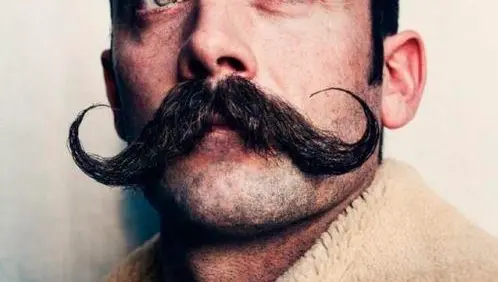
A handlebar mustache is a mustache grown long enough at the corners that the ends can be curled upward or outward, usually held in place with wax so they hold a defined curl throughout the day. It’s one of the few facial hair styles where the styling technique matters as much as the growth itself — you can have plenty of length and still end up with a shape that droops by lunchtime if the wax and curling method aren’t right.
This guide is built for that exact problem. It covers what actually separates a handlebar mustache from other long mustache styles, how long it realistically takes to grow one, and the wax and curling routine that keeps the ends holding shape through a full day rather than just for the first hour after you leave the bathroom.
Table of Contents
1. What Is a Handlebar Mustache?
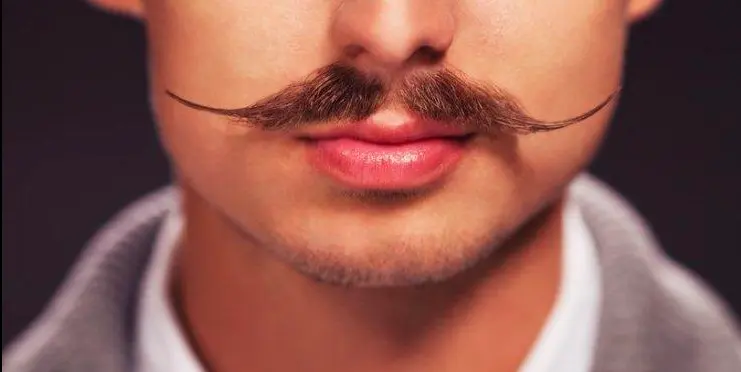
A handlebar mustache is defined by length at the corners of the mouth rather than length across the whole mustache. The center stays relatively close to the lip, while the outer ends are grown out, twisted, and curled upward or outward using wax — creating the curved shape that gives the style its name, since it resembles the handlebars of an old bicycle.
Quick snippet answer: A handlebar mustache is a mustache style where the ends are grown long enough to twist and curl upward, typically shaped and held in place with mustache wax to keep a defined curl throughout the day.
It’s not a style you fall into by accident. Growing the length is one part of it, but the actual “handlebar” shape only exists once you start curling and waxing the ends — until then, it just reads as an overgrown mustache.
2. Handlebar Mustache vs Other Long Mustache Styles
Several long mustache styles get confused with each other, so it’s worth seeing them side by side.
| Style | Center Length | Ends | Product Needed | Difficulty |
| Handlebar mustache | Moderate | Curled upward/outward, waxed | Mustache wax | Moderate to high |
| English mustache | Long, flat | Extended straight out, no curl | Light wax or none | Moderate |
| Walrus mustache | Long, full | Hangs down over the lip | Minimal | Low |
| Dali mustache | Short center | Thin, curled sharply upward at a steep angle | Strong-hold wax | High |
| Chevron mustache | Full, wide | No curl, sits flat | None | Low |
| Horseshoe mustache | Long, connects to beard sides | Straight down past the mouth | None | Low |
The clearest distinction is the curl itself. English and horseshoe mustaches rely on length without curling, while the handlebar and Dali mustache both depend on wax to hold their shape — the difference between those two is mostly angle and thickness, with the Dali being thinner and curled more sharply.
3. Types of Handlebar Mustache Styles
Handlebar mustache styles vary more than people expect once you start comparing curl size, thickness, and how far the ends extend.
Classic Handlebar Mustache
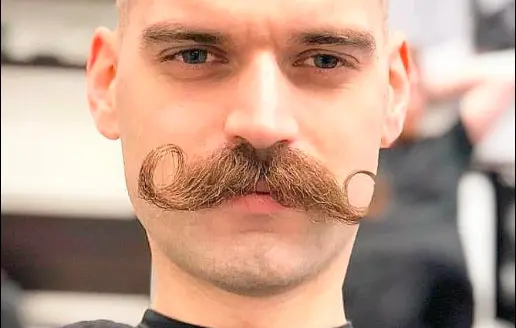
A moderate curl, rounded rather than sharp, sitting just above the corners of the mouth. This is the most wearable everyday version and the easiest for beginners to maintain.
Imperial Handlebar Mustache
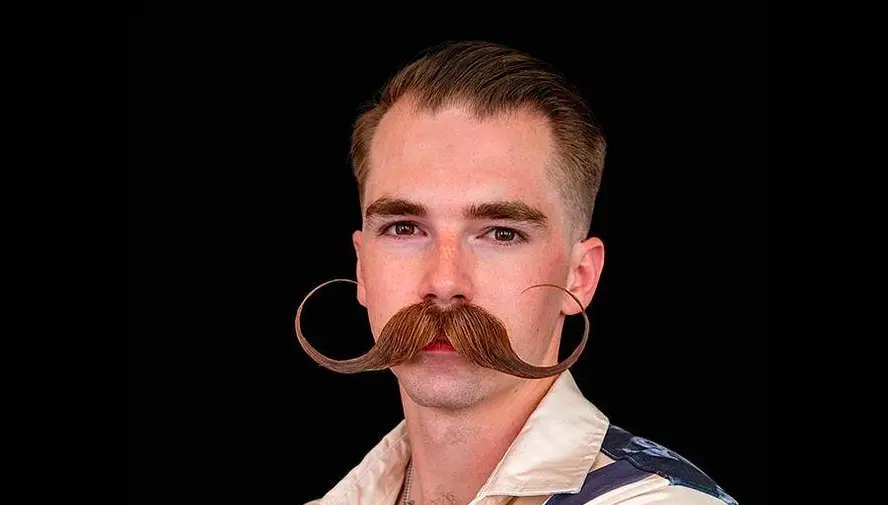
A larger, wider curl that extends further out from the face, often requiring longer growth time and a firmer-hold wax to keep its shape through the day.
Petite Handlebar Mustache
A smaller, subtler curl close to the lip line, giving a hint of the handlebar shape without the dramatic width of the imperial version. This suits men who want the style but work in more conservative environments.
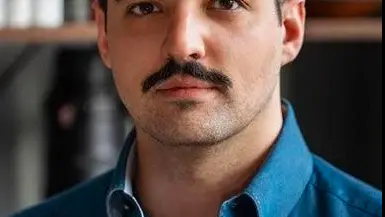
Waxed Flat-Curl Handlebar
Instead of a tight curl, the ends are shaped into a gentle upward flick rather than a full loop. It holds up better in humid weather since there’s less wax surface exposed to heat.
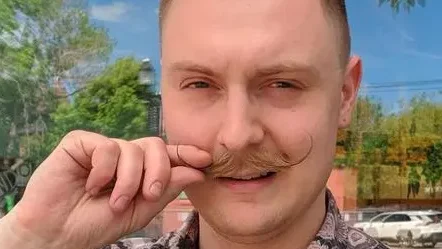
Handlebar With Curled Tips Only
Growth stays fairly short through the center and only the very tips are grown long enough to twist into a small curl. This is a good transition style if you’re not ready to commit to a full handlebar mustache yet.
4. Who Suits a Handlebar Mustache
Face shape: A handlebar mustache adds visual width at the upper lip, which works well on narrower or longer faces, similar to the balancing effect covered in our best beard for oblong face guide. On rounder faces, a smaller petite handlebar tends to look more proportionate than the wider imperial version.
Upper lip length: Men with a slightly longer space between the nose and upper lip generally have an easier time growing a defined handlebar shape, since there’s more room for the mustache to sit without curling into the nostrils.
Age group: There’s no real age restriction here — the style has stayed popular with both younger men chasing a retro look and older men who’ve worn some version of it for years. What matters more than age is patience, since a proper handlebar mustache takes real growth time.
Personality fit: This is a style that draws attention. If you’re comfortable with a mustache being the first thing people notice about your face, a handlebar mustache delivers that more than almost any other facial hair style.
5. Hair Type and Growth Speed
- Thick, coarse mustache hair: Holds a curl more easily once waxed and tends to grow the required length faster.
- Fine or thin mustache hair: Can still achieve a handlebar shape, but often needs a firmer-hold wax since fine hair loses curl definition faster during the day.
- Curly or wavy mustache hair: Sometimes works against a clean handlebar curl, since the natural wave can fight the direction you’re trying to shape. A flat iron or mustache-specific heat tool used briefly before waxing can help straighten the base before curling.
- Patchy mustache growth: If your mustache grows in unevenly at the corners, where the handlebar curl actually forms, this style will be harder to pull off convincingly than a straight style like a chevron mustache.
6. How to Grow a Handlebar Mustache
Step 1 — Stop trimming the corners completely. This is the single most common reason handlebar mustache attempts stall early. The corners need real length before there’s anything to curl, so resist trimming that area even when it looks scraggly.
Step 2 — Keep the center manageable. While the corners grow, keep the center of the mustache trimmed short enough that it doesn’t cover your upper lip or interfere with eating and drinking.
Step 3 — Give it four to six weeks minimum. Most men need at least a month of uninterrupted corner growth before there’s enough length to twist into a proper curl. Rushing this step is why a lot of first attempts end up looking more like an unruly mustache than a handlebar mustache.
Step 4 — Start light waxing once length allows a full twist. Once you can twist the corner hair around your finger and it holds even briefly without wax, you’re ready to start shaping properly.
Step 5 — Trim only the length, never the width, early on. If the ends split or look uneven, trim vertically to clean up split ends rather than cutting back the horizontal length you’ve been growing.
7. How to Curl and Shape It: Step-by-Step Wax Technique
This is where most of the actual skill in wearing a handlebar mustache lives.
- Start with clean, dry mustache hair. Wax doesn’t hold well on damp hair, so this should be one of the last steps in your routine, not the first.
- Warm a small amount of wax between your fingers. A pea-sized amount per side is usually enough — more wax doesn’t mean a stronger hold, it usually just looks greasy.
- Apply from root to tip, working outward. Comb the wax through evenly rather than concentrating it only at the ends.
- Twist each side individually. Roll the hair between your thumb and finger, working from the corner of the mouth outward, curling it in the direction you want the final shape to sit.
- Hold the curl for a few seconds. Wax needs a moment to set at room temperature before it holds independently.
- Check both sides for symmetry. Curl one side, then the other, then go back and compare them side-on in a mirror before moving on with your day.
- Touch up midday if needed. Carry a small wax tin if you’re out for long hours, especially in warm weather where wax softens faster.
Expert tip: If your curls keep collapsing by early afternoon, the usual cause is either too little wax or wax with too soft a hold. A firmer, beeswax-based formula generally lasts longer than lighter, oil-based blends.
8. Daily Mustache Grooming Routine
- Morning: Wash with a gentle cleanser, dry thoroughly, then apply wax and curl.
- Midday (optional): Check shape after eating or drinking, since both can soften the curl.
- Evening: Comb out the wax gently before bed rather than sleeping with it fully set, which helps avoid breakage over time.
- Weekly: Trim any split ends and check overall symmetry under strong light.
For general facial hair upkeep beyond the mustache itself, our beard care guide covers skin and hair health basics that apply here too.
9. Tools and Products Worth Owning
- Firm-hold mustache wax — the single most important product for this style; softer beard balms won’t hold a curl.
- Small mustache comb — for even wax distribution and daily shaping.
- Precision scissors — for trimming split ends without cutting length.
- Mini heat tool or flat iron (optional) — useful for taming curly or wavy mustache hair before waxing.
- Small travel wax tin — genuinely useful if you need midday touch-ups.
Avoid buying multiple wax brands at once. Test one firm-hold formula for a couple of weeks before switching, since hold strength varies more between brands than most product pages let on.
10. Pairing a Handlebar Mustache With a Beard
A handlebar mustache doesn’t have to stand alone. Combined with a beard, it becomes what’s often called a handlebar beard — where the mustache keeps its curled shape while the beard underneath stays styled separately, usually shorter and cleaner so it doesn’t compete visually with the mustache.
This combination works particularly well with styles that already keep the beard relatively short and structured, similar to the balance found in a French beard or a well-maintained corporate beard. If you want a fuller beard instead, a Garibaldi beard or Bandholz beard can still work with a handlebar mustache, provided the mustache is waxed and curled clearly enough to stand apart from the beard’s volume.
11. Common Mistakes
- Trimming the corners too early. This resets the growth clock and is the most common reason people give up on the style within the first month.
- Using too much wax. Heavy application looks greasy and actually holds a curl worse than a thin, even layer.
- Ignoring symmetry. One side curled tighter than the other is more noticeable than most men expect until they see a photo of themselves.
- Skipping the trim on split ends. Split, frayed tips make even a well-waxed curl look unkempt.
- Choosing the wrong wax strength. A light-hold wax on thick, coarse hair won’t survive the day, while a very firm wax on fine hair can look stiff and unnatural.
12. Common Myths
Myth: Any beard wax will work for a handlebar mustache. Beard balms and light waxes are formulated for softness, not hold. A proper handlebar curl needs a firmer, purpose-made mustache wax.
Myth: You need naturally thick mustache hair to pull this off. Fine hair can still hold a handlebar shape with the right wax strength — thickness affects how long the curl lasts, not whether it’s achievable at all.
Myth: Growing the mustache longer everywhere gets you there faster. The center doesn’t need much length at all. What actually takes time is corner growth specifically, so trimming the center shorter while the corners grow is standard practice, not a shortcut.
13. Is a Handlebar Mustache Workplace-Appropriate?
The petite handlebar and flat-curl versions tend to read as neat and controlled, which makes them workable in most business-casual settings. The imperial handlebar, with its wider curl and stronger visual presence, suits creative industries, hospitality, or self-employed professions better than conservative corporate environments. If you’re unsure how your workplace will respond, starting with a smaller curl and adjusting size over time is a safer approach than committing to the widest version immediately.
14. Realistic Growth Timeline
| Week | What’s Happening | What to Do |
| Week 1–2 | Corners look uneven, center may need light trimming | Stop trimming corners entirely |
| Week 3–4 | Enough length to twist but not hold a curl unaided | Begin light waxing to test shape |
| Week 5–6 | Curl holds with wax for several hours | Refine wax technique and check symmetry |
| Week 7+ | Full handlebar shape achievable | Maintain with daily waxing and weekly trims |
Growth speed varies with genetics and age, so some men reach a workable handlebar mustache by week four while others need closer to two months. Neither pace is unusual.
Final Thoughts
A handlebar mustache is less about raw length and more about technique — knowing when to stop trimming the corners, how much wax to actually use, and how to curl both sides so they match. Once the shape is established, it doesn’t take much daily time to maintain, but it does need consistency, particularly in the first six weeks while the corners are growing in. Whether you go with a subtle petite handlebar or a full imperial curl, the same rule applies: clean symmetry and the right wax strength matter more than how long you can grow it.
If you’re deciding how to pair this with facial hair below the mustache, our guides on goatee styles and the mutton chops beard are worth a look for contrast.
FAQs
1. What is a handlebar mustache? A handlebar mustache is a mustache style where the ends are grown long enough to twist and curl upward, usually held in shape with wax to keep the curl defined throughout the day.
2. How long does it take to grow a handlebar mustache? Most men need four to six weeks of uninterrupted corner growth before there’s enough length to curl properly, with a fully refined shape often taking closer to two months.
3. What’s the difference between a handlebar mustache and an English mustache? A handlebar mustache is curled upward at the ends using wax, while an English mustache is grown long and kept straight without curling.
4. Do I need wax for a handlebar mustache? Yes. Without wax, even long mustache hair won’t hold the curled shape that defines the style — a firm-hold mustache wax is essential.
5. Can fine mustache hair hold a handlebar curl? Yes, though it usually needs a firmer-hold wax than thick hair does, since fine hair loses curl definition faster during the day.
6. What’s the best mustache grooming routine for beginners? Wash and dry the mustache, apply a small amount of wax evenly, twist and curl each side individually, then check both sides for symmetry before heading out.
7. Can a handlebar mustache be combined with a beard? Yes — this combination is often called a handlebar beard, where the mustache keeps its curled shape while the beard underneath is kept shorter and cleaner.
8. Is a handlebar mustache appropriate for work? Smaller petite handlebar styles generally suit business-casual environments, while the wider imperial version suits creative or casual workplaces better.
9. How much wax should I use for a handlebar mustache? A pea-sized amount per side is usually enough. Using more wax than that tends to look greasy rather than improving hold.
10. Why does my handlebar mustache curl collapse during the day? This usually means either too little wax was applied or the wax formula isn’t firm enough for your hair type — switching to a beeswax-based, firmer-hold wax often solves it.
11. What face shapes suit a handlebar mustache best? Narrower or longer face shapes tend to suit a fuller imperial handlebar, while rounder faces often look more balanced with a smaller petite version.
12. Should I trim my mustache while growing a handlebar style? Trim the center to keep it manageable, but avoid trimming the corners at all until you’ve reached the length needed for a proper curl.
13. What’s the easiest handlebar mustache style for beginners? The classic handlebar mustache, with its moderate rounded curl, is the easiest starting point and the most forgiving if your growth is slightly uneven.
14. Does curly mustache hair make a handlebar shape harder to achieve? It can, since natural wave sometimes fights the curl direction you’re trying to create. A brief pass with a small heat tool before waxing often helps.
15. What’s the biggest mistake people make growing a handlebar mustache? Trimming the corners too early, before enough length has grown in, which is the most common reason first attempts stall or look uneven.