 By Beard Style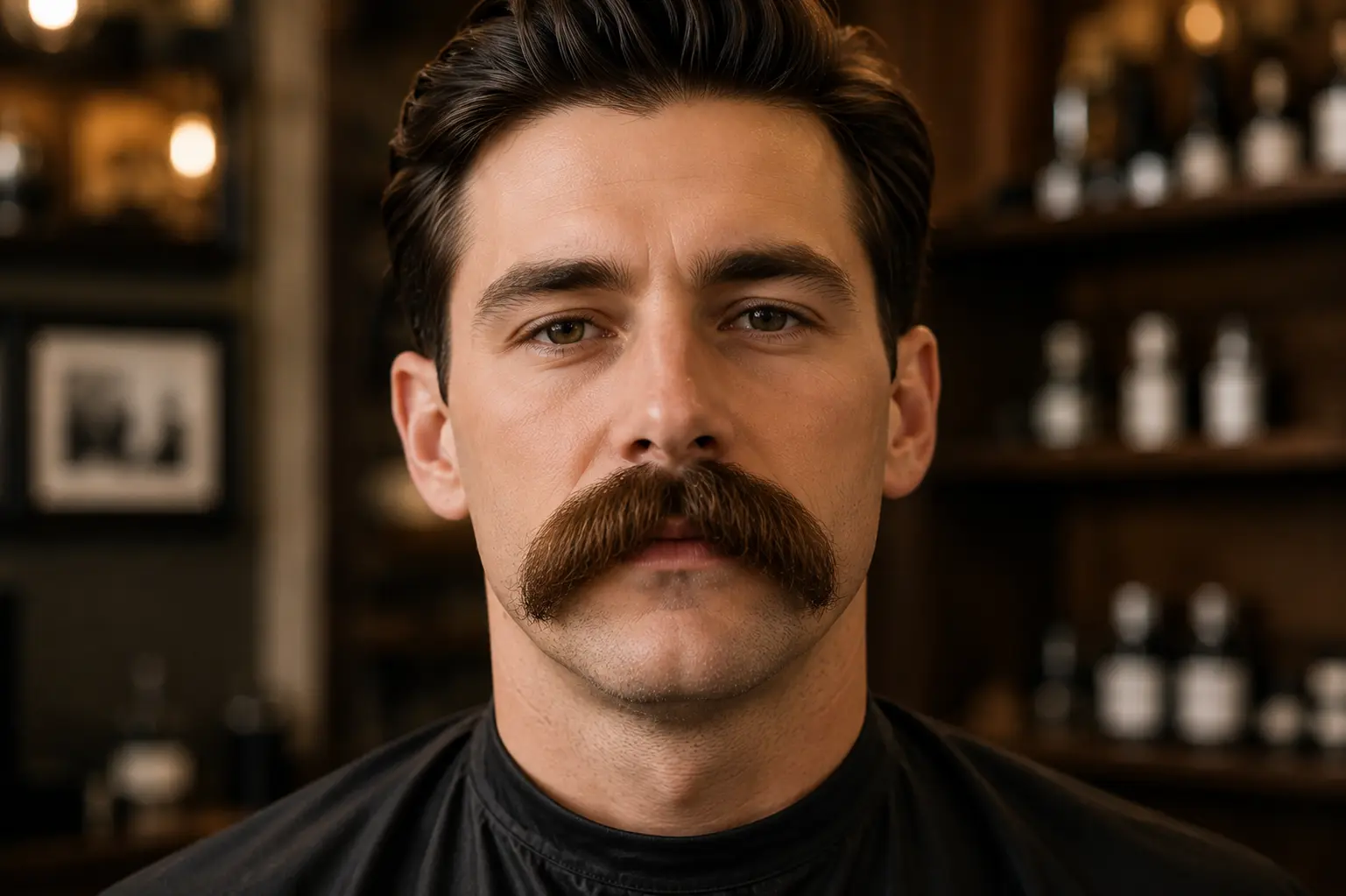
Table of Contents
A walrus mustache is one of the few facial hair styles that turns heads without a single beard hair below the lip. It’s thick, it hangs over the mouth, and it has more personality than almost any other mustache style out there. If you’ve been thinking about growing one, or you already have the length and just need to shape it properly, this guide covers the whole process — growth, styling, maintenance, and the mistakes that ruin the look.
What Is a Walrus Mustache?
A walrus mustache is a thick, full mustache that grows down and outward, completely covering the top lip and often extending past the corners of the mouth. Unlike a handlebar or a pencil-thin style, it isn’t groomed into curls or sharp lines — it’s left fuller and heavier, resembling the whiskers of, well, a walrus.
The defining traits of a walrus mustache are simple:
- Full coverage over the upper lip
- Downward growth rather than upturned tips
- Wide width, often reaching past the mouth corners
- Minimal shaping, though a groomed version does exist
It sits at the opposite end of the spectrum from something like a pencil mustache, which is thin and precise. The walrus is bold, unapologetic, and works best on men who want a mustache that actually makes a statement rather than blending in.
Where the Walrus Mustache Comes From
This style has been around since the late 1800s, when full facial hair was the norm rather than the exception. Lawman Wyatt Earp wore one, as did Theodore Roosevelt and philosopher Friedrich Nietzsche, whose mustache became almost as famous as his writing. It carried an air of authority back then — a mustache this size wasn’t something you could grow by accident.
The style faded through most of the 20th century as clean shaves and trimmed mustaches took over, but it never disappeared completely. Actor Wilford Brimley kept it alive on screen for decades, and in recent years it’s made a genuine comeback among men who want a vintage look with real substance, not just a trend borrowed from social media. Barbers report a steady rise in requests for thicker, fuller mustache shapes over the last several years, particularly among men already growing out a full beard who want to try a standalone mustache style.
Walrus Mustache vs Other Mustache Styles
Men often confuse a walrus with a horseshoe or a Fu Manchu because all three are “big” mustaches. The difference comes down to shape and what happens at the corners of the mouth.
| Style | Coverage | Shape | Maintenance | Best For |
| Walrus Mustache | Full, covers top lip | Hangs down, no curl | Low to moderate | Bold, vintage looks |
| Handlebar Mustache | Full, curled tips | Upturned ends | High | Sharp, classic style |
| Horseshoe Mustache | Full, extends to jawline | Straight vertical sides | Moderate | Rugged, biker look |
| Chevron Mustache | Covers lip only | Straight, wide | Low | Retro, everyday wear |
| Fu Manchu | Thin sides, long | Drooping strands | High | Dramatic, niche style |
If you’re deciding between a walrus and something more structured, the honest answer is: a walrus mustache requires more patience during growth but far less daily styling once it’s established. A handlebar needs wax every single day. A walrus mostly needs a comb and a trim.
Who Should Grow a Walrus Mustache
Not every face carries a mustache this size the same way. Here’s what actually matters:
Face Shape A wide, heavy mustache adds visual weight to the middle of the face, so it works especially well on oval and rectangular faces where there’s enough length to balance it out. On rounder faces, it can make the face look wider — if that’s a concern, pairing it with some length elsewhere, like a longer chin area, helps. If you’re unsure what suits your face shape, our guides on the best beard for a round face and best beard for an oval face apply the same face-shape logic to mustache proportions.
Hair Type Thicker, coarser facial hair grows into a fuller walrus shape faster. Fine or thin facial hair can still get there, but it takes longer and may need a boar-bristle comb worked in daily to train the direction of growth.
Age Group This style reads as mature and works particularly well on men in their 30s to 60s. Younger men can absolutely grow one, but the vintage association means it often looks more “costume” than “personal style” on a 19-year-old, unless the rest of the look supports it.
Lifestyle Fit If your job involves public-facing roles, a walrus mustache is a bigger commitment than a stubble or corporate beard — it’s noticeable, and not every workplace culture is on board with it. Know your environment before committing to the full growth period.
How Long Does It Take to Grow One
Realistically, expect 4 to 6 months of uninterrupted growth before you have enough length and width to shape it properly. Facial hair grows at roughly half an inch per month on average, and a walrus mustache needs length that extends past the lip corners on both sides — that’s more width than most mustache styles require.
The first month is the hardest. It looks patchy, uneven, and frankly a bit rough. Don’t trim the sides during this stage even if it feels unruly; width comes from letting the corners grow out, not from trimming them back.
How to Grow a Walrus Mustache Step by Step
- Stop touching the mustache area entirely for at least 8 weeks. No trimming, no shaping, just growth.
- Wash it 2–3 times a week with a gentle cleanser to keep the skin underneath from getting irritated or flaky.
- Comb daily once it passes half an inch, brushing downward and outward to train the hair’s direction.
- Moisturize the skin underneath with a light beard oil to prevent the itchiness that causes most men to quit in week two or three.
- Wait for full coverage — you’ll know it’s ready to style when the mustache passes the corners of your mouth and covers the top lip completely.
- Trim only the strays — flyaway hairs that stick out at odd angles — not the overall length or width.
If you’re growing this alongside a full beard, our beard care guide covers the broader growth-phase advice that applies to facial hair generally, not just the mustache area.
How to Style a Walrus Mustache
Once you’ve got the length, styling is where the look actually comes together. There are two main directions:
The Natural Walrus — brushed straight down, no product beyond a light oil to keep it soft. This is the lower-maintenance version and suits a rugged, lived-in look.
The Groomed Walrus — combed into shape and set with a strong-hold mustache wax so it holds its width and doesn’t droop into the mouth while eating or talking. This version looks more intentional and polished.
To style it:
- Comb the mustache straight down and slightly outward while it’s still slightly damp.
- Warm a small amount of wax between your fingers until it turns clear and pliable.
- Work the wax through from the center outward, following the natural growth direction.
- Use the comb again to even out the shape and remove any clumps.
- Trim only the bottom edge if it’s hanging low enough to interfere with eating or speaking clearly.
Avoid pulling the mustache into a curl — that’s a handlebar technique, and forcing it onto a walrus mustache just looks messy rather than deliberate.
Daily Maintenance and Care
A walrus mustache is lower-maintenance than a handlebar but it’s not zero-effort. Here’s a realistic daily and weekly routine:
Daily
- Comb after washing your face, morning and evening
- Apply a small amount of beard oil to keep hair soft and skin underneath hydrated
- Check for food or drink residue after meals — this is the one real downside of full coverage over the mouth
Weekly
- Trim stray hairs that stick out past the main shape
- Wash with a dedicated beard or mustache shampoo to avoid stripping natural oils
- Check width symmetry in a mirror under good light
Monthly
- Full shape trim if the edges have grown uneven
- Deep condition with a beard balm if the hair feels dry or brittle
If you already maintain a longer beard alongside the mustache, the trimming principles from our how to trim a beard guide carry over directly to keeping mustache width even.
Tools and Products You Actually Need
You don’t need a full grooming cabinet for this style, but a few items make a real difference:
- Boar-bristle mustache comb — trains hair direction better than plastic combs
- Strong-hold mustache wax — for the groomed version; look for a natural beeswax base
- Beard oil — jojoba or argan oil based, applied daily to prevent itchiness and flaking
- Precision mustache scissors — for trimming strays without cutting into the main shape
- Mild beard shampoo — regular shampoo strips too much natural oil from thicker facial hair
Skip anything marketed as “instant” mustache growth serums with no ingredient transparency. Growth speed comes down to genetics, testosterone levels, and general health — not a product you rub on top.
Common Mistakes Men Make
- Trimming too early. Shaping a walrus mustache before it’s fully grown in is the single most common reason it never reaches its full width.
- Skipping the comb. Without daily combing, hair grows in every direction and never settles into the downward walrus shape.
- Over-waxing. Too much wax makes the mustache look greasy and stiff rather than full and natural.
- Ignoring the skin underneath. Dry, flaky skin under a thick mustache is common and easily prevented with light daily oil.
- Copying a handlebar routine. Curling the tips or twisting them into points defeats the entire point of the walrus shape.
Common Myths, Cleared Up
Myth: A walrus mustache only suits older men. Reality: age helps it read as intentional, but a well-groomed walrus works on any adult with the patience to grow it properly.
Myth: Thicker facial hair always grows a fuller mustache. Reality: density matters, but growth pattern and genetics play a bigger role than most men assume.
Myth: You need wax every day. Reality: the natural, unwaxed version is a legitimate and popular way to wear this style — wax is optional, not required.
Pros and Cons
| Pros | Cons |
| Distinctive, memorable look | Can interfere with eating and drinking |
| Lower daily styling effort than a handlebar | Long growth period (4–6 months) |
| Works with or without a full beard | Not accepted in every professional setting |
| Suits mature, rugged aesthetics well | Requires patience through the awkward growth phase |
Variations of the Walrus Mustache
- English Walrus — narrower and slightly more groomed, popular in the UK vintage revival scene
- Natural Walrus — no product, brushed straight down, the lowest-maintenance version
- Groomed Walrus — waxed and shaped for a neater, more deliberate appearance
- Walrus with Beard — paired with a full beard like a Bandholz or Garibaldi style for a complete vintage look
- Walrus with Goatee — combined with an extended goatee for men who want facial hair on the chin without a full beard commitment
If you’re weighing a standalone mustache against pairing it with a beard, browsing through types of beard styles is a good starting point before committing to either direction.
Barber-Approved Tips
- Let it grow for a full season before judging whether the style suits you — the first six weeks always look worse than the final result.
- Comb against the grain occasionally to check for uneven patches early, while there’s still time to plan around them.
- If the mustache droops into your mouth while eating, a light wax at the edges solves it faster than trimming length you worked months to grow.
- See a barber for the first proper shaping. A trained eye will symmetrize the width in a way that’s hard to judge on yourself in a mirror.
- If you notice unusual bald patches or slow, uneven growth that doesn’t improve after a few months, it’s worth a quick conversation with a dermatologist — organizations like the American Academy of Dermatology have solid, evidence-based guidance on facial hair growth and skin health underneath it.
FAQs
What is a walrus mustache? A walrus mustache is a thick, full mustache that grows down and outward, completely covering the upper lip and often extending past the corners of the mouth.
How long does it take to grow a walrus mustache? Most men need 4 to 6 months of uninterrupted growth to reach the length and width needed to shape a proper walrus mustache.
Does a walrus mustache need wax? No. Wax is optional and used for the groomed version. The natural walrus mustache is worn unwaxed and simply combed into place.
What face shape suits a walrus mustache best? Oval and rectangular face shapes carry a walrus mustache best, since the width balances well against a longer face. Rounder faces can still wear it but may want extra length elsewhere to offset the added width.
Is a walrus mustache the same as a horseshoe mustache? No. A horseshoe mustache extends down the sides of the mouth toward the jawline, while a walrus mustache stays wider and heavier directly over the top lip without extending downward at the sides.
Can younger men grow a walrus mustache? Yes, though the vintage association means it tends to look more natural on men in their 30s and older. Younger men can still pull it off with the right overall styling.
How do I stop my walrus mustache from getting in my mouth while eating? A light application of strong-hold wax at the edges keeps the hair up and out of the way during meals without needing to trim length.
What’s the difference between a walrus mustache and a Fu Manchu? A Fu Manchu has thin sides that grow long and droop past the jawline, while a walrus mustache is uniformly thick and stays centered over the upper lip.
Do I need a beard to wear a walrus mustache? No. It works as a standalone style. It also pairs well with fuller beards like a Bandholz or a Garibaldi if you want a complete vintage look.
What tools do I need to maintain a walrus mustache? A boar-bristle mustache comb, mustache wax for the groomed version, beard oil for the skin underneath, and precision scissors for trimming stray hairs.
Why does my walrus mustache look patchy in the first few weeks? Uneven early growth is completely normal. Facial hair follicles don’t all grow at the same rate, and the shape only becomes visible after 8 to 10 weeks of consistent growth.
Is a walrus mustache professional enough for work? It depends on the workplace. It’s a noticeable, bold style, so it suits creative or casual environments more easily than strict corporate settings — worth considering before committing to the full growth period.
How often should I trim a walrus mustache? Once fully grown, a monthly trim for shape and a weekly check for stray hairs is enough. Avoid trimming during the initial growth phase.
A walrus mustache isn’t a style you rush. It rewards patience during the growth phase and pays off with a look that’s genuinely distinctive rather than a copy of what everyone else is wearing. Whether you go fully natural or keep it waxed and shaped, the key is consistency — comb it daily, trim only what needs trimming, and let the width fill in on its own timeline. Get through the awkward middle stretch, and a walrus mustache becomes one of the lowest-maintenance, highest-impact styles a man can grow.
Suggested Image ALT Text: Man with a full walrus mustache showing thick, vintage-style facial hair grooming