 By Bread Styles Team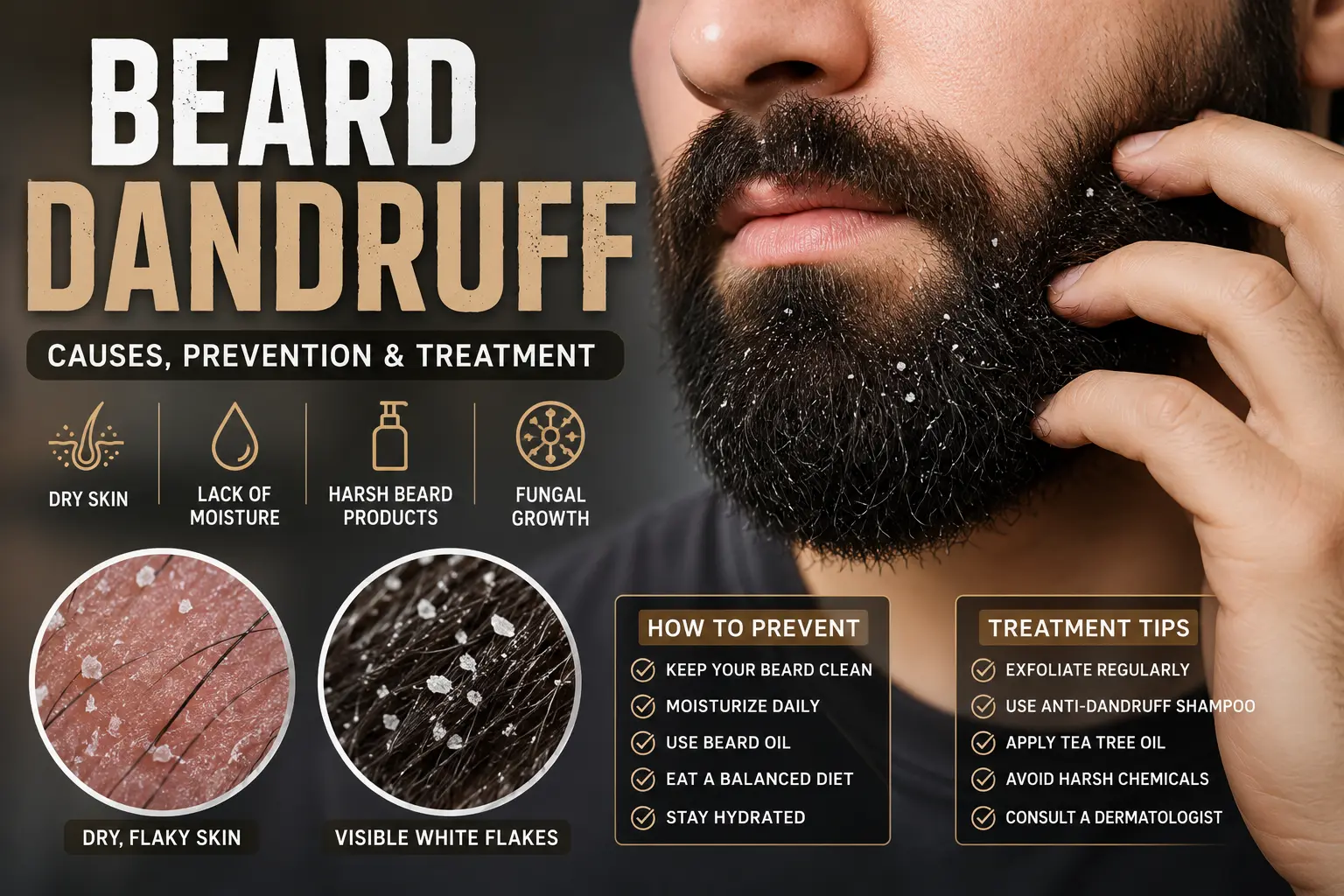
Beard dandruff shows up at the worst times — a dark shirt, good lighting, and suddenly there’s a dusting of white flakes on your shoulder that wasn’t there an hour ago. It’s common, it’s not a hygiene failure, and in most cases it’s genuinely simple to treat once you understand what’s actually causing it. The tricky part is that “beardruff” gets used as a catch-all term for a few different skin issues that don’t all respond to the same fix.
This guide covers what beard dandruff actually is, how to tell it apart from ordinary dry skin, and a practical, step-by-step approach to clearing it up and keeping it from coming back.
Table of Contents
What Beard Dandruff Actually Is
Quick answer: Beard dandruff, sometimes called beardruff, refers to visible white or yellowish flakes shedding from the skin underneath facial hair. It’s usually caused by dry skin, product buildup, or an overgrowth of a naturally occurring skin yeast (Malassezia), the same organism linked to scalp dandruff.
It’s worth separating this from beard hair issues entirely — dandruff is a skin condition, not a hair one. Products and habits that fix dry, frizzy beard hair don’t necessarily address what’s happening at the skin level, which is why some men keep oiling a flaky beard for weeks without improvement.
Beard Dandruff vs Dry Skin vs Seborrheic Dermatitis
This distinction matters because the right fix depends on which one you’re actually dealing with.
| Condition | What It Looks Like | Main Cause | Best Approach |
| Simple dry skin | Fine, small flakes, skin feels tight | Lack of moisture | Regular moisturizing, gentler washing |
| Beard dandruff | Larger, oilier-looking flakes, sometimes with mild itching | Yeast overgrowth (Malassezia) combined with skin oil | Anti-dandruff ingredients, balanced washing |
| Seborrheic dermatitis | Red, inflamed patches with greasy scaling, more persistent itching | A more significant inflammatory skin reaction to the same yeast | Medicated treatment, often needs a dermatologist |
Simple dry skin generally responds to moisture alone. True beard dandruff usually needs an anti-fungal or anti-dandruff ingredient to actually resolve, not just more oil. Seborrheic dermatitis is the most persistent of the three and often needs a dermatologist’s input rather than over-the-counter fixes alone.
What Causes Beard Dandruff
Malassezia Yeast Overgrowth
This yeast lives naturally on everyone’s skin and normally causes no issues. Under certain conditions — excess oil, humidity, or an individual’s particular skin chemistry — it can overgrow and trigger the flaking and mild irritation associated with beard dandruff.
Dry Skin Underneath the Beard
Facial hair can trap moisture but also block natural oils from reaching the skin evenly, leading to genuinely dry patches that flake without yeast being the primary driver.
Product Buildup
Heavy balm, wax, or infrequent washing can trap oil, dead skin, and product residue against the skin, creating conditions that make flaking more likely and harder to see clearly until it’s noticeable.
Over-Washing
Counterintuitively, washing too often strips natural oils and dries the skin out, which can trigger the same flaking it’s trying to prevent.
Weather and Climate
Cold, dry air pulls moisture from skin quickly, which is why beard dandruff often gets worse in winter months regardless of an otherwise consistent routine.
Not Exfoliating
Dead skin cells that aren’t gently removed can build up under the beard, becoming more visible as flaking once they eventually shed.
How to Get Rid of Beard Dandruff Step by Step
- Identify which type you’re dealing with, using the comparison above. If there’s significant redness, inflammation, or persistent itching, skip ahead to the medical section rather than starting with over-the-counter fixes.
- Switch to a gentler, sulfate-free beard shampoo and reduce washing frequency to two to three times weekly if you’ve been washing daily.
- Exfoliate gently once or twice a week with a soft brush or a mild exfoliating cleanser to help clear buildup without irritating the skin.
- Introduce an anti-dandruff wash containing an ingredient like zinc pyrithione or ketoconazole, used according to the product’s instructions, generally a few times a week rather than daily.
- Follow with a lightweight, non-comedogenic moisturizer on the skin itself, separate from beard oil, to address dryness directly.
- Apply beard oil after the skin has absorbed the moisturizer, not as a replacement for it — oil conditions hair, but it isn’t formulated to treat the skin condition causing dandruff.
- Give it two to three weeks of consistent use before judging results — dandruff treatments typically need sustained use rather than a single application to show real improvement.
Ingredients and Product Types That Actually Help
| Ingredient/Product Type | What It Does |
| Zinc pyrithione | Anti-fungal, commonly found in dedicated anti-dandruff washes |
| Ketoconazole (often prescription-strength, some OTC) | Targets the yeast directly linked to dandruff and seborrheic dermatitis |
| Salicylic acid | Helps exfoliate and clear buildup on the skin |
| Tea tree oil | Has some natural anti-fungal properties, though generally milder than dedicated treatments |
| Non-comedogenic beard moisturizer | Hydrates skin without clogging follicles |
| Gentle exfoliating brush | Physically removes dead skin buildup |
If you’re reaching for a dedicated anti-dandruff shampoo, check that it’s suitable for facial use — some scalp-specific formulas are stronger than facial skin needs and can cause additional irritation. A proper beard moisturizer used alongside these treatments addresses the dryness component that anti-fungal washes alone don’t fully cover.
Daily Habits That Keep Beard Flakes Away
- Comb or brush daily to help distribute natural oils evenly and prevent buildup in one area.
- Apply a light beard oil daily, focused on the skin, not just the hair length.
- Avoid touching or scratching the beard throughout the day, which can introduce bacteria and worsen mild irritation.
- Rinse with warm, not hot, water. Hot water strips more natural oil than warm water and can worsen dryness over time.
- Pat dry rather than rubbing, which reduces unnecessary friction on already sensitive skin.
Common Mistakes That Make Beard Dandruff Worse
- Over-washing in an attempt to “fix” the flaking, which usually dries skin out further and worsens the problem.
- Piling on more beard oil without addressing the skin directly. Oil alone rarely resolves genuine beard dandruff, since it doesn’t target the underlying yeast or buildup.
- Using a scalp dandruff shampoo not suited for facial skin, which can be too harsh and cause additional irritation.
- Skipping exfoliation entirely, allowing dead skin and product buildup to accumulate.
- Giving up after a few days. Anti-dandruff treatments typically need consistent use over two to three weeks before real improvement shows.
- Scratching aggressively, which can break skin and increase irritation or infection risk.
Beard Dandruff by Beard Type and Length
- Short beards and stubble show flaking more visibly since there’s less hair to hide it, but the skin underneath is also easier to reach and treat directly.
- Longer beards can trap more heat, oil, and product against the skin, sometimes making dandruff more likely to develop, alongside being harder to treat thoroughly without careful, deliberate product application reaching all the way to the skin.
- Thick or dense beards need extra care to make sure treatment products actually reach the skin rather than just coating the outer hair — a thick beard care routine adjusted with anti-dandruff steps works better than treating the surface alone.
- Curly beards can trap more product and buildup at the skin level due to how the hair coils, making regular gentle exfoliation especially useful — see curly beard care for related handling.
When Beard Dandruff Signals Something Beyond Dry Skin
Most beard dandruff responds well to the steps above within a few weeks. It’s worth seeing a dermatologist if:
- Flaking is accompanied by significant redness, swelling, or persistent itching that doesn’t improve with basic treatment
- The skin looks greasy and scaly rather than simply dry and flaky, which can point toward seborrheic dermatitis
- Over-the-counter anti-dandruff products show no improvement after three to four weeks of consistent use
- You notice spreading beyond the beard area to eyebrows, hairline, or other typically oily skin zones, which is a common pattern with seborrheic dermatitis specifically
The American Academy of Dermatology publishes reliable, non-commercial information distinguishing simple dandruff from more persistent skin conditions, worth reviewing if home treatment isn’t resolving things.
Myths About Beard Dandruff
“Beard dandruff means you’re not washing enough.” Often the opposite is true — over-washing is a more common contributing factor than under-washing.
“More beard oil fixes dandruff.” Oil conditions hair but doesn’t treat the underlying yeast or skin issue causing genuine dandruff; it can even worsen buildup if applied too heavily.
“Beard dandruff is contagious.” The yeast responsible lives naturally on most people’s skin already — it’s an overgrowth issue, not something transmitted between people.
“Shaving it off is the only real fix.” Shaving removes the visible symptom temporarily but doesn’t address the underlying skin cause, which will likely return with new growth if untreated.
“Beard dandruff and dry skin flakes are the same thing.” They can look similar but often need different treatments — dry skin responds to moisture, while true dandruff usually needs an anti-fungal ingredient to fully resolve.
A Simple Weekly Anti-Dandruff Routine
- [ ] Wash 2–3 times weekly with a gentle, sulfate-free shampoo
- [ ] Use an anti-dandruff wash (zinc pyrithione or similar) 2–3 times weekly, alternating with regular shampoo
- [ ] Gently exfoliate once or twice weekly
- [ ] Apply a non-comedogenic moisturizer to the skin daily
- [ ] Apply beard oil daily, focused on the skin first
- [ ] Reassess after 3 weeks; consult a dermatologist if there’s no real improvement
Final Thoughts
Beard dandruff responds well to a fairly simple fix in most cases — the right washing frequency, a genuine anti-dandruff ingredient rather than just more oil, and a bit of patience while the skin actually recovers over a few weeks. The key is figuring out whether you’re dealing with straightforward dryness, true dandruff, or something more persistent like seborrheic dermatitis, since each one needs a slightly different approach. Get that distinction right, treat the skin directly rather than just the hair, and beard flakes are one of the more fixable problems on this list.
FAQs
1. What causes beard dandruff? Beard dandruff is typically caused by an overgrowth of a naturally occurring skin yeast called Malassezia, combined with factors like dry skin, product buildup, or over-washing that disrupt the skin’s normal balance underneath the beard.
2. How do I get rid of beard dandruff fast? While there’s no truly overnight fix, switching to a gentle wash routine, introducing an anti-dandruff ingredient like zinc pyrithione a few times weekly, and adding a proper skin moisturizer usually shows noticeable improvement within two to three weeks.
3. Is beard dandruff the same as beard dry skin? Not exactly. Dry skin causes fine flaking from lack of moisture, while true beard dandruff involves yeast overgrowth and often needs an anti-fungal ingredient, not just moisturizer, to fully resolve.
4. Does beard oil help with beard dandruff? Beard oil conditions hair and can support skin moisture to some degree, but it doesn’t treat the underlying yeast overgrowth responsible for genuine dandruff, so it works best alongside, not instead of, a targeted treatment.
5. What is beardruff? Beardruff is simply an informal term for beard dandruff — visible flaking of the skin underneath facial hair, most often caused by yeast overgrowth, dryness, or buildup.
6. Can over-washing cause beard dandruff? Yes. Washing too frequently strips natural oils and can dry out the skin, which sometimes triggers or worsens the same flaking people are trying to wash away.
7. What ingredients should I look for to treat beard dandruff? Zinc pyrithione, ketoconazole, and salicylic acid are commonly used ingredients in anti-dandruff products that target either the underlying yeast or help exfoliate buildup on the skin.
8. How is beard dandruff different from seborrheic dermatitis? Beard dandruff usually involves mild flaking with little to no redness, while seborrheic dermatitis is a more inflammatory condition involving red, greasy, scaling patches that often need a dermatologist’s treatment plan.
9. Can beard dandruff spread to other parts of the face? In cases related to seborrheic dermatitis specifically, flaking and irritation can appear in other naturally oily areas like the eyebrows or hairline, which is a sign to consult a dermatologist rather than continue home treatment alone.
10. Is it normal to have some beard flakes even with a good routine? Occasional mild flaking, especially in dry or cold weather, isn’t unusual, but persistent or worsening flaking despite a consistent routine usually points to needing a targeted anti-dandruff treatment.
11. Should I shave my beard off if I have bad beard dandruff? Shaving removes the visible symptom temporarily but doesn’t treat the underlying skin cause, so dandruff will likely return with new growth unless the actual issue is addressed directly.
12. How long does it take to clear up beard dandruff? Most cases show noticeable improvement within two to three weeks of consistent use of a proper anti-dandruff routine, though more persistent or medical cases may take longer or require professional treatment.
13. Can diet affect beard dandruff? General skin health can be influenced by diet and hydration, though beard dandruff is primarily driven by yeast overgrowth and skin care habits rather than diet alone in most cases.
14. What’s the best way to prevent beard dandruff from coming back? A consistent routine combining moderate washing frequency, regular gentle exfoliation, daily moisturizing of the skin, and periodic use of an anti-dandruff wash tends to keep flaking from returning.
15. When should I see a dermatologist about beard dandruff? If flaking comes with significant redness, persistent itching, greasy scaling, or shows no improvement after three to four weeks of consistent home treatment, it’s worth getting checked rather than continuing to self-treat.