 By Bread Styles Team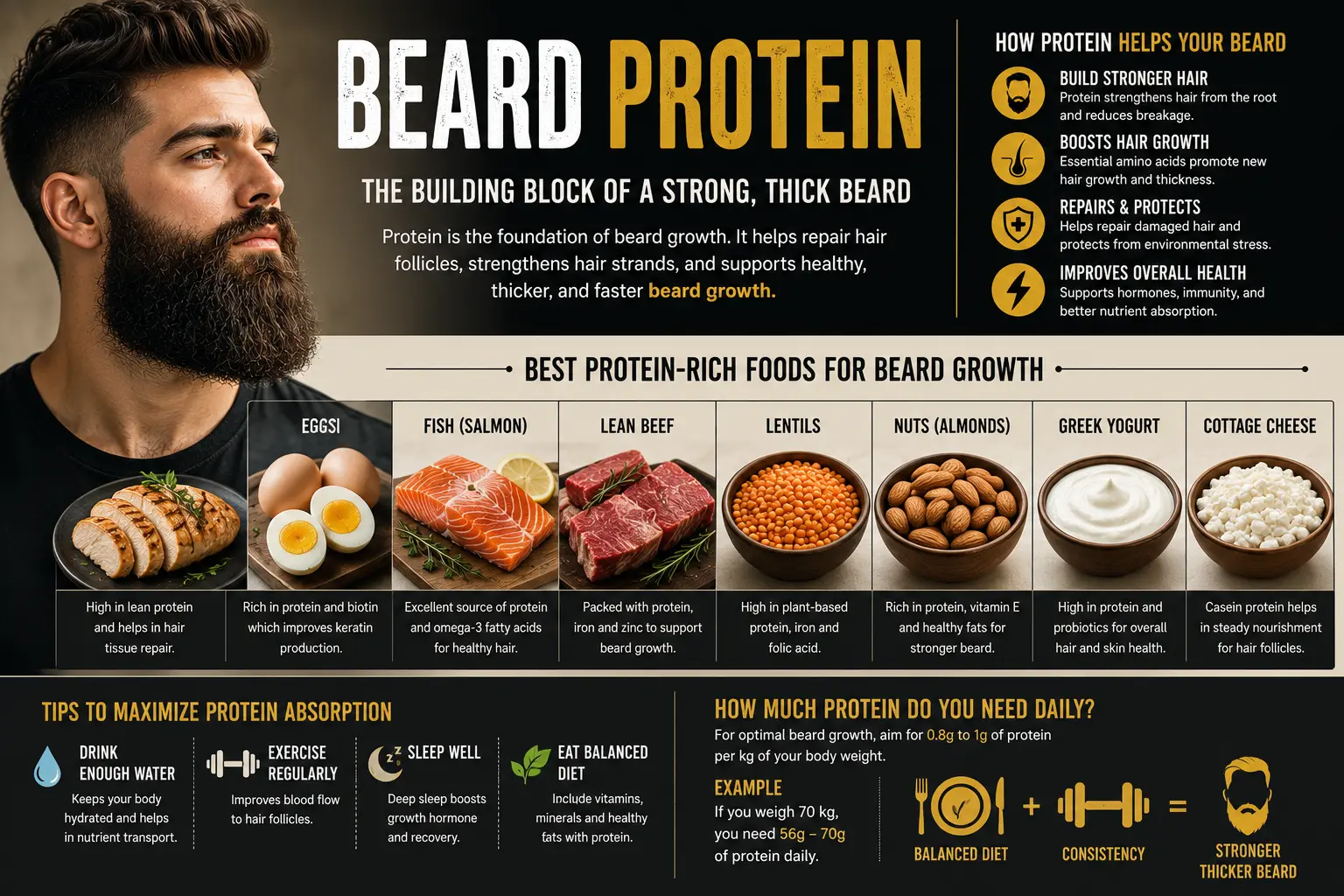
Beard protein isn’t a supplement category or a marketing term, it’s simply the dietary protein that supplies the raw material facial hair is built from. Every strand of beard hair is made mostly of keratin, a fibrous protein, which means the amount and quality of protein in a person’s diet has a direct, measurable connection to how strong and healthy that hair grows in.
This isn’t about eating extreme amounts of protein or following a bodybuilder’s meal plan. It’s about understanding what protein actually does for a beard, how much is genuinely needed, and where the best sources come from, without falling for the idea that more protein automatically means more or faster hair growth.
Table of Contents
Quick Answer: What Beard Protein Means
Beard protein refers to the dietary protein the body converts into keratin, the structural protein that makes up roughly 90% of hair. Adequate protein intake supports strong, healthy beard growth, while consistently low protein intake can lead to weaker, more brittle facial hair over time.
The Science: How Protein Actually Builds Beard Hair
Hair follicles are among the most metabolically active structures in the body, constantly producing new cells that eventually harden into keratin and form the visible hair shaft. That production process depends on amino acids, the building blocks protein breaks down into during digestion.
When dietary protein is sufficient, follicles have a steady supply of amino acids to maintain normal keratin production, which shows up as hair that’s structurally strong and resistant to breakage. When protein intake drops or stays inconsistent, the body prioritizes protein for essential functions like organ and muscle maintenance first, and hair production gets deprioritized, since it isn’t required for survival the way other processes are.
This is part of the broader picture covered in the guide to beard nutrition, where protein works alongside vitamins and minerals rather than as a standalone factor. Protein builds the structure; other nutrients support the follicle environment protein production depends on.
How Much Protein Do You Really Need for Beard Growth?
There’s no special, elevated protein target specifically for beard growth beyond what’s already recommended for general health. Most adult men maintain healthy hair growth, including beard hair, on a standard daily protein intake spread across meals rather than concentrated in one sitting.
Quick answer: Beard growth doesn’t require protein intake above standard dietary guidelines. A consistent, moderate amount spread throughout the day supports healthy hair growth better than a single large, protein-heavy meal.
What matters more than hitting an exact number is consistency. A diet that regularly falls short of adequate protein, whether from restrictive dieting, low appetite, or simply not prioritizing protein-rich foods, is more likely to affect beard health than a diet that meets normal recommendations even without going out of its way to maximize protein.
Complete vs. Incomplete Protein: Does the Type Matter?
Protein sources are sometimes described as “complete,” meaning they contain all nine essential amino acids the body can’t produce on its own, or “incomplete,” meaning they’re missing one or more.
| Protein Type | Examples | Beard Growth Relevance |
| Complete (animal) | Eggs, chicken, fish, dairy | Provides all essential amino acids in one source |
| Complete (plant) | Quinoa, soy, buckwheat | Less common but fully sufficient on their own |
| Incomplete (plant) | Beans, lentils, nuts, grains | Needs to be combined with other sources across the day |
For most people, this distinction matters less in practice than it sounds. Eating a variety of protein sources across a normal day, rather than relying on a single food, naturally covers the full range of essential amino acids, whether those sources are animal-based, plant-based, or a mix of both.
Best Protein Sources for Beard Growth
Some protein sources offer more supporting nutrients for hair health than others, which makes them worth prioritizing over protein alone.
Eggs A complete protein source that also delivers biotin, making it one of the more efficient single foods for beard protein needs.
Fish, especially salmon Provides complete protein along with omega-3 fatty acids and vitamin D, both relevant to overall hair growth protein support.
Lean poultry Chicken and turkey offer a high-protein, lower-fat option that fits easily into most daily meals.
Greek yogurt and dairy A convenient protein source with the added benefit of calcium and, in some cases, probiotics that support gut health.
Lentils and legumes A strong plant-based option that also delivers iron, useful for men following a vegetarian or reduced-meat diet.
Lean red meat Dense in both protein and iron, red meat in moderate portions covers two nutrients tied to healthy beard growth at once.
Nuts and seeds A smaller protein contribution compared to the sources above, but useful as a snack that also adds zinc and healthy fats to the mix.
Signs Low Protein Intake Is Affecting Your Beard
Protein-related hair issues don’t usually appear suddenly. They build gradually and often show up alongside other signs of inadequate intake.
- Beard hair that feels noticeably weaker or breaks more easily than usual
- Slower growth compared to previous months without other explanation
- Dull, less resilient texture despite a consistent grooming routine
- Other signs of low protein intake, like fatigue or slower recovery from physical activity
- A diet that’s recently become more restrictive, lower calorie, or missing regular protein sources
If several of these apply together, it’s worth reviewing overall protein intake honestly before assuming the issue is genetics or a care routine problem. A pattern of consistently low protein is one of the more fixable causes of underwhelming beard health.
Does Protein Timing Matter for Beard Growth?
Timing gets a lot of attention in fitness circles, but for beard growth specifically, total daily intake matters far more than when protein is eaten. Spreading protein across meals rather than concentrating it all in one sitting tends to support more consistent amino acid availability throughout the day, which is a reasonable approach, but there’s no evidence that a specific window or timing strategy meaningfully changes beard growth outcomes.
Expert tip: A simple, practical approach is including a protein source at each main meal, breakfast, lunch, and dinner, rather than trying to optimize exact timing. Consistency across the day matters more than precision.
Protein Alone Isn’t the Whole Picture
Protein builds the physical structure of hair, but it doesn’t work in isolation. Biotin, zinc, iron, and vitamin D all play supporting roles in follicle health and function, and a diet high in protein but low in these other nutrients still won’t produce optimal beard health. This is covered in more depth in the guide to foods for beard growth, which looks at the fuller range of nutrients and foods that work alongside protein rather than protein in isolation.
Hydration also plays a supporting role that’s easy to overlook. Dehydration affects skin and hair health independently of protein or overall nutrition quality, so adequate water intake remains part of the picture even with protein intake already covered.
Common Beard Protein Myths
Myth: More protein means faster beard growth. Beyond meeting adequate intake, additional protein doesn’t accelerate hair growth, which follows its own biological cycle regardless of how much extra protein is consumed.
Myth: Protein shakes and supplements work better than food. Whole food protein sources typically come packaged with other beneficial nutrients, like biotin in eggs or omega-3s in fish, that isolated protein powder doesn’t provide.
Myth: Only animal protein supports healthy hair. Plant-based protein sources, when varied and combined appropriately, provide the same essential amino acids needed for healthy keratin production.
Myth: A high-protein diet fixes a patchy beard. Patchiness is primarily genetic. Protein supports the health and strength of hair that’s already growing, but it doesn’t change follicle density or growth pattern.
Building Protein Into a Realistic Beard Health Routine
Getting enough protein for beard health doesn’t require a strict diet or constant tracking. A few consistent habits cover most of what matters.
- Include a protein source at each main meal rather than concentrating it all at once
- Mix animal and plant sources for variety, especially if eating a largely plant-based diet
- Prioritize whole food sources over relying heavily on protein powders or bars
- Pair adequate protein with the other nutrients covered in the broader beard nutrition picture, since protein alone isn’t sufficient on its own
- Stay consistent for at least two to three months before expecting to see a visible difference, since hair growth cycles take time
- Support dietary changes with a proper beard care routine, since nutrition and topical care work together rather than one replacing the other
None of this requires dramatic changes for most men already eating a reasonably balanced diet. It’s more about making sure protein doesn’t quietly fall short, especially during busy periods or restrictive eating phases, since that’s when beard health typically starts to show it.
The Bottom Line
Beard protein is the foundation hair is physically built from, but it isn’t a lever to pull for faster or thicker growth beyond genetic potential. A consistent, moderate protein intake spread across meals, paired with the other nutrients that support follicle health, gives facial hair what it needs to grow as strong as it’s capable of. More protein than that doesn’t speed things up, and less than adequate intake is one of the more fixable reasons a beard might be underperforming.
9. FAQs
Why is protein important for beard growth? Beard hair is made mostly of keratin, a structural protein, so adequate dietary protein supplies the amino acids follicles need to build strong, healthy hair.
How much protein do I need for a healthy beard? There’s no special elevated target for beard growth specifically; meeting standard daily protein recommendations spread across meals is generally sufficient to support healthy hair.
Does eating more protein make a beard grow faster? No, extra protein beyond adequate intake doesn’t speed up hair growth, which follows its own biological cycle regardless of how much additional protein is consumed.
Can low protein intake cause beard hair loss? Low protein intake is more commonly linked to weaker, more brittle hair and slower growth rather than direct hair loss, though severe or prolonged deficiency can affect overall hair health more significantly.
What are the best protein sources for beard growth? Eggs, fish, lean poultry, Greek yogurt, and lentils are among the best protein sources, since several also provide supporting nutrients like biotin, omega-3s, or iron alongside the protein itself.
Do protein shakes help with beard growth? Protein shakes can help meet overall intake, but whole food sources are generally preferred since they provide additional nutrients, like biotin or healthy fats, that isolated protein powder doesn’t include.
Is plant-based protein as good as animal protein for beard growth? Yes, when varied and combined appropriately across meals, plant-based protein sources provide the same essential amino acids needed for healthy keratin production as animal sources.
Does protein timing matter for beard growth? Total daily protein intake matters more than timing; spreading protein across meals is a reasonable approach, but there’s no strong evidence that specific timing changes beard growth outcomes.
Can too much protein be harmful for beard health? Excess protein beyond what the body needs doesn’t provide additional beard growth benefits and isn’t necessary for hair health once adequate intake is already being met.
How long does it take to see beard improvements from more protein? Since hair grows in cycles, most dietary improvements take roughly eight to twelve weeks before any visible difference in strength or growth appears.
Can vegetarians get enough protein for healthy beard growth? Yes, a varied vegetarian diet including eggs, dairy, legumes, and grains can provide adequate protein and essential amino acids to support healthy beard hair.
Does protein alone fix a patchy or thin beard? No, patchiness and density are primarily genetic; protein supports the strength and health of hair that’s already growing but doesn’t change follicle pattern or distribution.
What happens to beard hair with a protein deficiency? Hair affected by inadequate protein intake tends to become weaker, more brittle, and slower growing, since the body prioritizes protein for essential functions over hair production first.
Should I combine protein with other beard nutrients? Yes, protein works best alongside biotin, zinc, iron, and other nutrients covered in a complete beard nutrition approach, since these support the follicle environment protein production relies on.
Is protein more important than beard oil for beard health? They serve different roles: protein supports hair growth from the inside through diet, while beard oil conditions the hair and skin directly, and both work best used together rather than as substitutes.