 By Bread Styles Team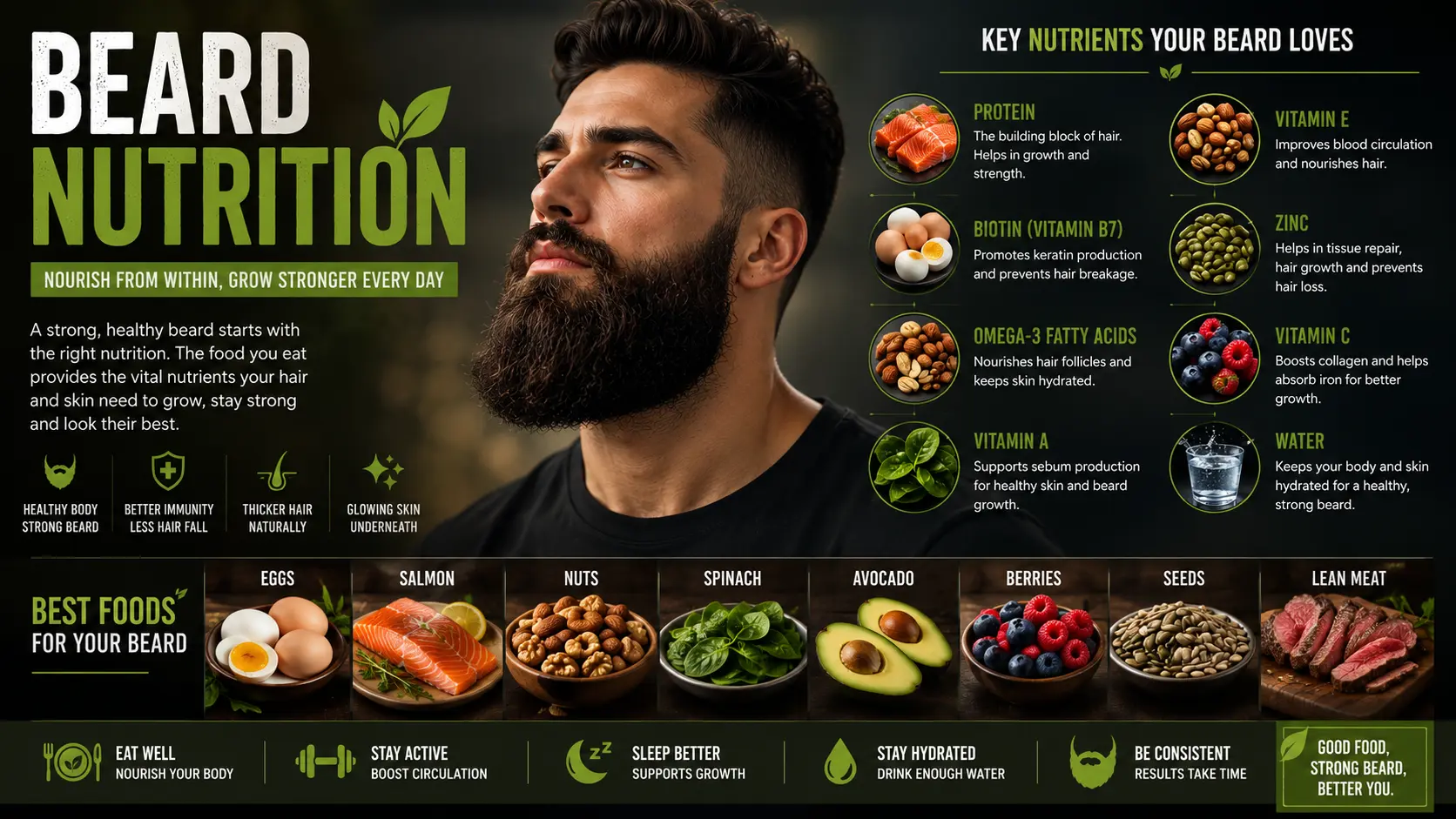
Beard nutrition doesn’t get nearly as much attention as beard oil or trimmers, but hair is one of the first things the body deprioritizes when nutrition falls short. Facial hair needs a steady supply of protein, vitamins, and minerals to grow at a normal rate and come in with any real thickness or strength, and a diet that’s consistently low in the right nutrients shows up in the mirror eventually, whether that’s slower growth, patchiness, or hair that feels thin and brittle.
This isn’t about a miracle diet that grows a fuller beard overnight. It’s about understanding which nutrients actually matter for facial hair, where to get them from real food, and what a healthy beard diet realistically can and can’t change.
Table of Contents
What Beard Nutrition Actually Means
Beard nutrition refers to the vitamins, minerals, and macronutrients the body needs to support healthy hair follicle function, growth speed, and hair strength in facial hair. It includes protein for hair structure, healthy fats for scalp and skin health, and specific vitamins and minerals like biotin, zinc, and iron that directly influence how hair grows and how strong it is once it’s grown in.
Hair follicles are metabolically active, meaning they require consistent nutrient supply to function properly. When that supply is inconsistent, whether from poor diet, restrictive eating, or an underlying deficiency, hair growth is one of the first processes the body scales back, since it isn’t essential for survival the way other functions are.
Why Diet Affects Beard Growth and Health
Genetics set the baseline for beard density, growth pattern, and how thick facial hair can realistically get. No diet changes that baseline. What diet does affect is whether a beard is growing at its full genetic potential or being held back by nutrient shortfalls the body is dealing with elsewhere first.
This is closely tied to the broader topic covered in the guide to beard growth, where nutrition is one factor among several, including genetics, hormones, and consistent care. Diet won’t turn a patchy beard into a full one if genetics are the limiting factor, but it can absolutely be the difference between a beard growing in as thick and healthy as it’s capable of versus growing in weaker than it should.
Key Nutrients for Beard Growth
Certain nutrients show up consistently in research and clinical guidance around hair health. Here’s what each one actually does for facial hair.
| Nutrient | Role in Beard Health | Common Food Sources |
| Protein | Hair is primarily made of keratin, a protein; low intake weakens hair structure | Eggs, chicken, fish, lentils, Greek yogurt |
| Biotin (Vitamin B7) | Supports keratin production and follicle health | Eggs, almonds, sweet potatoes, salmon |
| Zinc | Supports follicle repair and tissue growth | Beef, pumpkin seeds, chickpeas, oysters |
| Iron | Carries oxygen to hair follicles for healthy growth | Spinach, red meat, lentils, fortified cereals |
| Vitamin D | Linked to follicle cycling and hair growth regulation | Fatty fish, egg yolks, fortified milk, sunlight |
| Vitamin C | Supports collagen production and iron absorption | Citrus fruits, bell peppers, strawberries |
| Omega-3 fatty acids | Supports scalp and skin health, reduces inflammation | Salmon, walnuts, flaxseed, chia seeds |
Quick answer: The nutrients most closely linked to healthy beard growth are protein, biotin, zinc, iron, and vitamin D, since each plays a direct role in either building hair structure or supporting the follicle itself.
Best Foods for Beard Growth, by Category
Rather than chasing individual supplements, most of these nutrients are easier to get consistently through whole foods.
Protein sources Eggs, lean meats, fish, Greek yogurt, and legumes provide the amino acids hair needs to build keratin. Eggs in particular cover both protein and biotin in one food, making them one of the more efficient additions to a beard-focused diet.
Healthy fats Fatty fish like salmon and mackerel, walnuts, chia seeds, and olive oil supply omega-3s and support skin health at the follicle level, which matters for facial skin the same way it matters for scalp skin.
Iron-rich foods Red meat, spinach, lentils, and fortified cereals help maintain healthy oxygen delivery to hair follicles, which is particularly relevant for men with diagnosed or borderline iron deficiency.
Zinc sources Pumpkin seeds, chickpeas, beef, and oysters support the tissue repair and growth processes tied to follicle health.
Vitamin-rich produce Citrus fruits, bell peppers, sweet potatoes, and leafy greens round out a diet with the vitamin C and beta-carotene that support collagen production and overall skin and hair health.
Signs Your Diet Might Be Holding Your Beard Back
Not every case of slow or patchy growth is nutrition-related, but a few signs point toward diet as a contributing factor worth addressing.
- Hair that feels unusually brittle or breaks easily despite a consistent care routine
- Noticeably slower growth compared to a few months prior, without other changes
- A diet that’s heavily restricted, very low calorie, or missing entire food groups
- Other signs of nutrient deficiency, like fatigue, pale skin, or brittle nails
- Beard growth that improved after previous dietary changes, suggesting a real connection
If several of these apply, especially alongside other symptoms like fatigue or noticeable hair thinning elsewhere on the body, it’s worth discussing with a doctor rather than guessing, since blood work can identify an actual deficiency far more reliably than assuming from symptoms alone.
A Sample Day of Eating for Beard Health
This isn’t a prescriptive meal plan, just an example of how the key nutrients fit naturally into a normal day of eating.
Breakfast: Two eggs, whole grain toast, and a handful of berries (protein, biotin, vitamin C)
Lunch: Grilled chicken or salmon with a spinach salad, chickpeas, and olive oil dressing (protein, iron, zinc, healthy fats)
Snack: A small handful of walnuts or pumpkin seeds (omega-3s, zinc)
Dinner: Lean beef or lentils with sweet potato and steamed vegetables (protein, iron, zinc, vitamin A)
Throughout the day: Consistent water intake, since hydration supports overall skin and hair health alongside nutrition itself
This kind of balanced approach checks most of the key nutrient boxes without requiring supplements, tracking, or a complete overhaul of a normal diet.
Do Beard Vitamins and Supplements Actually Work?
Supplements can help close a gap when someone has an actual, confirmed deficiency, but they aren’t a shortcut to faster or thicker growth for someone whose diet is already adequate. Biotin for beard growth is one of the most heavily marketed examples: biotin deficiency is genuinely linked to hair problems, but true deficiency is uncommon in people eating a varied diet, and taking more biotin than the body needs doesn’t produce extra benefit.
The same logic applies to most beard vitamins and beard supplements on the market. They’re most useful for someone with a genuine, identified shortfall, less useful as a blanket solution for anyone hoping for faster growth regardless of their existing diet. A simple blood test can confirm whether a deficiency actually exists before spending money on a supplement that may not be addressing anything.
Expert tip: Food-based nutrients are generally absorbed more efficiently than isolated supplement forms. Where possible, closing a nutritional gap through diet first, then supplementing only where a real deficiency is confirmed, tends to be both more effective and more cost-efficient than supplementing broadly.
Common Beard Nutrition Myths
Myth: Eating more protein grows a beard faster than genetics allow. Protein supports healthy hair structure, but it can’t override genetic limits on density or growth rate.
Myth: Biotin supplements guarantee thicker facial hair. Biotin only helps where an actual deficiency exists. Extra biotin beyond what the body needs doesn’t translate to extra hair growth.
Myth: A “beard diet” works faster than normal healthy eating. There’s no special combination of foods that outperforms a generally balanced, nutrient-rich diet for supporting hair health.
Myth: Beard growth responds to diet changes within days. Hair growth cycles operate over weeks and months, so dietary improvements typically take a full growth cycle, often eight to twelve weeks, before any visible difference shows up.
What Diet Can and Can’t Do for a Beard
Setting realistic expectations avoids a lot of frustration and wasted money on unnecessary supplements.
What good nutrition can do:
- Support hair growing in as thick and strong as genetics allow
- Reduce brittleness and breakage tied to nutrient shortfalls
- Improve skin health underneath the beard, which affects follicle function
- Correct growth issues specifically caused by a real deficiency
What diet can’t do:
- Change genetic density, growth pattern, or patchiness
- Speed up the natural hair growth cycle beyond a normal rate
- Replace consistent topical care and grooming habits
- Fix beard growth issues caused by hormonal conditions without medical treatment
A patchy or thin beard that’s genetic in origin won’t fill in from diet changes alone, and it’s worth reading the guide to patchy beard care for a clearer picture of what’s realistically changeable versus what isn’t.
Building Beard Health From the Inside Out
Nutrition works best as one part of a broader approach rather than a standalone fix. A beard that’s supported nutritionally still needs consistent topical care to look and feel its best.
- Eat a varied diet covering protein, healthy fats, and the key vitamins and minerals tied to hair health
- Stay hydrated, since dehydration affects skin and hair health independently of diet quality
- Pair good nutrition with a proper beard care routine, including regular washing and oiling
- Address any suspected deficiency with a doctor and blood work rather than guesswork
- Give dietary changes a full growth cycle, roughly two to three months, before expecting visible results
- Combine nutrition with topical growth support, like a beard growth oil, for a more complete approach where growth is the main goal
Facial hair nutrition isn’t a replacement for genetics or a proper grooming routine, but it removes one of the barriers that can hold a beard back from reaching its actual potential.
The Bottom Line
Beard nutrition won’t turn a naturally patchy beard into a full one, and it won’t speed up how fast hair grows beyond its normal cycle. What it does is make sure the follicles have what they need to grow hair that’s as thick, strong, and healthy as genetics allow. Protein, biotin, zinc, iron, and a generally balanced diet cover most of what matters, and results show up over months, not days, alongside a consistent care routine rather than instead of one.
9. FAQs
Does diet really affect beard growth? Yes, diet affects how well hair follicles function and how strong hair grows in, though genetics still set the overall limits on density, pattern, and growth rate.
What foods are best for beard growth? Eggs, lean meats, fish, leafy greens, nuts, and seeds cover most of the key nutrients tied to beard health, including protein, biotin, zinc, and iron.
Can biotin actually make my beard grow faster? Biotin only improves hair growth in people with an actual biotin deficiency, which is uncommon in those eating a varied diet, so extra biotin beyond what the body needs typically doesn’t add extra growth.
How long does it take to see results from better beard nutrition? Since hair growth cycles operate over weeks and months, most dietary improvements take roughly two to three months before any visible difference in beard health or growth appears.
Can poor nutrition cause a patchy beard? Patchiness is primarily genetic, but poor nutrition can make existing hair weaker or slower growing, which may make natural patchiness appear more pronounced.
Is protein important for beard growth? Yes, hair is made primarily of keratin, a protein, so consistent protein intake supports the raw material needed for healthy hair structure.
Do beard vitamins work better than regular food? Whole foods are generally absorbed more efficiently than supplements, and vitamins are most effective when addressing a confirmed deficiency rather than being taken broadly without one.
What vitamin deficiency causes slow beard growth? Deficiencies in biotin, iron, zinc, or vitamin D are most commonly linked to slower or weaker hair growth, though a blood test is the only reliable way to confirm an actual deficiency.
Can drinking more water improve beard health? Proper hydration supports overall skin and hair health, which works alongside good nutrition rather than replacing the need for a balanced diet.
Does a low-calorie or restrictive diet affect beard growth? Yes, very low-calorie or nutrient-restricted diets can slow hair growth since the body deprioritizes non-essential processes like hair growth when overall nutrient intake is inadequate.
Are there foods that actually make a beard thicker? No single food increases thickness beyond genetic potential, but a diet consistently rich in protein, zinc, and healthy fats supports hair growing in as strong and full as it’s naturally capable of.
Should I take a beard supplement if my diet is already healthy? Supplements are most useful for a confirmed deficiency; if a diet is already varied and balanced, additional supplementation typically doesn’t provide extra benefit for beard growth.
Can beard nutrition fix a beard affected by low testosterone? No, hormone-related growth issues require medical evaluation and treatment, since diet alone can’t address a hormonal cause of slow or sparse facial hair growth.
Is omega-3 good for beard health? Yes, omega-3 fatty acids support skin health at the follicle level and help reduce inflammation, both of which contribute to a healthier growing environment for facial hair.
What’s the difference between beard nutrition and beard growth oil? Beard nutrition supports hair health from the inside through diet, while beard growth oil works topically on the skin and follicles, and the two are typically used together rather than as substitutes for each other.