 By Bread Styles Team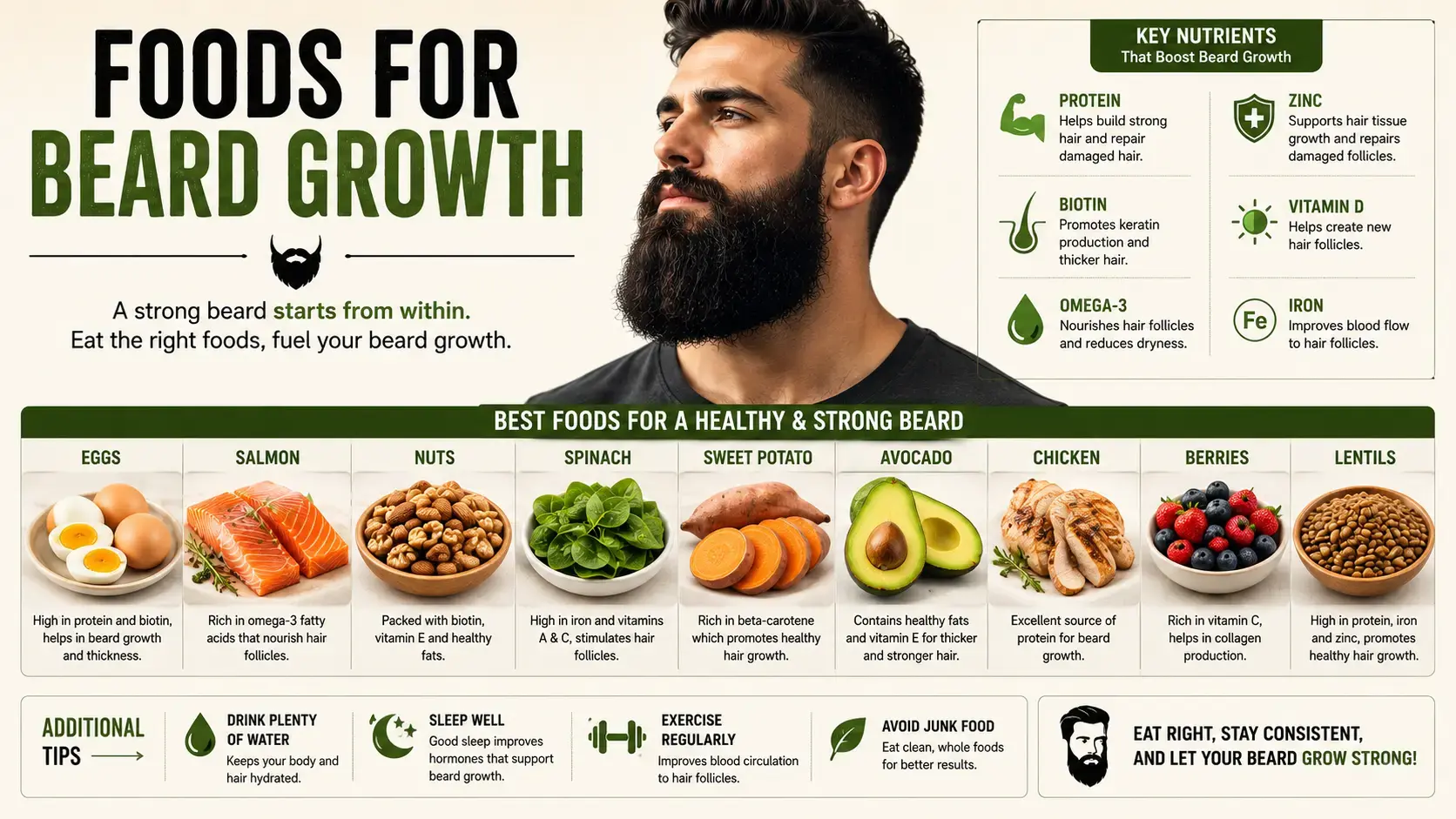
Foods for beard growth aren’t a secret list barbers keep to themselves, they’re mostly foods that show up on any solid nutrition plan: eggs, fish, leafy greens, nuts, and lean protein. What’s less obvious is why each one matters for facial hair specifically, and which ones are actually worth prioritizing if a fuller, healthier beard is the goal.
This list breaks down the foods most closely tied to beard health, why they work, and how to realistically fit them into a normal week of eating without turning meals into a chore.
Table of Contents
Quick Answer: The Best Foods for Beard Growth
The best foods for beard growth are eggs, salmon, spinach, pumpkin seeds, Greek yogurt, sweet potatoes, lean red meat, and walnuts. These foods provide protein, biotin, zinc, iron, and healthy fats, all of which directly support hair follicle function and the structural strength of facial hair.
Why Certain Foods Support a Fuller Beard
Hair follicles need a steady supply of specific nutrients to function properly, and food is where that supply comes from. Protein builds the keratin that makes up hair itself, while vitamins and minerals like biotin, zinc, and iron support the follicle’s ability to grow healthy strands consistently.
This connects to the broader topic covered in the guide to beard nutrition, which looks at the full nutritional picture beyond individual foods. Here, the focus stays practical: specific foods, what they offer, and how to actually work them into a beard diet without overcomplicating things.
15 Best Foods for Beard Growth
1. Eggs One of the most efficient foods on this list, eggs deliver both protein and biotin in a single source, covering two of the most important nutrients for hair structure and follicle health.
2. Salmon Rich in omega-3 fatty acids and protein, salmon supports skin health at the follicle level while also providing a solid source of vitamin D.
3. Spinach Packed with iron, spinach helps maintain healthy oxygen delivery to hair follicles, which matters more than most men realize for consistent growth.
4. Pumpkin seeds A strong plant-based source of zinc, pumpkin seeds support the tissue repair processes tied to follicle function.
5. Greek yogurt High in protein with the added benefit of probiotics, Greek yogurt is an easy daily addition that supports both hair structure and general gut health.
6. Sweet potatoes Rich in beta-carotene, which the body converts to vitamin A, sweet potatoes support skin health and cell turnover, both relevant to a healthy growing environment for facial hair.
7. Lean red meat A dense source of both iron and zinc, red meat in moderate amounts covers two nutrients that are harder to get in equally concentrated form from plant sources alone.
8. Walnuts A convenient source of omega-3s and biotin, walnuts make an easy snack that fits into almost any beard diet without much effort.
9. Oysters Among the highest natural sources of zinc available, oysters are a strong option for anyone specifically targeting zinc intake through food rather than supplements.
10. Chicken breast A lean, versatile protein source that supports the amino acid needs of healthy hair structure without the added saturated fat of some red meat cuts.
11. Lentils A plant-based source of both protein and iron, lentils are especially useful for anyone following a vegetarian approach to beard nutrition.
12. Avocados Rich in healthy monounsaturated fats and vitamin E, avocados support skin health and provide a good source of biotin as well.
13. Almonds Another solid biotin source, almonds also provide vitamin E and healthy fats in a convenient, portable snack.
14. Citrus fruits Oranges, grapefruit, and similar fruits are strong sources of vitamin C, which supports collagen production and helps the body absorb iron from other foods more effectively.
15. Bell peppers Particularly red bell peppers, these are another strong vitamin C source and add variety to a beard diet without much preparation effort.
Protein for Beard Growth: Why It Comes First
Beard hair is made primarily of keratin, a structural protein, which means protein intake directly affects the raw material available for building healthy hair. A diet consistently low in protein tends to produce weaker, more brittle hair, since the body doesn’t have enough building blocks to maintain strong keratin production.
Protein for beard growth doesn’t require extreme intake or a bodybuilder-level diet. Most men get adequate protein through a normal, varied diet that includes eggs, meat, fish, dairy, or plant-based sources like lentils and legumes spread across the day rather than concentrated in a single meal.
Best Foods by Goal
Different men come to beard nutrition with different priorities. Here’s how to prioritize based on the specific outcome that matters most.
| Goal | Priority Nutrients | Best Foods to Focus On |
| Faster growth | Protein, biotin, iron | Eggs, salmon, spinach, lentils |
| Thicker, stronger strands | Protein, zinc | Chicken, pumpkin seeds, oysters, Greek yogurt |
| Healthier skin underneath | Omega-3s, vitamin E | Salmon, walnuts, avocado, almonds |
| Reduced brittleness | Iron, vitamin C, protein | Red meat, citrus fruits, bell peppers, Greek yogurt |
Foods That Work Against Beard Growth
Just as some foods support beard health, others can work against it when eaten in excess or as the bulk of a regular diet.
- Highly processed foods, which tend to displace nutrient-dense options without offering much in return
- Excess sugar, linked to inflammation that can affect overall skin and follicle health over time
- Very low-protein diets, which limit the raw material hair needs to build keratin
- Extremely restrictive or crash diets, which often create broad nutrient shortfalls the body deprioritizes hair growth to compensate for
- Excess alcohol, which can interfere with nutrient absorption, including zinc, over time
None of this means these foods need to be eliminated entirely. It’s about making sure they aren’t the foundation of a beard diet, rather than an occasional part of it.
A Simple Weekly Beard Diet Approach
Rather than tracking every meal, a simpler approach is making sure a handful of key food groups show up multiple times through the week.
- Eggs, a few mornings a week for a reliable protein and biotin combination
- Fish, ideally salmon or another fatty fish, twice a week for omega-3s and vitamin D
- A handful of nuts or seeds daily, whether walnuts, almonds, or pumpkin seeds, as an easy snack
- Leafy greens or colorful vegetables, at least once daily for iron and vitamin C
- A lean protein source, like chicken, lentils, or Greek yogurt, at most meals
This kind of loose weekly structure covers most of the nutrients tied to healthy beard growth without requiring a rigid meal plan or constant tracking.
Common Mistakes When Eating for Beard Growth
- Relying entirely on one or two “beard superfoods” instead of a varied diet
- Assuming more protein than needed will speed up growth beyond a normal rate
- Skipping meals or under-eating overall, which limits every nutrient at once, not just the ones tied to hair
- Expecting visible changes within days rather than the weeks or months hair growth cycles actually take
- Ignoring hydration, which plays its own role in overall skin and hair health alongside food choices
- Overcomplicating things with supplements before addressing the basics through regular food first
Many of these mistakes overlap with broader misconceptions covered in the beard mistakes guide, useful reading for anyone troubleshooting slow or inconsistent beard growth from multiple angles.
What These Foods Can Realistically Do
Foods for beard growth support the biological process already happening. They don’t override genetics, and they won’t turn a naturally patchy or thin beard into a dense one. What a nutrient-rich diet does is make sure hair follicles have what they need to grow facial hair that’s as strong, thick, and healthy as a person’s genetics allow.
Results also take time. Hair grows in cycles, and dietary changes typically need eight to twelve weeks before any visible difference shows up. Pairing good nutrition with a consistent beard care routine, including proper washing and conditioning, gives facial hair the best realistic chance at looking its best, rather than relying on diet alone.
The Bottom Line
The best foods for beard growth aren’t exotic or expensive: eggs, fish, lean protein, leafy greens, nuts, and a few key fruits and vegetables cover almost everything facial hair needs nutritionally. A beard diet built around these foods, eaten consistently rather than occasionally, gives hair follicles the raw materials they need to perform at their genetic best, with visible results showing up over months rather than days.
9. FAQs
What foods help beard growth the most? Eggs, salmon, spinach, pumpkin seeds, and lean red meat are among the most effective foods for beard growth, since they provide concentrated sources of protein, biotin, zinc, and iron.
How much protein do I need for beard growth? Most men get enough protein for healthy hair through a normal, varied diet that includes protein at most meals, without needing to significantly increase intake beyond standard dietary recommendations.
Can eating more eggs make my beard grow faster? Eggs support healthy hair structure through protein and biotin, but they won’t speed up growth beyond a person’s natural genetic rate, even when eaten in larger quantities.
Is there a specific beard diet that works best? There’s no single specialized diet that outperforms a generally balanced approach rich in protein, healthy fats, and key vitamins and minerals like biotin, zinc, and iron.
Do I need to eat meat for beard growth, or can I get the same nutrients from plants? Plant-based sources like lentils, pumpkin seeds, and leafy greens provide many of the same nutrients as meat, though some nutrients like zinc and iron are more concentrated in animal sources.
How long before I see results from eating better for beard growth? Since hair growth operates in cycles, most dietary improvements take roughly eight to twelve weeks before any visible change in growth or hair strength appears.
Can bad food choices actually slow down beard growth? Yes, diets heavy in processed food, very low in protein, or extremely calorie-restricted can limit the nutrients hair follicles need, which may slow growth or weaken existing hair.
Are there foods that specifically thicken beard hair? No single food increases thickness beyond genetic potential, but foods rich in protein and zinc support hair growing in as strong and full as a person’s biology allows.
Do nuts and seeds really help with beard growth? Yes, nuts and seeds like walnuts, almonds, and pumpkin seeds provide biotin, zinc, and healthy fats that support both hair structure and the health of the skin underneath facial hair.
Is fish good for beard growth? Yes, fatty fish like salmon provide omega-3 fatty acids, protein, and vitamin D, all of which support healthy hair follicle function and skin health.
Can drinking more water improve beard growth from foods I’m already eating? Proper hydration supports overall skin and hair health and works alongside good nutrition, helping the body use the nutrients from food more effectively.
Do vegetarians or vegans have a harder time growing a healthy beard? Not necessarily, though vegetarians and vegans typically need to be more deliberate about combining plant sources like lentils, seeds, and legumes to reach adequate protein, iron, and zinc levels.
What’s the fastest way to improve beard growth through diet? There’s no true “fastest” method, since hair growth follows a biological cycle, but consistently eating a varied diet with adequate protein and key micronutrients gives hair the best realistic support available through food.
Can too much protein be bad for beard growth? Excess protein beyond what the body needs doesn’t accelerate hair growth and isn’t typically necessary; a consistent, moderate intake through regular meals is generally sufficient.
Should I combine beard-friendly foods with beard oil or other products? Yes, nutrition supports hair health from the inside while topical products like beard oil condition the hair and skin directly, and the two work best together rather than as substitutes for one another.