 By Bread Styles Team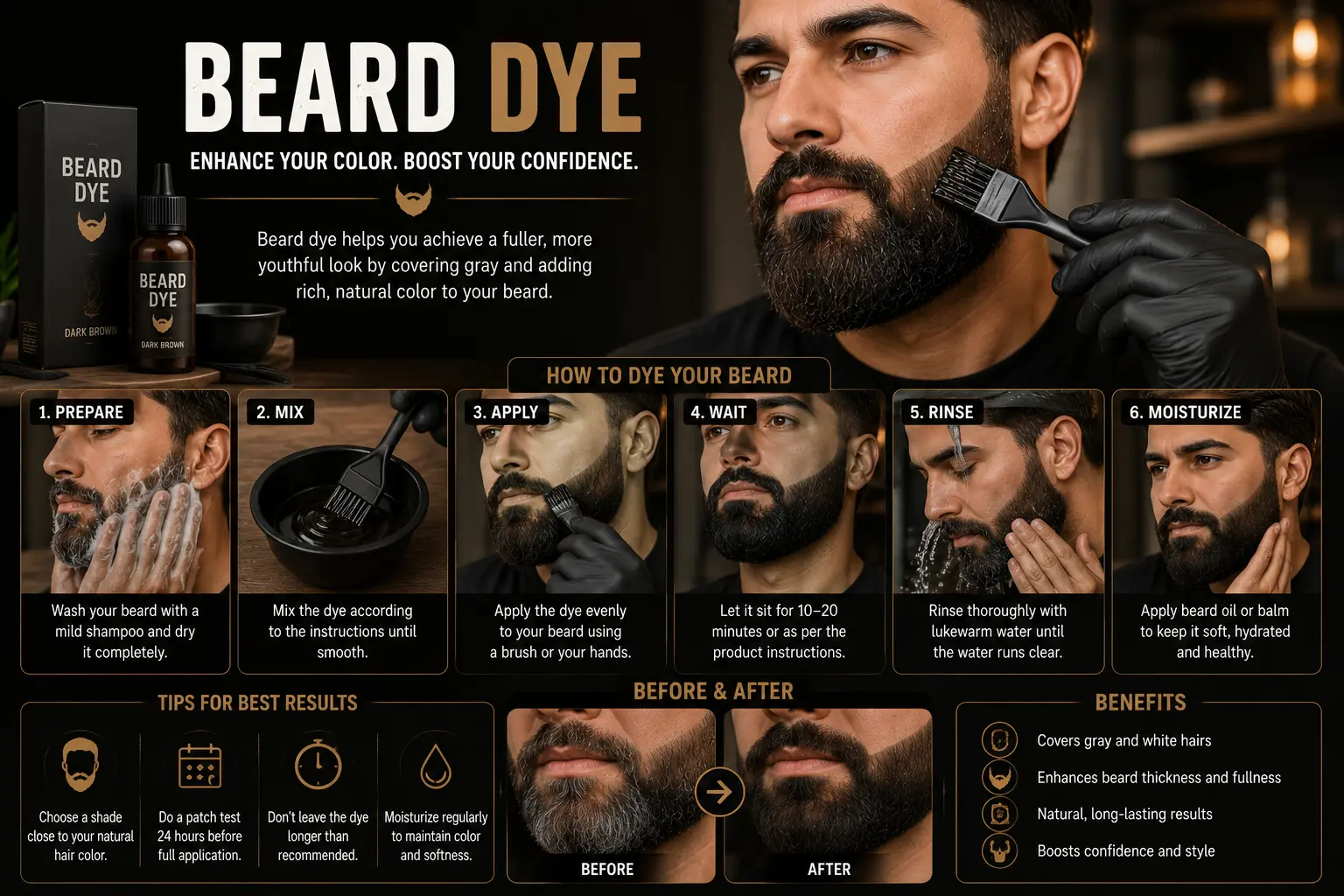
Beard dye has a bit of a reputation problem, mostly because of badly applied jet-black dye jobs that look nothing like real hair. That’s a technique and shade issue, not a reason to avoid beard coloring altogether. Used correctly, beard dye for men can look completely natural, whether the goal is covering grey, evening out patchy color, or just refreshing a beard that’s gone dull.
This guide covers the different types of beard dye, how to pick a shade that won’t look flat or fake, the actual application process, and the mistakes that cause most of the bad results people associate with dyeing facial hair in the first place.
Table of Contents
What Beard Dye Actually Does
Quick answer: Beard dye deposits color pigment onto facial hair to change or restore its natural tone, most commonly used to cover grey or white hair, deepen a faded color, or even out patchy color variation. It ranges from temporary color-depositing formulas to permanent chemical dye, each lasting a different length of time.
It’s worth being clear about what dye can’t do: it doesn’t change the hair’s texture, thickness, or growth pattern, and it doesn’t stop new grey hair from coming in at the root. It’s purely cosmetic, coloring the strand itself, which is why touch-ups become part of the routine for anyone using it long-term.
Types of Beard Dye
Not all beard coloring products work the same way, and picking the right type matters more than picking a specific brand.
| Type | How It Works | Lasts | Best For |
| Permanent dye | Chemical process that alters the hair shaft | 4–6 weeks until roots show | Full grey coverage, long-term color change |
| Semi-permanent dye | Coats the hair without fully altering its structure | 2–4 weeks | Lighter grey blending, less commitment |
| Color-depositing shampoo/conditioner | Gradual color buildup with regular washing | Ongoing with use, fades if stopped | Subtle grey reduction, low-maintenance option |
| Henna/natural dye | Plant-based pigment that coats the strand | 2–4 weeks | Men wanting to avoid synthetic chemicals |
| Beard-specific dye kits | Formulated for coarser facial hair and sensitive skin | Varies by formula, usually 4–6 weeks | Most first-time users — safer than scalp dye on facial skin |
Beard-specific kits exist for a real reason: facial skin is thinner and more reactive than the scalp, and standard head-hair dye is often too harsh to use safely on the face.
Should You Dye Your Beard? An Honest Look
This is worth answering honestly before getting into technique, since beard dye isn’t the right call for everyone.
Reasons it makes sense:
- Grey or white hair coming in earlier than the rest of your beard, creating an uneven look
- Wanting a more uniform tone across a beard with patchy natural color variation
- Preparing for a specific event where a consistent, polished look matters
- Simply preferring a different shade than your natural one
Reasons to reconsider:
- Needing to reapply every few weeks isn’t appealing to you
- You’re prone to skin sensitivity or allergic reactions (patch testing is non-negotiable either way)
- Your natural grey or white already looks intentional and you’re happy with it — plenty of men lean into a well-groomed salt and pepper beard or full white look rather than dyeing at all
There’s no universally correct choice here. Beard dye is a maintenance commitment, not a one-time fix, so it’s worth being honest about whether you’ll actually keep up with touch-ups before starting.
Choosing a Shade That Looks Natural
Quick answer: The most natural-looking beard dye shade is usually one shade lighter than your original hair color, since dye tends to deposit slightly darker than expected and dark, flat color is the main reason dyed beards look artificial.
A few practical guidelines:
- Match to your eyebrow color if your beard has changed more than your brows have — eyebrows often retain closer-to-original pigment longer.
- Avoid solid black unless your natural hair was genuinely jet black; most natural hair has warmer or cooler undertones that flat black ignores completely.
- If you’re only partially grey, consider a shade that blends rather than fully eliminates the grey — a small amount of natural grey mixed with color often looks more convincing than a uniform, flat tone.
- When in doubt, test on a small, hidden section first (this also doubles as your allergy patch test).
How to Dye a Beard Step by Step
- Patch test 48 hours before your first full application. Apply a small amount of dye to the inside of your forearm or behind the ear and wait for any reaction.
- Wash the beard the day before, not right before dyeing. Freshly washed hair, without oil or product residue, absorbs dye most evenly, but natural oils from a day’s gap help protect the skin underneath.
- Apply petroleum jelly along the hairline and skin edges to prevent staining the skin around the beard.
- Mix the dye according to instructions, working quickly once combined, since most formulas begin setting immediately.
- Apply from the roots outward using the included applicator brush or gloved fingers, working in small sections for even coverage.
- Time it precisely. Under-processing leaves patchy color; over-processing leads to an unnaturally dark, flat result. Set a timer rather than guessing.
- Rinse thoroughly with cool water until water runs clear, then follow with a gentle, color-safe conditioner.
- Avoid washing again for 24 hours to let the color fully set.
Grey Beard Dye: What’s Different About Covering Grey
Grey and white hair behaves differently under dye than pigmented hair, which is why grey beard dye often gets formulated or marketed separately.
- Grey hair has no natural pigment underneath, so it can grab dye more intensely than the surrounding hair, sometimes resulting in patches that look darker than the rest of the beard.
- Processing time often needs to be slightly longer for full grey coverage, though this varies by product — always follow the specific formula’s instructions rather than estimating based on past experience with pigmented hair.
- A gradual color-depositing shampoo can work well for lighter grey coverage without committing to full chemical dye, particularly for men just starting to grey rather than fully white.
- Full white beards may need a dedicated permanent formula for reliable coverage, since lighter color-depositing options often aren’t strong enough to fully mask true white hair.
If you’re not fully committed to ongoing coloring, it’s worth reading about general white beard care first — sometimes the better fix for a dull-looking white beard is addressing yellowing and dryness rather than dyeing over it entirely.
Natural Beard Dye Options
Not everyone wants a chemical process on their face, and natural beard dye has become a legitimate category rather than a niche alternative.
- Henna is the most established natural option, providing reddish-brown tones that vary based on how long it’s left on and your natural hair color underneath.
- Henna mixed with indigo can produce more brown-to-black results for men wanting a darker natural tone.
- Coffee or tea rinses offer very subtle, temporary tinting — more of a slight tone-shift than genuine grey coverage, and worth setting expectations accordingly.
Natural options generally require more frequent reapplication than chemical dye and offer a narrower color range, but they carry lower risk of the harsh chemical reactions some men experience with synthetic formulas. They’re not necessarily “safer” across the board, though — natural doesn’t automatically mean allergy-free, so patch testing still applies here too.
How Long Beard Dye Lasts and When to Touch It Up
| Dye Type | Typical Duration Before Roots Show |
| Permanent | 4–6 weeks |
| Semi-permanent | 2–4 weeks |
| Color-depositing shampoo | Fades gradually, top-up with regular washing |
| Henna/natural | 2–4 weeks |
Root regrowth becomes visible faster on men with quicker beard growth rates, so actual timing varies. A good rule of thumb: touch up as soon as new growth at the roots becomes noticeable in normal lighting, rather than waiting for it to be obvious from across a room.
Common Beard Dye Mistakes
- Skipping the patch test. Even products marketed as gentle or natural can cause reactions on some skin.
- Choosing a shade that’s too dark. This is the single biggest reason dyed beards look artificial rather than natural.
- Leaving dye on too long “just to be safe.” Over-processing leads to flat, uneven color rather than better coverage.
- Dyeing over freshly trimmed or irritated skin. Chemical dye on broken or newly shaved skin increases irritation risk significantly.
- Not protecting the skin around the beard line. This leads to visible staining on skin that’s noticeable for days after application.
- Washing the beard too soon after dyeing. This can strip color before it’s fully set, leading to faster fading than expected.
Aftercare for a Dyed Beard
Dyed hair, like bleached or chemically treated scalp hair, needs a bit more care to stay looking good between applications.
- Use a color-safe, sulfate-free beard shampoo to slow fading.
- Apply beard oil daily — dyed hair tends to be slightly drier than untreated hair.
- Avoid excessive heat styling, which can accelerate color fading in treated hair more than it does in natural hair.
- Consider a leave-in beard conditioner a few times a week to keep dyed strands from becoming brittle.
Safety, Allergies, and Patch Testing
This is the section worth taking seriously regardless of how many times you’ve dyed your beard before, since sensitivity can develop even after previous uses without issue.
- Always patch test 48 hours before applying to the full beard, even with products used successfully in the past.
- Watch for redness, itching, swelling, or a burning sensation during the patch test — any of these means don’t proceed with that product.
- Avoid dyeing if you have active skin conditions, cuts, or recent sunburn in the area.
- Ensure good ventilation when mixing and applying chemical dye, since fumes from some formulas can be irritating in enclosed spaces.
- If you experience a reaction, rinse immediately with cool water and seek medical attention if swelling or breathing difficulty occurs. For general information on hair dye allergies, the American Academy of Dermatology publishes reliable, non-commercial guidance worth reviewing before your first application.
Myths About Beard Dye
“Beard dye and head hair dye are interchangeable.” They’re formulated differently — facial skin is more sensitive, and using scalp dye on a beard raises the risk of irritation.
“Natural beard dye is always safer than chemical dye.” Natural options carry lower risk for some men but can still trigger allergic reactions, so patch testing matters regardless of the type.
“Once you dye, you can’t stop without looking worse.” Growing out dyed hair looks the same as any regrowth situation — a gradual trim-down or a slightly shorter cut manages the transition without drama.
“Darker is always better coverage.” Overly dark shades are the top reason dyed beards look unnatural; matching tone matters more than intensity.
“Beard dye stops grey hair from coming in.” Dye only colors existing hair — it has no effect on new growth or the follicle’s pigment production.
Final Thoughts
Beard dye works best when it’s treated as a subtle correction, not a total transformation. Pick a shade close to your natural tone, patch test every time regardless of past experience, and follow the timing instructions precisely rather than guessing. Whether you’re covering grey, evening out patchy color, or just refreshing a dull beard, a well-applied beard dye job should be nearly undetectable as dye at all — that’s the actual goal, more than picking the darkest shade on the shelf.
FAQs
1. What is the best beard dye for covering grey hair? A permanent or semi-permanent formula specifically designed for facial hair generally offers the most reliable grey coverage, since grey hair often needs slightly longer processing time than pigmented hair to absorb color evenly.
2. How long does beard dye last? Permanent dye typically lasts four to six weeks before root regrowth becomes visible, semi-permanent and henna options last roughly two to four weeks, and color-depositing shampoos fade gradually with each wash.
3. Is beard dye safe to use on facial skin? Beard-specific dye formulas are generally safer for facial skin than standard scalp hair dye, since facial skin is thinner and more reactive. A patch test 48 hours before full application is still essential regardless of the formula.
4. What shade of beard dye looks the most natural? Choosing a shade one level lighter than your original hair color usually looks more natural than matching exactly, since dye tends to deposit slightly darker than expected once fully processed.
5. Can I use natural beard dye instead of chemical dye? Yes, henna and henna-indigo blends are established natural beard dye options, offering reddish-brown to darker tones depending on formulation and processing time, though they typically need more frequent reapplication than chemical dye.
6. Does beard dye stop grey hair from growing back? No. Beard dye only colors the existing hair strand and has no effect on the follicle, so new grey growth will still appear at the roots as the hair grows.
7. Why does my dyed beard look fake or too dark? This usually comes from choosing too dark a shade, over-processing the dye by leaving it on longer than instructed, or not accounting for how differently grey hair absorbs color compared to pigmented hair.
8. How often do I need to touch up grey beard dye? Typically every four to six weeks for permanent formulas, though this depends on your individual hair growth rate and how noticeable root regrowth becomes in normal lighting.
9. Should I patch test beard dye every time, even if I’ve used it before? Yes. Skin sensitivity can develop over time even with a product used safely in the past, so a 48-hour patch test before each full application is the safer approach.
10. Can beard dye cause an allergic reaction? Yes, both chemical and natural beard dyes can trigger reactions in some people, ranging from mild irritation to more serious swelling. Watching for redness or burning during a patch test helps catch this before full application.
11. What’s the difference between beard dye and beard coloring shampoo? Traditional dye chemically alters or coats the hair shaft for longer-lasting color, while color-depositing shampoo builds up pigment gradually with each wash and fades faster if you stop using it.
12. Can I dye a beard that’s mostly white? Yes, though fully white beards typically need a dedicated permanent formula for reliable, even coverage, since lighter color-depositing products often aren’t strong enough to fully mask white hair.
13. Does dyeing a beard damage the hair? Permanent chemical dye can make hair slightly drier and more prone to breakage over time, which is why aftercare with beard oil and a color-safe conditioner matters for anyone dyeing regularly.
14. Is henna a good option for grey beard dye? Henna can cover grey effectively, typically producing reddish-brown tones, though the exact result depends on your natural hair color and how long the henna is left to process.
15. What should I do if beard dye irritates my skin? Rinse the area immediately with cool water and stop using the product. If swelling, intense burning, or breathing difficulty occurs, seek medical attention rather than waiting to see if it resolves on its own.