 By Bread Styles Team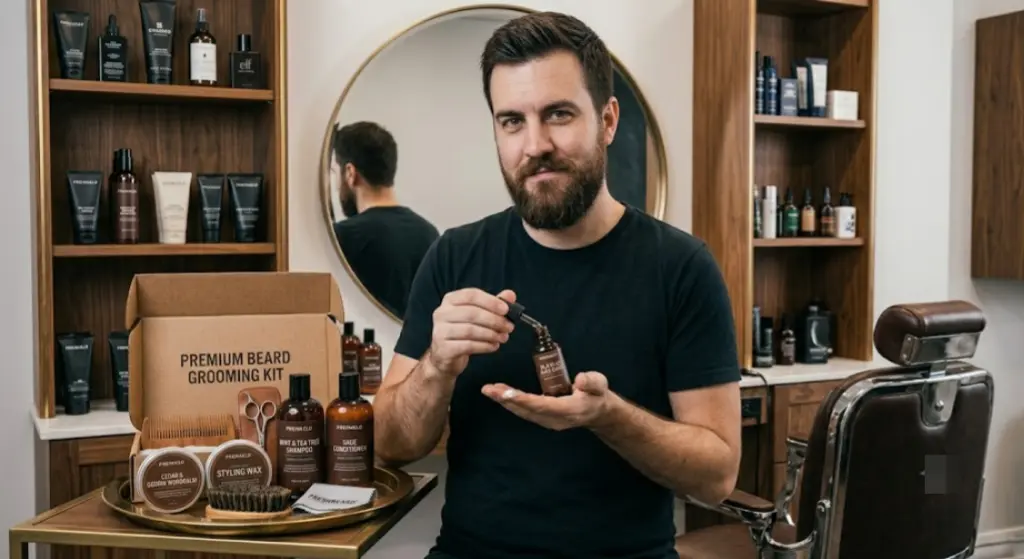
A beard grooming kit sounds like a simple purchase until you’re staring at a wall of boxed sets, half of them padded out with items you’ll never touch and a scissors that couldn’t cut butter. The category is genuinely useful — a good kit saves you from buying six separate things and guessing at what pairs with what — but “kit” gets slapped on a lot of products that don’t deserve the label.
This is a practical breakdown of what a real beard grooming kit should contain, how to tell a genuinely useful one from a padded box of filler, and how to match a kit to your actual beard rather than a generic one-size-fits-all bundle.
Table of Contents
What a Beard Grooming Kit Should Actually Include
Quick answer: A solid beard grooming kit should include beard oil, a balm or butter, a wash or shampoo, a comb, and either a trimmer or scissors, at minimum. Anything beyond that — brushes, additional serums, storage bags — is a bonus, not a requirement, and shouldn’t be the reason you pick one kit over another.
The mistake a lot of men make is judging a complete beard kit by item count rather than usefulness. A five-piece kit where every item gets used regularly beats a twelve-piece kit where half the contents sit untouched after the first week.
Core Kit Components, Explained
Each item in a proper kit should have a clear, distinct job. If you can’t explain what something does differently from another item in the same box, that’s usually filler.
| Component | Job |
| Beard oil | Daily moisture, softening, reduces itch during growth |
| Beard balm or butter | Adds light hold and heavier conditioning, useful for styling |
| Beard wash/shampoo | Cleans without stripping natural oils the way regular soap does |
| Comb (ideally wide-tooth) | Detangles and trains hair direction |
| Brush (boar bristle, if included) | Distributes product evenly, smooths, adds shine |
| Scissors or trimmer | Shape maintenance and length control |
| Storage bag or case | Convenience for travel, not a functional grooming item |
Notice that a genuinely complete beard kit doesn’t need ten items — it needs the right five or six, each doing a job the others don’t overlap with.
Kit Tiers: Starter, Complete, and Premium
Not every man needs the same kit, and tier matters more than brand name when narrowing down options.
| Tier | Typical Contents | Best For |
| Starter | Oil, comb, small balm | New beards under two months, testing the basics |
| Complete/Standard | Oil, balm, wash, comb, scissors | Most established beards, general daily use |
| Premium | All standard items plus brush, conditioner, sometimes a trimmer | Longer or more demanding beards, gifting occasions |
A best beard grooming kit for one man might be genuine overkill for another. Someone two weeks into growing a beard doesn’t need a premium kit with a trimmer and conditioning treatment — a starter tier with oil and a comb covers what actually matters at that stage.
What Makes a Kit Genuinely Good vs Just Well-Marketed
This is the part most buying guides skip, and it’s where the real difference between kits shows up.
Ingredient Quality Over Ingredient Count
A short, simple oil formula with a couple of carrier oils (jojoba, argan) often outperforms a long list of ingredients that mostly exist for marketing appeal rather than function.
Tool Quality, Not Just Tool Presence
A scissors or comb included purely to pad out the box is often lower quality than something bought separately for a similar price. Check reviews specifically for the tools, not just the overall kit rating, since a box can have great oil and a genuinely poor comb.
Sizing That Matches Actual Use
Some kits include travel-sized versions of everything, which look complete but run out within a few weeks of regular use. If a kit is your primary supply rather than a backup, check that sizes are practical for ongoing use, not just for a photo.
Fit for Your Specific Beard
A kit built around heavy balm and minimal oil suits a thick beard care routine better than a fine or thin beard, which typically needs lighter products. The best beard grooming kit for you depends on what you’re actually growing, not a generic “one kit fits all” claim on the packaging.
Complete Beard Kit vs Building Your Own
| Factor | Pre-Made Kit | Building Your Own |
| Convenience | High — one purchase covers basics | Lower — requires research per item |
| Cost | Often better value if all items get used | Can be cheaper if you skip items you don’t need |
| Customization | Limited to what’s bundled | Full control over each product |
| Best for | Beginners, gifts, simplifying the decision | Established routines, specific beard types with particular needs |
A reasonable middle ground many men land on: start with a complete beard kit to cover the basics affordably, then replace individual items with more targeted products — like a specific beard oil or beard balm — as you learn what your beard actually responds to.
Choosing a Kit Based on Your Beard Type
Matching a kit to beard type avoids the most common source of buyer’s remorse in this category.
- Curly beards benefit from kits leaning heavier on conditioning products and including a wide-tooth comb rather than a fine one — check the ratios against a curly beard care routine before buying.
- Straight beards generally do fine with lighter oil-forward kits and don’t need heavy balm included.
- Thin or sparse beards are better served by kits with lighter products overall, since heavier formulas can weigh down lower-density hair — see thin beard care for what actually helps at lower density.
- Grey or white beards benefit from kits including color-safe, clear-toned products rather than amber oils that can tint lighter hair over time — the white beard care guide covers this in more depth.
- New, growing-in beards don’t need a full kit yet — a starter kit with just oil and a comb is enough while density and shape are still developing.
Beard Grooming Kits as Gifts
This is one of the most common reasons people search for a beard grooming kit in the first place, and a few extra considerations apply when buying for someone else.
- Presentation matters more for gifts than for personal use — a nicely packaged kit reads better as a gift even if the functional contents are similar to a plainer option.
- When in doubt, go lighter on scent. Strongly fragranced oils are the most common “returned or unused” complaint with gifted grooming kits.
- Check the recipient’s current beard length and stage. A trimmer-heavy kit is wasted on someone with a well-established beard who already owns one, while a starter kit might undersell someone with an established routine.
- Pair the kit with a note pointing to a routine guide if the recipient is new to beard care — a beard care routine breakdown gives them a starting point beyond just the products themselves.
Red Flags to Watch For Before Buying
- Vague or missing ingredient lists on the oil or balm — a trustworthy product discloses what’s actually in it.
- A scissors or trimmer that feels like an afterthought in product photos or descriptions, often a sign it’s low quality filler rather than a functional tool.
- Overwhelming item counts with no clear purpose for several pieces — more isn’t better if half the box goes unused.
- No mention of skin sensitivity or patch-testing guidance, particularly concerning for kits including any color-depositing or chemical components.
- Reviews that only mention packaging or unboxing rather than actual results after use — a sign the kit may photograph well without performing well.
Using a New Kit Correctly From Day One
Buying the right men’s grooming kit is only half the equation — using it correctly matters just as much.
- Start with oil alone for the first few days, even if the kit includes multiple products, to see how your skin responds before layering more on.
- Wash before applying balm or oil for the first time, since starting on a clean beard gives a more accurate sense of how each product actually performs.
- Introduce one new product every few days rather than using everything at once — this makes it easier to identify what’s working and what isn’t.
- Store products away from direct heat or sunlight, particularly natural oils, which can degrade faster in warm bathrooms than in a cooler cabinet.
- Replace the comb or brush if it came with sharp or uneven teeth — a low-quality tool can undo the benefit of good products by snagging and damaging hair.
Does a Men’s Grooming Kit Need to Cover More Than the Beard?
Some kits marketed broadly as a men’s grooming kit bundle in skincare, hair, or shaving items alongside beard products. This isn’t necessarily better or worse — it depends on what you actually need.
- If your goal is specifically beard care, a focused kit avoids paying for shaving or skincare items you won’t use.
- If you’re just starting a broader grooming routine and want a simpler starting point, a combined kit can be a reasonable way to cover the basics without multiple separate purchases.
- Either way, check that the beard-specific components in a combined kit aren’t diluted or downgraded compared to a dedicated beard kit at a similar price.
Common Mistakes When Buying or Using a Kit
- Buying based on packaging alone without checking what’s actually inside beyond the marketing copy.
- Assuming more items automatically means better value, when unused products are effectively wasted money regardless of count.
- Ignoring your specific beard type and buying a generic kit that doesn’t match your hair’s actual needs.
- Using every product at full strength immediately instead of easing in and watching for any skin reaction.
- Never replacing worn-out tools from an older kit, even after the comb teeth have bent or the scissors have dulled.
Final Thoughts
The best beard grooming kit isn’t the one with the most items in the box — it’s the one where every included product actually gets used and genuinely fits your beard type and stage of growth. Check ingredient quality over ingredient count, match the kit to whether you’re two weeks or two years into growing a beard, and don’t be swayed by packaging alone. A well-chosen kit, even a modest one, does more for your beard than an oversized set half of which ends up in a drawer.
FAQs
1. What should a good beard grooming kit include at minimum? At minimum, a useful kit should include beard oil, a balm or butter, a wash or shampoo, and a comb. Scissors or a trimmer round out a genuinely complete beard kit, while extras beyond that are optional bonuses.
2. What’s the difference between a starter and a complete beard grooming kit? A starter kit typically includes just oil and a comb, suited for beards under two months old, while a complete kit adds wash, balm, and often scissors for more established beards with fuller routines.
3. Is it better to buy a beard grooming kit or individual products? A kit is often more convenient and cost-effective for beginners, while building your own from individual products gives more control and customization once you know what your specific beard actually needs.
4. How do I choose the best beard grooming kit for my beard type? Match the kit’s products to your hair type — heavier balm-forward kits suit thick or coarse beards, while lighter oil-forward kits generally work better for thin, fine, or straight facial hair.
5. What makes a men’s grooming kit worth the price? Ingredient quality, functional tool quality (not just tool presence), and practical product sizes for regular use are better value indicators than total item count or packaging presentation.
6. Are beard grooming kits good gift ideas? Yes, particularly lighter-scented, well-packaged kits matched to the recipient’s beard length and stage. A trimmer-heavy kit isn’t ideal for someone who already owns one, for example.
7. How often should I replace items in a beard grooming kit? Oils and balms typically last several months with regular use, while combs, brushes, and blades should be replaced once they show wear, bending, or dulling that could damage hair or irritate skin.
8. Do beard grooming kits work for all beard lengths? Not universally. Kits built for short, growing-in beards differ meaningfully from those suited to longer, more established beards, so checking the intended stage before buying avoids a mismatch.
9. What’s a red flag when shopping for a complete beard kit? Vague ingredient lists, a scissors or trimmer that looks like filler rather than a functional tool, and reviews focused only on packaging rather than actual results are all signs worth pausing on.
10. Can a beard grooming kit cause skin irritation? It’s possible, particularly with fragranced oils or any color-depositing products. Introducing new products gradually and doing a basic patch test with anything new reduces this risk.
11. Should a men’s grooming kit include more than beard products? It depends on your needs. Combined kits covering skincare or shaving alongside beard care can simplify a broader routine, but check that the beard-specific items aren’t downgraded to fit more into the box.
12. Is a bigger beard kit always a better value? Not necessarily. A smaller kit where every item gets regular use is generally better value than a larger one padded with products that go unused after the first few tries.
13. What tools in a beard grooming kit matter most? A wide-tooth comb and a reliable trimmer or scissors tend to matter most, since these directly affect shape and detangling, while accessories like storage bags are convenience extras rather than functional necessities.
14. Can I use a beard grooming kit if I have sensitive skin? Yes, but check for fragrance-free or minimal-ingredient options and patch test new products before full use, especially with any kit that includes color-depositing or heavily scented items.
15. How do I know if a beard grooming kit is actually good quality? Look for a clear ingredient list, reviews mentioning actual results rather than just unboxing, and components that each serve a distinct purpose rather than a padded box designed to look impressive.