 By Bread Styles Team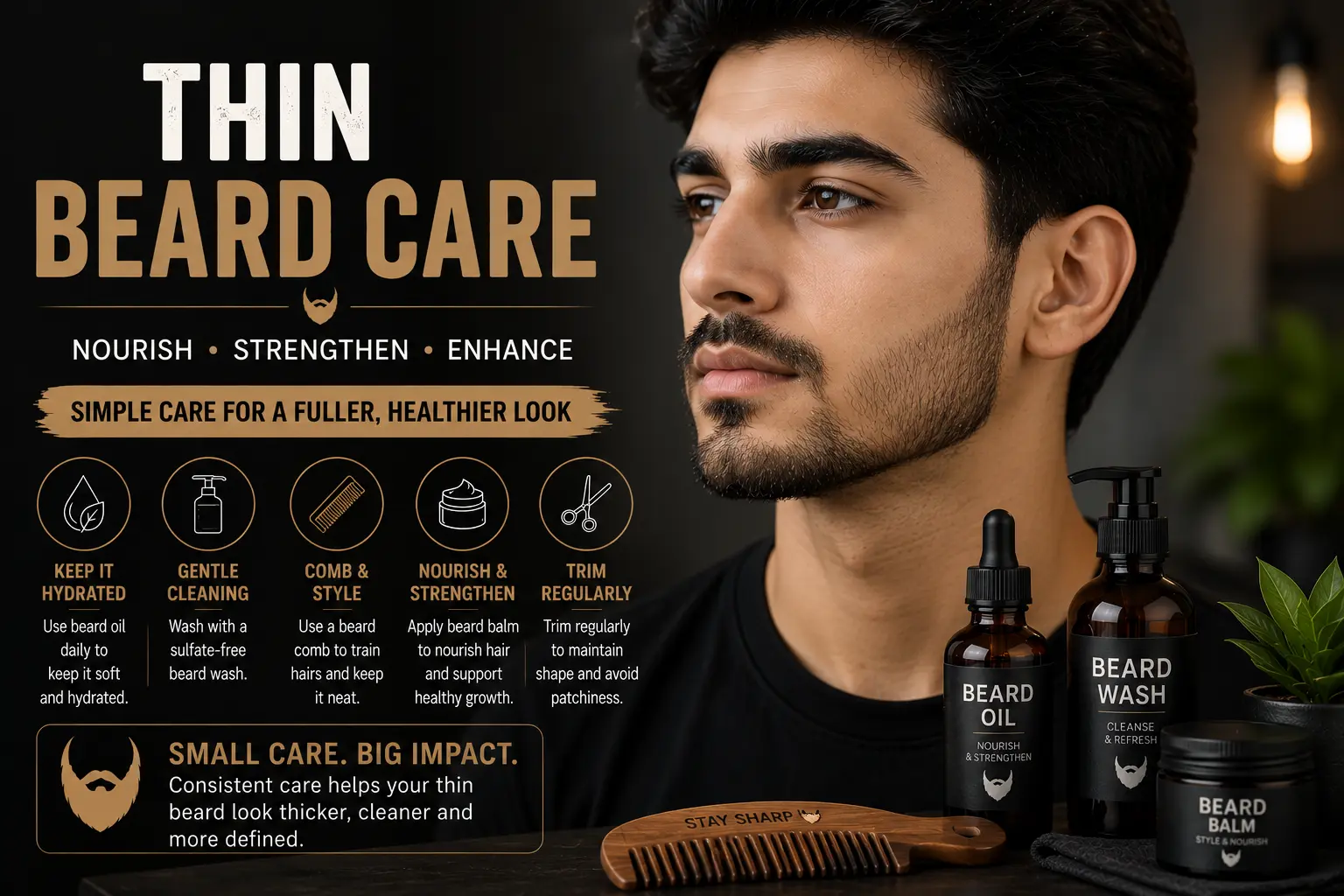
Thin beard care gets treated like a consolation prize online, as if sparse growth is a problem to apologize for instead of something you can actually work with. It isn’t. A thin beard responds well to the right routine, the right styling choices, and a bit of patience most guys skip past looking for a faster fix. What it doesn’t respond to is more product piled on top of bad habits.
This guide covers why beards grow in thin, what genuinely helps thicken and fill them over time, and — just as important — how to style what you already have so it looks deliberate instead of unfinished. Some of this is about growth. Most of it is about working smarter with the hair that’s already there.
Table of Contents
What Thin Beard Care Actually Means
Quick answer: Thin beard care refers to the grooming, growth support, and styling choices used to manage facial hair that’s low in density or coverage. It combines realistic growth support (patience, nutrition, sometimes topical treatments) with styling techniques that make existing hair look fuller and more even.
It’s worth separating two things early: growing more hair and styling the hair you already have. Genuine thin beard growth takes months and has real limits set by genetics and hormones. Styling changes can make a visible difference in a single haircut. A good routine uses both, instead of waiting on growth alone to fix everything.
Why Some Beards Grow In Thin
There’s rarely one single cause, but a few factors show up again and again.
Genetics
Follicle density on the face is inherited, the same way head hair density is. If your father or grandfather had thinner facial hair, there’s a reasonable chance you will too. This is the factor no product changes.
Age and Hormones
Facial hair often keeps filling in well into a man’s mid-to-late twenties, sometimes later. A patchy or thin beard at 18 doesn’t necessarily predict what it’ll look like at 25. Testosterone and DHT sensitivity at the follicle level drive how much hair grows and how coarse it becomes, and that sensitivity can still be developing in younger men.
Nutrition and General Health
Chronic stress, poor sleep, and nutritional gaps (particularly iron, zinc, and B vitamins) can affect hair growth across the whole body, beard included. This is rarely the main cause of a thin beard, but it’s worth ruling out if growth suddenly changes.
Localized Thinning vs Overall Thinness
Some men have overall low density everywhere. Others have a full mustache and chin but thin cheeks, or the reverse. These call for different approaches — general thin beard care helps both, but localized thinning often responds better to styling adjustments than to waiting for more growth.
Thin, Patchy, or Sparse: Know the Difference First
These words get used interchangeably, but they’re not quite the same problem.
| Term | What It Means | Best Approach |
| Thin | Low density evenly across the whole beard | Sparse beard care routine focused on styling shorter, fuller-looking shapes |
| Patchy | Uneven density — some areas full, others bare | Check the dedicated patchy beard guide for zone-specific fixes |
| Sparse | Very low density, often still early in growth | Growth-focused routine with patience as the main strategy |
| Fine | Individual strands are thin, regardless of density | Volumizing styling products, careful trimming to avoid a wispy look |
If your beard is more patchy than uniformly thin, it’s worth reading the dedicated patchy beard guide alongside this one, since patchiness often needs targeted styling rather than a general thin beard care routine.
Can You Actually Make a Thin Beard Thicker?
Sometimes, within limits. Here’s an honest breakdown, not a sales pitch.
- Time genuinely helps. Many beards fill in noticeably between ages 20 and 28 without any intervention at all.
- Minoxidil has real evidence behind it for facial hair in some men, though results vary and effects reverse if you stop using it. It’s worth reading up on minoxidil for beard growth before starting, including the commitment it requires.
- Biotin and beard vitamins support overall hair health if you’re actually deficient, but won’t create density that genetics don’t support. Biotin for beard growth is more “removing a limiter” than “adding a boost” for most men.
- Beard rollers (microneedling) have some supporting research for stimulating growth, though results are modest and inconsistent. A beard roller is a low-risk option to try, not a guaranteed fix.
- Beard growth kits bundling several of the above can be a convenient way to start, but manage expectations — a beard growth kit speeds up consistency, not biology.
None of these promise a completely different beard. They can meaningfully improve thin beard growth for some men and do very little for others, largely depending on how much of the thinness is genetic versus temporary.
The Daily Thin Beard Care Routine
Thin facial hair needs a lighter touch than a dense beard — heavy products flatten it and make gaps more visible.
Morning:
- Apply 2–3 drops of beard oil (less than you’d use on a thicker beard), focused mainly on the skin.
- Comb gently to train direction and avoid pulling hair out of thin patches.
- Use a light styling balm only if you need hold — too much weighs thin hair down and exposes skin underneath.
Evening:
- Wash 2–3 times a week with a gentle, sulfate-free shampoo. Thin beards don’t produce as much natural oil, so over-washing dries them out fast.
- Apply a lightweight beard conditioner or serum rather than a heavy balm.
- Avoid brushing dry — thin hair breaks more easily than dense hair under rough handling.
Weekly:
- Check growth evenness under good light — thin beard care benefits from catching patchy or bald spots early, before a shape is built around them.
- Trim conservatively. It’s easier to take more off next time than to wait for hair to grow back after cutting too short.
Styling Tricks to Make Thin Facial Hair Look Fuller
This is where a thin beard care routine earns its keep fastest — these changes show up the same week, not months later.
- Keep it shorter. Longer thin hair shows more scalp-like gaps. A well-maintained stubble beard or short length hides thinness far better than growing long and hoping it fills in.
- Use a beard fade. Blending the sides shorter draws attention away from thin cheek coverage and toward the fuller chin and jawline. The beard fade styles guide covers how barbers approach this.
- Comb hair across, not just down. Directing growth slightly across bare patches, rather than straight down, can visually close small gaps.
- Consider beard filler or fibers. Temporary keratin-based fillers, similar to hair fibers used on the scalp, can add the appearance of density for events or photos. They’re cosmetic, not a growth solution, but they work well as a short-term beard filling tip.
- Keep the neckline and cheek line sharp. A crisp beard neckline and clean beard cheek line make thin hair read as intentional rather than unfinished.
- Avoid harsh lighting comparisons. Beards look thinner under direct overhead light than in natural daylight — check progress in consistent lighting so you’re not misjudging real growth.
Best Beard Styles for Thin or Sparse Growth
Some shapes work with low density instead of exposing it.
- A stubble beard stays short enough that thin coverage looks purposeful rather than patchy.
- A goatee concentrates growth where it’s usually densest (chin and mustache), avoiding thinner cheek areas entirely — worth exploring in the goatee styles guide.
- A circle beard works similarly, isolating the strongest growth zones.
- A balbo beard is specifically useful for uneven density, since it’s built around shaping the hair you actually have rather than growing everything uniformly — see the balbo beard guide for the exact lines.
- For men just starting out, the best beard styles for beginners page includes several low-commitment shapes that work well while growth is still filling in.
Face shape still plays a role. Thin beards on oval faces generally have more flexibility, while heart-shaped faces often benefit from added width at the jaw, which a well-chosen shape can create even with lower density.
Products Worth Trying for Thin Beard Growth
- Beard growth oil — typically contains ingredients like castor oil and peptides aimed at supporting the growth cycle. Evidence is mixed but the risk is low.
- Beard serum — usually lighter than oil, good for thin beards that don’t need heavy conditioning.
- Beard vitamins — useful mainly if a genuine nutritional gap exists.
- Beard comb — a fine-tooth comb actually works better here than the wide-tooth combs recommended for thicker beards, since there’s less volume to detangle.
- Beard moisturizer — thin beards can still have dry, flaky skin underneath, which draws attention to gaps; a light beard moisturizer helps the skin look healthier where hair is sparse.
Skip anything promising dramatic density in a week or two. Thin beard growth, when it happens at all beyond what genetics already set, is a months-long process — not a weekend fix.
Mistakes That Make a Thin Beard Look Worse
- Growing it long before it’s ready. Length exaggerates unevenness that a shorter cut would hide.
- Overloading with heavy balm or wax. This flattens thin hair and makes the skin underneath more visible, not less.
- Ignoring the skin. Dry, flaky, or red skin under thin hair stands out far more than it would under a dense beard.
- Comparing progress under bad lighting. Overhead lighting exaggerates thinness and leads to giving up too early.
- Skipping trims because “there’s not much to cut.” Uneven ends still show on thin beards, sometimes more clearly than on thick ones.
- Jumping straight to minoxidil or supplements without adjusting the basics first — sleep, diet, and a proper routine sometimes account for more than people expect.
Thin Beard Care by Age
Teenagers and early 20s: Thinness here is often just timing. Focus on hygiene and a light routine rather than aggressive growth products — the beard styles for teenagers guide has realistic expectations for this stage.
Mid-to-late 20s: Many beards are still filling in during this window. This is often the best time to reassess, since density can change noticeably compared to age 19 or 20.
30s and 40s: If a beard is still thin at this stage, genetics are likely the main factor, and styling choices matter more than waiting for further natural thin beard growth.
50s and beyond: Hair can thin further with age, sometimes independent of beard-specific factors. A salt and pepper beard kept slightly shorter often looks fuller than one grown long and thin.
A Realistic Maintenance Schedule
| Task | Frequency |
| Beard oil (light amount) | Daily |
| Combing | Daily |
| Beard wash | 2–3 times per week |
| Trim/shape check | Every 2–3 weeks |
| Growth product application (if used) | As directed, usually daily |
| Progress photos in consistent light | Every 2–4 weeks |
Myths About Thin Beards
“A thin beard will never fill in.” Genetics set a ceiling, but many beards continue developing into the mid-to-late twenties, sometimes further.
“Shaving more often makes hair grow back thicker.” This is a persistent myth with no real evidence behind it. Shaving affects the visible tip of the hair, not the follicle underneath.
“Beard oil alone will fix thinness.” Oil improves the health and appearance of existing hair — it doesn’t create new follicles or density.
“You need to grow it long to know if it’s actually thin.” Short styling usually gives a clearer, more flattering read on density than growing everything out first.
“Supplements work the same for everyone.” They only help where a genuine deficiency exists — otherwise the effect is minimal at best.
When to See a Dermatologist
Most thin beard care is a styling and patience problem, not a medical one. That said, it’s worth checking in with a dermatologist if you notice sudden patchy hair loss (as opposed to hair that was always sparse), redness, scaling, or bald spots with a clearly defined edge, since these can point to conditions like alopecia areata or fungal infections rather than ordinary thin growth. The American Academy of Dermatology and British Association of Dermatologists both publish reliable information distinguishing normal thin growth from medical hair loss, worth a look if something feels off rather than just slow.
Final Thoughts
Thin beard care works best as two projects running side by side — supporting whatever additional growth is realistically possible, and styling what’s already there so it looks intentional instead of accidental. Keep the routine light, trim regularly, choose a shape that works with your actual density, and give real growth changes months rather than days to show up. A thin beard handled well often looks better than a thick one that’s never been shaped properly.
FAQs
1. What is the best thin beard care routine to start with? A light daily application of beard oil, gentle combing, washing two to three times a week with a mild shampoo, and regular trims to keep the shape clean tend to make the biggest visible difference early on.
2. Can a thin beard actually become thicker over time? For many men, yes, especially before the mid-to-late twenties when facial hair is often still developing. Beyond that age, genetics play a larger role, though styling can still make existing hair look fuller.
3. Does shaving make a thin beard grow back thicker? No. This is a common myth. Shaving cuts the visible hair at the surface and has no effect on the follicle or how thick future growth will be.
4. What’s the difference between thin beard care and sparse beard care? The terms overlap heavily. “Thin” usually refers to overall low density, while “sparse” is sometimes used for early-stage or particularly light growth — both benefit from similar lighter, styling-focused routines.
5. What beard styles work best for thin facial hair? Shorter styles like stubble, goatees, circle beards, and balbo beards tend to work best, since they concentrate on the areas where growth is usually strongest and avoid exposing thinner patches.
6. Does minoxidil actually work for a thin beard? Some men see real improvement in density with consistent use, though results vary and typically reverse if treatment stops. It’s worth researching thoroughly and setting realistic expectations before starting.
7. Why does my beard look thinner in certain lighting? Overhead or harsh direct lighting exposes gaps between hairs more than natural or angled light does, which can make a beard look thinner than it actually is in person.
8. Are beard growth vitamins worth taking for thin facial hair? They help most when there’s an actual nutritional gap. If your diet already covers biotin, zinc, and B vitamins adequately, additional supplementation is unlikely to noticeably change beard density.
9. How long does it take to see results from thin beard growth products? Most products, including minoxidil, require consistent use for two to four months before any real change becomes visible, and results vary significantly between individuals.
10. Should I trim a thin beard shorter or let it grow longer? Shorter generally looks fuller and more intentional on thin or sparse growth, since length tends to expose gaps rather than hide them.
11. Can stress or diet cause a thin beard? They can contribute to slower or thinner growth in some cases, particularly with chronic stress or specific nutrient deficiencies, though genetics remain the primary factor for most men.
12. What are the best beard filling tips for photos or events? Temporary keratin-based beard fibers or fillers can add the appearance of density short-term, along with careful trimming and directional combing to visually close small gaps.
13. Is a patchy beard the same as a thin beard? Not quite. A thin beard has generally low density everywhere, while a patchy beard has uneven density, with some fuller areas and some noticeably bare ones.
14. At what age does a thin beard usually fill in the most? Many men see the most noticeable filling in between their early and late twenties, though the exact timeline varies by individual and genetics.
15. When should I see a doctor about a thin beard? If thinning appears suddenly, comes with defined bald patches, redness, or scaling, or looks different from the gradual, even sparseness you’ve had for years, it’s worth getting checked rather than assuming it’s ordinary thin beard growth.