 By Bread Styles Team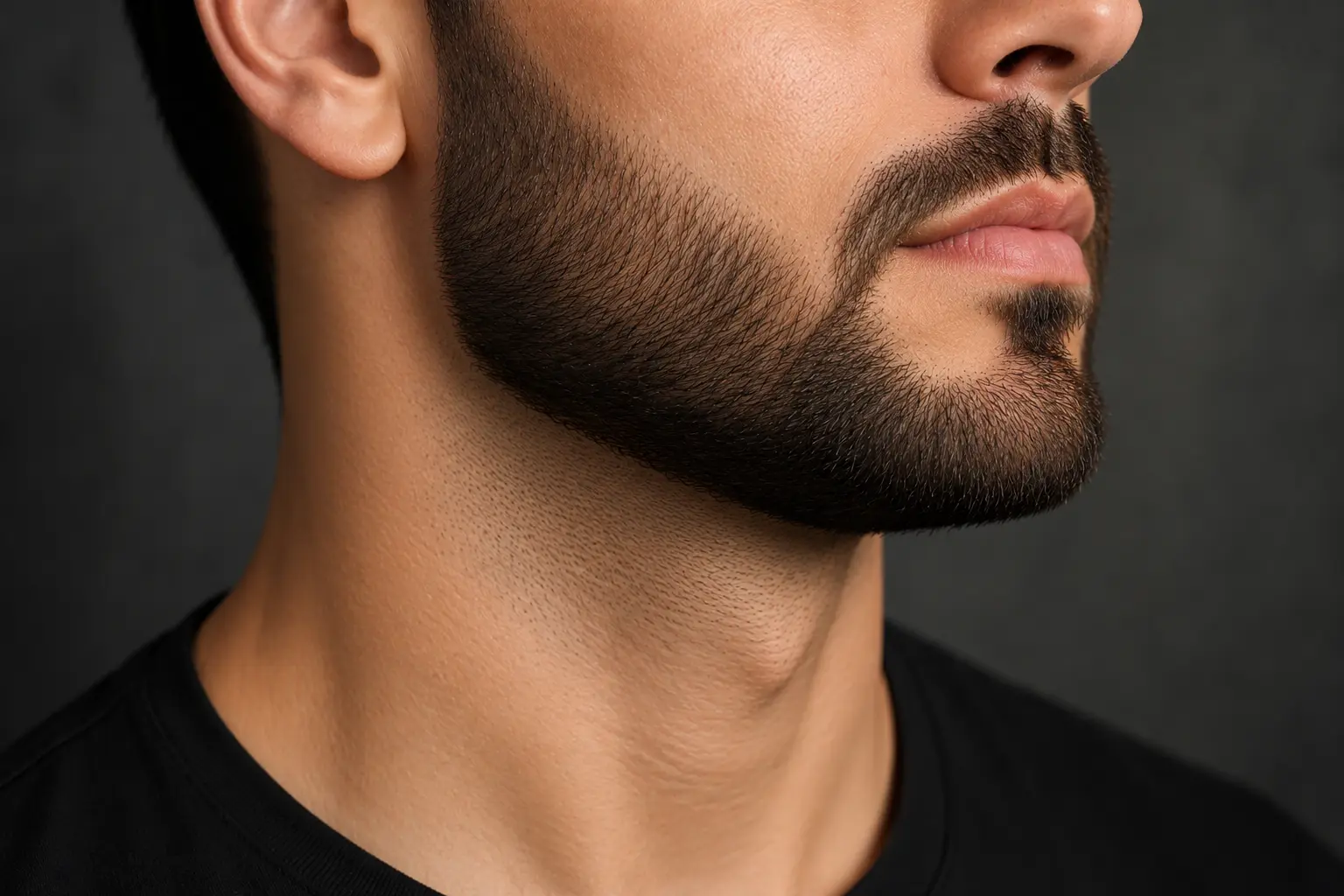
Your beard neckline is the line where your beard ends and your neck begins, and it’s one of the most overlooked details in beard grooming. Men will spend weeks getting the cheek line, the mustache, and the overall shape right, then completely skip the neckline — which is exactly why so many otherwise good beards end up looking unfinished from the side or front.
Get the beard neck shape wrong and it shows two ways: trim it too high and you lose the natural definition between your jaw and neck, giving a “floating beard” look. Trim it too low and neck hair blends into chest hair with no clear line at all. This guide walks through exactly where your neckline should sit, how to find it on your own face, and how to trim it cleanly regardless of your beard length.
Table of Contents
1. What Is a Beard Neckline?
A beard neckline is the trimmed boundary that separates beard growth on the jaw from the loose neck hair below it. It follows a slight U or curved shape rather than a straight line across the throat, and it’s what gives a beard its finished, framed appearance from the front and side profile.
Quick snippet answer: A beard neckline is the shaped edge where beard hair on the jaw ends and neck hair is shaved away. It typically sits just above the Adam’s apple, following a gentle curve rather than a straight horizontal cut.
Without a defined neckline, a beard tends to just fade unevenly into neck stubble, which reads as unkempt even if the rest of the beard is well maintained.
2. Why the Beard Neckline Matters More Than Most Men Think
A clean neckline beard shape does more visual work than people expect. It creates a clear boundary that frames the jaw, makes the beard look intentional rather than grown out of neglect, and directly affects how sharp a beard photographs from below or in profile, which matters more now than it used to given how often men are photographed at slightly upward angles on video calls and phones.
Barbers often point to the neckline as one of the first things they check on a walk-in client, precisely because it’s the detail most men neglect between professional trims. A well-shaped beard with a sloppy neckline still reads as unfinished; a modest beard with a crisp neckline often looks more polished than a fuller one without it.
3. How to Find Your Natural Beard Neckline
There are two reliable methods barbers use to find where a neckline should sit. Either works well — the goal is picking the one that matches your neck and jaw shape most naturally.
The Two-Finger Method
Place two fingers horizontally above your Adam’s apple. Where your fingers sit is roughly where your neckline should be trimmed, following a slight upward curve toward each ear rather than a flat line straight across.
The Jaw-Line Method
Trace an imaginary line from behind each ear down to just under the jaw, then curve it slightly upward toward the chin. This method works particularly well for longer or angular jaws, since it keeps the neckline closer to the jaw’s natural shape rather than a fixed distance from the throat.
Featured snippet answer: To find your beard neckline, place two fingers above your Adam’s apple — that’s roughly where the line should sit. Trim everything below that point, curving the line slightly upward toward each ear rather than cutting it straight across.
Avoid trimming higher than your jawline itself. A neckline set too high removes the natural transition between jaw and neck, creating what barbers often call a “floating beard” — a beard that looks disconnected from the rest of the face.
4. How to Trim a Beard Neckline Step by Step
Step 1 — Let your beard grow in fully before shaping the neckline. Trimming the neckline too early, before you know your beard’s true growth pattern, often results in cutting the line too high.
Step 2 — Locate your neckline using the two-finger or jaw-line method. Mark it lightly with a trimmer’s edge or a light pencil line if you want a visual guide for your first attempt.
Step 3 — Set your trimmer to a shorter guard or no guard at all. Neck hair below the neckline should be shaved close, not just trimmed shorter, for the cleanest contrast.
Step 4 — Trim from the center out toward each ear. Working outward in small sections gives you more control than trying to cut the entire line in one pass.
Step 5 — Curve the line slightly upward toward the ears. A completely straight line across the throat looks unnatural. A gentle upward curve toward the jaw on each side reads as far more natural.
Step 6 — Shave everything below the line clean. Use a razor or a trimmer without a guard to remove all hair below your marked neckline, checking evenness in a mirror as you go.
Step 7 — Check from multiple angles. Tilt your head back slightly and check both sides in a mirror, since asymmetry is more visible from this angle than looking straight ahead.
5. Beard Neckline Shapes by Beard Length
The exact approach to a beard neckline shifts slightly depending on how long your beard is.
| Beard Length | Neckline Approach | Notes |
| Stubble to short beard | Keep the line close to the jaw, minimal curve | Similar upkeep to a stubble beard, trim every few days |
| Medium beard | Standard two-finger neckline with gentle upward curve | Most common approach, works for most face shapes |
| Long beard | Neckline set slightly lower to avoid a cramped, high-set look | Common with long beard styles where volume needs more room to hang naturally |
| Beard with fade | Neckline blends into a fade rather than a hard shaved line | Pairs well with beard fade styles for a more contemporary look |
As a beard grows longer, the neckline generally needs to sit a touch lower than it would on a shorter beard, simply because more volume needs somewhere to fall without looking pinched near the throat.
6. Tools You Actually Need
- Trimmer with adjustable guard lengths — for defining the neckline shape before the final clean-up.
- Razor or trimmer without a guard — for shaving hair below the line completely clean.
- Small handheld mirror — to check the line from the side, since front-facing mirrors alone miss asymmetry.
- Shaving gel or cream — if using a razor below the neckline, to reduce irritation on a sensitive area.
- Aftershave balm or moisturizer — the neck area is prone to razor bumps, so aftercare matters here more than on the cheeks.
7. Neckline Adjustments for Different Neck and Jaw Shapes
Shorter or fuller necks: Setting the neckline slightly higher than the standard two-finger position can help create more visual separation between the jaw and neck. This pairs well with the styling logic in our best beard for round face guide, where avoiding added bulk lower on the face is generally the goal.
Longer, narrower necks: A slightly lower neckline tends to look more balanced here, giving the beard a bit more room before it transitions into bare skin.
Angular or square jaws: The jaw-line method usually works better than the standard two-finger method, since it follows the natural definition of the jaw rather than cutting across it at a fixed distance. See our best beard for square face guide for related shaping advice.
Rounder jaws: A gentle curve rather than a sharp angled neckline tends to look more proportionate, avoiding a look that fights against the face’s natural lines.
8. How Often to Maintain Your Beard Neckline
- Short beards and stubble: Every two to three days, since neck hair grows back visibly fast at this length.
- Medium beards: Once or twice a week is usually enough to keep the line sharp without over-trimming.
- Long beards: Weekly touch-ups, focusing mainly on cleaning up stray hairs rather than reshaping the whole line each time.
A neckline that’s left unmaintained for more than a couple of weeks often needs to be redefined from scratch rather than just touched up, since the boundary becomes harder to identify once regrowth blurs the original line.
9. Hard Line vs Faded Neckline
A hard-line neckline is a crisp, clearly shaved boundary — the traditional approach and still the most common. A faded neckline blends the beard into shorter and shorter hair rather than stopping at a sharp line, similar in spirit to a skin fade on a haircut.
Hard lines tend to suit shorter, denser beards and more formal or classic styling. Faded necklines tend to suit beards paired with a faded haircut, giving the whole look a more cohesive, modern feel. Neither is objectively better — it comes down to whether the rest of your grooming leans traditional or more contemporary.
10. Common Beard Neckline Mistakes
- Trimming too high. This is the single most common error, and it creates the “floating beard” look where the beard appears disconnected from the neck.
- Cutting a straight line across the throat. A completely flat neckline looks unnatural compared with a gentle upward curve toward the ears.
- Skipping the razor step. Trimming the neck hair shorter without fully shaving below the line leaves a fuzzy, undefined edge rather than a crisp one.
- Ignoring symmetry. Checking only from the front misses unevenness that’s obvious from the side or at an upward angle.
- Redefining the line too often. Reshaping the neckline every single day, rather than every few days, can gradually push the line higher than intended without you noticing.
11. Common Myths About the Beard Neckline
Myth: There’s one universal neckline position for everyone. Neckline placement should adjust based on neck length, jaw shape, and beard length — a fixed rule works as a starting point, not a strict standard for every face.
Myth: Shaving below the neckline daily makes hair grow back thicker. Shave frequency has no effect on regrowth thickness. This is one of the most common grooming myths and applies to neckline maintenance just as much as anywhere else on the face.
Myth: A faded neckline is only for very short beards. Faded necklines can work with medium and even longer beards, particularly when paired with a fade haircut, though the transition zone needs to be wider on longer beards to look smooth.
12. Professional and Barber Recommendations
Barbers generally recommend getting your first neckline shaped professionally, then maintaining it yourself between appointments once you know exactly where the line sits on your face. If you’re prone to razor bumps or ingrown hairs along the neck, dermatology sources such as the American Academy of Dermatology recommend shaving in the direction of hair growth and using a sharp, clean blade to reduce irritation in that area specifically, since neck skin tends to be more sensitive than the jaw or cheeks.
If you’re building out your grooming routine beyond the neckline itself, our full beard care guide and how to trim a beard resources cover the rest of the process in more depth.
Final Thoughts
A sharp beard neckline is one of the highest-impact, lowest-effort details in beard grooming. It takes a few minutes with the right tools, but it’s the difference between a beard that looks deliberately shaped and one that looks like it just happened. Find your natural line using the two-finger or jaw-line method, keep the curve gentle rather than flat, shave clean below it, and check it every few days before it drifts. Once you’ve set it correctly the first time, maintaining a clean neckline beard shape becomes one of the fastest parts of your entire routine.
If you’re refining other parts of your beard shape at the same time, our guides on types of beard styles and medium beard styles are useful next stops.
FAQs
1. Where should my beard neckline be? Your beard neckline should generally sit just above your Adam’s apple, found by placing two fingers horizontally above it, with the line curving slightly upward toward each ear rather than running straight across.
2. How do I trim my beard neckline at home? Locate the line using the two-finger or jaw-line method, trim the area with a shorter guard, then shave everything below the line completely clean with a razor or guardless trimmer for the sharpest result.
3. What happens if I set my neckline too high? Setting the neckline too high removes the natural transition between your jaw and neck, creating what’s often called a “floating beard” that looks disconnected from the rest of your face.
4. How often should I trim my beard neckline? Short beards need attention every two to three days, medium beards once or twice a week, and longer beards can usually go about a week between touch-ups.
5. Should my beard neckline be a straight line? No. A completely straight line across the throat looks unnatural. A gentle upward curve toward each ear generally looks far more natural and flattering.
6. What’s the difference between a hard-line and faded beard neckline? A hard-line neckline is a crisp, clearly shaved boundary, while a faded neckline gradually shortens hair rather than cutting a sharp edge, similar to a skin fade on a haircut.
7. Does my neckline change as my beard grows longer? Yes. Longer beards generally need the neckline set slightly lower than shorter beards to avoid a cramped, high-set appearance as more volume needs room to fall naturally.
8. What tools do I need to trim a beard neckline? An adjustable trimmer, a razor or guardless trimmer for the final clean shave, a handheld mirror for checking angles, and a moisturizer or aftershave balm for the sensitive neck skin.
9. Can a bad neckline ruin an otherwise good beard? Yes. A poorly defined or uneven neckline is one of the fastest ways to make an otherwise well-groomed beard look unfinished, since it’s one of the first details people notice.
10. Should I shave or just trim below the neckline? Shaving is recommended for the cleanest, sharpest result. Trimming shorter without shaving tends to leave a fuzzy, less defined edge.
11. How do I find the right neckline for my jaw shape? Angular or square jaws generally suit the jaw-line method, which follows natural jaw definition, while rounder jaws tend to look more proportionate with a gentler curve using the two-finger method.
12. Does shaving my neck daily thin out the hair over time? No. Shave frequency doesn’t affect hair thickness or growth rate — that’s a common misconception rather than an actual grooming effect.
13. Is it better to get my first beard neckline done by a barber? Many barbers recommend this, since it establishes a clear reference point for where the line sits on your specific face, which makes maintaining it yourself much easier afterward.
14. Can I use the same neckline for a fade haircut and a regular haircut? A faded neckline generally pairs better with a fade haircut for a cohesive look, while a hard-line neckline works well with most haircut styles, including classic and longer cuts.
15. What’s the most common mistake men make with their beard neckline? Trimming it too high is by far the most common mistake, which removes the natural jaw-to-neck transition and makes the beard look disconnected from the face.