 By Beard Style
Best Beard for Round Face is all about creating the illusion of a longer, more defined face. If you’ve got a round face, you’ve probably heard conflicting advice about facial hair — some people say beards make round faces look bigger, while others swear a beard is exactly what a round face needs. The truth sits in the middle: the right beard absolutely can add definition, length, and structure to a round face. The wrong one just adds bulk in all the same places your face already has it.If you’ve got a round face, you’ve probably heard conflicting advice about facial hair — some people say beards make round faces look bigger, others swear a beard is exactly what a round face needs. The truth sits in the middle: the right beard absolutely can add definition, length, and structure to a round face. The wrong one just adds bulk in all the same places your face already has it.
The difference comes down to shape, not size. A round face is defined by soft, curved edges, a similar width and length, and minimal angularity around the jaw. The best beard for round face works by introducing the angularity and visual length the face shape lacks — not by simply adding more hair everywhere.
This guide walks through exactly which beard styles work for round faces, which ones to avoid, and how to shape any beard specifically to slim and define round features. By the end, you’ll know:
- Why certain beard styles flatter round faces and others don’t
- The best beard styles for a round face, ranked by effectiveness
- How to identify if you genuinely have a round face shape
- Styling and trimming techniques that add definition
- Common mistakes that make a round face look fuller, not sharper
Let’s start by confirming what a round face shape actually looks like.
Table of Contents
1. How to Tell If You Have a Round Face
Before choosing a beard, confirm you’re actually working with a round face shape rather than a similar one like oval or square.
Signs of a round face:
- Face width and length are roughly equal
- Cheeks are the widest point, often appearing full or soft
- Jawline is curved rather than angular
- Chin tends to be rounded rather than pointed
- Forehead is typically rounded, without sharp corners
Quick test: Pull your hair back and look straight into a mirror. If your face looks close to as wide as it is long, with soft curves rather than defined angles at the jaw and cheekbones, you’re likely working with a round face shape.
This matters because the techniques that work for a round face — adding length, adding angularity — are different from what works for a long or square face, which need width and softening, respectively.
Read More About Types Of Beard Styles: https://beardstyles.net/types-of-beard-styles/
2. Why Beard Shape Matters More Than Beard Size on a Round Face
A common misconception is that round faces need less facial hair to avoid looking “bigger.” In reality, the issue isn’t volume — it’s shape.
A beard left to grow in its natural, rounded shape mirrors the curves a round face already has, which can make the face look fuller rather than more defined. The fix isn’t necessarily less beard — it’s a beard shaped with intentional angles, length, and tapering.
Key principle: The best beard for round face draws the eye downward and adds visible structure along the jaw, rather than simply following the natural curve of the cheeks and chin.
Read More About Short Beard Styles: https://beardstyles.net/short-beard-styles/
3. The Best Beard Styles for a Round Face
Extended Goatee
A goatee connected by a thin line along the jaw to the sideburns, with the cheeks kept bare or very lightly stubbled.
Why it works: The horizontal jawline strip creates a defined edge where a round face naturally lacks one, breaking up the soft curve from ear to chin. Maintenance level: Medium-high — the connecting line needs frequent, precise trimming. Styling difficulty: Medium.

Anchor Beard (Anchor Goatee)
A pointed chin section connected to a mustache and thin jawline strip, shaped to resemble a ship’s anchor.
Why it works: The pointed chin adds visual length below the jaw, while the angular jawline lines counteract the natural curves of a round face. Maintenance level: High — needs frequent edging to maintain sharp lines. Styling difficulty: High.
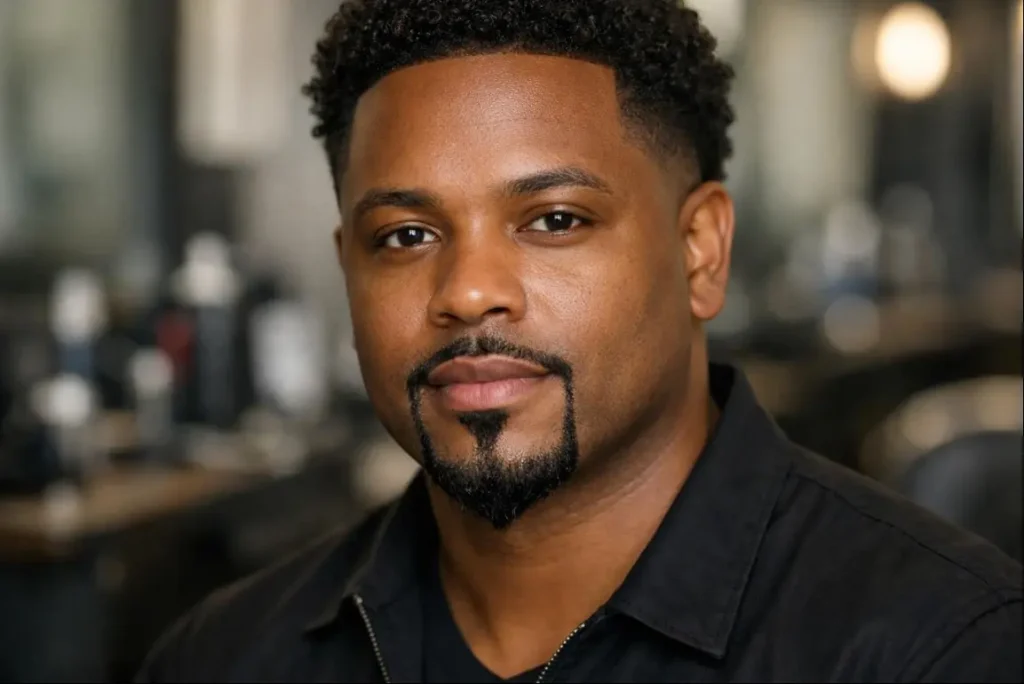
Ducktail Beard
A beard that tapers to a defined point at the chin, regardless of overall length.
Why it works: The pointed taper draws the eye downward, visually elongating the face — exactly what a round face benefits from. Maintenance level: Medium-high. Styling difficulty: Medium-high; the taper requires regular trimming to stay sharp rather than rounding out naturally.
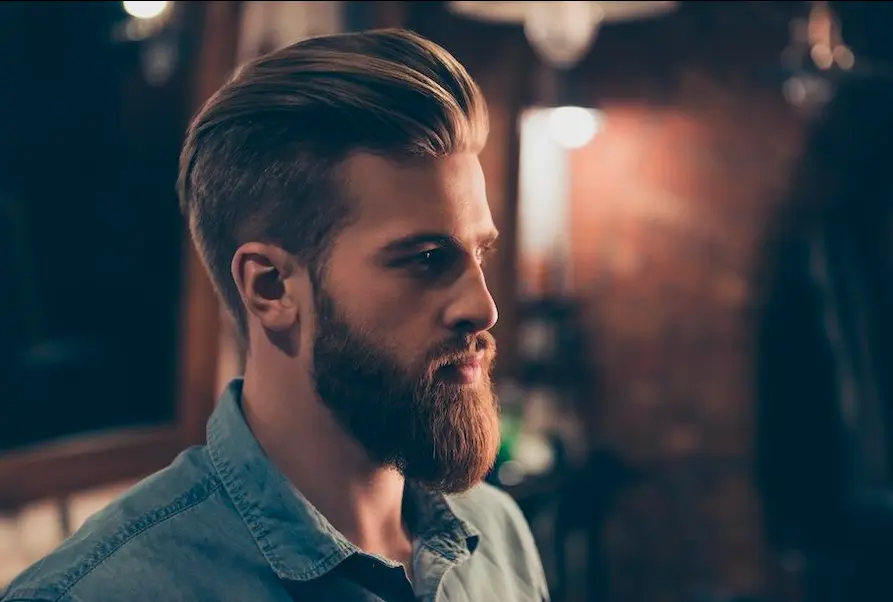
Short Boxed Beard (With a Defined Point)
A clearly lined beard, roughly a quarter to half an inch, shaped with slightly more length and a subtle point at the chin rather than a fully rounded bottom edge.
Why it works: Clean, straight lines along the cheeks and a tapered chin combine to add structure without significant bulk. Maintenance level: Medium. Styling difficulty: Medium.
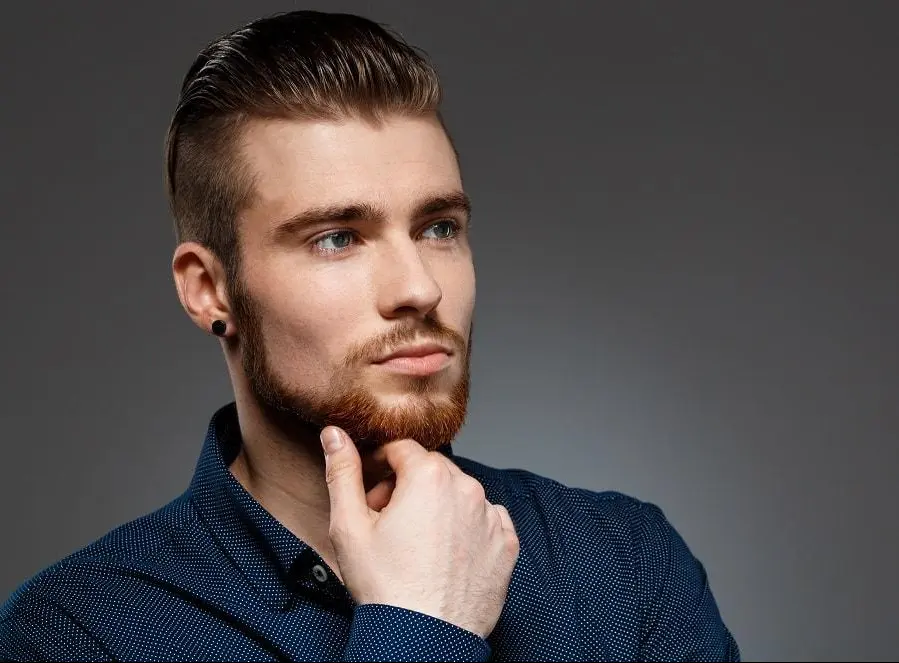
Garibaldi Beard (Carefully Shaped)
A fuller, rounder beard that can work on a round face only when deliberately trimmed narrower at the bottom rather than left in its naturally wide, rounded form.
Why it works: When shaped correctly — narrower at the jawline, slightly more length at the chin — it adds the lower-face length a round face needs. Who should be cautious: If left fully natural and rounded, this style can add bulk rather than definition; shaping is essential. Maintenance level: High.

Van Dyke
A pointed goatee combined with a disconnected mustache, cheeks kept clean-shaven.
Why it works: The pointed chin and clean cheek lines add definition and length without the bulk of a fuller beard. Maintenance level: High — daily shaving of the cheeks is required. Styling difficulty: High.
Read More About Long Beard Styles: https://beardstyles.net/long-beard-styles/

4. Beard Styles to Avoid on a Round Face
Not every beard style works against a round face’s natural curves. A few to approach with caution:
- Fully rounded full beard with no tapering — mirrors the face’s existing curves rather than countering them
- Mutton chops — adds width at the exact point a round face is already widest, the cheeks
- Bushy, unshaped beard — without structure, volume tends to round out the face further rather than adding length
- Very short chin puff goatee — can look visually “lost” on a fuller face, failing to add the structure a round face benefits from
This doesn’t mean these styles are completely off-limits — a skilled barber can adapt almost any style with the right shaping. But left in their default, natural form, these are the styles most likely to work against round features rather than for them.
Read More About Goatee Styles: https://beardstyles.net/goatee-styles/
5. Beard for a Chubby or Fuller Face
Many men searching for “beard for round face” are really looking for a beard for a fuller or chubbier face shape, which shares similar challenges with an even greater need for definition.
What Changes With a Fuller Face
- Slightly more length helps. A beard with a bit more length at the chin (without going long) tends to slim the lower face more effectively than very short stubble.
- Defined cheek lines matter even more. A blurry, undefined cheek line on a fuller face emphasizes width; a sharp line counteracts it.
- Avoid very light stubble alone. It often isn’t enough definition to meaningfully change the face’s visual proportions.
Best Options for a Fuller Face
- Extended goatee — defines the jaw clearly
- Ducktail beard — adds visual length through the taper
- Short boxed beard with a pointed chin — balances structure with manageable maintenance
Barber tip: On a fuller face, the goal is contrast — clearly defined dark lines against the skin do more to slim the face visually than length or volume alone.
Read More About Stubble Beard: https://beardstyles.net/stubble-beard/
6. How to Shape Any Beard to Slim a Round Face
Regardless of which specific style you choose, a few shaping principles apply broadly to round and fuller faces:
- Keep the cheek line higher and straighter than the natural growth line, creating a more defined boundary rather than letting cheek hair blend gradually into the face.
- Add slight length or a point at the chin rather than keeping the bottom edge fully rounded.
- Avoid excessive width at the sideburns and upper cheeks, where a round face is already at its widest.
- Keep the neckline clean and slightly higher than usual, since a low neckline can visually shorten the lower face further.
A barber experienced with face-shape-specific shaping can apply these principles to almost any beard style, even ones not specifically listed as “best for round faces” above.
Read More About Best Beard For Round Face: https://beardstyles.net/best-beard-for-round-face/
7. Stubble and Short Styles for Round Faces
Heavy Stubble
Heavy stubble (around 4–5 days of growth) adds noticeably more definition than light stubble, making it a better starting point for round faces.
Maintenance level: Low-medium. Styling tip: Keep the cheek line slightly higher than the natural growth line to avoid emphasizing width.
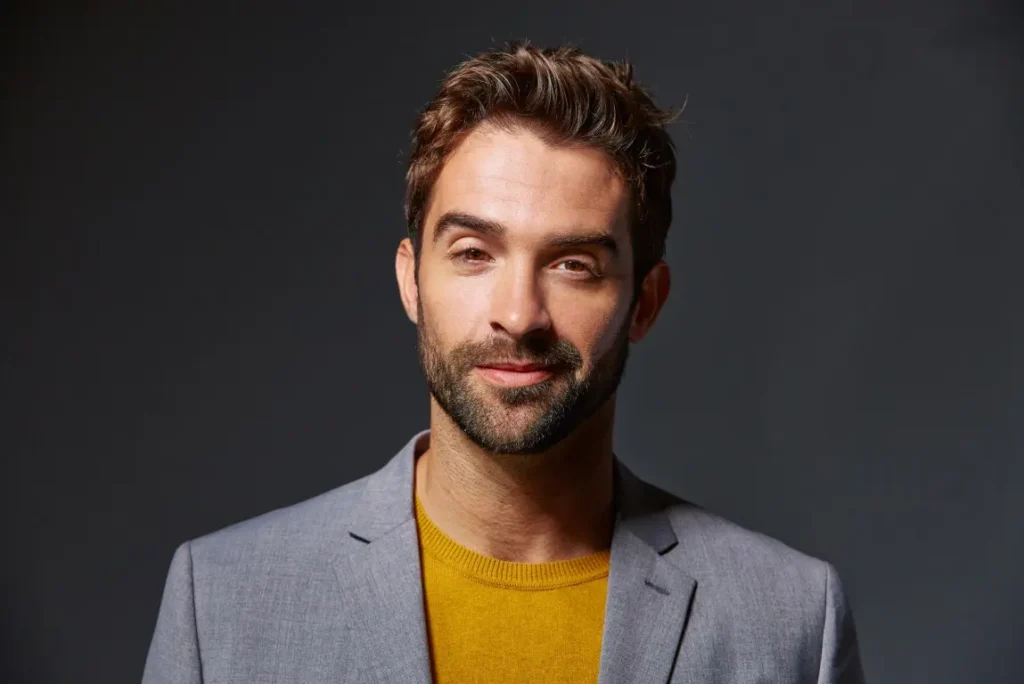
Designer Stubble
Stubble shaped with sharp, defined lines along the cheeks and neck, often paired with a fade haircut.
Maintenance level: Medium. Why it works for round faces: The deliberate, straight lines counteract the face’s natural curves more effectively than soft, unshaped stubble.
For a deeper breakdown of stubble lengths and styling, see our full stubble beard guide.
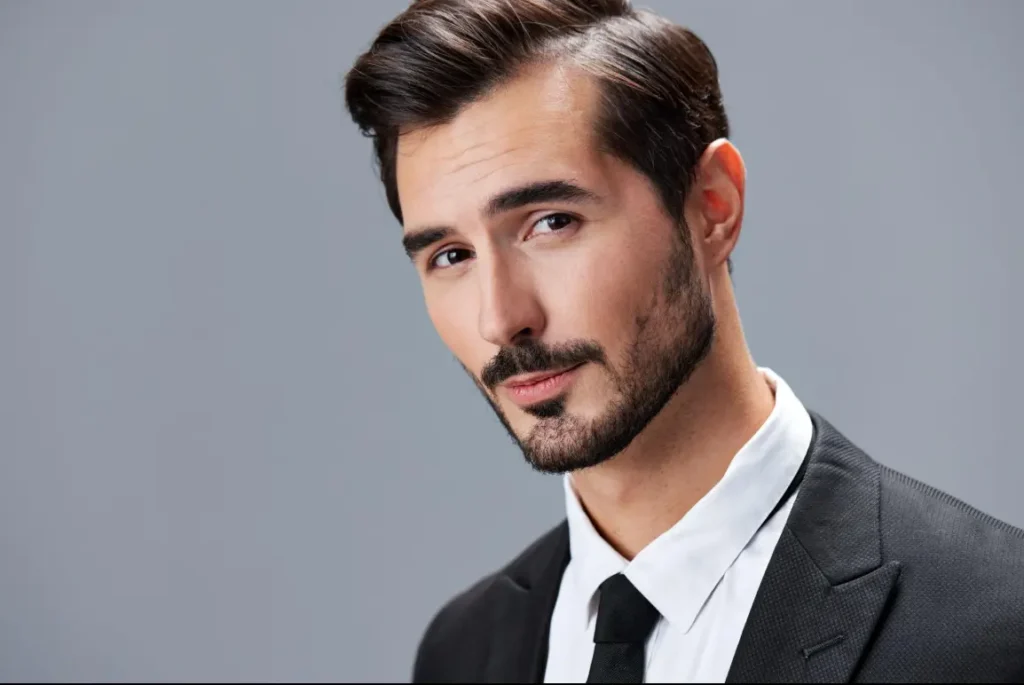
8. Goatee Styles for Round Faces
Goatees are particularly well-suited to round faces because nearly every variation involves shaving the cheeks, which directly addresses the face’s widest point.
- Extended goatee — adds a defined jawline; the strongest all-around option
- Anchor goatee — adds angularity through the pointed chin and connected lines
- Van Dyke — adds length and definition with disconnected, sharp lines
A classic goatee without any jawline extension can work too, but tends to be less effective at adding structure compared to the extended or anchor variations.
For a full breakdown of every goatee variation, see our complete goatee styles guide.
9. Full and Long Beard Styles for Round Faces
Full and long beards aren’t off-limits for round faces, but they require more deliberate shaping than they would on an oval or square face.
Full Beard (Tapered)
A classic full beard works on a round face only if it’s trimmed with a slight taper toward the chin rather than left in its natural rounded shape.

Garibaldi (Narrowed)
As mentioned earlier, the Garibaldi can work if a barber deliberately narrows the sides and adds length at the chin, rather than allowing the beard’s naturally rounded volume to remain unshaped.
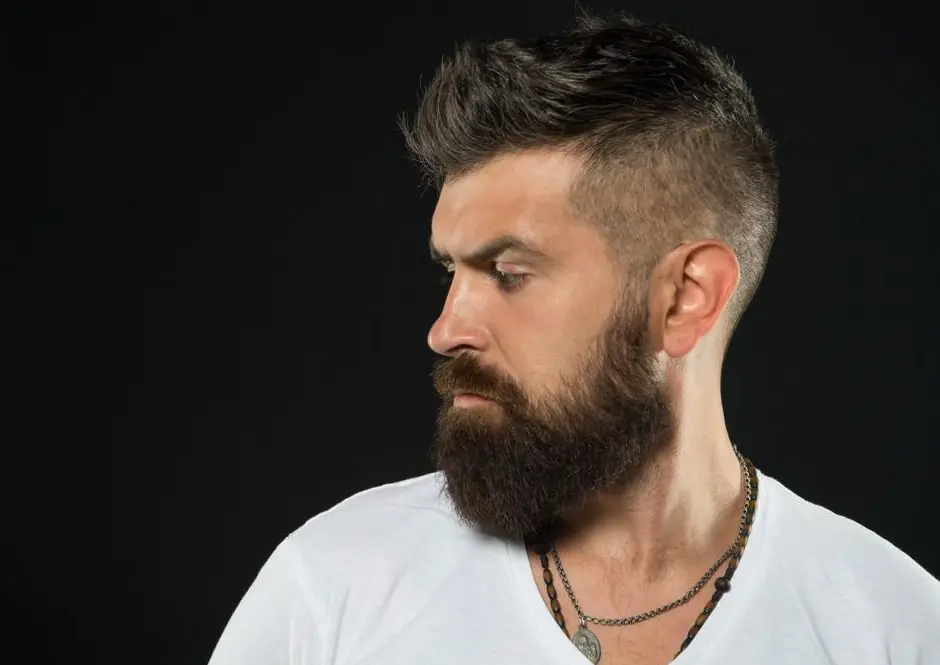
Realistic expectation: Long, fully rounded beard styles like the Bandholz are generally the most challenging to make work on a round face, since their defining feature is exactly the volume and roundness a round face is trying to counteract.
10. Hair Type Considerations for Round Faces
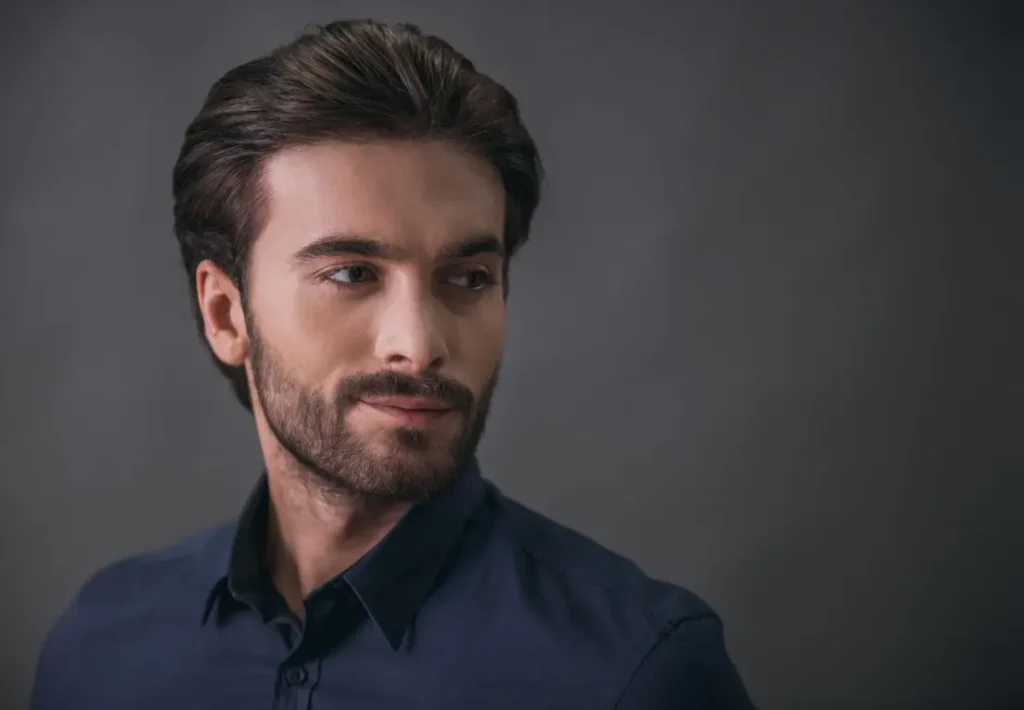
Thick, Coarse Hair
Holds defined lines and tapered shapes well, making styles like the extended goatee and ducktail beard easier to maintain on round faces with coarse hair.
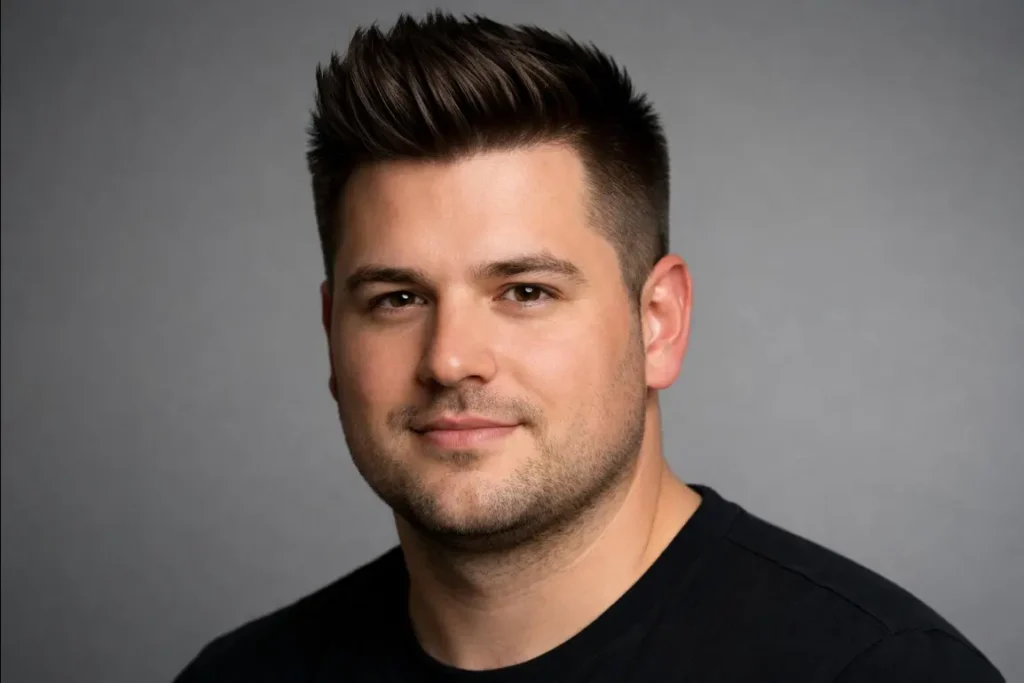
Fine, Straight Hair
Can struggle to hold a crisp taper at length. Heavy stubble or designer stubble, which rely less on dramatic shaping, often work more reliably on fine hair.
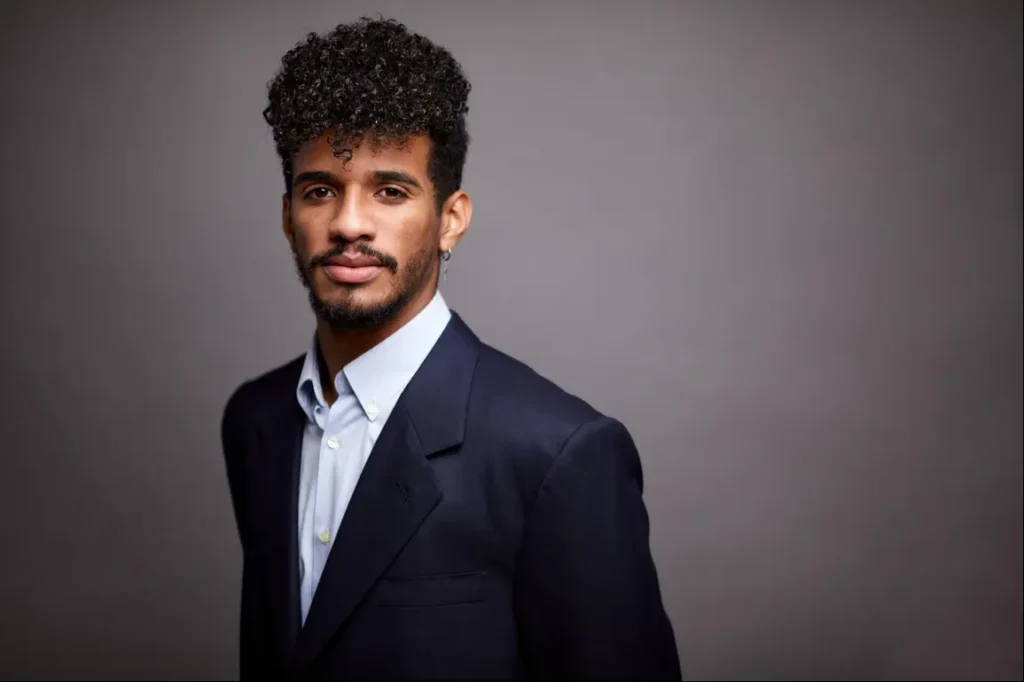
Curly or Coily Hair
Naturally adds volume, which can work against the “add definition, not bulk” goal on a round face unless actively shaped and trimmed to maintain clean, intentional lines.
11. How to Grow a Beard If You Have a Round Face
- Grow for 3–4 weeks before shaping. You need to see your natural growth pattern before committing to a specific taper or line.
- Identify your jawline beneath the growth. Even on a round face, there’s usually a subtle jaw structure that a barber can use as a guide for shaping.
- Start with a goatee-based style if you’re unsure. Extended goatees and similar styles are the most forgiving starting point for round faces and easiest to adjust as you learn what works.
- Get a professional shaping session. A first visit to a barber once the beard has grown in is worth the cost — they can establish lines that you can then maintain yourself.
Read More About Types Of Beard Styles: https://beardstyles.net/types-of-beard-styles
12. Maintenance Routine for Round-Face Beard Styles
Daily
- Apply beard oil to keep hair soft and reduce itchiness, particularly important for styles requiring frequent shaving around clean lines
- Brush or comb in the direction of your intended shape to train growth over time
Weekly
- Re-define cheek lines and jaw lines, since round-face-specific shaping requires more frequent upkeep than a more natural, unshaped beard
- Trim the chin area to maintain any taper or point central to the chosen style
Skin Care
Frequent shaving around defined lines (especially for goatee-based styles) can cause irritation. A gentle pre-shave routine and a soothing balm afterward help reduce redness and ingrown hairs.
Read More About Short Beard Styles: https://beardstyles.net/short-beard-styles/
13. Common Mistakes Round-Faced Men Make
- Letting the beard grow without any shaping — mirrors the face’s natural curves instead of countering them
- Keeping the cheek line too low or undefined — emphasizes the face’s width rather than minimizing it
- Choosing a fully rounded, bushy style without tapering — adds visual bulk in exactly the wrong place
- Avoiding facial hair altogether out of fear of “looking bigger” — a well-shaped beard typically adds more definition than a clean-shaven round face has on its own
- Going too short — very light stubble or a tiny chin puff often doesn’t add enough definition to make a visible difference
Read More About Long Beard Styles: https://beardstyles.net/long-beard-styles/
14. Common Myths About Beards and Round Faces
Myth: Round faces should avoid beards entirely. A well-shaped beard, particularly one with a defined jawline or pointed chin, typically adds structure rather than bulk.
Myth: More beard volume always looks better on a round face. Volume without shaping tends to mirror the face’s natural curves; targeted shaping matters more than overall size.
Myth: Only a goatee works on a round face. While goatee-based styles are particularly effective, properly shaped full and ducktail beards can also work well with the right tapering.
Myth: A round face is the same as a chubby or fuller face. They share similar styling principles, but a round face is defined by shape (equal width and length, soft curves) rather than size — a man can have a round face shape at any body weight.
Read More About Goatee styles : https://beardstyles.net/goatee-styles/
15. Conclusion
There’s no need to avoid facial hair if you have a round face — you just need a beard shaped to add what your face shape naturally lacks: length and angularity. Extended goatees, ducktail beards, and carefully tapered full beards all do this well, while fully rounded, unshaped styles tend to work against round features rather than for them.
If you’re starting out, an extended goatee or heavy stubble with a defined cheek line is the safest, most forgiving place to begin. From there, a good barber can help you fine-tune the exact taper and line placement that suits your specific bone structure best.
Read More About Stubble Beard: https://beardstyles.net/stubble-beard/
FAQ
1. What is the Best Beard for Round Face ? The extended goatee, anchor beard, and ducktail beard are generally considered the most effective styles for adding definition and length to a round face.
2. Should round-faced men avoid beards? No — a well-shaped beard typically adds structure and definition to a round face; the key is choosing a style with tapering or angularity rather than a fully rounded, natural shape.
3. What beard styles should round faces avoid? Fully rounded, unshaped full beards, mutton chops, and overly bushy styles tend to add bulk rather than definition on a round face.
4. Is a goatee good for a round face? Yes — goatee-based styles, especially the extended goatee and anchor goatee, are among the most effective options for round faces.
5. What’s the Best Beard for Round Face a chubby or fuller face? The extended goatee, ducktail beard, and a short boxed beard with a defined point at the chin tend to work best for fuller faces.
6. Does a beard make a round face look bigger? Only if left unshaped and fully rounded; a beard shaped with defined lines and some length at the chin typically slims and defines a round face instead.
7. How should I trim my beard if I have a round face? Keep the cheek lines higher and straighter than your natural growth, add slight length or a point at the chin, and avoid excessive width at the sideburns.
8. Can a full beard work on a round face? Yes, but it needs to be deliberately tapered narrower at the sides with some added length at the chin, rather than left in its natural rounded shape.
9. What’s the easiest beard style for a round face to maintain? Heavy stubble with a defined, slightly raised cheek line is generally the lowest-maintenance option that still adds noticeable definition.
10. Does stubble work for a round face? Yes — heavy stubble or designer stubble, both shaped with clear cheek lines, can add definition without requiring the upkeep of a fully shaped beard style.
11. How do I know if I actually have a round face? Round faces typically have roughly equal width and length, with soft, curved jawlines and cheeks as the widest point — pulling your hair back in front of a mirror makes this easier to assess.
12. What’s the difference between styling for a round face versus an oval face? Round faces benefit from added length and angularity, while oval faces are already balanced and can generally wear a wider range of styles without specific shaping adjustments.
13. Will a beard hide a double chin on a round face? A well-shaped beard, particularly one with some length and a defined edge along the jaw, can help minimize the visual impact of a fuller jaw or chin area, though results vary by individual.
14. How long should I grow my beard before shaping it for a round face? Most barbers recommend growing for 3–4 weeks before the first major shaping session, since you need enough length to see your natural growth pattern and jaw structure.
15. Is professional barber shaping necessary for round-face beard styles? It’s not strictly necessary, but a first professional shaping session is highly recommended, since establishing the right lines and taper from the start makes ongoing maintenance much easier