 By Bread Styles Team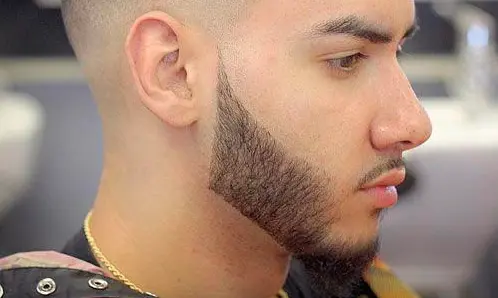
A beard fade is the difference between a beard that looks grown and a beard that looks cut. It’s the technique barbers use to blend the hair on your cheeks, neck, and sideburns down into shorter, cleaner lengths, so there’s no hard line where your beard meets your skin or your haircut.
Beard fade styles come in a few main varieties — low, mid, high, and taper — and each one changes where that blend starts and how dramatic it looks. Picking the right one depends on your face shape, hair texture, and how sharp or subtle you want the final result to be. This guide covers all of them, plus how to ask for one correctly and how to keep it looking fresh between barber visits.
Table of Contents
What a Beard Fade Actually Is
A beard fade is a gradual transition in hair length, usually moving from longer hair on the chin and jawline down to very short or skin-level hair near the ears, neck, or cheeks. Instead of the beard ending abruptly, it tapers off smoothly, which is what gives fade styles their clean, barbershop-finished look.
This technique borrows directly from haircut fading, where hair blends from short at the sides to longer on top. Applied to a beard, the same principle creates a sharper edge without looking harsh or unfinished.
How a Beard Fade Works (The Blending Explained)
Every beard fade follows the same basic structure, even though the details change between low, mid, and high versions.
- A starting point is chosen. This is where the fade begins — near the ear, mid-cheek, or higher up toward the temple, depending on the style.
- Clipper guards step down in size. A barber typically starts with a longer guard and works down through shorter ones, blending each transition so there’s no visible line between lengths.
- The beard length above the fade stays fuller. The jaw, chin, and mustache usually keep more length, since the fade is meant to clean up the edges, not shorten the whole beard.
- Edges are sharpened last. Straight razors or trimmers with no guard are used to define clean lines along the cheek and neckline once the fade itself is blended.
Done well, a fade should look seamless from a few feet away and only reveal its structure up close. That blending step is really what separates a proper fade beard style from a beard that’s simply been trimmed shorter on the sides.
The Main Beard Fade Styles
There are three primary fade heights, plus a variation called a taper fade that overlaps with all of them. Here’s how each one works and who it tends to suit best.
Low Fade Beard
A low fade beard starts blending right around the sideburns and jawline, close to the ear, and fades quickly into very short hair or skin. It’s the most subtle of the fade heights, since the transition happens in a smaller area.
Why it works: It keeps most of the beard’s natural shape intact while cleaning up just the edges, making it a safer starting point for men new to fade styles. Best for: Professional settings, first-time fade wearers, and men who want a clean look without a dramatic style statement. Styling difficulty: Low to moderate. Best hair types: Works well with most textures, especially straight to wavy hair.
Mid Fade Beard
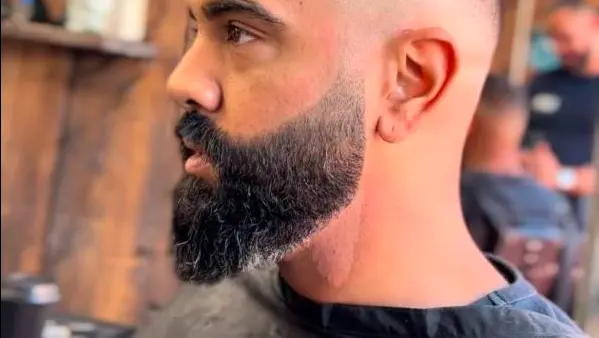
A mid fade beard begins the transition roughly halfway up the side of the face, between the jawline and the temple. It’s more noticeable than a low fade but still balanced, without extending too high toward the hairline.
Why it works: It creates a visible contrast between the fuller beard and the shorter sides without looking overly styled or aggressive. Best for: Men who want a defined, modern look that still works in most professional and casual settings. Styling difficulty: Moderate. Best hair types: Suits medium to coarse hair particularly well, since the added texture holds the fade’s shape.
High Fade Beard
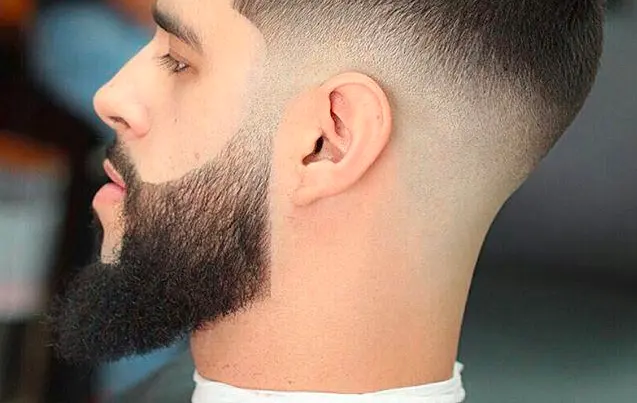
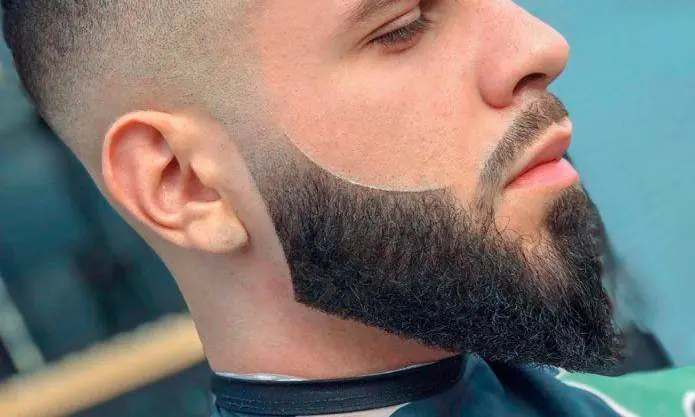
A high fade beard starts blending much closer to the temple or even into the haircut itself, creating a sharper, more dramatic contrast between the beard and the skin. This version often connects directly with a high fade haircut for a fully unified look.
Why it works: The higher starting point creates the boldest visual statement of the three fade heights, which suits men who want their grooming to stand out. Best for: Younger men, creative or casual work environments, and anyone pairing the beard with a matching skin fade haircut. Styling difficulty: Moderate to high, since it requires more precision to avoid looking patchy at the transition point. Best hair types: Works best with thicker, denser hair that can hold a sharp line.
Taper Fade Beard
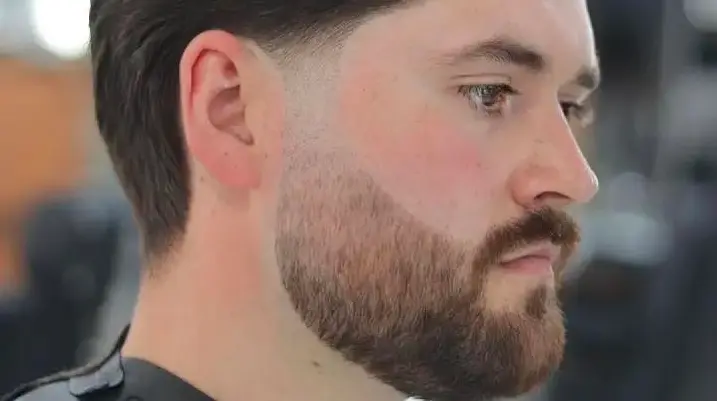
A taper fade beard is less about height and more about how gradual the blend is. Rather than a quick drop from long to short, a taper stretches the transition out over a longer distance, creating a softer, more gradual fade than a standard low, mid, or high fade.
Why it works: It offers a subtler alternative for men who like the fade concept but don’t want a sharply defined line anywhere on the face. Best for: Men who prefer a natural, low-maintenance look that still has some shape to it. Styling difficulty: Low to moderate, since there’s more room for small imperfections without them being obvious. Best hair types: Works well across most textures, especially fine to medium hair.
Comparison Table
| Fade Type | Starting Point | Visual Impact | Best For | Maintenance |
| Low Fade Beard | Near the ear/jaw | Subtle | First-timers, professional settings | Every 2–3 weeks |
| Mid Fade Beard | Mid-cheek to temple | Moderate | Balanced, modern look | Every 2 weeks |
| High Fade Beard | Near the temple/hairline | Bold | Paired with matching haircut fades | Every 1–2 weeks |
| Taper Fade Beard | Gradual, no fixed point | Soft, natural | Low-maintenance styling | Every 3–4 weeks |
Beard Fade vs. Skin Fade vs. Taper: Clearing Up the Confusion
These three terms get mixed up constantly, so it’s worth separating them clearly.
- Beard fade refers specifically to the blending technique applied to facial hair, regardless of height.
- Skin fade usually describes a haircut where the sides fade all the way down to bare skin, and the same term sometimes gets applied to a beard fade that goes down to skin level near the ears or neck.
- Taper describes a gradual, gentle blend rather than a specific height, and can technically apply to a low, mid, or high fade depending on how it’s executed.
In short: fade height (low, mid, high) tells you where the transition starts, while “taper” tells you how gradual that transition is. A high fade can still be tapered, and a low fade can still fade down to skin.
Which Beard Fade Suits Your Face Shape
Fade height changes how much attention gets drawn to the jaw and cheek area, which means face shape plays a real role in which version looks most balanced.
| Face Shape | Recommended Fade | Why |
| Round | Mid to high fade | Adds definition and length along the jaw, which pairs well with the angular approach in the best beard for round face guide |
| Oval | Any fade height | Oval faces have the most flexibility, similar to the range covered in the best beard for oval face guide |
| Square | Low to mid fade | Keeps some fullness at the jaw rather than over-sharpening an already angular shape, in line with the best beard for square face approach |
| Diamond | Low fade | Preserves cheek fullness while cleaning the edges, which complements the guidance in the best beard for diamond face guide |
| Heart | Low to mid fade | Keeps width at the jaw intact, matching the balance strategy from the best beard for heart face guide |
| Oblong | Mid fade | Adds width through contrast without extending length, similar to the direction in the best beard for oblong face guide |
| Triangle | Low fade | Avoids drawing extra attention to an already wide jaw, consistent with the best beard for triangle face strategy |
Beard Fade Styles by Hair Texture
Hair texture affects how crisp or soft a fade looks, and it’s worth adjusting your expectations based on what you’re working with.
- Straight hair holds fade lines cleanly but can show gaps more easily if the blending isn’t done carefully.
- Wavy hair blends naturally and tends to hide small imperfections in the transition zone.
- Curly hair can make sharp, high fades trickier to maintain, since curls tend to spring back and blur defined lines faster.
- Coily hair often looks best with a taper fade or low fade rather than a high fade, since the density and pattern hold shape differently at shorter lengths.
If you’re dealing with uneven growth alongside texture challenges, it’s worth reading the patchy beard guide before committing to a higher, more exposed fade style.
How to Ask Your Barber for the Right Fade
Miscommunication is the most common reason a beard fade doesn’t turn out the way someone pictured it. Be specific about three things:
- Name the fade height — low, mid, or high — rather than just saying “fade it.”
- Specify how much length to keep on top. Tell your barber how full you want the chin, jaw, and mustache to stay, since the fade only affects the sides and blend zone.
- Bring a reference photo if possible. Fade styles vary enough between barbers that a photo removes most of the guesswork.
A good barber will also ask about your face shape and hair growth pattern before starting, since that affects where the fade should realistically begin.
Can You Do a Beard Fade at Home?
A low fade beard is realistic to maintain at home once a barber has established the initial shape, especially with a quality trimmer that has multiple guard lengths. Mid and high fades are harder to maintain solo because the blending zone is larger and mistakes are more visible.
At-home fade checklist:
- Use a trimmer with at least 5–7 guard length settings for smooth transitions
- Work from the longest guard down, never starting with the shortest
- Blend in small, circular motions rather than straight lines
- Check both sides in good lighting before finishing
- Touch up every few days rather than waiting for it to grow out completely
For the full trimming process, including tools and technique, the how to trim a beard guide walks through it step by step. Getting the initial shape done professionally and maintaining it at home afterward is usually the most practical approach.
Maintenance Schedule for Each Fade Type
- Low fade beard: touch up every 2–3 weeks, since the smaller blend zone grows out less noticeably.
- Mid fade beard: touch up every 2 weeks to keep the more visible transition sharp.
- High fade beard: touch up every 1–2 weeks, since this is the fastest style to look unkempt as it grows out.
- Taper fade beard: touch up every 3–4 weeks, since the gradual blend hides regrowth longer than a defined fade height.
Regardless of fade type, daily beard oil and regular washing keep the hair manageable enough that the fade holds its shape between trims. The beard care guide covers a full maintenance routine if you’re building this into a longer-term grooming habit.
Common Mistakes That Ruin a Good Fade
- Skipping the blend and just cutting straight lines. This creates a visible step instead of a smooth transition, which defeats the purpose of a fade.
- Choosing a fade height that doesn’t match face shape. A high fade on a triangle-shaped face, for example, draws attention to an already wide jaw.
- Letting it grow out too long between touch-ups. Fades lose their sharpness faster than a standard beard trim, especially at mid and high heights.
- Using the wrong guard sequence. Jumping straight from a long guard to a very short one without intermediate steps creates a visible line rather than a gradient.
- Ignoring the top of the beard. A sharp fade paired with an unshaped, uneven beard on top looks unfinished, no matter how clean the sides are.
Cost and How Often to Get It Redone
A professional beard fade typically costs somewhere between a standard beard trim and a full haircut-and-beard combo, depending on the barbershop and region. Most men get it redone every 2 to 4 weeks depending on fade height, with high fades needing the most frequent visits and taper fades needing the least. Building a relationship with one barber who knows your preferred height and blend style tends to produce more consistent results than switching barbers frequently.
Myths About Beard Fades
Myth: A beard fade styles only works with short beards. Not true. Fades work with short beard styles and longer ones too, since the fade only affects the sides and blend zone, not the length kept on the chin and jaw. The long beard styles guide includes several options that pair well with a low or mid fade.
Myth: You need thick hair for a fade to look good. Fine and medium hair can hold a fade perfectly well, especially at lower heights. Very high fades are where thicker hair has a real advantage, since it holds a sharper line.
Myth: Once you get a fade, you’re stuck maintaining it forever. A fade grows out gradually rather than looking bad overnight, and you can transition into a fuller, non-faded beard by simply letting the sides grow back out over a few weeks.
Frequently Asked Questions
What are the main beard fade styles? The main beard fade styles are low, mid, and high fades, along with the taper fade, which describes a more gradual blend rather than a specific height. Each one changes where the transition starts and how dramatic the final look appears.
What’s the difference between a low fade beard and a high fade beard? A low fade beard starts blending near the jawline and ear, creating a subtle transition, while a high fade beard starts closer to the temple, creating a bolder, more noticeable contrast.
Is a taper fade the same as a regular fade? Not exactly. A taper fade refers to a more gradual blend rather than a specific height, while low, mid, and high fades describe where the transition begins. A fade can be tapered at any of those heights.
Can I do a beard fade styles at home? A low fade beard is realistic to maintain at home with a quality trimmer and multiple guard lengths. Mid and high fades are harder to manage solo and usually look better with the initial shape done by a barber.
How often does a beard fade styles need to be touched up? Low fades typically need touch-ups every 2 to 3 weeks, mid fades every 2 weeks, and high fades every 1 to 2 weeks, since higher fades grow out and lose definition faster.
Which beard fade styles suits a round face best? A mid to high fade tends to work well on round faces, since it adds definition and length along the jaw rather than emphasizing the face’s natural curve.
Does hair texture affect which beard fade styles works best? Yes. Straight and wavy hair generally hold fades cleanly, while curly and coily hair often look better with a taper or low fade, since higher fades can blur more quickly with tighter curl patterns.
What should I tell my barber to get the right beard fade? Specify the fade height (low, mid, or high), how much length you want to keep on the chin and jaw, and bring a reference photo if possible to avoid miscommunication.
Can a beard fade styles work with a longer beard? Yes. A fade only affects the sides and blend zone, so it can be paired with a longer beard on top as long as the transition itself stays clean and well-maintained.
Does a beard fade style cost more than a regular beard trim? Typically, yes, since fades require more precise blending and time than a standard trim, though the exact cost depends on the barbershop and region.
Is a high fade beard harder to maintain than a low fade? Yes. High fades have a larger, more visible blend zone, which means they grow out and lose sharpness faster than low fades, requiring more frequent touch-ups.
Can beard fade styles work for older men? Yes, though lower fade heights and more gradual tapers tend to look more natural and versatile across a wider range of ages compared to very high, sharply defined fades.
Do I need a specific type of trimmer for a beard fade? A trimmer with several guard length settings, ideally five or more, makes it much easier to blend smoothly between lengths, whether you’re doing touch-ups at home or working with a barber.
Is a beard fade styles suitable for patchy beard growth? It can be, especially a low fade or taper, since these styles work with shorter, less dense hair better than a high fade, which needs more visible density to look clean.
How long does a beard fade styles take to grow out completely? Depending on your beard’s growth rate, a fade typically starts losing its defined shape within 2 to 4 weeks, though the timeline varies by fade height and individual hair growth speed.