 By Bread Styles Team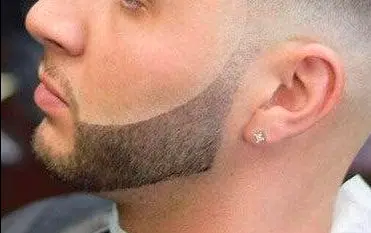
Beard designs sit somewhere between a haircut and a piece of grooming art. They take the basic idea of shaping facial hair and push it further with clean lines, shaved sections, and deliberate patterns that turn a beard into something more distinctive than a standard trim.
Not every design works on every beard, and not every beard is ready for one. Some depend on sharp contrast between hair and skin, others need a certain length or density to look intentional rather than accidental. This guide walks through the main categories of beard designs, which ones suit different lengths and occasions, the tools involved, and how to avoid the mistakes that turn a good idea into an uneven mess.
Table of Contents
What Counts as a Beard Design
A beard design is any deliberate pattern, line, or shaved section added to a beard beyond a standard shape-up. That includes anything from a single crisp cheek line to a fully patterned section carved into the sides of a full beard.
The line between a regular trim and an actual design usually comes down to intention and contrast. A clean neckline and cheek line are basic maintenance. A shaved geometric line running through the cheek, a defined part, or a symmetrical pattern cut into shorter sections of the beard is where it crosses into design territory.
Most beard design ideas fall into a few broad categories, and understanding those categories makes it much easier to figure out what will actually suit your face, beard length, and lifestyle.
Types of Beard Designs to Consider
Line-Up Designs
A line-up focuses on sharpening the natural edges of the beard rather than adding anything new. This includes crisp cheek lines, a defined neckline, and a clean edge around the mustache. It’s the simplest form of beard line designs and the easiest starting point for anyone new to the idea.
Best for: Any beard length, especially short beard styles and stubble. Styling difficulty: Low. Suitable face shapes: All, since it enhances existing shape rather than changing it.
Geometric Beard Patterns
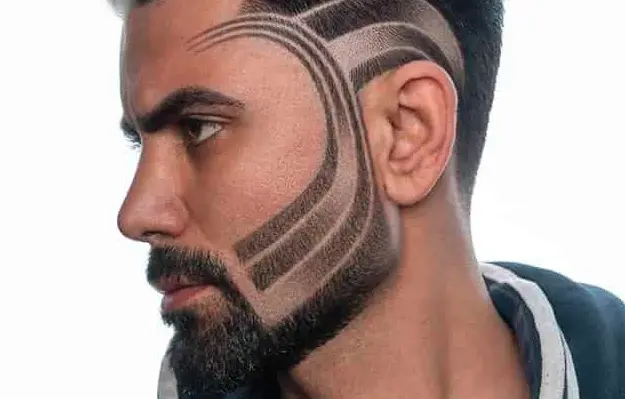
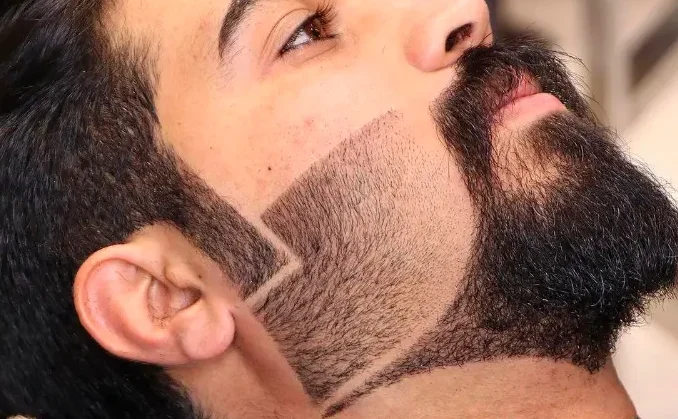
This category includes straight or angled lines shaved through sections of the cheek or jaw, creating a structured, symmetrical look. Geometric beard patterns work best on beards with enough length and density to show contrast between the shaved lines and the surrounding hair.
Best for: Medium to full beards with even density. Styling difficulty: Moderate to high. Suitable face shapes: Works particularly well on rounder or softer face shapes, where sharp lines add structure.
Part Lines and Side Designs
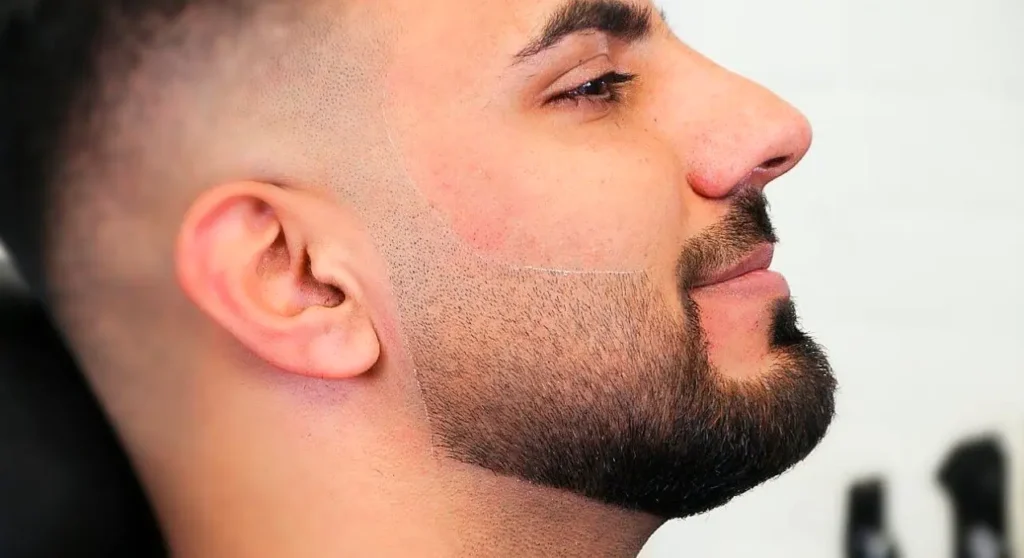
A single shaved part line running through the beard, similar to a hair part, is one of the more subtle stylish beard designs available. It’s a small detail that adds personality without requiring a full pattern.
Best for: Short to medium beards. Styling difficulty: Low to moderate. Suitable face shapes: All, since it’s a minor accent rather than a structural change.
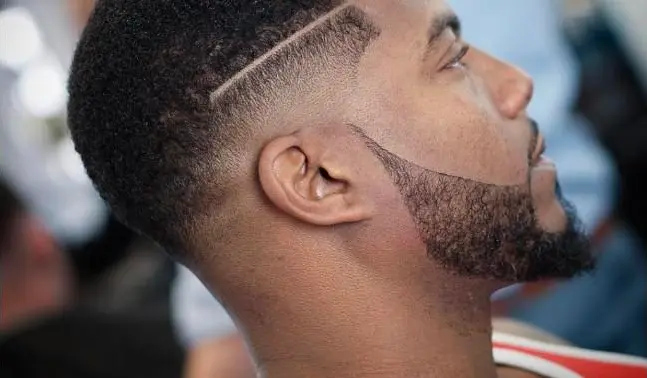
Fade-Integrated Designs
Combining a beard fade with a design element, like a line running into the faded section, creates a more advanced, layered look. This category depends heavily on the fade itself being done cleanly first. If you haven’t settled on a fade style yet, the beard fade styles guide breaks down the low, mid, high, and taper options that pair well with added design work.
Best for: Short to medium beards with a fade already established. Styling difficulty: High. Suitable face shapes: Depends on the fade height chosen alongside the design.
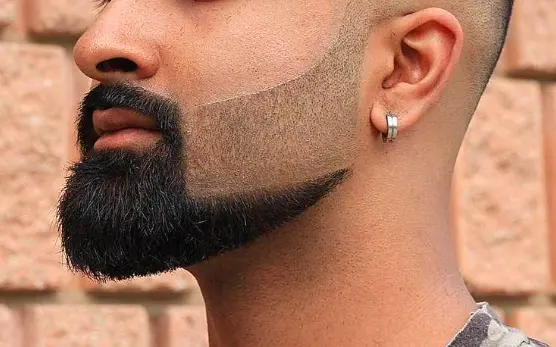
Symbol and Initial Designs
Shaving a specific symbol, initial, or small icon into the beard is one of the boldest creative beard designs available. It’s highly personal and works best as a temporary or occasion-specific choice rather than a everyday style, since it grows out unevenly and needs frequent upkeep.
Best for: Special occasions, short-term styling, or men who enjoy frequent grooming changes. Styling difficulty: Very high, often best left to a professional. Suitable face shapes: Depends on placement, generally works on any shape since it’s a small focal detail.
Comparison Table
| Design Type | Beard Length Needed | Difficulty | Best For |
| Line-Up | Any | Low | Everyday maintenance and structure |
| Geometric Pattern | Medium to full | Moderate-High | Bold, structured looks |
| Part Line | Short to medium | Low-Moderate | Subtle personal detail |
| Fade-Integrated | Short to medium | High | Layered, modern styling |
| Symbol/Initial | Short to medium | Very High | Occasions, temporary statements |
Best Beard Designs by Beard Length
Design potential changes significantly depending on how much beard you’re working with, so it helps to match the idea to your current growth stage.
Short beards and stubble: Clean line-ups and simple part lines work best here, since there isn’t enough length for a shaved pattern to stand out clearly. The stubble beard guide covers the length settings that give you the cleanest base for these smaller details.
Medium beards: This is where most geometric patterns and fade-integrated designs start to look their best, since there’s enough length to create real contrast between shaved and unshaved sections. The medium beard styles guide has a range of base shapes that work well as a canvas for added designs.
Full beards: Full beards can handle bolder, larger patterns and symbol designs, since the surrounding density makes shaved lines stand out more dramatically. A well-shaped goatee styles or full beard base gives design elements more room to work with.
Tools You Actually Need
Getting a clean beard design depends far more on the right tools than on raw skill. Here’s what actually matters:
- A detail trimmer with a T-blade for precise line work along cheeks and edges
- A straight razor or single-blade trimmer for the sharpest, cleanest shaved lines
- A stencil or edging tool for symmetrical geometric patterns, especially for first attempts
- A mirror setup with two angles (a handheld mirror plus a wall mirror) since single-mirror setups make symmetry difficult to judge
- Good, direct lighting to avoid missing patchy spots or uneven lines
Skipping quality tools is the fastest way to end up with a lopsided design, especially for anything beyond a basic line-up.
How to Create a Simple Beard Design at Home
- Start with a clean, even beard base. Trim and shape the overall beard first before attempting any design work.
- Sketch the design lightly with a grooming pencil or washable marker if you’re attempting anything beyond a basic straight line.
- Use the detail trimmer to outline the design first, going slowly rather than committing to a full shave immediately.
- Check symmetry constantly, especially for patterns that mirror across both sides of the face.
- Finish with a razor for sharp edges, only after you’re confident the outline is even.
- Clean and moisturize the skin immediately after, since freshly shaved lines are more sensitive to irritation.
Simple line-ups and part lines are realistic for most men to do confidently at home. Anything more elaborate benefits from watching the process done by a professional at least once before trying it solo. For a broader trimming foundation before attempting any of this, the how to trim a beard guide is worth reviewing first.
Skin and Safety Considerations
Beard designs involve more direct blade contact with the skin than a standard trim, which raises the chance of irritation if it’s not done carefully.
- Watch for razor bumps and ingrown hairs, especially along shaved lines where hair regrows against the grain.
- Avoid designs on inflamed or broken skin. Wait until any existing irritation clears before adding sharp lines or shaved sections.
- Use a clean, sharp blade every time. Dull blades increase the risk of nicks and irritation, particularly on curved areas like the jaw.
- Moisturize daily after getting a design done, since exposed skin along shaved lines can dry out faster than the rest of the beard.
The American Academy of Dermatology notes that ingrown hairs and razor bumps are more common in curlier hair types, which is worth factoring in before choosing a design with a lot of fine, shaved detail.
Professional vs. DIY: When to See a Barber
Simple line-ups and single part lines are reasonable to handle at home once you’re comfortable with a detail trimmer. Anything involving symmetry across both sides of the face, geometric patterns, or symbol and initial designs is worth taking to a barber, at least for the first attempt.
See a barber if:
- The design needs to be symmetrical across both cheeks
- You’re combining a design with a fade for the first time
- You want a symbol, initial, or detailed pattern
- You have naturally curly or coily hair, which makes shaved lines harder to keep clean between trims
DIY is reasonable if:
- You’re doing a basic cheek or neck line-up
- You want a single straight part line
- You already have experience with a detail trimmer
Beard Designs by Occasion
Not every design belongs in every setting, and it’s worth matching the boldness of the choice to where you’ll actually be wearing it.
Everyday and professional settings: Stick to clean line-ups and subtle part lines. These read as intentional grooming rather than a statement piece, which fits most workplace environments. The corporate beard guide covers shapes that pair well with this level of subtlety.
Casual and social settings: Geometric patterns and fade-integrated designs have more room to stand out here, especially for weekends, events, or creative work environments.
Special occasions: Symbol and initial designs work best as short-term statements for specific events, since they require the most upkeep and grow out unevenly within days.
Maintenance and Aftercare
- Touch up line-ups every 5–7 days, since these grow out and lose sharpness the fastest.
- Maintain geometric patterns every 1–2 weeks, depending on how quickly your beard grows.
- Moisturize shaved sections daily with a light, non-comedogenic lotion or beard oil to prevent dryness and irritation.
- Avoid picking at ingrown hairs along shaved lines. If irritation persists, easing off sharp designs for a few weeks allows the skin to recover.
- Rebuild the design gradually after a full regrow, rather than trying to recreate the exact same lines from memory in one sitting.
A consistent beard care routine underneath the design work matters just as much as the design itself. The beard care guide covers washing and conditioning habits that keep the surrounding hair healthy enough to show off the design clearly.
Common Mistakes That Ruin a Design
- Attempting an elaborate pattern with uneven beard density. Patchy areas make symmetry nearly impossible to achieve cleanly.
- Rushing the outline stage. Most uneven designs come from skipping the light sketch step and going straight in with a blade.
- Using a dull or low-quality trimmer. This leads to jagged lines rather than crisp, clean edges.
- Ignoring skin condition beforehand. Designs on already irritated skin tend to heal poorly and look worse once the redness settles.
- Copying a design meant for a different beard length. A pattern that looks sharp on a full beard can look thin and unclear on shorter growth, and vice versa.
If uneven growth is a recurring issue rather than a one-time problem, it’s worth reading the patchy beard guide before committing to a design that depends on full, even coverage.
Who Should Think Twice Before Getting One
Beard designs aren’t the right fit for everyone, and that’s worth being honest about. Men with significant patchy growth may struggle to get clean symmetry, since gaps in density interrupt the lines a design depends on. Men with sensitive skin or a history of frequent ingrown hairs should be cautious with anything involving extensive shaved detail, since more blade contact means more opportunity for irritation. If you fall into either category, simpler line-ups tend to look cleaner and cause fewer problems than elaborate geometric or symbol designs.
Frequently Asked Questions
What are beard designs? Beard designs are deliberate patterns, shaved lines, or shapes added to a beard beyond standard trimming, ranging from simple line-ups to detailed geometric patterns and symbols.
What beard designs are best for beginners? Simple line-ups and single part lines are the easiest beard design ideas to start with, since they require less precision than symmetrical patterns or detailed shapes.
Do beard designs work on short beards? Yes, though options are more limited. Short beards and stubble suit clean line-ups and subtle part lines better than larger shaved patterns, which need more length and density to stand out.
Can I do a beard design at home? Basic designs like line-ups and single part lines are realistic to do at home with a quality detail trimmer. More complex geometric patterns or symmetrical designs are usually better handled by a barber, at least initially.
What tools do I need for beard line designs? A detail trimmer with a T-blade, a sharp razor for clean edges, good lighting, and a mirror setup that lets you check both sides are the essential tools for most beard designs.
Are beard designs bad for your skin? They can cause irritation, razor bumps, or ingrown hairs if done with dull tools or on already irritated skin. Using sharp, clean blades and moisturizing afterward reduces most of that risk.
How often do beard designs need to be touched up? Simple line-ups need touch-ups every 5 to 7 days, while more detailed geometric patterns typically need attention every 1 to 2 weeks depending on growth speed.
Can curly or coily hair handle beard designs? Yes, but curlier hair types are more prone to ingrown hairs along shaved lines, so simpler designs with less fine detail tend to hold up better and cause fewer skin issues.
What’s the difference between a beard fade and a beard design? A beard fade blends hair length gradually from long to short, while a beard design adds a specific pattern, line, or shape on top of that base, sometimes combining both techniques together.
Do beard designs work for every face shape? Most designs, especially line-ups and part lines, work across all face shapes since they enhance existing structure rather than changing it. Larger geometric patterns can be adjusted based on face shape for the best visual balance.
Is it better to get a beard design done professionally? For anything beyond a simple line-up, yes. Symmetrical patterns and detailed designs are difficult to judge on your own face and are usually cleaner when done by an experienced barber.
How long do beard designs typically last before growing out? Simple line-ups start losing sharpness within about a week, while more detailed patterns can look worn down within a similar timeframe, depending on individual hair growth rate.
Can beard designs be combined with a beard fade? Yes. Fade-integrated designs, where a line or pattern connects into a faded section, are a popular combination, though this style is more advanced and often best done by a professional.
What beard length works best for detailed patterns? Medium to full beards generally show geometric and detailed patterns more clearly, since there’s enough length and density to create visible contrast against the shaved sections.
Are beard designs suitable for patchy beards? Patchy growth makes symmetry and clean lines harder to achieve, so simpler designs like a basic line-up usually look better than elaborate patterns on uneven beard density.