 By Beard Style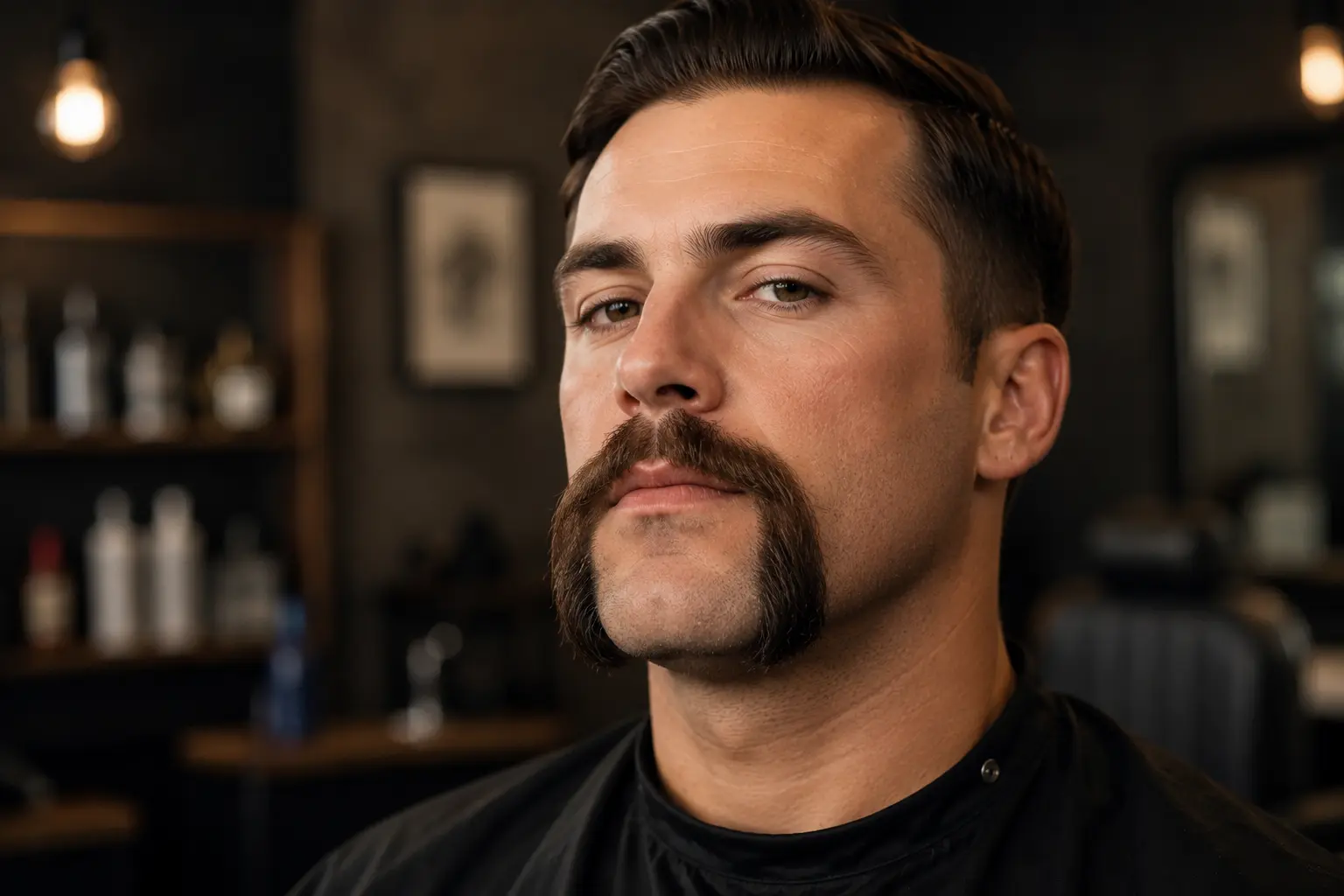
Table of Contents
What Is a Horseshoe Mustache?
A horseshoe mustache is a thick mustache with two vertical strips of hair running down from the corners of the mouth to the jawline, shaped like an upside-down horseshoe. Unlike a classic mustache that stays confined to the upper lip, the horseshoe extends downward on both sides, framing the mouth and giving the whole lower face a bolder, more rugged outline.
It’s one of the few facial hair styles that reads as instantly recognizable. Most men picture Hulk Hogan or a leather-jacket biker the moment you say the words “horseshoe mustache,” and that association isn’t wrong — it’s exactly where the style built its reputation.
If you’re comparing it to lighter options, a classic mustache sits entirely on the lip, while the horseshoe adds noticeable weight and length along the sides of the mouth. That extra hair is what gives it a tougher, more dominant look than almost any other mustache style.
Where the Horseshoe Mustache Comes From
The horseshoe mustache has roots that go back further than most people assume. Cowboys and ranch workers in the American West wore heavy mustaches partly for practicality — thick facial hair offered some protection from sun, wind, and dust during long days outdoors.
The style really took hold in mainstream culture through motorcycle communities in the mid-20th century, which is why it’s still nicknamed the biker mustache in barbershops today. Riders wanted something that looked tough, held up under a helmet, and didn’t need constant upkeep the way a waxed handlebar mustache does.
Wrestling and action-film culture in the 1980s and 90s cemented the look. Hulk Hogan is the single most cited reference point, but the style also shows up on strongman competitors, certain military units, and plenty of working-class trades where a mustache doubles as a statement of toughness rather than refinement.
Horseshoe Mustache vs. Other Mustache Styles
Men often land on this page while comparing mustache options, so here’s how the horseshoe stacks up against its closest relatives.
| Style | Shape | Maintenance | Best For |
| Horseshoe Mustache | Lip + vertical strips to jawline | Medium-high | Rugged, bold looks |
| Classic Mustache | Lip only, no downward growth | Low | Everyday, low-fuss styles |
| Handlebar Mustache | Lip mustache with curled, waxed tips | High | Vintage, statement styling |
| Chevron Mustache | Full, wide lip mustache, no curl | Medium | Retro masculine look |
A chevron mustache shares the same “full and thick” energy but stays above the lip line. A handlebar mustache needs regular waxing to hold its curl, while the horseshoe mustache style is far less fussy day to day since there’s no curling involved — just clean, straight lines.
Who Actually Suits a Horseshoe Mustache
Not every face carries this style well, and a barber will tell you that honestly rather than let you find out after growing it for two months.
Best face shapes:
- Square or rectangular faces — the vertical lines balance a strong jaw without adding bulk
- Oval faces — enough versatility to carry almost any mustache shape, horseshoe included
- Longer faces — the horizontal weight of the mustache breaks up length, similar to how a beard works for an oblong face
Less ideal for:
- Very round or heavy faces, where the vertical strips can visually add width rather than definition
- Very narrow, slim faces, where the bold shape can overwhelm smaller features
Hair type: Thick, coarse facial hair holds the shape best. Fine or wispy hair can grow the horseshoe, but it takes longer to look full, and the vertical strips are more likely to look patchy along the way.
Age groups: This style works across a wide age range, but men in their late 20s through 50s tend to pull it off most naturally, largely because facial hair density peaks in that window. Younger men can absolutely grow one — patience just matters more.
How to Grow a Horseshoe Mustache the Right Way
Growing into this shape takes more discipline than people expect, mainly because you have to resist trimming for weeks before the final shape becomes obvious.
- Stop shaving your entire lower face and lip area for at least 3–4 weeks. You need full coverage before you can see where the strips should sit.
- Let the mustache and the areas beside your mouth grow untouched. Trim your neckline and cheeks only if you’re keeping the rest of your face clean-shaven — never touch the mustache zone yet.
- Wash and condition the area regularly using a gentle beard or facial cleanser. Growing-phase hair is often itchy and dry, and skipping this step is the fastest way to quit early.
- Comb daily once hair reaches half an inch or more. This trains the direction of growth and makes the eventual shaping far easier.
- Wait for even density before shaping. Rushing the horseshoe mustache style before the hair fills in evenly is the single biggest reason first attempts look messy.
If you’re growing this alongside a full beard before deciding on a final look, it helps to browse the different types of beard styles first so you know what you’re working toward.
Trimming and Shaping: Step-by-Step
Once you’ve got 3–4 weeks of even growth, shaping is where the style actually comes together.
- Start with clean, dry hair. Wet hair looks longer than it is and leads to over-trimming.
- Comb everything downward and outward so you can see the natural line from your lip to your jaw.
- Mark your corners. The vertical strips should start right at the corners of your mouth — not further out toward your cheeks.
- Trim the cheek and jaw edges first, using a clipper guard (a 2 or 3 works for most men) to create a clean, straight vertical line down to just below the jawline.
- Shape the mustache itself so it sits neatly above the lip, full but not covering it.
- Clean the neckline and remaining cheek hair completely, since the horseshoe only works with everything else shaved bare — that contrast is what defines the shape.
- Check symmetry from a mirror straight on, not at an angle. Uneven strips are the most common flaw in this style.
If you’re not confident doing this freehand yet, it’s worth reading a broader guide on how to trim a beard first, since many of the same clipper and blending principles apply here.
Daily and Weekly Maintenance
Daily:
- Comb the mustache into place after washing your face
- Wipe away any food residue — the downward strips sit close to the mouth and catch crumbs more than a standard mustache
- Apply a small amount of beard oil or balm to keep hair soft rather than wiry
Weekly:
- Re-trim the cheek and jaw edges to keep the vertical lines sharp; this style loses its definition fast if edges are left to blur
- Shave the neckline and any stray cheek growth clean
- Check length with a clipper guard so the mustache doesn’t creep past your lip line
Monthly:
- Full reassessment in good lighting — face shape, jaw definition, and even gray hair growth can shift how the style should be trimmed over time
Consistency matters more here than with a lower-maintenance option like a stubble beard. The clean lines are the entire point of a horseshoe mustache, and they blur quickly without weekly attention.
Horseshoe Mustache Variations
- Thin Horseshoe — narrower vertical strips for a subtler, less biker-heavy version
- Thick Horseshoe (Biker Mustache) — the classic, heavy version most associated with the name
- Horseshoe with Soul Patch — a small tuft of hair below the lip added for extra character; pairs well with the same logic behind a soul patch beard
- Horseshoe Beard Combo — some men blend the horseshoe shape into a fuller horseshoe beard setup with connected jaw hair, though the purest version keeps the cheeks and neck completely bare
Pros and Cons
| Pros | Cons |
| Distinctive, bold look with strong character | Requires weekly trimming to stay sharp |
| Works well with a fully shaved face for contrast | Not universally flattering on all face shapes |
| Lower daily styling effort than a waxed mustache | Can look outdated in certain professional settings |
| Suits thick, coarse facial hair especially well | Takes real patience during the 3–4 week growth phase |
Common Mistakes Men Make With This Style
- Trimming too early. Shaping before the hair is fully grown in almost always leaves visible gaps.
- Uneven vertical strips. One side ends up longer or wider than the other because of rushed, asymmetrical trimming.
- Letting cheek stubble creep back. The contrast between bare cheeks and the mustache is what makes the style work — stubble regrowth ruins that line within days.
- Ignoring the neckline. A messy neck undercuts an otherwise sharp horseshoe mustache.
- Choosing it purely for the biker look without checking whether it actually complements their face shape first.
Barber Tips That Actually Make a Difference
- Use a straight edge or clipper comb attachment as a guide line rather than trimming freehand until you’re confident.
- Trim in natural daylight when possible — indoor lighting hides unevenness that becomes obvious outside.
- If your hair grows curly, expect the vertical strips to need slightly more frequent trims to stay straight-looking.
- Pair the mustache with clean grooming everywhere else. A sharp beard neckline and clean cheek line make the horseshoe read as intentional rather than unkempt.
- Give it a full 6 weeks before judging the final look. Facial hair density is inconsistent early on, and the shape often improves noticeably after that point.
Myths About the Horseshoe Mustache
Myth: It only works for bikers and wrestlers. Not true. Plenty of professionals wear a well-groomed horseshoe mustache successfully — grooming discipline matters more than the stereotype.
Myth: You need thick facial hair to even attempt it. Helpful, but not required. Fine hair just needs a longer growing window and more patience during the fill-in stage.
Myth: It’s the same as a classic mustache. A classic mustache stays above the lip. The horseshoe’s defining feature is the downward extension to the jaw — without that, it’s a different style entirely.
Myth: It never needs trimming once grown. It actually needs more consistent trimming than most mustache styles because of how visible any unevenness becomes along those long vertical lines.
Tools and Products Worth Owning
- Precision trimmer with multiple guard lengths — essential for the vertical strip edges
- Mustache comb — trains hair direction and prevents flyaways
- Beard or mustache balm — softens coarse hair and reduces itch during the growing phase
- Straight razor or single-blade razor — for keeping the cheeks and neckline completely clean
- Small mirror set — a handheld mirror alongside your bathroom mirror helps catch asymmetry from the side
For a full breakdown of daily grooming habits beyond just the mustache, our beard care guide covers washing, oiling, and general upkeep that applies here too.
If you’re also considering dermatological advice on ingrown hairs or skin irritation from trimming, the American Academy of Dermatology publishes general facial hair care guidance worth checking for anyone with sensitive skin.
Conclusion
A horseshoe mustache is one of the boldest, most recognizable facial hair styles a man can wear, but it rewards patience and consistency far more than most people expect going in. Grow it fully before shaping, keep the vertical lines sharp every week, and shave the rest of your face clean to let the contrast do its work. Get those three things right and the horseshoe mustache style holds up as a genuinely strong look — not just a costume reference to Hulk Hogan or a biker mustache cliché.
FAQs
1. What is a horseshoe mustache? A horseshoe mustache is a thick mustache with two vertical strips of hair extending from the corners of the mouth down to the jawline, forming an upside-down horseshoe shape.
2. Why is it called a biker mustache? It earned the nickname through motorcycle culture in the mid-20th century, when riders favored the bold, low-maintenance look over more delicate, waxed mustache styles.
3. How long does it take to grow a horseshoe mustache? Most men need 3–4 weeks of uninterrupted growth before there’s enough hair to shape properly, though full density can take up to 6–8 weeks depending on hair type.
4. Does a horseshoe mustache suit every face shape? No. It generally suits square, rectangular, oval, and longer faces best, while very round or very narrow faces may find it less flattering.
5. Is a horseshoe mustache the same as a Fu Manchu? No. A Fu Manchu has thin strands that grow past the jawline and often taper to a point, while a horseshoe keeps thicker, straight vertical strips ending at the jaw.
6. How often should I trim a horseshoe mustache? Weekly touch-ups on the vertical edges and neckline keep the shape sharp, since this style loses definition quickly compared to other mustache styles.
7. Can I grow a horseshoe mustache with thin facial hair? Yes, though it takes longer to fill in evenly. Patience during the growing phase matters more than natural thickness.
8. What’s the difference between a horseshoe mustache and a classic mustache? A classic mustache stays entirely above the lip, while the horseshoe adds vertical strips down to the jawline, giving it a bolder, heavier appearance.
9. Does a horseshoe mustache work in professional settings? It can, especially when neatly trimmed and paired with short, tidy grooming elsewhere, though some conservative workplaces may still view it as a strong statement look.
10. What products help maintain a horseshoe mustache? A precision trimmer, mustache comb, beard balm, and a clean razor for the cheeks and neckline cover most of what’s needed for upkeep.
11. Can I combine a horseshoe mustache with a beard? Some men blend it into a fuller jaw setup, though the traditional version keeps the cheeks and neck completely shaved for maximum contrast.
12. Why does my horseshoe mustache look patchy? Patchiness usually means the hair hasn’t fully grown in yet, or the vertical strips were shaped before density was even across both sides.
13. Is the horseshoe mustache making a comeback? It has stayed present in barbershop culture for decades without fully disappearing, and interest tends to spike alongside broader retro grooming trends.
14. What age group suits a horseshoe mustache best? Men in their late 20s through 50s often carry it most naturally due to peak facial hair density, though it can work at other ages with patience.
15. Should beginners trim it themselves or see a barber? First-timers often get a cleaner result with a barber shaping the initial lines, then maintain the weekly touch-ups themselves at home.