 By Bread Styles Team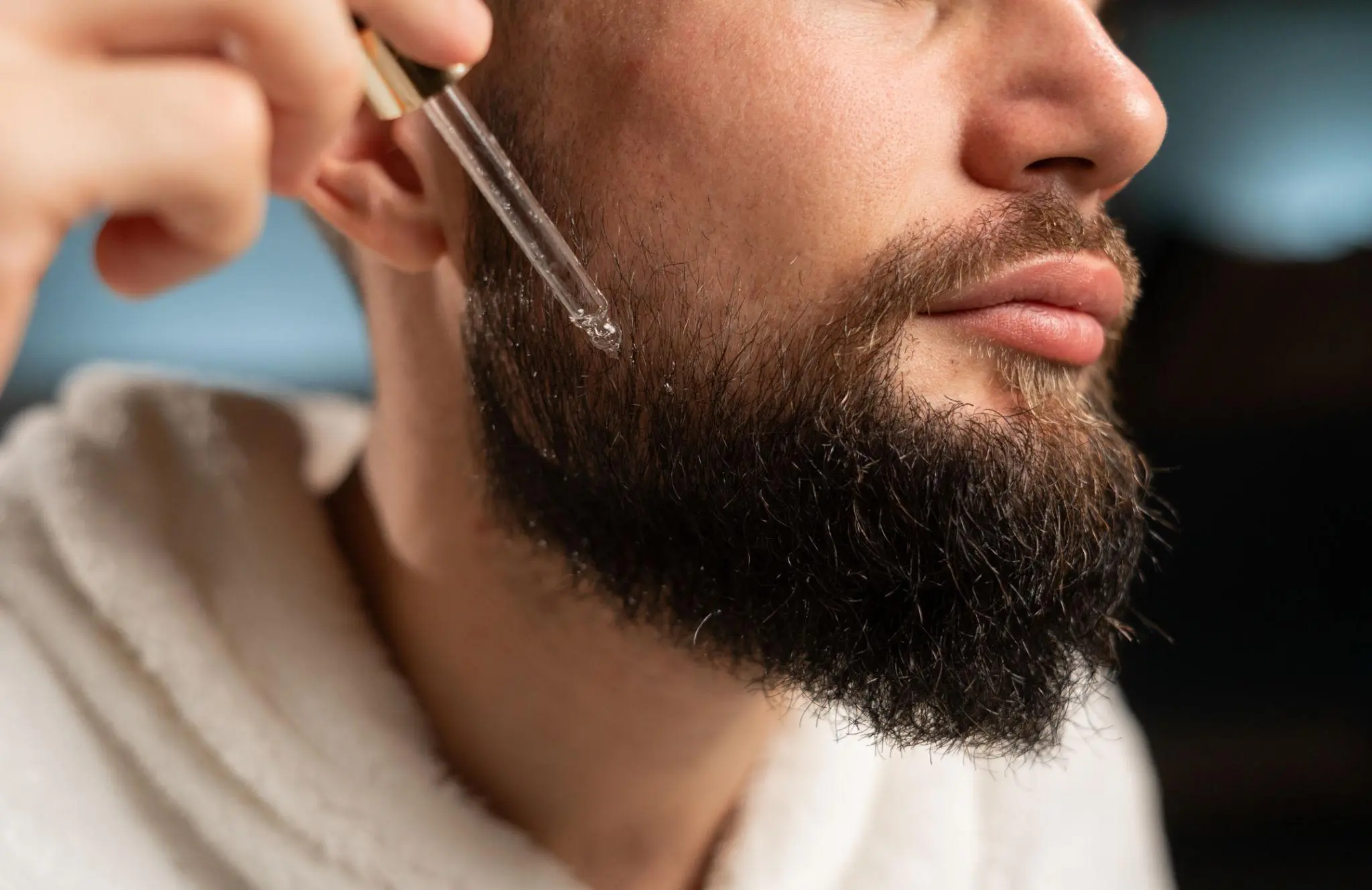
Table of Contents
What Is Beard Serum
Beard serum is a lightweight, fast-absorbing liquid formula applied directly to the skin and hair, designed to target specific concerns like slow growth, dryness, or damaged strands, using a more concentrated blend of active ingredients than a standard oil. Think of it as a treatment product rather than a daily conditioner — it’s built to fix a problem, not just maintain what’s already there.
The word “serum” gets borrowed from skincare, and the comparison holds up. A face serum treats specific skin concerns with concentrated actives; a beard serum does the same thing for facial hair and the skin underneath it. That’s different from a beard oil, which is mainly about softness, shine, and daily conditioning.
If your beard looks and feels fine and you’re just after routine upkeep, a standard beard oil might be all you need. Beard serum earns its place when something specific needs addressing — patchiness, breakage, dullness, or stalled growth.
How Beard Serum Actually Works
Beard serums work through a mix of delivery and formulation. The liquid base is usually thinner than oil, which lets it penetrate the skin and hair shaft faster instead of sitting on the surface. Active ingredients are also used in higher concentrations than you’d find in a general-purpose beard oil.
Once applied, a serum does one or more of the following depending on its formula:
- Delivers vitamins and peptides directly to the skin around the follicle
- Improves circulation in the beard area, which supports nutrient delivery to hair roots
- Strengthens the hair shaft from the outside, reducing breakage and split ends
- Balances oil production on flaky or irritated skin underneath the beard
None of this rewrites your genetics. A serum can improve the health and condition of hair that’s already growing, and in some cases support follicle activity if a deficiency or poor circulation was holding growth back. It won’t create new follicles where none exist.
Types of Beard Serum
Not all beard serums are built for the same job. Knowing which category you’re shopping in matters more than picking a brand name off a shelf.
Beard Growth Serum
Formulated around ingredients tied to follicle stimulation — often including caffeine, biotin, peptides, or in some medically supervised cases, minoxidil. Best suited for men dealing with slow growth or thin patches rather than damage.
Beard Repair Serum
Built for hair that’s already there but in poor condition — dry, brittle, prone to split ends. These lean on strengthening ingredients like keratin, panthenol, and nourishing plant oils rather than growth-focused actives.
Beard Care Serum
A more general maintenance formula, closer to a lightweight oil, aimed at overall skin and hair condition rather than solving one specific problem. Good for men without a major complaint who just want a cleaner, more targeted product than a heavy oil.
| Serum Type | Main Goal | Best For |
| Growth Serum | Stimulate follicle activity | Slow growth, thin patches |
| Repair Serum | Strengthen damaged hair | Dry, brittle, split ends |
| Care Serum | General maintenance | Healthy beards wanting light upkeep |
Ingredients Worth Checking For
The ingredient list tells you more about a beard serum than any claim on the front label. Here’s what shows up in well-formulated products, and what each one is actually doing.
- Biotin – supports keratin production at the hair shaft
- Caffeine – linked to improved microcirculation around follicles
- Peptides – support the structural proteins that make up hair
- Panthenol (Pro-Vitamin B5) – softens hair and reduces breakage
- Niacinamide – calms irritated or flaky skin under the beard
- Hyaluronic acid – hydrates skin without adding heaviness or grease
- Plant oils (jojoba, argan, castor) – used in smaller amounts than in beard oil, mainly to carry actives rather than as the main ingredient
Some growth-focused serums also include minoxidil, which has stronger clinical backing than most cosmetic ingredients on this list. It’s worth treating separately from standard serums since it requires more careful, consistent use — our minoxidil for beard guide covers how that differs from a regular cosmetic serum.
Beard Serum vs Beard Oil vs Beard Balm
This comparison comes up constantly, and the short version is: they solve different problems and often work best together rather than as substitutes.
| Feature | Beard Serum | Beard Oil | Beard Balm |
| Texture | Lightweight, fast-absorbing | Light to medium oil | Thick, wax-based |
| Main Purpose | Targeted treatment | Daily conditioning | Styling and hold |
| Best For | Specific concerns (growth, damage) | General softness and shine | Shaping and taming flyaways |
| Absorption Speed | Fast | Moderate | Slow (sits on hair) |
| Frequency | 1–2 times daily | Daily | As needed for styling |
A beard serum treats a specific issue underneath the surface. Beard oil handles daily softness and skin hydration. Beard balm adds hold and shape once the beard has some length. Men with longer beards often layer all three — serum first for treatment, oil for conditioning, balm last for styling. For shorter styles, a serum and oil combination is usually enough. If you’re still building your beard out, our beard care guide walks through how these products fit together at different growth stages.
How to Apply Beard Serum the Right Way
Applying serum correctly matters more than the product itself in a lot of cases. Here’s the process barbers actually recommend.
- Start with a clean, slightly damp beard. Wash with a proper beard wash or rinse with warm water to open the pores and improve absorption.
- Use 2–4 drops for shorter beards, up to 6–8 for longer ones. More isn’t better here — excess serum just sits on the surface without absorbing.
- Rub between your palms first. This warms the serum and helps it spread evenly rather than pooling in one spot.
- Work it into the skin, not just the hair. Use your fingertips in small circular motions to reach the skin underneath, since that’s where follicles actually live.
- Comb or brush through. A beard comb or beard brush distributes the product evenly and trains the hair to lie in one direction.
- Let it absorb for a minute or two before applying oil or balm on top.
Application Checklist
- [ ] Damp, clean beard before application
- [ ] Serum warmed between palms first
- [ ] Massaged into skin, not just hair
- [ ] Combed through evenly
- [ ] Followed by oil or balm if needed
Where Beard Serum Fits in Your Routine
Most men get the order wrong, applying oil or balm first and serum on top, which blocks proper absorption. The correct order is:
- Wash or rinse
- Beard serum (treatment layer)
- Beard oil (conditioning layer)
- Beard balm (styling layer, if needed)
Applying serum first lets the active ingredients reach the skin before oil creates a barrier on top. This single change in order improves how well any beard serum performs, regardless of brand.
Who Should Use It
Good candidates for beard serum:
- Men with visibly dry, brittle, or breaking beard hair
- Men dealing with flaky or irritated skin under the beard
- Men with slow, patchy growth who’ve already ruled out a genetic ceiling
- Men transitioning from stubble to a fuller beard who want to support the skin through that stage
Less likely to need it:
- Men with already healthy, well-conditioned beards doing fine on oil alone
- Teenagers whose facial hair is still hormonally developing — see our beard styles for teenagers guide for realistic expectations at that stage
- Men expecting a serum to fix bald patches with no follicle activity at all
Beard serum works across most hair types — coarse, curly, straight, or fine — since the formula targets skin and follicle health rather than hair texture specifically. Men with coarser or curlier facial hair, covered in our curly beard styles guide, often see the biggest improvement in manageability since serum reduces frizz and breakage more noticeably on textured hair.
How to Choose the Best Beard Serum
- Match the formula to your actual problem. Growth concerns need a growth-focused serum; damage needs a repair-focused one.
- Check ingredient concentration, not just the ingredient list. A serum with biotin listed last, after ten filler ingredients, isn’t doing much.
- Avoid heavy fragrance in sensitive-skin formulas. Added fragrance is a common cause of irritation underneath the beard.
- Look for lightweight, non-greasy textures. A serum that feels heavy or leaves residue isn’t formulated correctly for fast absorption.
- Check for dermatologist testing or clean ingredient certifications, especially if you have sensitive or acne-prone skin.
Buying Checklist
- [ ] Formula matches your specific concern (growth, repair, or care)
- [ ] Active ingredients appear early in the ingredient list
- [ ] Lightweight, fast-absorbing texture
- [ ] Minimal or no added fragrance for sensitive skin
- [ ] Reasonable price per month of use
What Results to Realistically Expect
Skin condition tends to improve first, since that happens on a much shorter timeline than hair growth.
- 1–2 weeks: Less flaking, softer texture, reduced itchiness under the beard
- 4–6 weeks: Noticeably less breakage and split ends, if hair damage was the main issue
- 8–12 weeks: Some improvement in growth consistency, if a growth-focused formula is being used correctly and consistently
If a serum isn’t paired with a decent diet and proper washing, results plateau quickly no matter how good the formula is. For the nutritional side of the equation, our beard vitamins and beard supplements guides cover what’s happening internally while a serum works on the surface.
Is DIY Beard Serum Worth Trying
Homemade versions using carrier oils and essential oils show up often in forums and social posts. They’re not harmful in most cases, but they’re missing what makes a real serum work.
What DIY versions usually get wrong:
- No access to concentrated actives like peptides or stabilized vitamin complexes
- Inconsistent ratios that are hard to replicate batch to batch
- Essential oils used at unsafe concentrations, which can irritate skin rather than help it
- No preservative system, meaning homemade batches spoil faster than commercial products
A DIY blend can work fine as a basic conditioning oil. It’s not a real substitute for a properly formulated serum built around clinically supported actives at tested concentrations.
Common Mistakes to Avoid
- Applying too much. More serum doesn’t mean faster results — it just means product sitting unabsorbed on the surface.
- Applying to dry hair only, skipping the skin. The skin is where follicles live, so serum needs to reach it.
- Using serum and oil in the wrong order. Oil applied before serum blocks absorption.
- Expecting overnight change. Skin improves fast; hair growth doesn’t.
- Skipping a patch test on a new formula. Concentrated actives are more likely to cause a reaction than a basic oil.
Myths About Beard Serum
Myth: Beard serum works faster than beard oil because it’s “stronger.” Not accurate in every case. Serum is more targeted, not automatically stronger, and using too much doesn’t speed up results.
Myth: You need to use serum, oil, and balm every single day to see results. Not true for everyone. Serum and oil daily is enough for most men — balm is optional and depends on styling needs.
Myth: Beard serum can grow hair on completely bare skin. False. Serum supports existing follicle activity; it doesn’t create follicles where none exist.
Myth: All beard serums are basically the same product with different labels. False. Growth, repair, and care formulas are built around different active ingredients for different problems.
Safety, Patch Testing, and Skin Reactions
Concentrated actives mean beard serum carries a slightly higher chance of irritation than a basic oil, so a few precautions are worth taking:
- Patch test any new serum on your forearm for 24 hours before applying it to your face
- Introduce active ingredients like caffeine or peptide blends gradually rather than switching products all at once
- Stop use if you notice redness, burning, or breakouts that don’t settle within a few days
- Men with sensitive or eczema-prone skin should look for fragrance-free, minimal-ingredient formulas
- If irritation persists, a dermatologist can identify whether a specific ingredient is the cause
For ongoing skin concerns beyond what a cosmetic serum addresses, the American Academy of Dermatology and the British Association of Dermatologists both offer reliable, medically reviewed information worth checking.
Barber’s Take
In the chair, beard serum tends to come up most with two types of clients: guys whose beard looks fine but feels rough and unmanageable, and guys frustrated with slow, patchy growth who’ve already tried oil without much change. For the first group, serum usually makes a visible difference within a few weeks because it’s addressing hair condition directly. For the second group, it helps, but expectations need to stay realistic — a serum supports what’s already growing better than it creates new growth from nothing.
The best results consistently come from clients who treat serum as one part of a full routine rather than a stand-alone fix — proper washing, regular trimming with our how to trim a beard guide, and a decent diet all matter just as much as the product itself.
Final Thoughts
Beard serum earns its place as a treatment step, not a replacement for the basics. It works best applied to clean, slightly damp skin, before oil or balm, and matched to an actual concern — growth, repair, or general care. Give any formula eight to twelve weeks of consistent, correctly ordered use before deciding whether it’s working, and keep expectations tied to what a topical product can realistically do: support the hair and skin you already have, not rewrite your genetics.
FAQs
What does beard serum actually do? Beard serum delivers concentrated active ingredients directly to the skin and hair to target a specific concern, such as slow growth, dryness, or damaged strands, working faster and more precisely than a general conditioning oil.
Is beard serum better than beard oil? Neither is strictly better — they serve different purposes. Serum targets specific issues with concentrated actives, while oil handles daily conditioning and softness. Many men use both together.
How often should I apply beard serum? Most formulas work best applied once or twice daily to clean, slightly damp skin, followed by oil or balm if needed.
Can beard serum help with patchy growth? It can support growth if the patchiness is linked to poor circulation or a nutrient-related slowdown, but it won’t fill in patches caused by low follicle density in that area.
How long does it take for beard serum to show results? Skin condition often improves within one to two weeks. Changes in hair growth or texture typically take eight to twelve weeks of consistent use to become noticeable.
Should I apply beard serum before or after beard oil? Serum goes on first, since it’s designed to absorb into the skin. Oil applied afterward locks in hydration without blocking the serum’s active ingredients.
Can beard serum cause skin irritation? It’s possible, since serums use more concentrated actives than basic oils. A 24-hour patch test on the forearm before facial application reduces this risk.
Is beard growth serum the same as minoxidil? Not usually. Most beard growth serums use ingredients like caffeine, biotin, and peptides, while minoxidil is a separate, more clinically studied treatment that some men use alongside or instead of cosmetic serums.
Can I make my own beard serum at home? You can blend carrier and essential oils at home, but homemade versions lack the concentrated, stabilized actives and proper preservative systems found in properly formulated commercial serums.
Does beard serum work on all beard types? Yes, since it targets skin and follicle health rather than hair texture specifically, though men with coarser or curlier hair often notice the biggest improvement in manageability.
Is beard repair serum different from beard growth serum? Yes. Repair serum focuses on strengthening damaged, brittle hair, while growth serum targets follicle stimulation for slow or thinning growth.
Do I need beard serum if I already use beard oil? Not necessarily, unless you’re dealing with a specific issue like breakage, irritation, or stalled growth that a general conditioning oil isn’t addressing.
Can teenagers use beard serum? Facial hair is still hormonally developing during teenage years, so a basic care-focused serum is fine, but growth-specific formulas rarely make a noticeable difference at this stage.