 By Bread Styles Team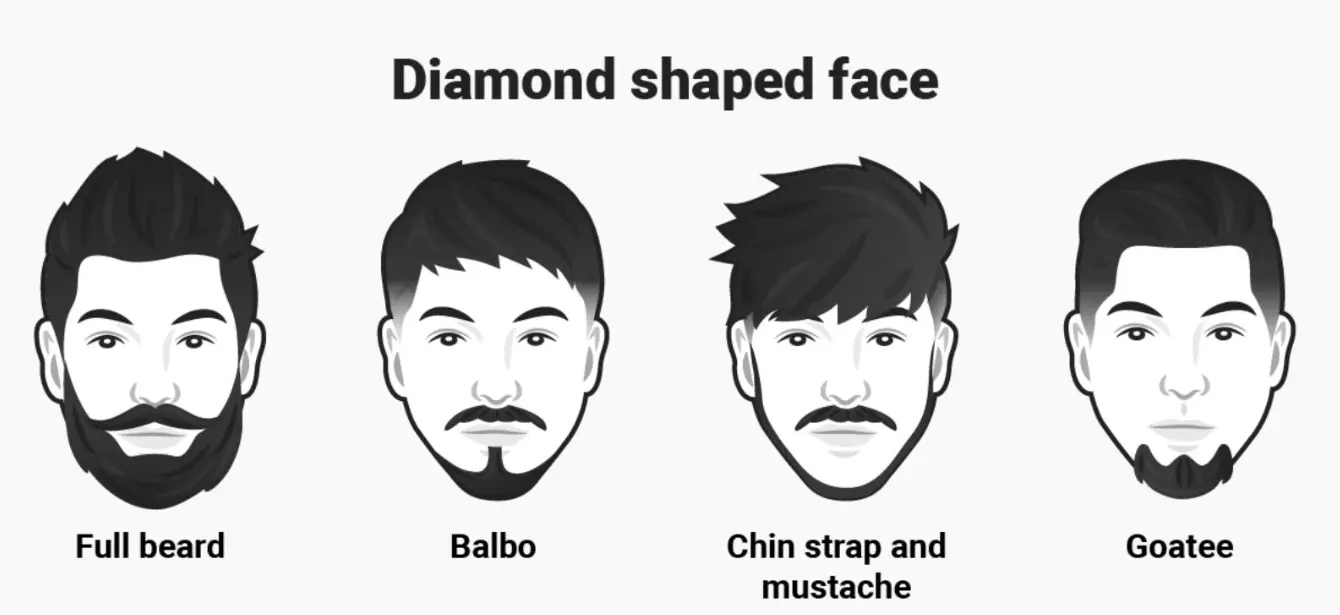
The diamond face shape is one of the less commonly discussed ones in grooming guides — most resources spend their time on round, square, and oval faces, leaving diamond-faced men with generic advice that doesn’t really account for what makes their face shape distinct. That’s a shame, because a diamond face actually has a very specific set of features that respond particularly well to certain beard styles and noticeably less well to others.
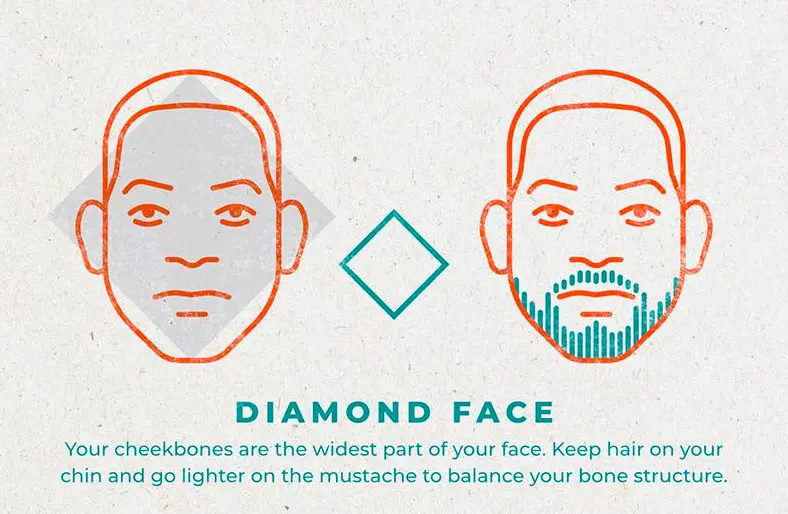
A best beard for diamond face is defined by wide, prominent cheekbones as the broadest point, with a noticeably narrow forehead above and a narrow, sometimes pointed chin below. That combination creates a shape that’s already somewhat angular and striking — a beard’s job, when you have a diamond face, is to add width at the two narrow ends (the forehead and chin) rather than emphasizing the width already present at the cheekbones.
This guide gives you the complete picture: exactly which beard styles suit a diamond face, why they work, which ones to use with more caution, and how to shape and maintain your beard once you’ve chosen a direction.
Table of Contents
1. Is Your Face Actually Diamond-Shaped?
Diamond faces are sometimes confused with oval faces because both are longer than wide. The difference is in where the width sits.
Key features of a diamond face:
- Cheekbones are the widest point — notably wider than both the forehead and jaw
- Forehead is narrow, sometimes with a slightly angular or pointed hairline
- Jawline is narrow and angular, often ending in a somewhat pointed chin
- Face length is noticeably longer than its width
- Strong cheekbones give the face a prominent, angular quality
Quick check: Pull your hair back. If your cheekbones clearly dominate, with both your forehead and jaw sitting noticeably narrower on either side, you’re working with a diamond face shape.
Understanding this distinction matters because the styling logic for a diamond face is almost the opposite of what works for a round face. Where a round face beard needs length and chin definition to break up soft curves, a diamond face needs width at the chin and forehead to offset its already-angular, prominent cheekbones.
2. What Makes Beard Styling for a Diamond Face Different
Most face shapes need a beard to correct a single dominant proportion issue — a round face needs length, a long face needs width, a square face needs softening. A diamond face has two narrow zones to address (forehead and chin), separated by its natural wide point at the cheekbones.
That means the best beard for a diamond face focuses primarily on adding width at the chin area — the lower of the two narrow zones — since a beard can’t do much about the forehead on its own. Facial hair at the chin that’s slightly wider and fuller than it would be on other face shapes creates a visual anchor below the prominent cheekbones, balancing the face’s proportions from the bottom up.
At the same time, you generally want to avoid styles that add too much additional width at the cheekbones themselves, since the cheeks are already the face’s widest point.
3. Best Beard Styles for a Diamond Face
Full Beard (Kept Fuller at the Jaw)
A classic full beard, shaped with slightly more volume through the jaw and chin rather than the upper cheeks, works exceptionally well on a diamond face.
Why it works: The added width at the chin and lower jaw creates a broader base that balances the prominent cheekbones above it. How to shape it: Ask your barber to keep the cheek hair slightly shorter while maintaining or even adding length at the chin and jaw corners, creating width where the face naturally lacks it. Maintenance level: Medium. Styling difficulty: Medium.
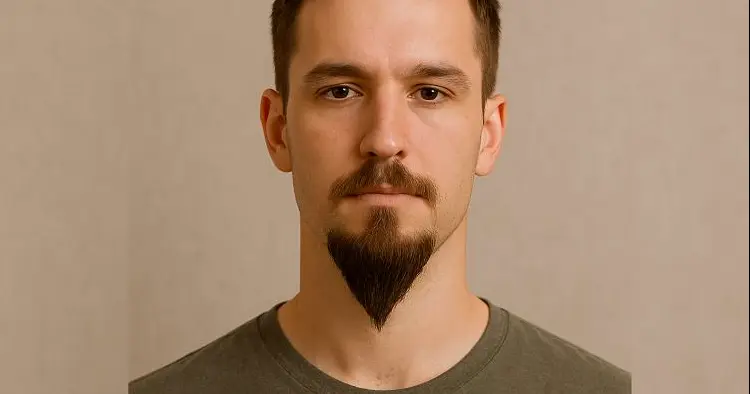
Van Dyke Beard
A pointed chin beard paired with a disconnected mustache, cheeks shaved clean.
Why it works: The clearly defined chin section adds visual weight and width at the most useful point for a diamond face — below the prominent cheekbones. Our complete Van Dyke beard guide walks through every variation and trimming step. Maintenance level: High. Styling difficulty: High.
Balbo Beard
A floating chin beard, disconnected from the sideburns, paired with a separate mustache.
Why it works: The chin section adds definition and width at the jaw without requiring full cheek coverage, which helps balance a diamond face without drawing further attention to the already-wide cheekbone area. See the complete Balbo beard guide for shaping specifics. Maintenance level: High. Styling difficulty: High.
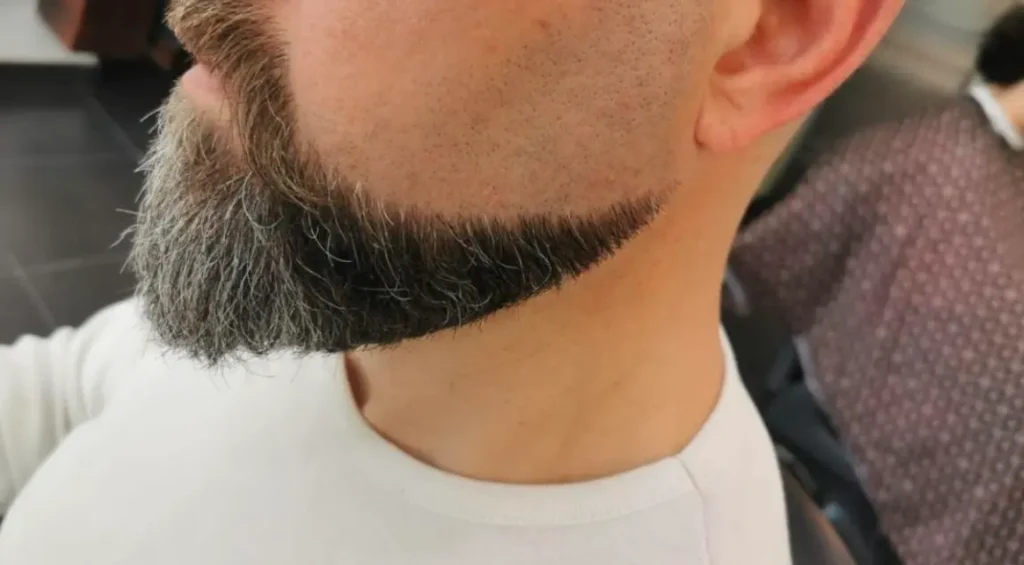
Short French Beard
A narrow beard outlining the jaw and chin, connected to a mustache, with the cheeks kept short or shaved.
Why it works: The outlined jaw creates a clear bottom border, adding perceived width along the chin and jawline. Maintenance level: High — thin lines need frequent, precise edging. Styling difficulty: High.

Corporate Beard (Slightly Extended at Jaw)
A tightly trimmed, precisely lined beard kept under half an inch, shaped with a slightly wider jaw section than the standard corporate style.
Why it works: Clean, intentional lines with a touch more width through the lower jaw suit both professional settings and the diamond face’s proportional needs. For more workplace-friendly options, see our corporate beard guide. Maintenance level: Medium-high.

4. Beard Styles to Approach Carefully
Not every style serves a diamond face equally well. A few to consider carefully:
- Heavily pointed, very narrow chin beards — a sharply narrow point at the chin can over-emphasize the face’s already-angular quality without adding helpful width
- Styles with significant added cheek volume — a very full, bushy beard left wide through the upper cheeks adds width exactly where a diamond face already has plenty of it
- Extremely thin chin straps — these trace a narrow line along the jaw without adding the chin width a diamond face benefits from most
This doesn’t mean these styles are categorically off-limits, but they require more deliberate shaping to work well on a diamond face than they would on, say, an oval face.
5. Short and Stubble Options for Diamond Faces
Heavy Stubble
4–5 days of growth across the whole face.
For diamond faces: Heavy stubble doesn’t dramatically change proportions, but it provides a level of texture and defined shadow that suits most face shapes, including diamond. Keep the cheek line higher rather than lower to avoid adding unnecessary visual width through the upper cheeks. Our stubble beard guide covers every length in detail.

Short Boxed Beard
A clearly lined beard kept around a quarter to half an inch.
For diamond faces: Shape it with slightly more volume through the jaw corners than through the upper cheeks — this width-at-the-bottom approach works with the diamond face’s natural proportions rather than against them.
Maintenance level: Medium.
For the full range of short facial hair options, the short beard styles guide covers everything from stubble to a short boxed beard in depth.

6. Goatee and Chin-Focused Styles for Diamond Faces
Goatee-based styles are a natural fit for diamond faces, since they focus visual attention on the chin — the exact area where adding definition and width helps most.
Classic Goatee
Hair on the chin only, with cheeks shaved.
For diamond faces: Works well, but keep the goatee wider than a very narrow point — width at the chin is the goal, not further sharpening an already-angular jawline.
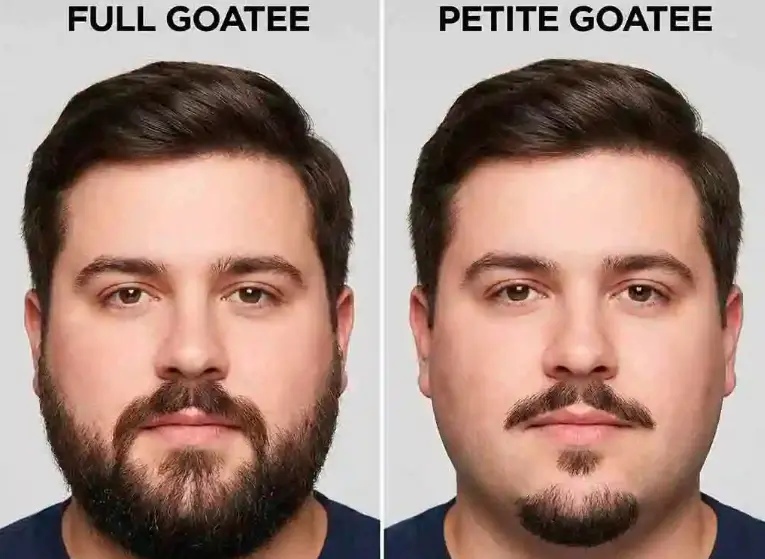
Extended Goatee
A goatee connected by a thin line along the jaw to the sideburns.
For diamond faces: The jawline connection helps define the lower face and create perceived width, without covering the upper cheeks where volume isn’t needed.
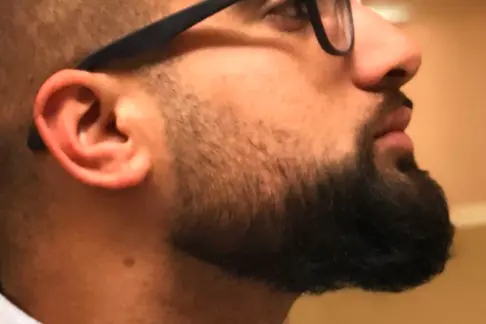
Van Dyke
Already covered in section 3 above as one of the top recommendations — see our dedicated Van Dyke beard guide for the full breakdown.
For a complete comparison of every goatee variation and how they compare, the goatee styles guide is the best reference.
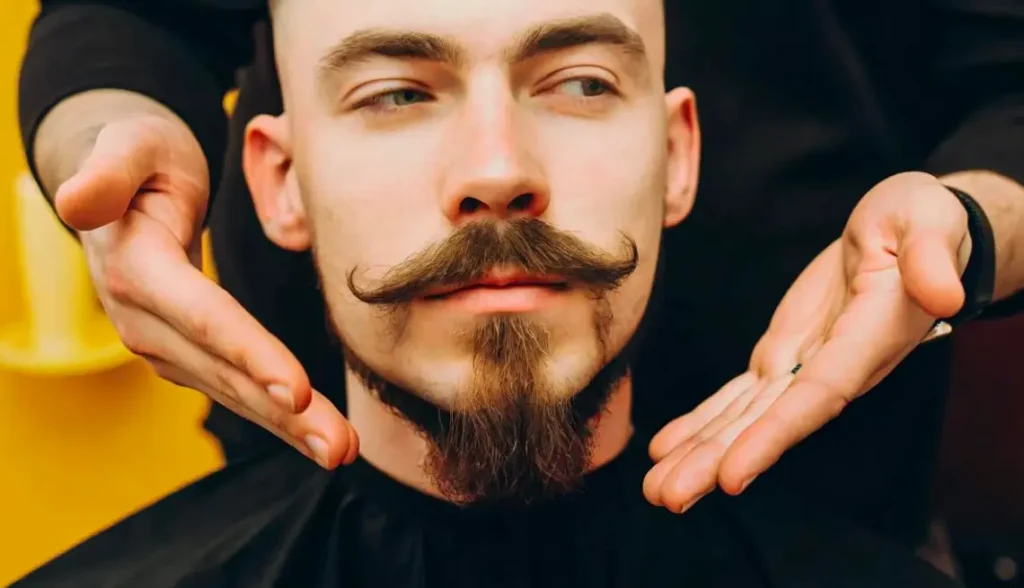
7. Full and Long Beard Styles for Diamond Faces
A diamond face can carry a full or long beard well, with one important consideration: the width focus should stay at the jaw and chin rather than the upper cheeks.
Full Beard (Chin-Focused)
As covered above, a classic full beard shaped deliberately wider through the jaw and chin than the upper cheeks suits a diamond face particularly well.
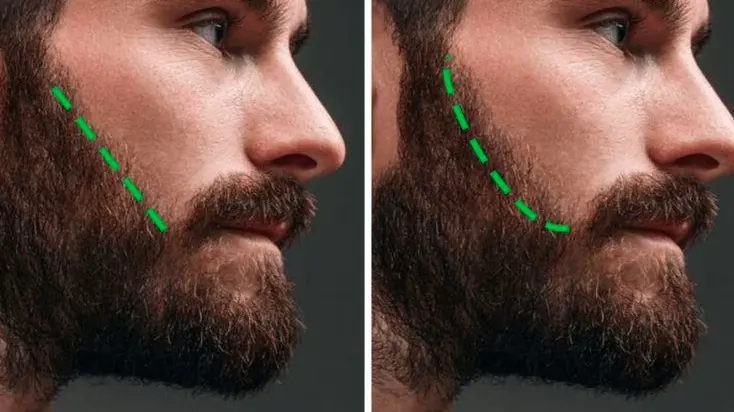
Medium-Length Full Beard
A medium-length full beard offers enough volume to create real jaw width without the length commitment of a Garibaldi or Bandholz. For all the medium-length options, see our medium beard styles guide.
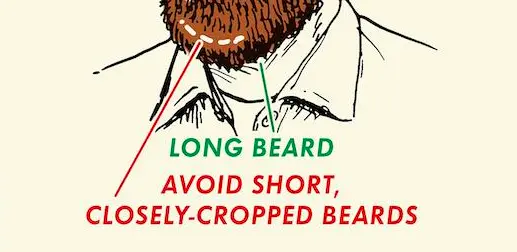
Long Beard With Volume at the Chin
A long beard on a diamond face works best when the barber deliberately keeps the lower portion fuller than the upper cheek area. This isn’t a dramatic change — just a subtle shaping emphasis that makes the beard work with the face’s proportions. Our long beard styles guide covers growth timelines and maintenance for longer styles.
8. How Hair Type Affects Your Options
Thick, coarse hair: Holds defined lines and volume particularly well, making styles like the Balbo, Van Dyke, and short boxed beard easier to maintain with crisp definition.
Fine, straight hair: Can look slightly less full in volume-dependent styles. A Van Dyke or short boxed beard often reads more deliberate on fine hair than a very bushy, volume-led approach.
Curly or coily hair: Naturally adds volume, which suits fuller, chin-focused styles well. Regular conditioning helps manage tangling at longer lengths — see our beard care guide for a full routine.
Patchy cheek growth: A diamond face, where the cheeks are sometimes kept short or removed entirely in styles like the Van Dyke or Balbo, is particularly well-suited to men whose cheek growth is naturally uneven. Chin and jaw growth doing the styling heavy lifting means patchier cheeks become a non-issue. For more on managing patchy growth, see our patchy beard guide.
9. Shaping Techniques Specific to Diamond Faces
A few practical shaping principles apply consistently to diamond face beards, regardless of the specific style:
- Keep cheek lines slightly higher than your natural growth line, to avoid adding unnecessary width through the upper cheek area.
- Keep the chin section wider rather than dramatically pointed. Even in styles like the Van Dyke, a moderately rounded or squared chin section serves a diamond face better than an extremely narrow point.
- Let the jaw corners have slightly more volume — trimming the very sides of the jawline slightly less aggressively than you might on other face shapes helps create the width effect at the bottom of the face.
- Avoid excessive volume at the sideburn area, where a diamond face is already at or near its widest point.
A good barber who understands face-shape-specific shaping can apply all of these to almost any style you choose, including styles not specifically listed here as “best for diamond faces.”
10. Growing a Beard With a Diamond Face Shape
- Grow for at least 3–4 weeks before making any style decisions. You need to see your actual density across the chin, jaw, and cheeks before choosing a style that depends on specific distribution.
- Identify your chin and jaw growth first. Diamond faces benefit most from strong chin growth, since styles like the Van Dyke and Balbo rely heavily on that specific zone.
- Get your first shaping done professionally if possible. Establishing the right lines for a diamond face, particularly the balance between cheek volume and chin width, is easier to get right from a barber’s perspective than from a front-facing bathroom mirror.
- Reassess at 6–8 weeks. Once growth has settled in, you’ll have a much clearer sense of which specific style variation works best for your individual pattern.
11. Maintaining Your Beard Week to Week
A diamond face beard works hard — it’s correcting proportion, not just looking decorative. That makes consistency in maintenance more important than it might be on a more forgiving oval face.
Daily:
- Apply beard oil to keep hair soft and the skin underneath moisturized
- Brush or comb to keep the chin section training in the right direction
Weekly:
- Trim stray hairs and reassess your cheek lines — they tend to drift slightly higher than intended over time, which can gradually reduce the chin width that’s doing the styling work
- Re-check chin width specifically; this is the detail that drifts most on diamond face beards
Every 2–4 weeks:
- Full trim to maintain overall length and shape
- Deep-condition if the beard is medium or long length, or if hair is coarse or curly
The full daily and weekly routine for keeping any beard in good shape is covered in our beard care guide.
12. Common Mistakes Diamond-Faced Men Make
- Over-pointing the chin section — sharpening the goatee or Van Dyke to a very narrow point when a slightly rounder, wider version would better serve the face shape
- Allowing too much cheek volume — letting the beard naturally fill wide through the upper cheeks without deliberately keeping that area slightly trimmer
- Ignoring the jawline entirely — focusing only on the chin without extending slight width through the jaw corners where it helps most
- Choosing a style that works for an oval face (like any-length, any-shape) without adapting it to the specific proportional needs of a diamond face
- Not consulting a barber for the first shaping session — the balance point between cheek volume and chin width is subtle enough that professional eyes are genuinely useful the first time
13. What Barbers Actually Recommend
When an experienced barber sees a diamond face, a few things happen automatically:
They avoid styles that add fullness to the cheek area. They look for ways to create perceived width at the chin. They tend to recommend styles with defined, somewhat wider chin sections — the Van Dyke, Balbo, and chin-emphasized full beards come up frequently. And they pay close attention to how the natural chin and jaw growth is distributed, since the effectiveness of any chin-focused style depends on how the hair actually grows in that specific zone.
If your chin growth is strong and even, you have a wider range of options. If it’s slightly patchy or uneven, a goatee or classic full beard shaped with more structure often looks more deliberate than a Van Dyke, which requires very consistent density across the chin and mustache sections specifically.
14. Common Myths About Best Beard for Diamond Face
Myth: Diamond faces are rare and hard to find advice for. While less commonly discussed than round or square faces, the diamond shape is straightforward to identify and style for once the core principle — width at the chin, restraint at the cheeks — is understood.
Myth: Any goatee works equally well on a diamond face. A very narrow, sharply pointed goatee can over-emphasize the angular quality of a diamond face; a slightly wider, more rounded goatee shape usually serves it better.
Myth: Full beards always make diamond faces look wider. A full beard shaped with deliberate width at the jaw and chin actually balances a diamond face well; the issue arises only when the beard is left to grow its natural roundness through the cheeks without any shape adjustment.
Myth: Diamond faces should avoid facial hair entirely. This is the opposite of the truth — a well-chosen beard is one of the most effective tools for balancing a diamond face’s proportions.
FAQ
1. What is the best beard for a diamond face? The Van Dyke beard, Balbo beard, and a classic full beard shaped wider at the chin and jaw than the upper cheeks are generally the strongest options for balancing a diamond face’s prominent cheekbones and narrower forehead and jaw.
2. What makes a diamond face shape different from an oval face? An oval face is longer than wide with a gently tapered jaw, while a diamond face has wide, prominent cheekbones as the dominant feature, with both the forehead and jaw sitting noticeably narrower on either side.
3. Should diamond faces add width or length with a beard? Width at the chin and jaw is the priority for a diamond face, since the cheekbones are already the face’s widest point and the chin and forehead are where additional balance is needed.
4. Is a goatee good for a diamond face? Yes — goatee-based styles work well because they focus visual weight on the chin area, which is exactly where a diamond face benefits from more definition and width. Avoid very narrow, sharply pointed variations; a slightly fuller, rounder goatee shape serves the face better.
5. Does a full beard work on a diamond face? Yes, provided it’s shaped with slightly more volume through the jaw and chin than the upper cheeks, rather than being left to grow in its natural, rounded form across the whole face.
6. What beard styles should diamond faces avoid? Very narrow chin points, styles with significant added cheek volume, and extremely thin chin straps that don’t add meaningful width at the jaw can all work against a diamond face’s proportional needs.
7. What’s the easiest low-maintenance beard for a diamond face? Heavy stubble with a slightly higher cheek line and a natural chinward emphasis is generally the lowest-maintenance option that still works with a diamond face’s proportions.
8. Can patchy cheek growth work in my favor if I have a diamond face? Often, yes — since the most flattering diamond face beard styles (like the Van Dyke and Balbo) keep the cheeks shaved anyway, patchy cheek growth is largely irrelevant for the styles that suit this face shape best.
9. How do I tell if I have a diamond face versus an oval one? Look for prominent cheekbones that are clearly wider than both your forehead and jaw. An oval face has more gradual proportions throughout; a diamond face has a more dramatic contrast between the wide cheekbones and the narrower areas above and below.
10. Should the chin section of my beard be pointed or round for a diamond face? Moderately rounded or squared is usually more flattering than a very sharp, narrow point, since width at the chin is the goal rather than further emphasizing the face’s natural angularity.
11. Does hair type change which beard styles work for a diamond face? Yes — thick, coarse hair holds defined lines particularly well in styles like the Balbo and Van Dyke, while fine hair may suit a more subtle, fuller approach like the short boxed beard or heavy stubble.
12. How do I find a barber who understands diamond face shaping? Ask specifically about face-shape-specific shaping during your consultation, describe your face shape, and request a style suggestion rather than simply naming a beard; an experienced barber will immediately understand the proportional goal.
13. What’s the most common beard mistake on a diamond face? Allowing too much cheek volume to grow in unchecked, which adds width where the face already has plenty of it, rather than deliberately building width where it’s actually needed — the chin and jaw corners.
14. Are there beard styles on BeardStyles.net specifically for diamond faces? Yes — several guides on the site cover styles that work particularly well for diamond faces, including the Van Dyke beard, Balbo beard, goatee styles, and the types of beard styles overview.
15. Can a beard without a mustache work on a diamond face? Yes — styles that focus on the chin and jaw without a mustache can work well, particularly those that add deliberate width at the chin. For more on this, see our dedicated beard without mustache guide.
Read More About Beard Care Guide: https://beardstyles.net/beard-care-guide/