 By Bread Styles Team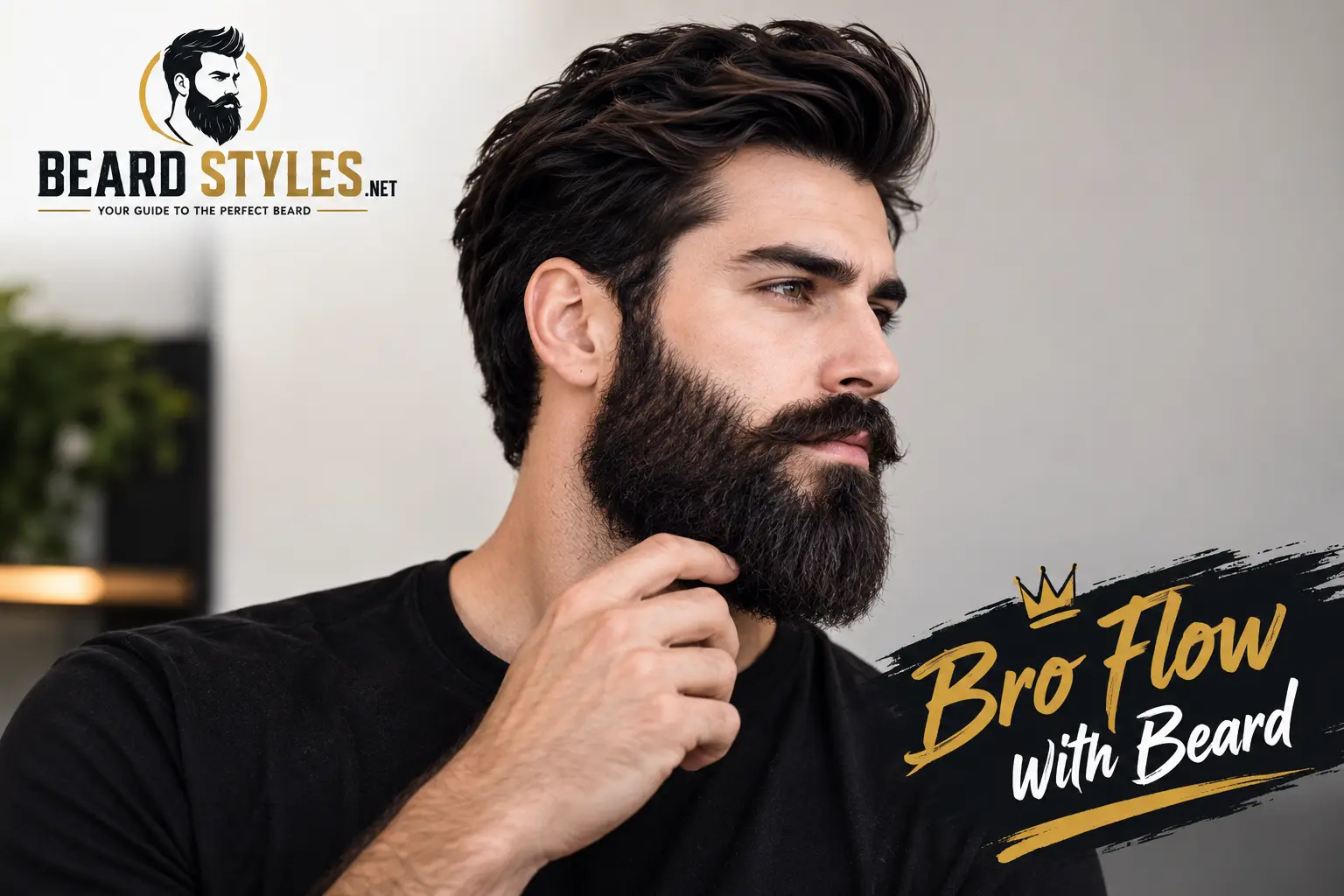
A bro flow with beard lets hair grow to medium length, pushed straight back or falling naturally without a defined part, and pairs it with a groomed beard for balance. It’s one of the few haircuts on this list where the whole point is doing less rather than more, which makes it a genuinely different animal from styles that rely on precise fades or daily product.
This guide covers where the look actually comes from, how much length and patience it takes to get there, and the beard pairings and light maintenance that keep it looking intentional rather than simply unkempt.
Table of Contents
What Is a Bro Flow with Beard
A bro flow is a medium-length haircut, typically falling somewhere between the ears and the collar, worn with minimal parting and styled to move naturally off the forehead rather than combed into a defined shape. It relies heavily on natural texture, wave, or curl to do most of the visual work, which is part of what separates it from more structured medium-length styles.
A bro flow with beard pairs that relaxed, natural-looking hair with facial hair, usually short to medium length, to add some structure at the jaw that balances the looseness on top. The bro flow hairstyle beard combination has become closely associated with a laid-back, outdoorsy aesthetic, though it works in plenty of settings beyond the beach or the ski slope it’s often pictured in.
Where the Look Actually Comes From
The style has strong roots in surf, skate, and lacrosse culture, where practical, low-maintenance hair that could handle salt water, helmets, and long days outdoors became something of an informal uniform. Over time, it moved from a purely practical choice into a recognizable style in its own right, picked up by barbers who started shaping it more intentionally rather than leaving it to grow entirely on its own.
What’s changed in barbershops is mostly the sides. The original, fully organic version often kept length all around, while the modern take frequently pairs the flowing top with a tighter taper or fade at the sides, giving the style more shape and making it easier to keep looking deliberate as it grows.
How Much Length You Need and How Long It Takes
This is a patience-dependent style, more so than most short or structured cuts.
- Minimum length: Around 3 to 4 inches on top is generally needed before the hair has enough weight to fall naturally rather than sticking up.
- Ideal length: 4 to 6 inches gives the most natural movement and the classic flowing look most people associate with the style.
- Growing timeline: If starting from a shorter cut, expect 3 to 5 months of growth before there’s enough length to work with, depending on your hair’s growth rate.
During the growing-out phase, ask your barber to keep the sides tighter and tidy so the transition doesn’t look like an accident while you wait for the top to catch up.
Best Face Shapes for a Bro Flow with Beard
| Face Shape | Styling Note | Beard Pairing |
| Round | Push hair back for added height | Boxed beard with sharp angles for extra length |
| Square | Natural fall works well | Short beard or stubble, keep proportions clean |
| Oval | Most flexible, any length works | Wide range of beard lengths suit it |
| Long | Slightly shorter length overall | Fuller sides, shorter chin to add width |
| Diamond | Moderate length, softened at the crown | Fuller jawline beard to balance a narrow chin |
For more detail on pairing beard length with face shape, see best beard for round face, best beard for square face, and best beard for oval face.
Beard Styles That Pair Best
Because a bro flow leans so heavily into a relaxed, natural aesthetic, the beard generally works best when it shares that same easy, low-effort energy rather than looking sharply structured.
- Stubble — the most common pairing, matching the effortless, low-maintenance nature of the haircut. See the stubble beard guide.
- Short beard — adds a bit more definition while staying compatible with the casual top. Covered in short beard styles.
- Medium beard — works particularly well with the fuller versions of this haircut, since both lean into natural volume. See medium beard styles.
- Bandholz beard — for men who want to lean fully into a rugged, low-maintenance overall aesthetic. See the Bandholz beard guide.
A sharply lined, structured beard can look slightly at odds with the loose, natural energy of this haircut, though it’s not off-limits if a more polished contrast is the specific look you’re after.
The Less-Is-More Product Philosophy
Unlike most haircuts on this site, a bro flow is largely defined by what you don’t do to it. Heavy pomades, strong-hold gels, and precise combing tend to work against the style rather than for it.
| Product | Purpose | Notes |
| Sea salt spray | Enhances natural texture | The most commonly used product for this style |
| Light styling cream | Tames flyaways without weighing hair down | Use sparingly |
| Leave-in conditioner | Keeps longer hair manageable and healthy | Especially useful for wavy or curly types |
| Nothing at all | Air-dried, fully natural finish | Works well for hair with strong natural texture |
Many men wearing a genuine bro flow use little to no product at all, relying instead on healthy hair and a good cut to do the work.
How to “Style” It, or Mostly Not
- Towel-dry gently after washing rather than rubbing vigorously. This helps preserve natural wave or curl pattern rather than causing frizz.
- Apply a small amount of sea salt spray if you want extra texture. This is optional and works best on hair with some natural wave already.
- Push hair back from the forehead with your fingers, not a comb. A comb creates too much uniformity for a style that’s meant to look naturally tousled.
- Let it air-dry completely rather than blow-drying. Heat styling tends to work against the relaxed, natural finish this look is going for.
- Finish the beard to match. A pass with a beard comb keeps things looking intentional even though the top is largely unstyled.
The entire process, if you use product at all, typically takes under a minute, which is part of the appeal for men who don’t want a lengthy morning routine.
Hair Type Considerations
| Hair Type | Fit for a Bro Flow |
| Straight | Can work but often needs sea salt spray to build texture; falls flatter without it |
| Wavy | Ideal, this is genuinely the best hair type for this style |
| Curly | Works very well, since natural curl adds volume and movement with minimal effort; check the curly beard care guide if the beard is curly too |
| Thick | Handles the length well, gives a fuller overall look |
| Fine | Can struggle to hold shape at longer lengths without product, may benefit from a slightly shorter version |
How to Ask Your Barber for It
- Ask for 3 to 6 inches of length left on top, depending on how long you eventually want to grow it.
- Specify a tighter taper or fade at the sides if you want the modern, more shaped version rather than length all around.
- Mention that you want minimal layering, since heavy layering can work against the natural, flowing finish.
- Ask for the beard to be shaped in the same visit for a coordinated finish.
- If you’re growing into the style, ask your barber to keep the sides maintained regularly while the top grows out, so the transition looks deliberate.
Maintenance and Daily Upkeep
Hair:
- Trim the sides every 3–4 weeks to keep them tidy while the top grows or maintains its length
- Trim the top only occasionally, mostly to remove split ends rather than shorten the overall style
- Deep condition regularly, since longer hair is more prone to dryness than shorter cuts
Beard:
- Trim every 1–2 weeks with a reliable beard trimmer to keep pace with the haircut
- Apply beard oil daily to prevent dryness
- Wash with a dedicated beard wash rather than regular shampoo
- Keep the beard neckline and beard cheek line tidy, ideally weekly
The beard care guide has a full routine breakdown if you’re setting one up from scratch.
Suitable for Work and Everyday Settings
A bro flow with beard leans casual and works especially well in outdoor, athletic, or creative environments, along with relaxed everyday settings generally. For more traditional office beard styles, keeping the length on the shorter end of the range and the beard closer to a corporate beard helps it read as more polished without losing the natural, flowing quality entirely.
For weddings or formal events, this style can work but generally benefits from a bit more intentional shaping than the fully undone, everyday version. The wedding beard styles guide has broader timing advice for coordinating haircuts and beard trims.
Best Age Groups
- Teens and 20s: Where this style is most popular, often paired with stubble or an early short beard for a low-effort, athletic look.
- 30s and 40s: Frequently a slightly more shaped version with tighter sides, paired with a fuller, well-groomed beard for a bit more polish.
- 50s and beyond: Less common but workable in a shorter, more restrained form, particularly alongside greying facial hair. The beard styles for men over 50 guide has broader advice for pairing longer styles with grey hair.
Common Mistakes
- Rushing the growing-out process. Trying to force the flow before there’s enough length rarely looks intentional.
- Over-styling with heavy product. This is one of the few cuts where less product genuinely looks better.
- Neglecting the sides while growing out the top. Untrimmed sides during the growth phase can look unkempt rather than deliberate.
- Ignoring the beard. A relaxed, natural top next to an ungroomed beard looks unfinished rather than intentional.
- Skipping conditioning. Longer hair needs more moisture than short cuts, and dry ends undercut the healthy, natural look the style relies on.
Myths About the Bro Flow
Myth: It’s the same as just not getting a haircut. A modern bro flow usually involves regular maintenance at the sides even while the top grows, which is different from simply skipping the barber entirely.
Myth: It only works with naturally wavy or curly hair. Straight hair can work too with the help of sea salt spray and the right cut, though it takes a bit more product than naturally textured hair.
Myth: It requires a long, involved styling routine. It’s actually one of the lowest-effort styles on this list day to day, often needing little more than a quick finger-comb and, optionally, some texture spray.
FAQs
What is a bro flow with beard? A bro flow with beard combines medium-length hair worn naturally without a defined part, pushed back or falling loosely, with a groomed beard, usually short to medium length, for a relaxed overall look.
Where does the bro flow hairstyle beard trend come from? It has roots in surf, skate, and lacrosse culture, where practical, low-maintenance hair became associated with an outdoorsy, athletic lifestyle before evolving into a recognized barbershop style.
How long does it take to grow a bro flow with beard? Most men need 3 to 5 months of growth to reach the 3 to 6 inches of length needed for the style, depending on natural hair growth rate.
What hair type works best for a bro flow? Wavy and curly hair tend to work best, since natural texture supports the relaxed, flowing look with minimal product needed.
Is a bro flow with beard high maintenance? It’s one of the lower-maintenance styles day to day, often needing little more than a quick finger-comb and occasional sea salt spray.
What beard length works best with a bro flow? Stubble or a short to medium beard tends to work best, matching the relaxed, natural energy of the haircut.
Does a bro flow with beard suit round faces? Yes, particularly when hair is pushed back for added height, paired with a beard shaped to add further length and angles to the jaw.
Can I get a bro flow with straight hair? Yes, though straight hair often needs sea salt spray or a similar texturizing product to build the movement the style relies on.
Is a bro flow with beard appropriate for work? A shorter, more shaped version with tighter sides works reasonably well professionally, though it leans more casual than most short or structured haircuts.
How often should I trim a bro flow with beard? Trim the sides every 3–4 weeks and the top only occasionally to remove split ends, along with a beard trim every 1–2 weeks.
How do I ask my barber for a bro flow? Specify 3 to 6 inches of length on top, ask for tighter sides if you want the modern version, and mention that you want minimal layering.
Can teenagers wear a bro flow with beard? Yes, it’s a popular choice among younger men, often paired with stubble or an early short beard as facial hair develops.
Does a bro flow suit thinning hair? It can be more difficult with significant thinning, since the style relies on natural volume and movement, though a shorter version may still work depending on where the thinning occurs.
What products do I need for a bro flow with beard? Sea salt spray is the most commonly used product, though many men wear this style with little to no product at all.
Is a bro flow with beard suitable for older men? It’s less common but can work in a shorter, more restrained form, particularly paired with a well-groomed grey or salt-and-pepper beard.
A bro flow with beard rewards patience over precision, which makes it a genuinely different kind of commitment than most haircuts on this list. Give the top time to grow, keep the sides maintained along the way, and pair it with a beard that shares the same relaxed, natural energy rather than fighting against it. For more ways to pair facial hair with different haircut lengths, the types of beard styles page is worth a look before your next barber visit.