 By Bread Styles Team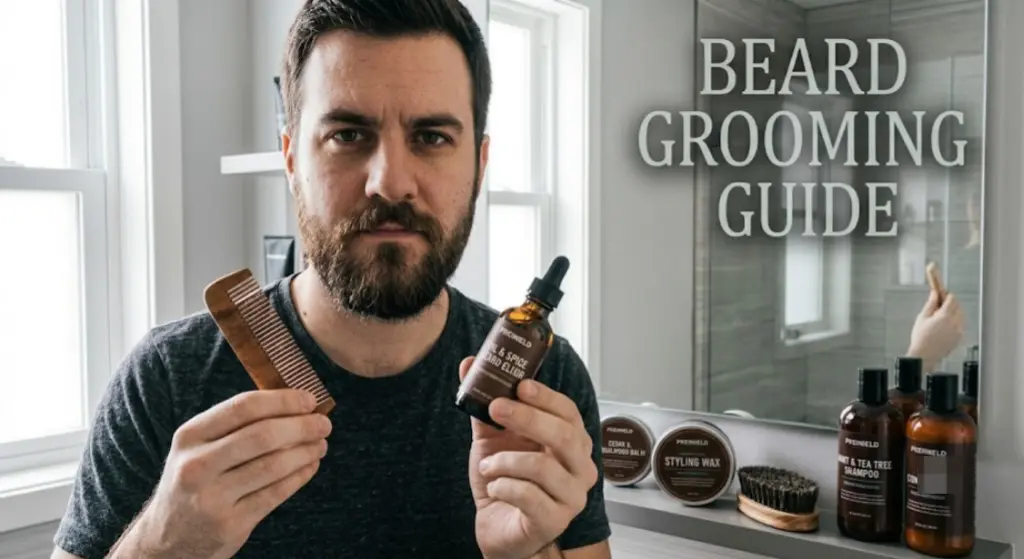
Good beard grooming tips aren’t complicated, but they get buried under a lot of noise — twelve-step routines, products nobody actually needs, and advice that doesn’t account for the fact that a curly, dense beard and a fine, straight one need completely different handling. This is a practical rundown, organized so you can find what applies to your beard specifically rather than wading through generic filler.
Some of this is daily habit. Some of it is technique. All of it comes from what barbers actually see working across the men who walk in with a beard that looks intentional versus one that just happened.
Table of Contents
What Good Beard Grooming Actually Involves
Quick answer: Effective beard grooming combines four things — consistent cleansing without over-washing, daily conditioning with oil or balm, regular trimming to maintain shape, and styling choices matched to your specific hair type and face shape. Skipping any one of these usually shows up as a specific, identifiable problem rather than the beard just looking generically “off.”
Most grooming beard advice online skips straight to product recommendations without covering the habits that make those products actually work. Oil applied to an unwashed, product-caked beard does far less than the same oil applied to a properly maintained one.
Daily Beard Grooming Tips
These are the habits that matter most, done consistently rather than perfectly.
- Apply beard oil every morning, focused on the skin first, then worked through the length. This is the single highest-impact daily habit for most beard types.
- Comb or brush daily, even on days you’re not styling, to train hair direction and catch tangles before they set.
- Don’t wash daily. Two to three times a week with a proper beard shampoo keeps natural oils intact.
- Pat dry, don’t rub. Towel friction roughens hair and contributes to frizz over time.
- Check the mirror from more than one angle before leaving the house — a lot of unevenness is only visible from the side.
Tools Every Well-Groomed Beard Needs
You don’t need a drawer full of products. You need the right handful, used consistently.
| Tool | Purpose |
| Beard oil | Daily moisture and softening |
| Beard balm or butter | Light hold and extra conditioning for longer beards |
| Wide-tooth comb | Detangling and directional training |
| Boar bristle brush | Distributing oil evenly, adding shine |
| Quality trimmer with guards | Length control and fading |
| Detail edger or trimmer | Sharp neckline and cheek line work |
| Beard scissors | Precision trims and split-end removal |
A basic setup covering these categories handles the vast majority of grooming needs. Specialty items — straighteners, rollers, growth serums — are useful for specific goals, but they’re additions to this base, not substitutes for it.
Trimming and Shaping Tips
Trimming is where a lot of beard styling tips actually live, since shape does more for overall appearance than length or density alone.
- Trim every three to four weeks, even if the beard “looks fine” — small, regular trims stay ahead of split ends and shape drift better than occasional big cuts.
- Always trim dry hair, never wet — wet hair looks longer than it is and throws off your judgment of how much to cut.
- Work in small sections rather than taking large amounts off at once, especially around the neckline and cheek line, where mistakes are hardest to fix quickly.
- Set the neckline conservatively. A neckline that’s too high is one of the most common and most noticeable trimming errors — when in doubt, leave more length and adjust down next time.
- Use the right blade sharpness. Dull blades drag and tear rather than cut cleanly, leading to a rougher, less defined line no matter how careful the technique.
For the full technique breakdown on sharp edges specifically, the beard line up guide walks through cheek line, neckline, and mustache border step by step, and the beard fade guide covers graduated blending if that’s part of your look.
Beard Styling Tips for Your Face Shape
Styling tips only work if they’re matched to your actual proportions, not applied generically.
- Round faces generally benefit from styles with more length and angular shaping at the jaw, which adds visual definition. See the best beard for round face guide for specific shapes.
- Square faces can usually handle fuller, boxier styles without it reading as heavy, since the jawline already provides strong structure — covered in the best beard for square face guide.
- Oval faces have the most flexibility and can wear nearly any length or shape, as outlined in the best beard for oval face guide.
- Heart-shaped faces often look most balanced with added width at the jaw and a slightly fuller chin area — the best beard for heart face guide has more detail on this.
If you haven’t settled on an overall shape yet, browsing the full types of beard styles overview is a reasonable starting point before narrowing down to face-shape-specific recommendations.
Healthy Beard Tips: Skin and Hair Together
Healthy beard tips need to cover the skin underneath just as much as the hair itself — most visible beard problems actually start at the skin level.
- Exfoliate gently once or twice a week, especially in the early growth months, to prevent ingrown hairs and flaking.
- Moisturize the skin, not just the hair. A dedicated beard moisturizer addresses dryness and flaking that oil alone doesn’t always reach.
- Watch for beardruff (dry, flaky skin under the beard) and treat it with consistent moisturizing rather than more washing, which usually makes it worse.
- Keep skin protected from sun exposure, particularly along the neckline and cheek edges where hair coverage is thinner.
- Don’t ignore persistent irritation. Occasional redness after trimming is normal; ongoing irritation that doesn’t improve with basic care is worth mentioning to a dermatologist.
Grooming Tips by Beard Type
Different textures need different priorities, and a lot of frustration with grooming beard routines comes from applying one-size-fits-all advice to hair that doesn’t fit that mold.
| Beard Type | Top Priority | Related Guide |
| Curly | Wide-tooth comb, heavier conditioning | Curly beard care |
| Straight | Lighter daily oil, occasional heat styling | Straight beard care |
| Thick/Dense | Frequent trims, weight control with balm | Thick beard care |
| Thin/Sparse | Shorter styling, avoiding heavy product | Thin beard care |
| Grey/White | Yellow prevention, extra moisture | White beard care |
Matching your routine to this table before adding anything more advanced solves most of the friction men run into with generic grooming advice that assumes one universal beard type.
Grooming Tips by Occasion
Beard grooming isn’t static — how you maintain and style it can shift depending on context.
- Everyday/casual: A consistent basic routine (oil, occasional wash, monthly trim) is usually enough — no need to over-style daily.
- Professional settings: Sharper lines and a more controlled shape read as more polished; the professional beard styles and corporate beard guides cover workplace-appropriate shaping.
- Special events (weddings, interviews, photos): Book a barber trim a few days before, not the same day — this gives minor redness or unevenness time to settle before the event.
- Travel: A compact version of your routine (travel-size oil, a small comb) prevents the “neglected” look that often creeps in on trips when the full routine gets skipped.
Seasonal Beard Grooming Tips
Weather changes affect facial hair more than most men account for.
- Winter: Cold, dry air pulls moisture from both skin and hair faster. Increase oil or balm use slightly and consider a weekly deep conditioning treatment.
- Summer: Sweat and sun exposure increase, so washing frequency can tick up slightly, and a lighter product (serum over heavy balm) usually feels more comfortable in heat.
- Humid climates: Frizz becomes more noticeable; a light anti-frizz balm and more frequent combing help manage it.
- Dry climates: Lean more heavily on conditioning products and consider a humidifier at home if dryness becomes a persistent issue.
Grooming Tips for Beginners vs Established Beards
New to growing a beard:
- Give it at least four to six weeks before judging shape or density.
- Start with just beard oil — don’t overload a new beard with a full product lineup before you know what it actually needs.
- Check best beard styles for beginners for low-commitment shapes while you’re still figuring out density and growth pattern.
Established beards (six months or more):
- Reassess your routine periodically — texture and needs often shift as length increases.
- Pay closer attention to split ends and trim discipline, since older hair at the tips has accumulated more wear.
- Consider whether your current shape still suits your face and lifestyle, rather than sticking with the first style you settled on.
Barber-Level Tips Most Men Never Hear
- Apply oil to slightly damp hair, not bone dry. It distributes more evenly and locks in some of that moisture.
- Comb before you brush, not after. Combing detangles; brushing then distributes product and smooths — reversing the order works less effectively.
- Trim your mustache separately from your beard length. It grows at a different rate and gets forgotten in a lot of home routines.
- Angle your trimmer slightly upward against the grain for the first pass, then with the grain for a clean finish — a two-pass approach barbers use for a smoother result than a single pass in one direction.
- Reassess your part or neckline height every few months. Hairlines and jaw definition shift slightly with weight and age, and a line that worked two years ago may need a small adjustment now.
Mistakes Worth Avoiding Along the Way
A few habits undercut even a solid grooming routine — over-washing, skipping trims, using head-hair products on facial hair, and heat-styling without protection are the most common. For the full breakdown of what to avoid and why, the dedicated beard mistakes guide covers this in more depth than a quick summary can.
Final Thoughts
Solid beard grooming tips come down to consistency more than complexity — daily oil, sensible washing frequency, regular trims, and a style that actually suits your face and hair type will outperform an expensive routine applied inconsistently almost every time. Build the basics first, adjust for your specific beard type and the season you’re in, and layer in more advanced technique — line ups, fades, heat styling — once the fundamentals are solid. That order matters more than most grooming beard advice gives it credit for.
FAQs
1. What are the most important beard grooming tips for beginners? Patience during the first four to six weeks, starting with a simple beard oil routine, washing only two to three times a week, and choosing a low-commitment style while density fills in are the most valuable early habits.
2. How often should I follow a full beard grooming routine? Daily basics like oil and combing should happen every day, while washing two to three times weekly and trimming every three to four weeks covers the rest of a well-rounded routine.
3. What beard styling tips work for most face shapes? Keeping the neckline and cheek line clean and choosing a length that adds balance — more length for round faces, fuller width for narrower jaws — tends to work across most face shapes as a starting point.
4. What are the best healthy beard tips for skin underneath the hair? Gentle exfoliation once or twice a week, consistent moisturizing separate from beard oil, and avoiding over-washing are the habits that most directly prevent irritation, flaking, and ingrown hairs.
5. Do grooming needs change based on beard type? Yes, significantly. Curly beards need more conditioning and a wide-tooth comb, thick beards need more frequent trims, and thin beards benefit from shorter styling and lighter product use.
6. What tools are essential for grooming a beard properly? A quality trimmer with guards, a detail edger, a wide-tooth comb, a boar bristle brush, beard oil, and beard scissors cover the core tools most men need for a complete routine.
7. How can I make my beard look more groomed without more products? Regular trims, consistent combing, and clean edges around the neckline and cheek line make the biggest visible difference — often more than any product change alone.
8. Should beard grooming tips change with the seasons? Yes. Winter typically calls for more conditioning due to dry air, while summer often benefits from lighter products and slightly more frequent washing due to sweat and sun exposure.
9. What’s the biggest difference between grooming a new beard versus an established one? New beards need patience and a simple routine while density and shape become clear, while established beards need more attention to split ends, shape reassessment, and adjusting products as texture changes over time.
10. How do barbers keep beard lines looking sharp? Working in small sections, using a two-pass trimming technique (against the grain, then with it), and checking symmetry from multiple mirror angles are common professional habits that translate well to home grooming.
11. What beard advice is most commonly ignored by men just starting out? Skipping regular trims because “there’s not much beard yet” is one of the most commonly ignored pieces of advice, even though early shape planning tends to produce a better-looking beard as it grows.
12. Can over-grooming a beard cause problems? Yes. Over-washing, excessive product layering, and daily heat styling without protection can all dry out or damage hair that would otherwise stay healthy with a more moderate routine.
13. What’s a quick daily beard grooming routine that actually works? Apply oil in the morning, comb through to train direction, and pat dry after any washing — this three-step baseline covers most of what a beard needs on non-wash days.
14. Do beard grooming tips differ for professional versus casual settings? Somewhat. Professional settings usually call for sharper, more defined lines and slightly shorter, more controlled shapes, while casual settings allow more flexibility in length and styling.
15. What’s one beard grooming tip most men don’t know? Trimming the mustache on its own schedule, separate from the rest of the beard, is frequently overlooked since it grows at a different rate and can throw off an otherwise well-maintained shape.