 By Bread Styles Team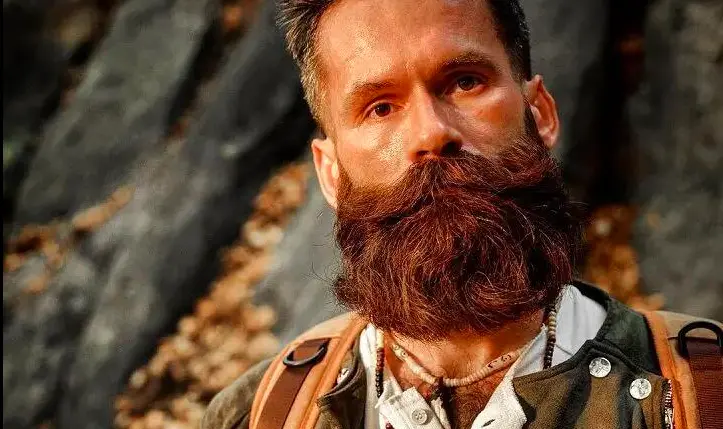
This guide breaks down the strongest rugged beard styles available right now, how to pick one for your face shape, and the grooming habits that keep a tough beard looking sharp instead of just unkempt. Whether you’re starting from stubble or already have a full long beard, you’ll find a direction that fits.
Table of Contents
What Makes a Beard Style “Rugged”?
A rugged beard style is a thick, full, naturally-shaped beard with minimal precision shaping — the kind of look built for men who want a strong, masculine beard without a polished, corporate finish. It leans on density and coverage rather than sharp lines.
Three things separate a rugged beard from a neat, structured one:
- Length and volume. Rugged styles usually sit at medium to long length, giving the jawline extra weight and presence.
- Loose shaping. Instead of razor-sharp cheek lines, rugged beards keep a soft, natural border that blends into the sideburns.
- Texture over polish. A slightly coarse, textured finish reads as tough. Over-styled, glossy beards don’t fit the category.
That doesn’t mean a rugged beard is an excuse to skip grooming. The best rugged beard looks are still trimmed, washed, and shaped — just with a rougher hand than a boardroom beard would get.
The Best Rugged Beard Styles to Try
Below are the rugged beard styles men ask barbers for most often, along with who each one suits and how much upkeep it demands.
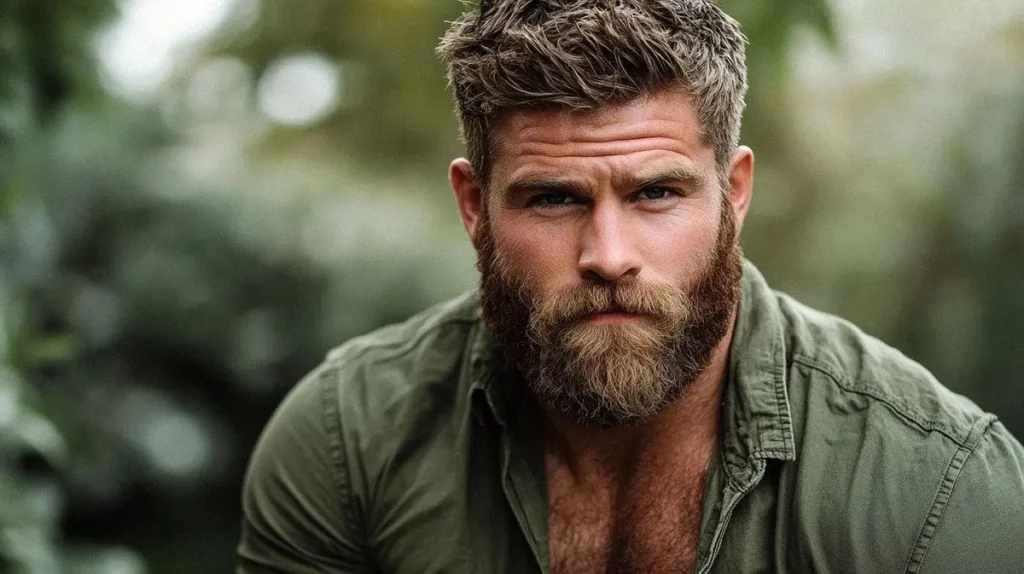
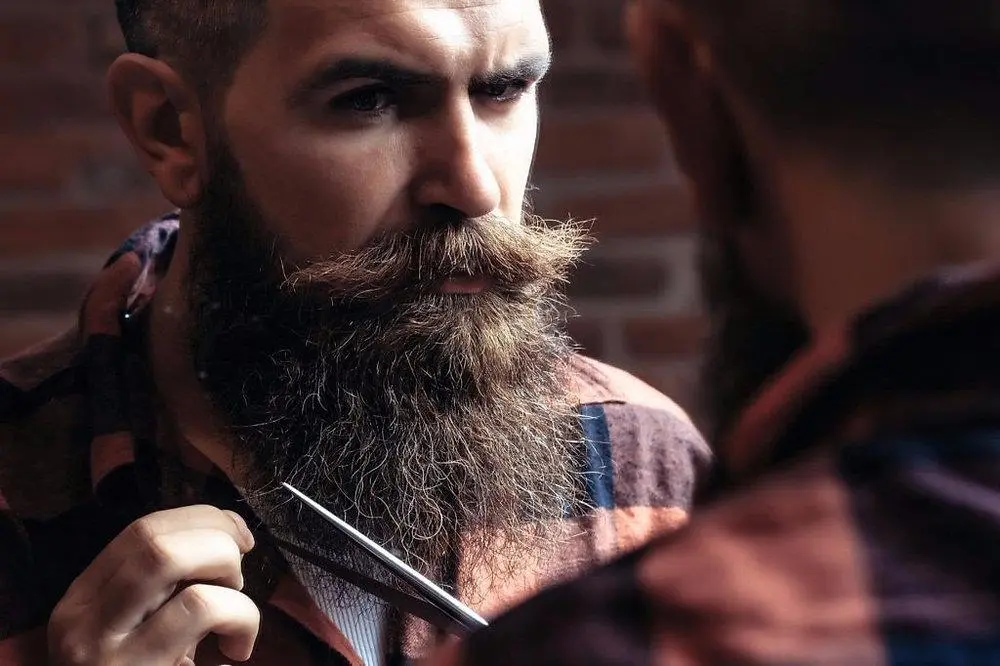
1. The Full Rugged Beard
This is the baseline rugged look — a dense, medium-to-long beard covering the cheeks, chin, and jaw with only light shaping at the neckline and cheek line. It works on almost any hair type and is the easiest entry point if you’re new to growing out facial hair. Pair it with a proper beard neckline to keep it from looking like an untamed patch of hair rather than an intentional style.
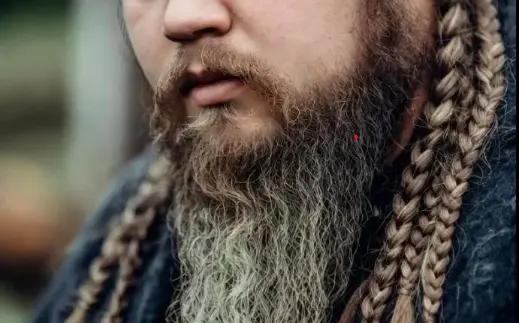
2. The Viking Beard
Long, thick, and often paired with equally long hair, the Viking beard is one of the most masculine beard shapes around. It suits men with strong beard density who don’t mind a longer grooming routine, including regular oiling to prevent tangles.
3. The Garibaldi
Rounded, full, and roughly four to six inches long, the Garibaldi beard is a rugged classic. It has slightly more shape than a Viking beard but keeps the same bold, outdoorsy volume. This style flatters men with oval or square jawlines especially well.
4. The Bandholz
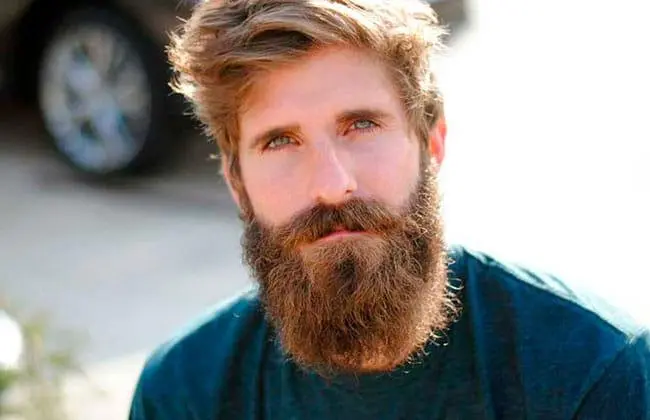
Named after Beardbrand founder Eric Bandholz, the Bandholz beard is a fully grown-out beard with almost no shaping beyond a trimmed neckline. It’s one of the toughest, most masculine beard looks because it lets natural growth patterns lead — perfect for men who want maximum rugged beard looks with minimal styling effort.
5. Mutton Chops for a Tough Edge
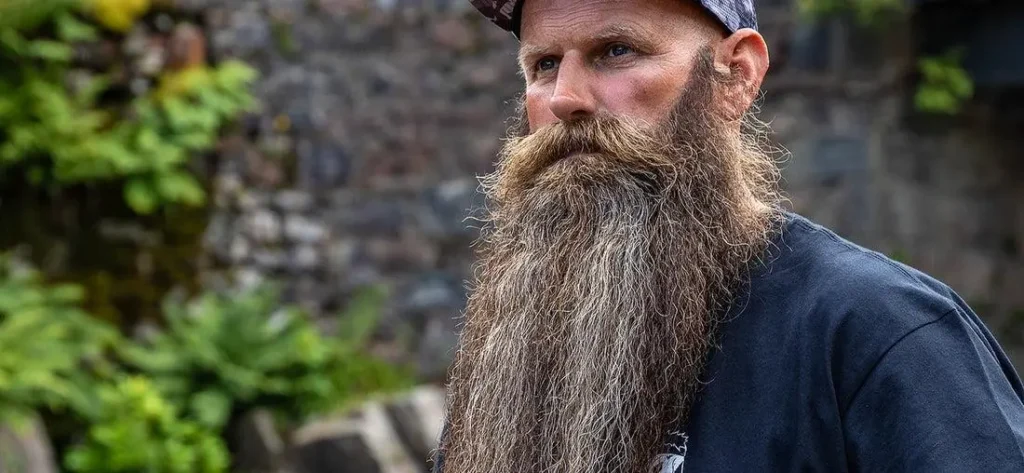
For a more distinctive, old-school tough beard idea, mutton chops bring heavy sideburn volume down the jaw. It’s a bolder choice, best suited to men with thick, even beard growth along the cheeks.
6. Rugged Stubble
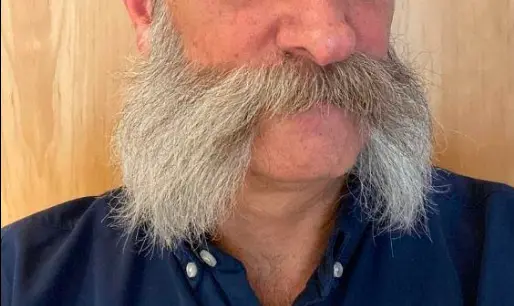
Not every rugged beard needs full length. A deliberately kept stubble beard at 4–6mm gives a rough, masculine texture without the maintenance of a longer beard. It’s the fastest way into rugged beard styles if you can’t grow past patchy medium lengths yet.
7. Thick Beard, Loosely Shaped
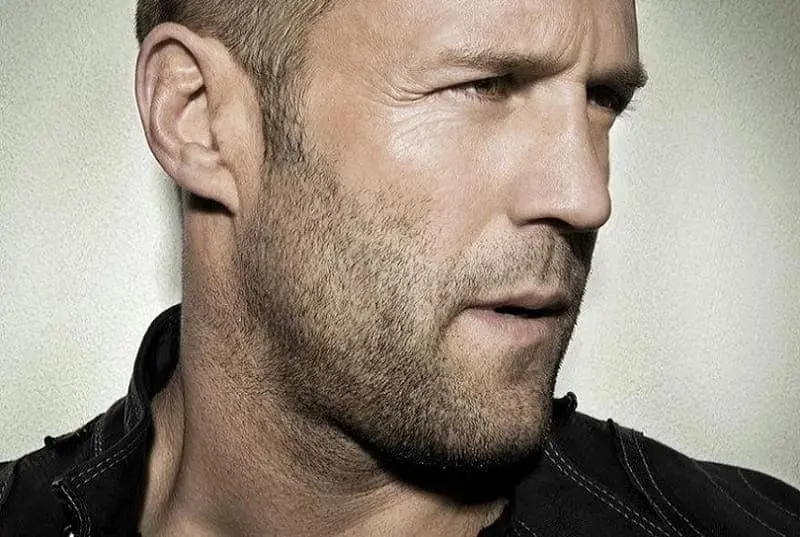
If your facial hair grows in dense, a thick beard style with only light trimming around the edges delivers serious rugged presence. Density does most of the work here — you’re mainly managing length and keeping the neckline clean.
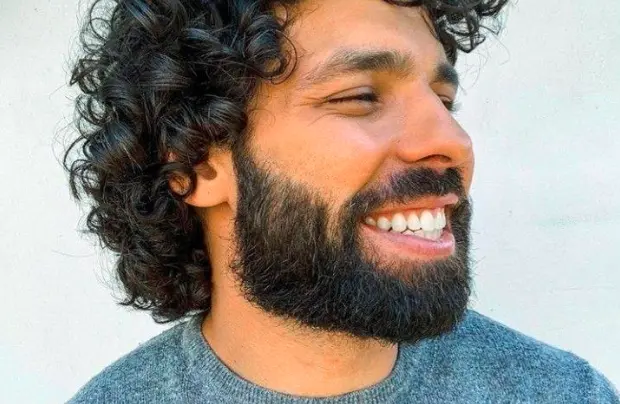
8. Curly Rugged Beard
Curly or coily facial hair naturally adds texture and volume, which suits the rugged aesthetic well. A curly beard style kept at medium length, with regular conditioning to prevent frizz, gives a full, masculine shape without needing much shaping at all.
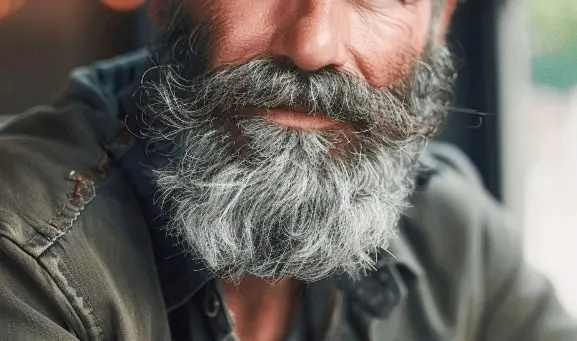
9. Salt and Pepper Rugged Beard
Grey coming through a beard doesn’t have to be softened or dyed. A salt and pepper beard kept full and slightly long reads as rugged and experienced rather than unkempt — one of the more distinguished tough beard ideas for men over 35.
Comparison: Rugged Beard Styles at a Glance
| Style | Length | Maintenance | Best For |
| Full Rugged Beard | Medium-Long | Low-Medium | Beginners, all face shapes |
| Viking Beard | Long | High | Men who want maximum volume |
| Garibaldi | Medium (4-6″) | Medium | Oval, square faces |
| Bandholz | Long, unshaped | Low | Minimalists who want length |
| Mutton Chops | Medium | Medium-High | Distinct, bold looks |
| Rugged Stubble | Short (4-6mm) | Low | Fast growth, busy schedules |
| Thick Beard | Medium | Low | Dense natural growers |
| Curly Rugged Beard | Medium | Medium | Curly/coily hair types |
| Salt and Pepper Rugged | Medium-Long | Low-Medium | Men over 35 with greying hair |
Rugged Beard Styles by Face Shape
Not every rugged beard style flatters every jawline. Matching the beard to your face shape keeps the tough look proportionate instead of overwhelming your features.
- Square face: A slightly rounded rugged beard like the Garibaldi softens strong angles. See our full best beard for square face breakdown.
- Round face: Add length and reduce width at the cheeks. Check the best beard for round face guide for shaping tips.
- Oval face: Nearly every rugged style works here, from the Viking beard to the Bandholz. Full details in the best beard for oval face guide.
- Diamond face: Fuller cheek growth balances a narrow chin — see the best beard for diamond face advice.
- Heart-shaped face: A rounded, fuller chin beard offsets a wider forehead. More in the best beard for heart face guide.
- Rectangular or oblong face: Keep sides fuller and avoid excessive chin length. The best beard for oblong face guide covers proportions in detail.
Outdoor Beard Style: Growing a Beard That Works Hard
An outdoor beard style needs to survive wind, sweat, sun, and constant movement — not just look good in a mirror. Men who hike, work outdoors, hunt, or spend long hours on job sites tend to gravitate toward fuller, lower-maintenance rugged looks for a practical reason: they hold up better between grooming sessions.
A few adjustments make any rugged beard more outdoor-ready:
- Keep it slightly shorter than your ideal length if you sweat heavily, since longer beards trap more moisture.
- Use a lightweight beard oil, not a heavy balm, in hot climates to avoid a greasy feel under sun exposure.
- Brush daily, even on rest days. Wind and hats tangle beard hair fast, and a rugged beard still needs to look intentional, not just wild.
- Trim the neckline every 2–3 weeks even if you’re leaving the rest untouched. It’s the one line that keeps an outdoor beard from reading as neglected.
How to Grow a Rugged Beard From Scratch
Growing into any of these rugged beard styles takes patience more than technique. Here’s the realistic timeline and process.
- Commit to at least 4–6 weeks of uninterrupted growth. This is when patchy patches typically fill in enough to judge your natural shape.
- Resist shaping too early. Trimming in week two almost always removes hair you’ll want later.
- Wash 2–3 times a week, not daily, to avoid stripping natural oils that keep new growth healthy.
- Start using beard oil once you hit stubble length, around week two, to reduce itchiness during the awkward growth phase.
- Get your first proper shaping around week 6–8, focusing only on the neckline and cheek line — leave the length and density alone.
- Reassess your face shape and beard density at the two-month mark to decide which of the styles above suits your growth pattern best.
If your growth comes in patchy along the cheeks, a patchy beard guide can help you work with uneven density rather than fighting it. For men who consistently struggle to fill in past a certain length, a thin beard style shaped around your actual density often looks more rugged than forcing a thicker style your hair can’t support yet.
Maintaining a Masculine Beard: Tools and Routine
A masculine beard holds its shape because of routine, not luck. Here’s what a working rugged-beard maintenance kit actually needs:
Essential tools:
- A boar-bristle brush, for distributing oil and training growth direction
- Beard scissors, for occasional length control without over-trimming
- A trimmer with adjustable guards, for neckline and cheek-line upkeep
- Beard oil or balm, matched to your hair texture and climate
- A wide-tooth comb, for detangling before brushing
Weekly routine:
- Wash 2–3 times with a beard-specific cleanser, not regular shampoo, which can dry out facial hair
- Oil daily, focusing on the skin underneath as much as the hair itself
- Brush once a day to train growth and prevent tangling
- Trim the neckline every 2–3 weeks to maintain a clean edge under a full, rugged top
For a complete step-by-step breakdown, our beard care guide and how to trim a beard resources cover technique in more depth.
Common Mistakes That Ruin a Rugged Look
Rugged doesn’t mean careless. These mistakes are the most common reason a tough beard idea ends up reading as messy instead of masculine.
- Skipping the neckline entirely. A rugged beard still needs one clean line. Without it, the beard blends into the neck and loses shape.
- Never trimming split ends. Length without health looks thin and wiry, not full.
- Overusing heavy products. Too much balm weighs hair down and kills the natural volume that makes rugged styles work.
- Ignoring cheek line drift. Letting cheek hair creep too high toward the eyes ages the whole look. A defined beard cheek line keeps things intentional.
- Growing past your density. Pushing length beyond what your beard can support in thickness creates gaps and stringiness rather than a fuller rugged shape.
- Forgetting the mustache. A rugged beard with a thin, uneven mustache looks unfinished, even if the rest is full and healthy.
Rugged Beard Styles by Age
Rugged beard styles work at almost any age, but the details shift as facial hair texture and growth patterns change over time.
Younger men (late teens to late 20s): Beard density is often still filling in. A shorter rugged stubble or full beard style, rather than an extreme Viking-length look, tends to suit thinner, patchier growth better. Check beard styles for teenagers for realistic expectations at this stage.
Men in their 30s and 40s: This is usually peak beard density, making it the easiest window to pull off longer, fuller rugged styles like the Garibaldi or Bandholz. Our beard styles for men over 40 guide covers shaping choices that suit maturing features.
Men 50 and older: Grey and salt-and-pepper tones are common by this stage, and a full, slightly long rugged beard often looks more distinguished than a closely trimmed one. See beard styles for men over 50 and grey beard styles for direction.
Low Maintenance vs High Maintenance Rugged Beards
Not every rugged beard demands the same time investment. If your schedule is tight, lean toward the low maintenance beard styles end of this list; if you enjoy the grooming process itself, the higher-maintenance options reward the extra effort with more dramatic shape.
| Maintenance Level | Styles | Weekly Time Needed |
| Low | Bandholz, Rugged Stubble, Thick Beard | 10–15 minutes |
| Medium | Full Rugged Beard, Salt and Pepper Rugged | 20–30 minutes |
| High | Viking Beard, Garibaldi, Mutton Chops | 40+ minutes |
Expert Barber Tips for a Rugged Finish
A few habits separate a professional-looking rugged beard from one that just looks unfinished:
- Trim under natural light, not bathroom lighting, which flattens shadows and hides unevenness.
- Always trim dry. Wet hair looks longer than it is, leading to over-cutting.
- Go against the grain only for the final pass when trimming, to avoid nicking skin or cutting too short too fast.
- Condition the skin, not just the hair. Dry, flaky skin under a beard undermines even the best rugged beard styles.
- Book a professional shaping every 2–3 months, even if you maintain length yourself in between. A barber can correct drift in the neckline and cheek line that’s hard to see on your own face.
A well-maintained rugged beard, done right, is one of the most reliable ways to build a strong, masculine beard look that holds up whether you’re at a desk or outdoors all day. The types of beard styles guide is a good next stop if you want to compare rugged looks against more polished, structured alternatives before committing.
FAQs
What is considered a rugged beard style? A rugged beard style is a full, naturally-shaped beard with minimal precision trimming, usually medium to long in length. It prioritizes volume and texture over sharp, structured lines.
What is the most masculine beard style? The Bandholz and Garibaldi are widely considered among the most masculine beard styles because of their full coverage and bold, natural shape. The right choice still depends on your face shape and beard density.
How long does it take to grow a rugged beard? Most men need 4–6 weeks to see enough growth to judge shape and density, with 2–3 months needed to reach the fuller length required for styles like the Viking beard or Garibaldi.
Do rugged beards need to be trimmed? Yes. Rugged beard styles still need regular neckline and cheek line trims every 2–3 weeks, even though the overall length and shaping stay loose and natural.
What face shape suits rugged beard styles best? Oval and square face shapes generally suit rugged beard styles the most, since the added volume works with strong or balanced jawlines rather than overwhelming them.
Can I get a rugged beard look with patchy facial hair? Yes, though it may take longer. Focusing on a shorter rugged stubble style and letting patches fill in over a few months usually produces better results than forcing a longer style too early.
What’s the difference between a rugged beard and a full beard? A full beard simply refers to complete cheek-to-chin coverage. A rugged beard style is a specific approach to that coverage — looser shaping, more natural texture, and less polish than a standard groomed full beard.
Is beard oil necessary for rugged beard styles? Beard oil isn’t strictly required, but it significantly reduces itchiness during growth and keeps the skin underneath healthy, which matters more as beard length increases.
How often should I wash a rugged beard? Two to three times a week with a beard-specific cleanser is usually enough. Washing daily with regular shampoo can dry out both the hair and the skin underneath.
What tools do I need for a rugged beard? A trimmer with guards, beard scissors, a boar-bristle brush, beard oil, and a wide-tooth comb cover most maintenance needs for any rugged beard style.
Can older men pull off rugged beard styles? Yes. Fuller, slightly longer rugged beards often suit older men particularly well, especially with grey or salt-and-pepper coloring, which adds a distinguished quality to the look.
Are rugged beard styles low maintenance? Some are. Styles like the Bandholz and rugged stubble require minimal shaping, while longer options like the Viking beard or Garibaldi need more regular upkeep to hold their shape.
What is an outdoor beard style? An outdoor beard style is a rugged look adapted for practical, active use — usually slightly shorter, lower-maintenance, and paired with lightweight products that hold up to sweat and weather.
Do rugged beards work for job interviews or professional settings? A well-groomed, shorter rugged style can work in relaxed professional settings, but very long or unshaped versions like the full Viking beard may be too casual for corporate environments. See our professional beard styles guide for safer alternatives.
What’s the biggest mistake men make with rugged beard styles? Skipping the neckline and cheek line entirely. A rugged beard still needs these two boundaries defined, or the whole look reads as neglected rather than intentional.