 By Beard Style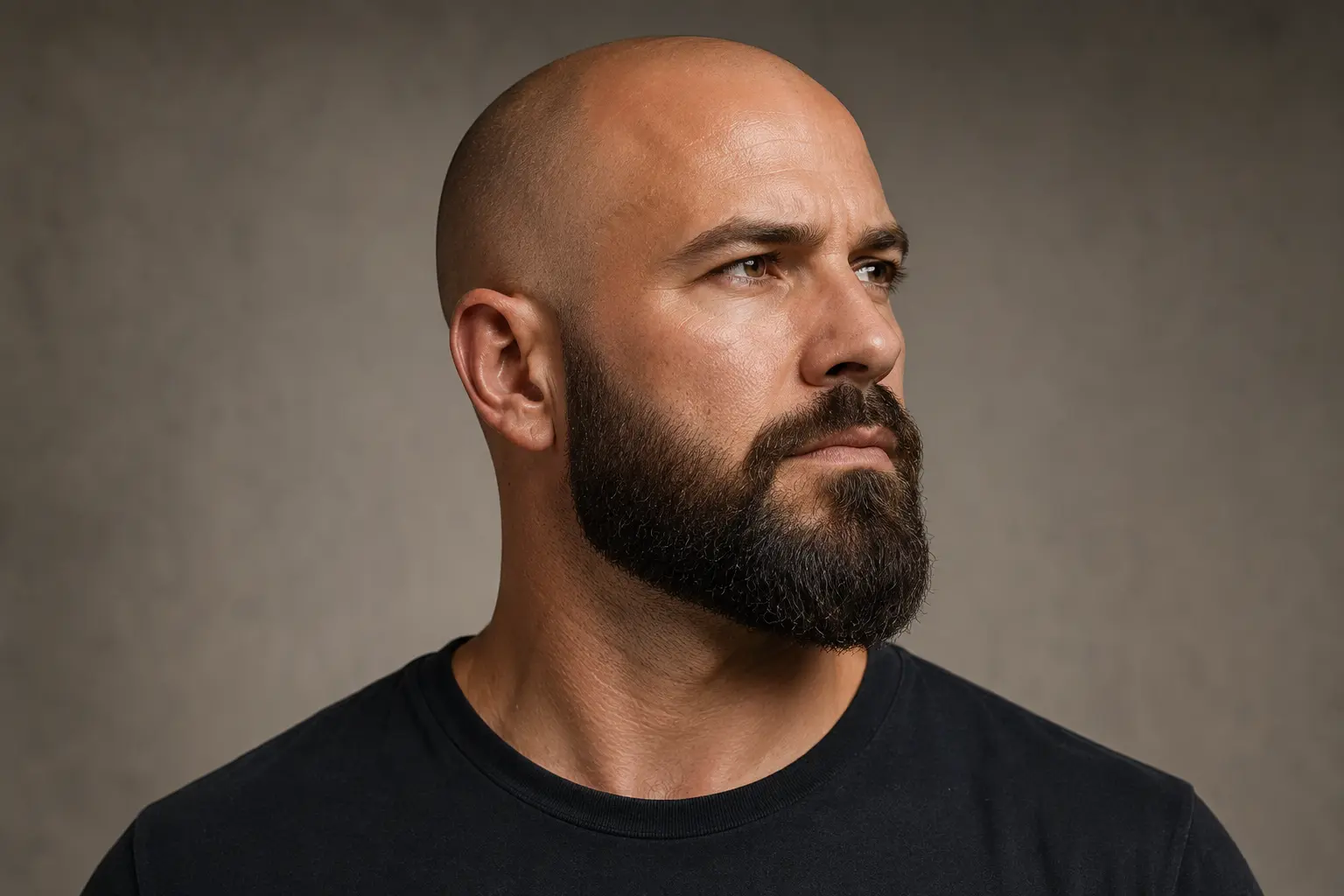
Table of Contents
Why a Beard Works So Well With a Bald Head
A bald head and a well-shaped beard do something for each other that neither look pulls off alone: they balance the face. Skin up top, hair below. It’s one of the reasons bald with beard has become one of the most requested combinations in barbershops over the last few years, and not just among older men trying to hide thinning hair. Plenty of guys shave their head on purpose and grow a beard to go with it.
The logic is simple. A bare scalp draws attention straight to the face. Without something to frame the jaw, cheeks, and chin, features can look flatter or the head can look disproportionately large or small depending on your shape. A beard adds structure back. It gives the lower half of your face weight, definition, and a sense of intention, so the whole look reads as a choice rather than an accident.
This guide walks through the beard styles for bald men that actually work, matched to face shape, hair type, and how much upkeep you’re willing to put in. Everything here comes from real grooming practice, not guesswork.
Quick Answer: Best Beard Styles for Bald Men at a Glance
If you only read one section, read this one.
The best beard for bald head looks depends mostly on your face shape and beard density:
- Full, thick beard – best for narrow or long faces that need width
- Goatee or Van Dyke – best for round or square faces that need length
- Circle beard – best for oval faces, adds definition without bulk
- Heavy stubble – best for men who want a low-maintenance shaved head beard
- Balbo – best for patchy growth or asymmetrical jawlines
- Corporate beard – best for professional settings, short and tidy
Here’s a fast comparison before we go into detail on each one.
| Beard Style | Maintenance Level | Growth Time | Best Face Shapes | Best For |
| Full Beard | High | 3–5 months | Oval, Long, Diamond | Adding width and warmth |
| Van Dyke | Medium | 2–3 months | Round, Square | Adding chin length |
| Classic Goatee | Low–Medium | 3–5 weeks | Round, Square, Oval | Everyday low-fuss styling |
| Extended Goatee | Medium | 6–8 weeks | Oval, Heart | Blending jaw and chin |
| Balbo | Medium | 6–8 weeks | Round, Square | Patchy growth, sharp shaping |
| Circle Beard | Low–Medium | 4–6 weeks | Oval, Diamond | Neat, minimal look |
| Chin Strap | Low | 2–4 weeks | Square, Oblong | Defining the jawline |
| Heavy Stubble | Very Low | 10–14 days | Almost all shapes | Busy schedules, rugged look |
| Corporate Beard | Low | 4–6 weeks | Oval, Square, Triangle | Office and client-facing roles |
For the full breakdown of every beard shape and category, our guide to types of beard styles is worth bookmarking alongside this one.
Full Beard (Bandholz Style)
A full, thick beard is the boldest option on this list, and it’s the one that changes a bald look the most dramatically.
What it is: Facial hair grown out on the cheeks, jaw, and chin with minimal shaping, letting natural density and length do the work. Named informally after the long, dense style popularized by beard-growing communities.
Why it works with a bald head: The contrast between a smooth scalp and a dense beard is striking. It reads as deliberate and confident rather than accidental, and it adds serious width and warmth to faces that look narrow or long without hair on top.
Who it suits:
- Oval, long, and diamond face shapes
- Men with thick, even facial hair growth
- Men comfortable with several months of awkward in-between stages
Styling difficulty: High. Growing it out evenly takes patience, and shaping the neckline and cheek line correctly is what separates a sharp full beard from a scruffy one.
Maintenance: Daily beard oil or balm to control frizz, weekly trims to keep the shape, and a proper beard neckline and beard cheek line to avoid the “just didn’t shave” look. For the full grooming routine that keeps a beard this size healthy, our beard care guide covers washing, conditioning, and trimming in order.
Common mistake: Letting the cheek line creep up too high, which makes the beard look like it’s fighting the bald head instead of complementing it.
Van Dyke Beard
What it is: A pointed chin beard paired with a separate, disconnected mustache, with the cheeks kept clean.
Why it works with a bald head: It draws the eye downward and adds vertical length to the chin, which helps round or square faces look more balanced against a bare scalp.
Who it suits:
- Round and square face shapes
- Men who like a defined, slightly formal look
- Men with the patience to keep cheek lines razor sharp
Styling difficulty: Medium-high. The disconnected mustache needs regular shaping, and the chin section needs consistent trimming to hold its point.
Maintenance: Trim every 5–7 days to keep the point sharp. A precision trimmer with a fine guard works better here than scissors alone. Read our full Van Dyke beard breakdown for a step-by-step shaping guide.
Classic Goatee
What it is: Hair on the chin only, sometimes connected to a mustache, with the cheeks and jawline shaved clean.
Why it works with a bald head: It’s compact and low-fuss, giving the chin some definition without demanding the commitment of a full beard. This makes it one of the most popular bald beard styles for bald men who want a change without a long growing phase.
Who it suits:
- Round and square faces that benefit from added chin length
- Men newer to facial hair or unsure about committing to more
- Busy schedules where quick trims matter more than intricate shaping
Styling difficulty: Low to medium.
Maintenance: Trim every 4–6 days. See our full goatee styles guide for variations, including connected and disconnected versions.
Extended Goatee
What it is: A goatee that stretches along the jawline without covering the cheeks, blending the chin and jaw into one continuous shape.
Why it works with a bald head: It adds width along the jaw, which helps balance a bald head that makes the face look shorter or wider than it is.
Who it suits: Oval and heart-shaped faces, and men who want more structure than a classic goatee without going full beard.
Maintenance: Weekly trims to keep the jawline edge crisp. Full details in our extended goatee guide.
Balbo Beard
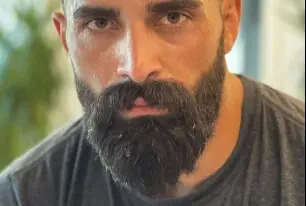
What it is: A mustache paired with a floating chin patch, with the cheeks and jawline shaved. No connection between the mustache and chin hair.
Why it works with a bald head: It’s precise and architectural, which suits men who want their bald head and beard to look intentionally styled rather than left to grow naturally. It’s also one of the best options for patchy growth, since it only needs density in specific spots.
Who it suits: Round and square faces, and anyone dealing with uneven growth along the cheeks. If patchiness is your main concern regardless of style, our patchy beard guide has targeted fixes.
Maintenance: Frequent trims (every 4–5 days) to maintain the gap between mustache and chin patch. Full guide: Balbo beard.
Circle Beard
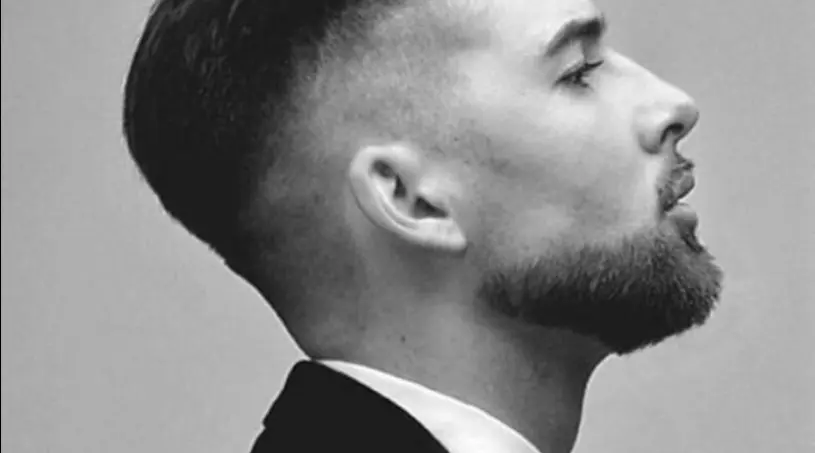
What it is: A goatee and mustache connected into one continuous circular shape around the mouth.
Why it works with a bald head: It’s neat and contained, adding just enough definition to the lower face without competing with a bare scalp for attention.
Who it suits: Oval and diamond face shapes especially, since the circular shape mirrors softer jawlines well.
Maintenance: Low to medium. Trim every week to maintain the connection points. Full guide: circle beard.
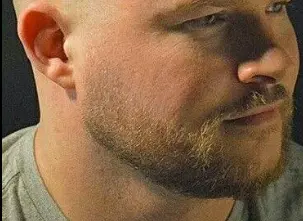
Chin Strap Beard
What it is: A thin line of hair that runs along the jawline from ear to ear, with the rest of the face shaved.
Why it works with a bald head: It traces and sharpens the jawline itself, which is particularly effective for square and oblong faces that already have strong angles worth highlighting.
Who it suits: Men with a defined jawline who want a minimal, precise look.
Maintenance: Needs trimming every 3–4 days to avoid looking uneven, since any stray growth outside the line is immediately noticeable.
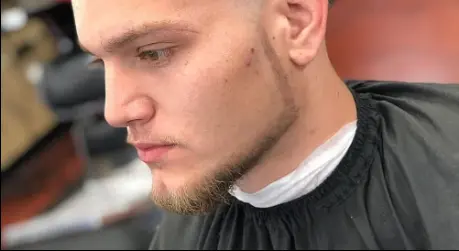
Heavy Stubble
What it is: Facial hair grown to somewhere between 3mm and 5mm and left mostly untrimmed in shape, just kept even in length.
Why it works with a bald head: It’s the lowest-maintenance option on this list and still gives the jaw texture and shadow. For a shaved head beard that doesn’t require constant shaping, heavy stubble is usually the first recommendation barbers give.
Who it suits: Almost every face shape. This is the safest starting point if you’re not sure which direction to take yet.
Maintenance: A trimmer set to one length, used every few days to keep it consistent. For the fine details on cutting technique and guard settings, our how to trim a beard guide covers it properly. For men who like stubble specifically as a long-term style rather than a growing-out phase, see stubble beard.
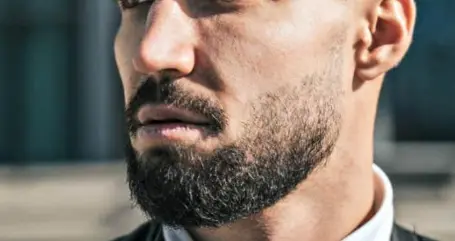
Corporate Beard
What it is: A short, tightly trimmed beard (usually under half an inch) with clean, straight lines along the neck and cheeks.
Why it works with a bald head: It reads as polished and professional, which matters for client-facing roles or conservative workplaces where a full beard might feel like too much of a statement next to a shaved head.
Who it suits: Oval, square, and triangle face shapes, and any man who needs his grooming to look deliberate in a formal setting.
Maintenance: Weekly trims with attention to the neckline. Full details in our corporate beard guide.
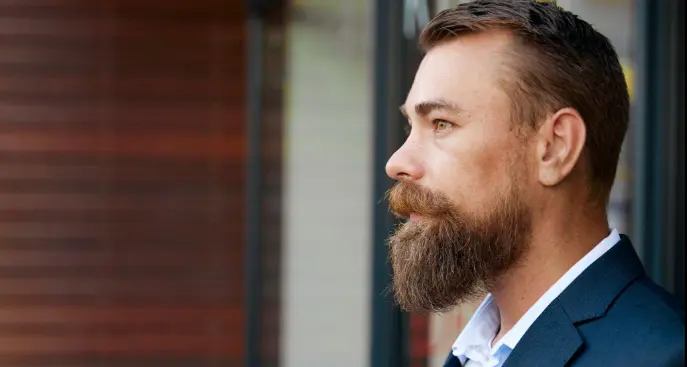
How to Pick a Beard Style Based on Your Face Shape
Face shape matters more for bald men than for men with hair, simply because there’s no hairline to soften the transition between forehead and face. Here’s how the shapes generally map to styles:
| Face Shape | What It Needs | Recommended Styles |
| Round | Length and angles | Van Dyke, chin strap, best beard for round face |
| Oval | Balanced, low-risk shapes | Circle beard, corporate beard, best beard for oval face |
| Square | Softened edges | Classic goatee, Balbo, best beard for square face |
| Diamond | Width at the jaw | Full beard, circle beard, best beard for diamond face |
| Heart | Fullness at the chin | Extended goatee, full beard, best beard for heart face |
| Oblong | Width, not extra length | Chin strap, full beard kept short, best beard for oblong face |
| Triangle | Balance at the jaw | Corporate beard, extended goatee, best beard for triangle face |
If you’re not sure which shape you are, stand in front of a mirror, pull your hair back (or run a hand over your scalp), and look at the width of your forehead versus your jaw versus your cheekbones. That single comparison usually points you toward the right category above.
Growing a Beard When You’re Bald: What’s Actually Different
Growing facial hair isn’t technically different for bald men, but the visual math is. A few things worth knowing before you start:
The bald-to-beard ratio matters. A beard that would look modest on a man with a full head of hair can look much bigger and bolder on a shaved head, because there’s no hair up top competing for visual weight. Many men find they need less length than they expected to get a strong effect.
Patchiness shows differently. Any gaps in your beard are more noticeable when there’s nothing else drawing the eye elsewhere on your head. If you’re dealing with uneven density, styles like the Balbo or a well-shaped short beard hide gaps better than a full beard grown out untouched.
Growth speed and texture don’t change. Facial hair growth is governed by genetics, hormones, and blood flow to the follicles, the same for bald men as anyone else. Shaving your head has no effect on beard growth rate. If you’re growing slowly or unevenly, that comes down to the same factors dermatologists point to for anyone: genetics, age, and sometimes underlying health issues, not scalp hair status.
The 90-day rule still applies. Most barbers recommend a minimum of 8–12 weeks of uninterrupted growth before judging a beard’s shape or deciding it isn’t working. Shaping too early is the single biggest reason growing-out attempts get abandoned.
Maintenance Routine for a Shaved Head Beard
A shaved head beard actually needs slightly more attention than a beard paired with a full head of hair, because both the scalp and the face are on display and any inconsistency between the two stands out.
Daily:
- Wash your face and scalp with the same gentle cleanser to avoid dryness on either surface
- Apply beard oil to condition the skin underneath and prevent itchiness
- Check for stray hairs on the neckline first thing, since bald skin makes strays more visible
2–3 times per week:
- Comb or brush the beard to train growth direction and catch tangles early
- Moisturize the scalp separately, since bald skin dries out faster without hair to trap moisture
Weekly:
- Trim the neckline and cheek line to keep edges sharp
- Trim the beard itself if maintaining a set length
Monthly:
- Full reshape or barber visit to correct any drift in the line work
- Check overall proportions between beard length and head shine, since both change slightly with weather and hair growth
Common Mistakes Bald Men Make With Their Beard
Setting the neckline too high. This is the most common error and the fastest way to make a beard look disconnected from the jaw. The natural neckline sits just above the Adam’s apple, not up near the jawbone.
Ignoring the cheek line. A beard with no clear boundary on the cheeks looks unfinished, especially against a clean scalp with sharp visual contrast.
Matching product for scalp and beard. Beard hair and scalp skin have different needs. A moisturizer built for a shaved scalp is usually too light for coarse facial hair, and a heavy beard balm can clog pores on a bald scalp.
Growing too long before shaping. Waiting for full growth before any trimming at all often means the beard has already developed uneven density that’s hard to correct later. Light shaping every few weeks during the growing phase keeps things on track.
Choosing a style based on trends instead of face shape. A style that looks great on a magazine cover doesn’t automatically translate to a different jaw structure or growth pattern.
Beard Myths for Bald Men, Debunked
“Shaving your head makes your beard grow faster.” No connection exists between scalp hair and facial hair growth rate. They’re controlled by different hormonal and follicular factors.
“Bald men should only wear short beards.” Full beards work fine on bald heads, especially for long or narrow face shapes that benefit from the added width.
“A beard can fix a receding hairline pattern.” A beard changes the balance of your face, but it doesn’t alter the biology of hair loss on the scalp. The two are separate processes.
“Thicker is always better.” Face shape and personal maintenance capacity matter more than raw density. A well-shaped shorter beard often looks sharper than an unshaped thick one.
When to See a Dermatologist
If you’re noticing unusual patchiness, redness, or bumps along with beard growth issues, it’s worth getting checked rather than guessing. The American Academy of Dermatology recommends a professional evaluation for persistent ingrown hairs, folliculitis, or sudden changes in hair growth patterns, since these can sometimes point to underlying skin or health conditions rather than normal grooming issues.
Final Thoughts
The best beard for bald head looks isn’t a single style, it’s the one that matches your face shape, your growth pattern, and how much upkeep you’re actually willing to do every week. Start with something manageable like heavy stubble or a classic goatee if you’re new to this combination, give it the full 8–12 weeks before judging the result, and adjust from there. Bald with beard works because it’s about balance, not about picking the boldest option on the list.
FAQs
1. What is the best beard style for a bald head? There’s no single best style, but full beards, circle beards, and heavy stubble are the most commonly recommended because they add balance to a bare scalp without demanding excessive upkeep.
2. Does going bald make your beard grow faster or thicker? No. Scalp hair and facial hair are controlled by separate hormonal and follicular processes, so shaving your head has no measurable effect on beard growth.
3. What beard suits a round face on a bald head? Angular styles like the Van Dyke or a chin strap beard add length and definition that a round face benefits from.
4. Is a full beard or short beard better for bald men? It depends on face shape and maintenance tolerance. Long or narrow faces usually benefit from a full beard’s added width, while round or square faces often look sharper with a shorter, more defined shape.
5. How long should I grow my beard before shaping it? Most barbers recommend at least 8–12 weeks of uninterrupted growth before serious shaping, since early trimming can lead to uneven density later.
6. Can a beard make a bald head look better? Yes. A beard adds visual weight and structure to the lower face, which balances the contrast created by a bare scalp and often makes facial features look more proportioned.
7. What’s the lowest maintenance beard for a shaved head look? Heavy stubble kept at a consistent 3–5mm length is the easiest to maintain, needing only a trimmer touch-up every few days.
8. Does beard oil help bald men specifically? Beard oil conditions facial hair and the skin underneath it regardless of scalp hair status, though bald men often benefit from using a separate, lighter moisturizer on the scalp itself.
9. What beard style hides patchiness best? Styles that only require hair in specific areas, like the Balbo or a short goatee, hide uneven density better than a full beard grown out without shaping.
10. Should bald men avoid mustaches? Not at all. Mustaches paired with goatees or Van Dyke styles work well on bald heads and add extra definition around the mouth and chin.
11. How often should a bald man trim his beard neckline? Weekly is standard for most styles, since strays are more visible against a clean scalp with nothing else to distract from an uneven line.
12. What face shapes suit a corporate beard with a shaved head? Oval, square, and triangle face shapes tend to suit a short, tightly trimmed corporate beard best, especially for professional or client-facing settings.
13. Is it harder to grow a beard evenly if you’re bald? No, evenness depends on genetics and hormone levels, not scalp hair. Bald men experience the same range of even or patchy growth as anyone else.
14. What’s the biggest mistake bald men make with beard styling? Setting the neckline too high, which disconnects the beard from the jawline and makes the whole look appear unfinished.
15. Can a beard style change how big or small a bald head looks? Yes. Wider, fuller beards tend to reduce visual bulk at the top of the head, while very short or patchy beards can sometimes emphasize the size of the scalp instead.