 By Beard Style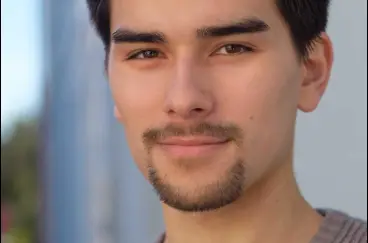
Table of Contents
Can Teenagers Really Grow a Beard? {#can-teenagers-grow}
Yes, but not all at the same speed. Facial hair growth is driven by testosterone and DHT (dihydrotestosterone), and both hormones ramp up gradually through puberty rather than switching on overnight. Some 16-year-olds already have a full jawline of hair. Others are still working with a mustache shadow and a few stray chin hairs at 19. Both are completely normal.
If you’re a teenager googling beard styles for teenagers, you’re probably somewhere in between: enough growth to work with, not quite enough to copy a grown man’s full beard. That’s the exact problem this guide solves.
Most guys don’t hit their genetic beard ceiling — the thickest and most even their beard will ever grow — until their mid-to-late twenties. So a beard at 17 is a checkpoint, not the final result. The goal right now is choosing a style that looks intentional with the hair you actually have, not the hair you’ll have in five years.
Why Teen Facial Hair Looks Patchy (And When That Changes) {#why-patchy}
Patchiness in young beards comes down to hair follicle density and how sensitive each follicle is to DHT. Some patches of your face — often the cheeks — have follicles that simply haven’t switched from fine vellus hair to thicker terminal hair yet. It’s not a sign anything is wrong, and it isn’t caused by shaving too early, despite what a lot of guys were told growing up.
A few honest points worth knowing:
- Beard density typically keeps improving until somewhere between ages 25 and 30.
- Genetics set the ceiling; nothing you buy raises that ceiling.
- Patchy at 16 doesn’t predict patchy at 22 — the cheeks are usually the last area to fill in.
- Ethnic background affects both density and growth rate, so comparing yourself to a friend’s beard timeline isn’t useful.
Understanding this early saves a lot of frustration. The right move isn’t fighting the patchiness — it’s picking a patchy beard style that works with it instead of against it.
The Best Beard Styles for Teenagers Right Now {#best-styles}
These styles are chosen specifically because they look deliberate on lighter, patchier, or uneven growth — the kind most teenagers are actually dealing with.
1. Stubble
Stubble is the single most reliable option for a teenager. It’s short, it’s forgiving of uneven density, and it reads as “grown man with a fresh look” rather than “kid trying to grow a beard.” Keeping it trimmed to somewhere between 1mm and 4mm hides gaps that would be obvious at fuller lengths. If you only take one style from this article, this is the one to try first — see the full stubble beard breakdown for lengths and upkeep.
Best for: almost every teenager, especially first-time growers. Maintenance: low — trim every 4–6 days with a guarded trimmer.
2. Light Corporate Beard
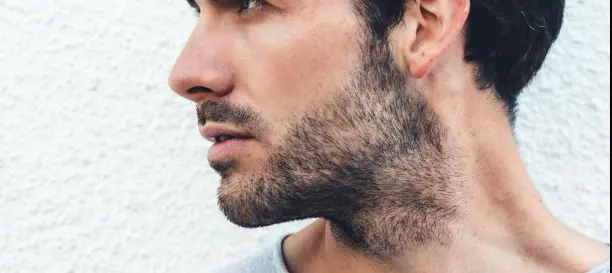
A short, tight, well-defined beard that stays close to the jaw and cheek line. It’s the same idea as a corporate beard that older professionals wear, just kept shorter to suit thinner teenage growth. Clean edges do more visual work than length here — a sharp neckline and cheek line make even a modest beard look finished.
Best for: teens with decent jaw and chin coverage but a thinner mustache or cheeks. Maintenance: moderate — needs a defined neckline and cheek line every 1–2 weeks.
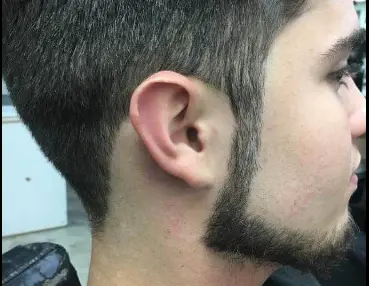
3. Chin Strap (Kept Thin and Tight)
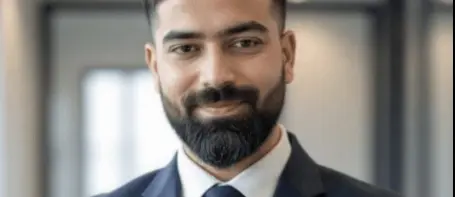
A narrow line of hair tracing the jaw works well when cheek and mustache growth are still patchy, because it deliberately avoids those areas. A thin chin strap beard gives definition without asking your face to produce hair it isn’t producing yet.
Best for: angular or square jawlines with strong chin-to-ear connection. Maintenance: high — needs a razor or precision trimmer every few days to stay sharp.
4. Soul Patch
A small patch of hair just below the lower lip. It’s low-commitment, doesn’t rely on cheek growth at all, and works as a starter style while you wait to see how the rest of your beard fills in. Check the soul patch guide for shaping tips.
Best for: teens with very light overall growth who still want something on their face. Maintenance: low.

5. Circle Beard
A thin mustache connected to a rounded chin beard. It’s a classic starter shape because it isolates the areas that grow in earliest for most teenagers — chin and upper lip. See the circle beard guide for the exact connecting technique.
Best for: round or oval faces, and teens whose mustache comes in before their cheeks do. Maintenance: moderate — the connection point needs regular touch-ups.
6. Light Goatee
A slightly fuller version of the circle beard, extending a bit more onto the chin. Works well once you’ve got a bit more density than a soul patch or circle beard needs.
Best for: teens 1–2 years into growth with decent chin coverage. Maintenance: moderate.
Quick Comparison Table
| Style | Growth Needed | Maintenance | Hides Patchiness |
| Stubble | Low | Low | Excellent |
| Light Corporate Beard | Medium | Medium | Good |
| Chin Strap | Low–Medium | High | Excellent |
| Soul Patch | Very Low | Low | Excellent |
| Circle Beard | Low–Medium | Medium | Good |
| Light Goatee | Medium | Medium | Good |
Styles Most Teenagers Should Hold Off On {#avoid-styles}
Some beard styles depend on volume and even density that most teenagers simply haven’t grown yet. Attempting them too early usually looks unfinished rather than intentional.
- Full long beards — a long beard style needs months of even, dense growth across the whole face. Gaps that are barely visible at stubble length become obvious once hair grows past an inch.
- Garibaldi or Bandholz-style beards — these bushy, full-volume looks (see Garibaldi beard and Bandholz beard) rely on density most guys don’t have until their mid-twenties.
- Mutton chops or handlebar mustaches — these require both patience and hair thickness that’s usually still a few years away for a teenager.
- Anchor or Van Dyke beards — sharp geometric shapes like the anchor beard or Van Dyke beard expose any patchiness immediately because the shape draws the eye to specific areas.
None of these are permanently off the table — they’re just better attempted once your beard has matured a bit more.
Matching a Teen Beard Style to Your Face Shape {#face-shape}
Face shape still matters at 16, even with lighter growth. A style that balances your proportions will look better with less hair than one that fights your natural shape.
- Round face — a chin strap or light goatee adds length and angle. Full guide: best beard for round face.
- Square face — stubble or a light corporate beard softens strong angles without hiding your jawline. See best beard for square face.
- Oval face — most styles on this list work; oval is the most forgiving shape. Details here: best beard for oval face.
- Diamond face — a fuller chin area balances a narrow jaw. Check best beard for diamond face.
- Heart-shaped face — width at the chin balances a wider forehead. See best beard for heart face.
If you’re not sure which shape you have, the general rule is to look at your face straight-on in a mirror and note where it’s widest — forehead, cheekbones, or jaw.
Dealing With a Patchy Beard as a Teenager {#patchy-fix}
Patchiness is the single biggest complaint teenagers have about growing facial hair, and it’s fixable with styling choices rather than products.
What actually helps:
- Let it grow for 4 weeks before judging it. Patches often fill in partially after the first month.
- Keep length short and even — long patchy hair reads as messy; short patchy hair reads as intentional stubble.
- Pick styles that avoid your weakest zones (usually the cheeks) rather than styles that highlight them.
- Trim with the grain and keep edges sharp — sharp lines distract from uneven density.
What doesn’t help:
- Beard growth oils and supplements — none have solid evidence of increasing follicle density or growth rate.
- Shaving more often to “thicken” hair — this is a myth; shaving doesn’t change hair thickness or growth speed.
- Comparing your timeline to friends’ — genetics vary enormously, even between brothers.
A Simple Grooming Routine for Young Beards {#grooming-routine}
A teenage beard doesn’t need a complicated routine, but a few habits make a real difference in how it looks day to day.
Daily:
- Wash your face (and beard) with a gentle cleanser to prevent buildup and breakouts under the hair.
- Brush or comb the beard to train hair direction, especially useful for the first few months of growth.
Weekly:
- Trim stray hairs and maintain your neckline and cheek line with a trimmer or razor.
- Apply a light, unscented moisturizer if skin underneath feels dry or itchy — a common issue in the first month of growth.
As Needed:
- Use a small pair of scissors to even out any noticeably longer or curlier hairs.
- Reassess your style every few weeks as density changes — a soul patch today might become a circle beard in two months.
For a deeper breakdown of tools, timing, and technique, the beard care guide and how to trim a beard guide cover it step by step.
Mistakes Teenagers Make With Facial Hair {#mistakes}
- Trimming too aggressively too early. Give growth a few weeks before shaping it — you can’t add hair back once it’s cut.
- Ignoring the neckline. An undefined neckline is one of the fastest ways to make any beard look unkempt, regardless of style.
- Copying a style from social media without checking face shape. A style that looks great on someone with a different jawline or density won’t translate the same way.
- Skipping skincare underneath. Teenage skin is often oilier, and hair traps oil and sweat, which can worsen breakouts if you don’t wash regularly.
- Using strong products meant for adult beards. Some beard oils and balms are formulated for coarser, denser hair and can feel heavy or greasy on lighter teen growth — less product, applied less often, usually works better.
When It’s Worth Talking to a Doctor {#doctor}
Most patchy or slow-growing teen beards are just normal development — no action needed beyond patience. That said, a few signs are worth mentioning to a doctor or dermatologist:
- Bald patches with a smooth, shiny texture rather than just thin hair (can indicate alopecia areata).
- Facial hair that hasn’t started at all by the late teens alongside other signs of delayed puberty.
- Persistent redness, itching, or bumps under the beard that don’t clear up with basic hygiene.
Organizations like the American Academy of Dermatology are a solid, trustworthy resource if you want more detail on skin or hair-related concerns specific to your situation. A GP visit is a reasonable first step rather than self-diagnosing from what you find online.
Final Thoughts
A beard at 16, 17, or 19 doesn’t need to look like your dad’s beard or a barber shop poster. The best beard styles for teenagers are the ones that work with the hair you actually have right now — usually shorter, tighter, and cleaner-edged styles like stubble, a light corporate beard, or a chin strap. Give it time, keep it groomed, and let the fuller styles wait until your genetics catch up. If you want more style options as your growth fills in, the full types of beard styles guide is a good next stop, and if you’re dealing with uneven bald spots specifically, the beard styles for bald men guide has some crossover techniques worth borrowing.
FAQs {#faqs}
1. What is the best beard style for a teenager? Stubble is generally the best beard style for teenagers because it’s short, low-maintenance, and hides uneven density better than any longer style.
2. At what age can a teenager start growing a beard? Facial hair growth usually begins between ages 13 and 16 with puberty, though visible, shaveable growth often doesn’t appear until 16–18 depending on genetics.
3. Why is my teenage beard patchy? Patchiness happens because facial hair follicles mature at different rates across the face, with cheeks usually being the last area to fill in — it’s normal and typically improves with age.
4. Does shaving make a teenager’s beard grow thicker? No. Shaving does not change hair thickness, density, or growth rate — this is a long-standing myth with no supporting evidence.
5. What age does a beard fill in completely? Most men see their fullest, most even beard growth between ages 25 and 30, though this varies significantly by genetics.
6. Can a 16-year-old have a full beard? Some can, depending on genetics and puberty timing, but most 16-year-olds have partial growth better suited to shorter styles like stubble or a light goatee.
7. What’s the best beard style for a patchy teenage beard? Short, defined styles — stubble, a chin strap, or a soul patch — work best because they avoid drawing attention to thin areas.
8. Should teenagers use beard oil? A light, unscented moisturizer can help with itchiness in early growth, but growth-boosting oils and supplements have no solid evidence behind them.
9. How often should a teenager trim their beard? Every 4–7 days is typical for maintaining a defined shape, though this depends on the chosen style and how fast the hair grows.
10. Is it normal for a teenager’s mustache to grow before the rest of the beard? Yes, the mustache and chin area are usually among the first regions to develop visible hair, with cheeks filling in later.
11. What beard styles should teenagers avoid? Full, high-volume styles like Garibaldi or Bandholz beards, along with sharp geometric shapes like the Van Dyke, generally look better once beard density has matured.
12. Can diet or supplements speed up teen beard growth? No specific diet or supplement has strong evidence for accelerating facial hair growth beyond normal, healthy nutrition supporting overall development.
13. Is a patchy beard a sign of low testosterone? Not necessarily — beard density is influenced more by localized DHT sensitivity in facial hair follicles than by overall testosterone levels, and patchiness is common and normal in teenagers.
14. What’s the easiest beard style to maintain for a teenager? Stubble is the easiest, requiring only a quick trim every several days with a guarded trimmer and no complex shaping.
15. Should I see a doctor about slow beard growth? Usually not necessary — slow growth is typically genetic — but smooth bald patches or a complete absence of any facial hair by the late teens are worth mentioning to a doctor.