 By Beard Style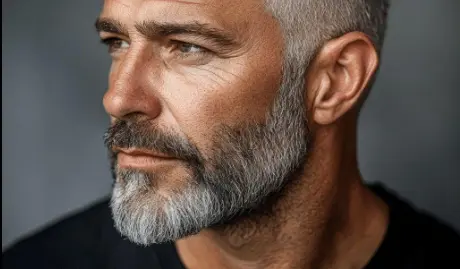
Table of Contents
Why Facial Hair Goes Grey Before (or After) the Hair on Your Head
Grey beard styles have become one of the most searched grooming topics for men over 35, mostly because facial hair almost never goes grey on the same schedule as scalp hair. Pigment cells in beard follicles tend to slow down earlier than the ones on your head, which is why plenty of men in their late twenties and early thirties notice silver strands in the chin and sideburns years before their hairline shows a single one.
This isn’t a sign of poor health or premature aging in most cases. It’s simply how melanin production works follicle by follicle, influenced heavily by genetics, and to a smaller extent by stress and lifestyle. Some men go salt-and-pepper gradually over a decade. Others notice a patch turn silver almost overnight around one temple of the jaw. Both are normal.
What matters more than why it happens is how you work with it. A well-groomed grey beard reads as distinguished and deliberate. A neglected one just looks unkempt, regardless of how good the underlying growth is. The rest of this guide covers the specific grey beard styles, care adjustments, and honest trade-offs worth knowing before you commit to a look.
Salt-and-Pepper, Full Grey, or White: Why the Difference Matters for Styling
Quick answer for anyone skimming: salt-and-pepper beards mix dark and grey strands unevenly, full grey beards have converted most of the pigment across the whole beard, and white beards have lost pigment almost entirely. Each stage changes how length, shape, and product choice should be handled.
| Stage | What It Looks Like | Styling Consideration |
| Salt and Pepper | Mixed dark and silver strands, often patchy | Texture blending matters most |
| Full Grey | Mostly uniform silver-grey tone | Shape and edges become the focus |
| White Beard | Minimal to no pigment left | Skin tone and yellowing prevention matter most |
Salt and pepper beard styling is really about disguising the uneven mix so it looks intentional rather than blotchy. A full grey beard has already solved that problem since the tone is consistent, so the attention shifts to keeping the shape sharp. White beard styling adds a new consideration entirely: white and grey hair yellows over time from UV exposure, smoking, certain shampoos, and even hard water, so care habits become part of the style itself.
The 12 Best Grey Beard Styles Right Now
These grey beard styles were chosen because they either work with uneven salt-and-pepper texture, showcase a fully converted silver tone well, or suit the coarser hair that often comes with grey facial hair.
1. Full Grey Bandholz
A long, full, natural beard grown without much shaping. On grey hair, a Bandholz beard has serious visual weight and reads as commanding rather than unkempt, especially once the beard passes the four-inch mark and the silver tone becomes the dominant feature of the face.
2. Grey Garibaldi
Rounded, full, and slightly wild at the edges, the Garibaldi beard suits men whose grey growth is thick and slightly coarse in texture. The rounded shape softens a lot of the sharper angles that come with an aging jawline.
3. Short Boxed Grey Beard
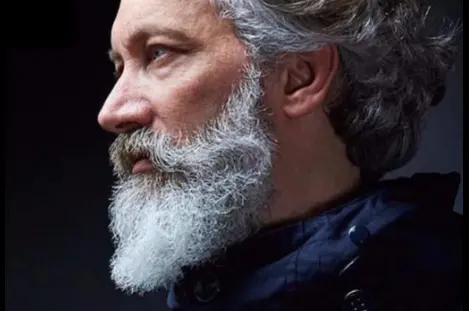
Tight, straight lines with length kept under an inch. This is one of the most reliable grey beard looks for professional settings because it reads as neat and controlled rather than dramatic.
4. Corporate Grey Beard
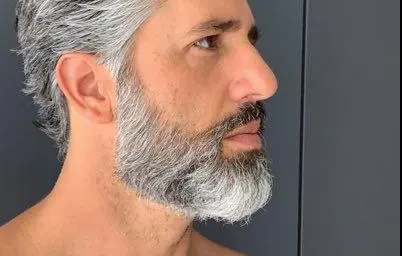
A close, clean corporate beard barely longer than heavy stubble, with crisp edges. This is the easiest entry point if you’re not ready to commit to a longer silver beard style and want something low-maintenance that still looks polished in an office environment.
5. Salt and Pepper Stubble
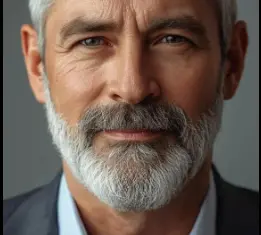
For men still in the mixed-tone stage, keeping the beard at 2–4mm stubble blends dark and grey strands into a single textured shadow instead of a scattered pattern. It’s arguably the lowest-effort of all grey beard ideas and works on nearly every face shape.

6. Grey Van Dyke
Isolating a goatee and mustache while keeping the cheeks shaved works particularly well once cheek hair has gone fully grey but chin hair still holds some pigment. The Van Dyke format keeps the contrast intentional rather than accidental.
7. Distinguished Medium Beard
A medium beard style around 1–2 inches with rounded, slightly tapered edges. This length is long enough to show off a full grey or white tone clearly without the maintenance demands of a longer beard.
8. Grey Circle Beard
A tight circle beard connecting mustache and chin hair. This suits men with thinner overall density whose grey growth is concentrated more around the mouth than the cheeks.
9. White Beard With Tapered Sides
For men fully into the white beard stage, tapering the length shorter near the ears and longer at the chin creates a flattering vertical line and avoids the “cloud” effect that a uniform-length white beard can sometimes create under bright light.
10. Grey Chin Strap With Stubble Fill
A defined chin strap paired with light stubble across the cheeks. This works well for men whose jawline growth has gone fully silver while the cheeks are still catching up, creating natural depth instead of an obvious two-tone patch.
11. Grey Extended Goatee
An extended goatee connects the mustache to the chin along a thin jawline strip. On silver hair, the thinner strip keeps the look modern rather than heavy, which suits narrower or longer face shapes especially well.
12. Grey Mutton Chops
A bolder, more old-fashioned option. Mutton chops on fully grey or white hair have a distinctly vintage, statement quality, and work best on men with strong jaw definition who want a style that stands out rather than blends in.
Matching a Grey Beard Styles to Your Face Shape
Grey or not, proportion rules for beards don’t change with hair color, though lighter tones can make a shape look slightly larger visually than the same shape in dark hair, since silver catches more light.
- Round face: Angular styles like the Van Dyke or a tapered white beard add definition. See best beard for round face
- Square face: A rounded Garibaldi or circle beard softens strong jaw angles. Full guide: best beard for square face
- Long or oblong face: Keep length moderate and avoid excessive chin length, which can stretch the face further. See best beard for oblong face
- Triangle face: A fuller cheek beard like the Garibaldi balances a narrower jaw. More detail here: best beard for triangle face
- Diamond face: A chin strap or extended goatee balances a narrower forehead and chin. See best beard for diamond face
Why Grey Beard Hair Needs a Different Care Routine
Grey and white facial hair isn’t just a color change. The hair shaft itself behaves differently once pigment production slows down, and most standard beard care advice doesn’t account for this.
It’s usually coarser and drier. Melanin isn’t just color, it also affects the hair’s structure. Grey hair tends to have a wirier texture and holds less natural moisture, which is why grey beards can look dull or frizzy even when regular dark beards in similar condition look fine.
It yellows with exposure. UV light, cigarette smoke, pollution, and minerals in hard water can all cause white and grey hair to take on a yellow or brassy tint over time. This is one of the most common frustrations men raise about white beard maintenance.
It’s more visible when uneven. Because grey and white strands reflect more light, any unevenness in length or shape is far more noticeable than it would be in a dark beard. Sharp trimming becomes more important, not less.
Adjustments that actually help:
- Switch to a moisturizing beard oil or balm with a heavier base, since coarser hair needs more conditioning than fine dark hair
- Use a purple or blue-toned beard shampoo occasionally to counteract yellowing, the same principle used in silver hair shampoos for scalp hair
- Apply SPF-containing balm or a beard-safe sunscreen if you spend a lot of time outdoors, since UV exposure is a major contributor to yellowing
- Brush daily with a boar-bristle brush to distribute natural oils and reduce the wiry, frizzy look coarser grey hair can develop
- Trim more frequently than you might with a dark beard, since split ends and uneven edges show up more clearly against silver or white tones
Our full beard care guide covers general routine building, and how to trim a beard is worth revisiting even for experienced groomers, since grey beard styles benefit from slightly more frequent edge maintenance than darker ones.
Should You Dye a Grey Beard? Honest Pros and Cons
This comes down to personal preference, not a grooming rule. Both choices are legitimate.
| Dyeing | Staying Natural | |
| Pros | Restores a uniform, younger-looking tone; useful for specific events or roles | Zero maintenance cost; often reads as confident and distinguished; no risk of harsh regrowth lines |
| Cons | Requires touch-ups every 3–4 weeks as roots grow in; some dyes irritate sensitive facial skin; can look artificial if not color-matched carefully | Salt-and-pepper transition phase can look uneven for a while |
| Best for | Men in client-facing roles wanting a specific look, or anyone just testing the change | Men comfortable with a natural, low-maintenance grey beard styles |
If you do decide to dye, use a beard-specific formula rather than head hair dye, since facial skin is more sensitive and beard dyes are typically gentler and shorter in processing time. A patch test 48 hours before a full application is standard practice and worth doing every time, even with a brand you’ve used before.
Common Grey Beard Problems and How to Fix Them
Yellowing or brassy tone Caused by UV exposure, smoking, or mineral buildup from hard water. Fix it with a purple-toned beard wash once or twice a week and rinsing with filtered water where possible.
Wiry, frizzy texture Coarser grey hair holds less moisture. A daily leave-in beard oil with a heavier carrier like argan or castor oil helps soften the texture noticeably within a few weeks.
Patchy salt-and-pepper look This is often just a transition phase. Keeping the beard slightly shorter during this stage blends dark and grey strands more evenly than longer lengths do.
Beard looks older than intended This usually comes down to shape, not color. A sharp, well-defined edge along the cheek line and neckline reads as intentional and modern regardless of hair color. Vague or fuzzy edges are what actually age a look.
Skin irritation from dye Switch to a beard-specific, ammonia-free formula and always patch test first. If irritation continues, a dermatologist consultation is worthwhile, and the British Association of Dermatologists publishes useful, non-commercial guidance on hair dye sensitivity.
Grey Beard Advice by Age Group
Men in their 30s noticing early grey Salt-and-pepper stubble or a short boxed beard usually looks the most natural at this stage, since the contrast between dark and silver hair is still developing.
Men in their 40s This is often when grey beard styles start to look genuinely distinguished. A medium beard or Van Dyke works well, and our guide on beard styles for men over 40 covers style choices specific to this stage in more depth.
Men in their 50s and beyond Fuller grey or white beard styles like the Bandholz or Garibaldi carry real presence at this age, and skin and hair care become more important than shape experimentation. See beard styles for men over 50 for more specific guidance on density, thinning, and styling at this stage.
A Realistic Weekly Maintenance Routine
| Day | Task |
| Daily | Brush beard, apply moisturizing oil |
| Every 4–5 days | Trim to maintain shape and edges |
| Weekly | Wash with a purple-toned or gentle beard shampoo |
| Weekly | Redefine cheek line and neckline |
| Bi-weekly | Deep condition with a richer balm |
| As needed | Touch up dye if coloring, always with a fresh patch test |
FAQs
What are the best grey beard styles for older men? Fuller shapes like the Bandholz or Garibaldi tend to suit older men well, since longer length shows off a fully converted silver or white tone, while sharper edges keep the overall look controlled rather than untidy.
Why is my beard turning grey before the hair on my head? Melanin production often slows down earlier in facial hair follicles than scalp follicles. This is a normal genetic pattern and isn’t typically linked to poor health.
How do I stop my white beard from turning yellow? Limit UV exposure with a beard-safe SPF balm, avoid smoking near your beard, use a purple-toned beard wash weekly, and rinse with filtered water if your tap water is hard.
Should I dye my grey beard or leave it natural? Both are valid choices. Dyeing restores a uniform tone but needs touch-ups every few weeks, while staying natural is lower maintenance and often reads as distinguished, especially once the salt-and-pepper transition phase is behind you.
Does grey beard hair need different products than dark beard hair? Yes. Grey and white hair is usually coarser and drier, so heavier oils and balms work better than lightweight formulas made for darker, finer hair.
At what age do most men’s beards start going grey? It varies widely by genetics, but many men notice the first grey strands in their beard in their late twenties to mid-thirties, often years before scalp hair follicles show any change.
Can stress cause a beard to go grey faster? Stress is thought to play a role in some cases, though genetics remain the primary driver of when and how facial hair loses pigment.
What’s the difference between salt and pepper beard styling and full grey beard styling? Salt-and-pepper styling focuses on blending mixed dark and silver strands so the beard doesn’t look patchy, while full grey styling focuses more on shape and edge definition since the tone is already uniform.
Is a longer or shorter beard better for hiding grey unevenness? Shorter lengths, like stubble or a short boxed beard, usually blend uneven salt-and-pepper strands more evenly than longer lengths, where the contrast between dark and grey hair becomes more visible.
Do grey beards make a face look older? Not inherently. Shape and grooming have a much bigger impact on perceived age than hair color. A sharp, well-maintained grey beard often reads as more distinguished, not older.
What is the lowest maintenance grey beard styles? Salt-and-pepper stubble or a corporate beard require the least daily upkeep, since both stay short enough to avoid major shaping demands while still looking polished.
Can I use regular hair dye on my beard? It isn’t recommended. Facial skin is more sensitive than the scalp, and beard-specific dyes are formulated with gentler ingredients and shorter processing times to reduce irritation risk.
Why does my grey beard feel wiry compared to before? Reduced melanin changes the internal structure of the hair shaft, often making it coarser and less able to hold moisture, which is why grey hair frequently feels wirier than the same hair did when it had pigment.
Final Thoughts
A grey beard isn’t something to disguise or rush through, it’s a stage that comes with its own set of styling advantages once you understand how to work with it. The right grey beard styles depend less on hiding the silver and more on choosing a shape that suits your face, keeping the edges sharp, and adjusting your care routine for coarser, drier hair. Whether you’re still in the salt-and-pepper stage or fully into white beard territory, consistency with grooming will do more for how the look reads than any single product.
If you’re exploring other stages of beard density alongside the color change, our guides on thin beard styles and thick beard styles cover how growth pattern interacts with styling choices, and the full types of beard styles library is a good next stop for finding your next look.
Suggested Image ALT Text: “Man with a well-groomed grey beard styles and sharp cheek line”