 By Bread Styles Team
Table of Contents
1. What Counts as “Long Hair” When Pairing With a Beard?
For grooming purposes, hair is generally considered “long” once it passes the ear and reaches the collar or beyond, giving it enough length to tie back, braid, or style with product. Anything shorter usually falls into medium-length territory instead.
This distinction matters because beard styles with long hair rely on that extra length for movement and shape. A beard sitting under three inches of loose or tied-back hair reads completely differently than the same beard under a short crop. The hair becomes part of the frame around your face, not just something sitting on top of it.
2. Why Long Hair and a Beard Work So Well Together
There’s a practical reason barbers keep recommending this combination rather than pushing every client toward a short crop and trimmed stubble.
- Facial balance. Long hair adds visual weight up top, which can offset a heavier jaw or beard.
- More styling range. You can wear it loose one day, tied up the next, without touching the beard at all.
- A stronger, more rugged aesthetic. Long hair paired with a full beard tends to read as more masculine and lived-in than a polished short-hair look.
- Less frequent cutting. Once both are grown in, you’re mostly maintaining length rather than constantly reshaping it.
None of that means the combination is effortless. Long hair and a full beard both need daily care, and skipping it shows fast — more on that later.
3. Best Beard Styles with Long Hair
Here are the pairings that come up most often in the chair, ranked roughly from easiest to maintain to most involved.
Loose Long Hair with a Full Beard
The simplest version: hair left down, natural texture showing, paired with a dense full beard. This works well for men who don’t want to spend time styling either element daily.
- Maintenance: Low for the hair, moderate for the beard
- Best for: Casual, everyday wear
- Tip: A light sea-salt spray adds texture without weighing the hair down
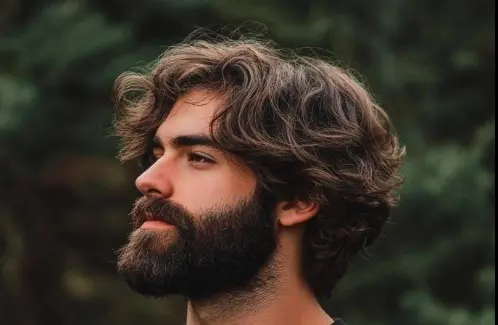
Man Bun Beard
The man bun beard combo pulls long hair back into a bun or half-bun, leaving the beard as the main focal point of the face. It’s one of the most searched pairings for a reason — it keeps hair out of the way while still showing off length.
- Maintenance: Moderate; hair needs to be long enough to tie without flyaways
- Best for: Work environments where loose hair isn’t practical, gym-goers, warmer climates
- Pairs well with: A bandholz beard or any dense, natural-growth beard
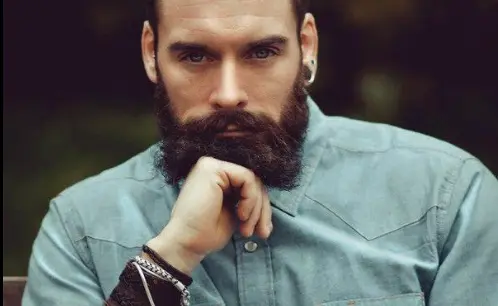
Top Knot with Beard
A tighter, higher variation of the man bun, styled at the crown rather than the back of the head. It creates more height and works especially well with round or square face shapes.
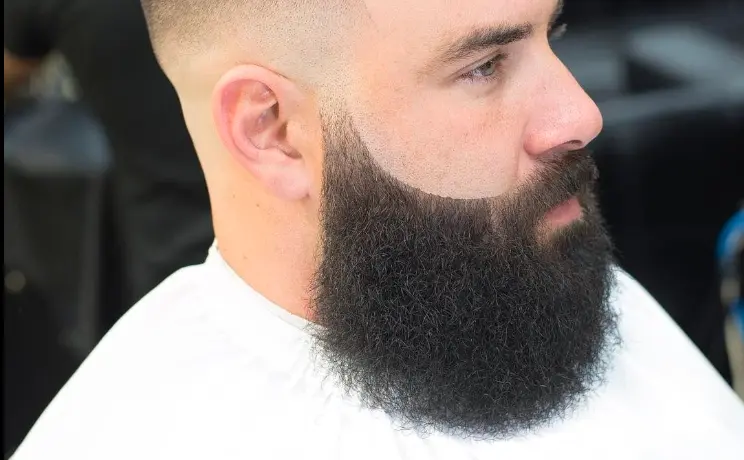
Slicked-Back Long Hair with Beard
Hair combed straight back using a pomade or clay, paired with a tighter, more groomed beard shape. This is the most polished version of the pairing and the one that translates best to formal or business settings.
- Best for: Interviews, weddings, client-facing roles
- Pairs well with: A corporate beard shape, kept tight along the cheek and neckline
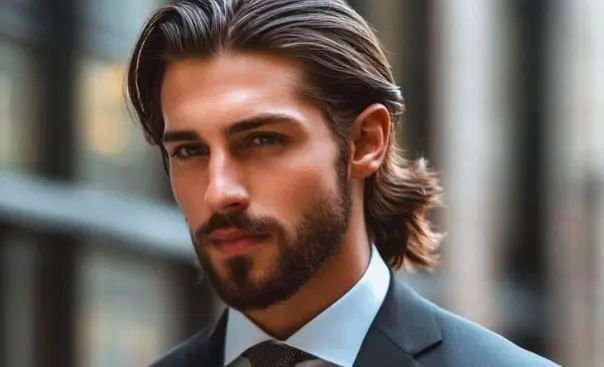
Viking-Inspired Long Hair and Beard
This is where Viking hair comes in — long, often loosely tied or partially braided, paired with a thick, untrimmed or lightly shaped beard. The look draws from Norse and Nordic grooming traditions and has become a dedicated style category of its own.
- Best for: Men wanting a bold, historical-inspired aesthetic
- Pairs well with: Our dedicated Viking beard styles guide, which covers braiding techniques and beard bead placement in more depth
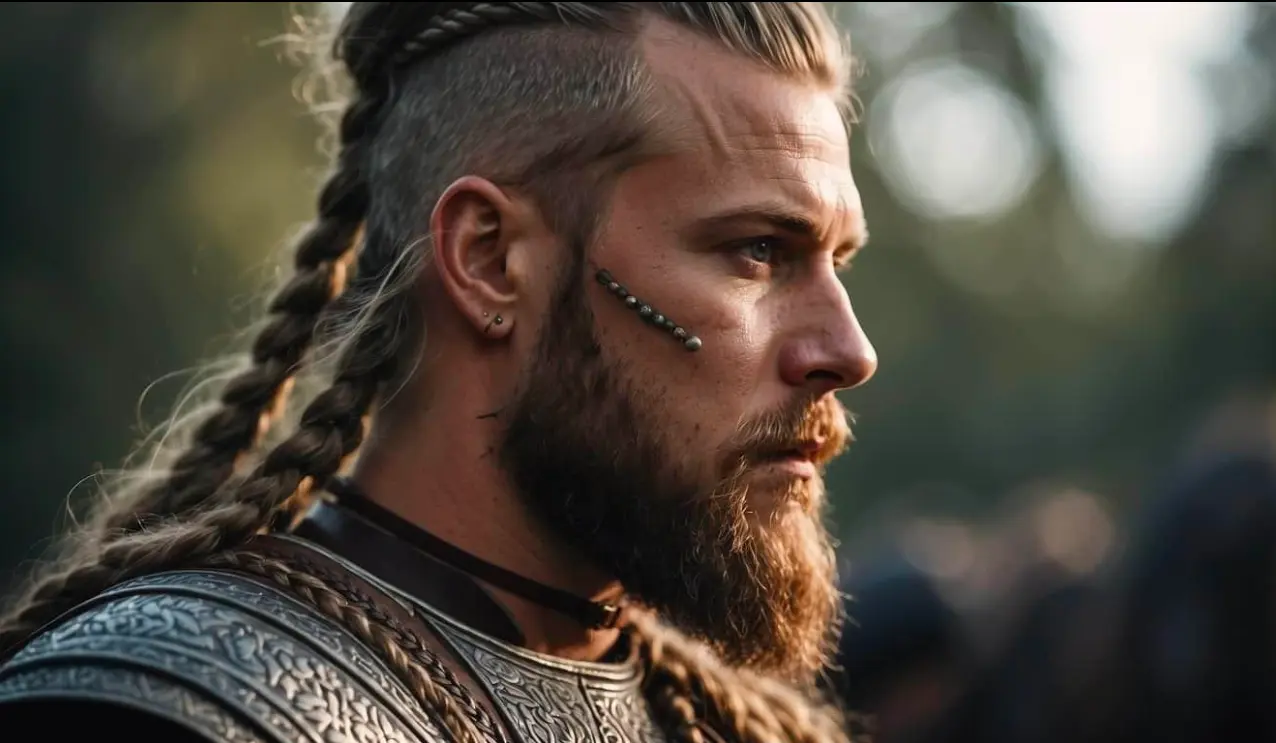
Braided Long Hair with Beard
Full braids, whether a single plait or multiple smaller ones, paired with a longer beard. This takes the most upkeep of any option on this list but delivers the most distinctive result.
- Maintenance: High; braids need to be redone every few days to look neat
- Best for: Special occasions, festivals, men who enjoy the styling process itself
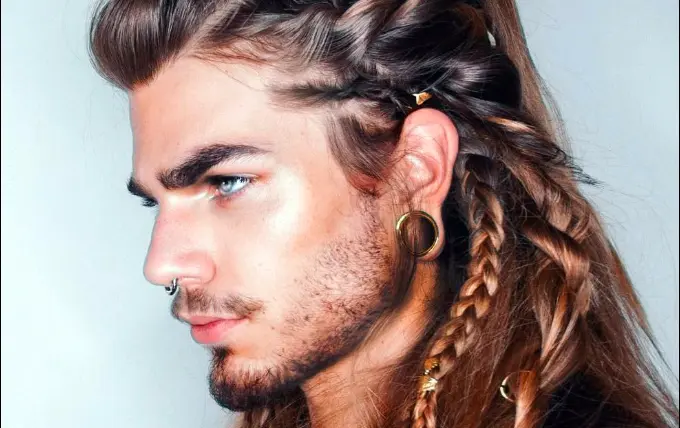
Long Hair with a Ducktail Beard
Pairing long, loose hair with a beard shaped into a tapered point at the chin — a ducktail beard — creates a strong vertical line that balances the width added by long hair on the sides.
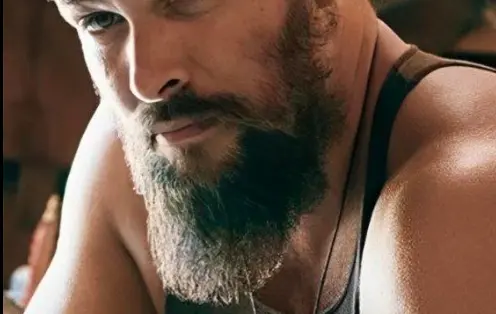
Man Bun with a Van Dyke
For a less common but sharp option, a tied-back man bun paired with a Van Dyke beard — mustache and pointed chin beard without connecting sideburns — creates contrast between a soft, relaxed hairstyle and a precise, structured beard shape.
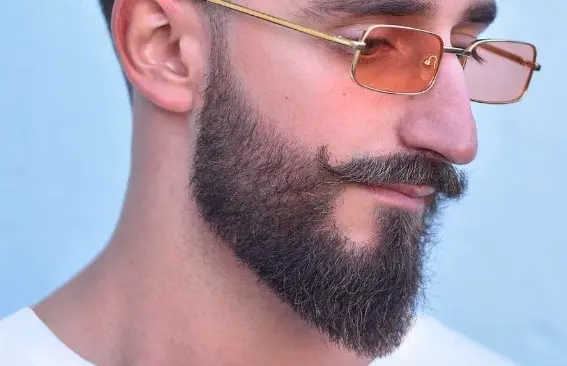
Long Hair with a Garibaldi Beard
A rounder, fuller Garibaldi beard under loose or half-tied long hair leans into volume on both ends, which suits narrower face shapes especially well.
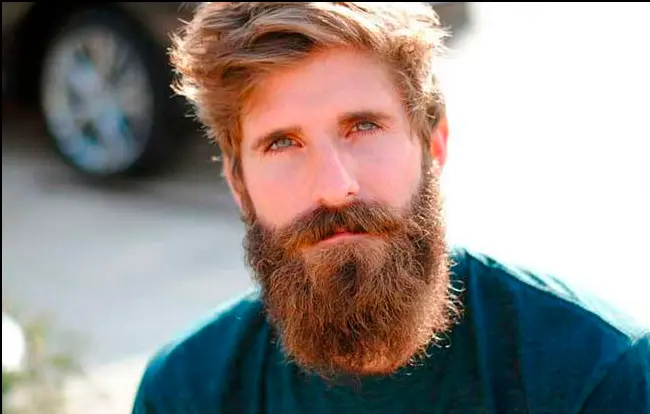
Quick Reference Table
| Pairing | Maintenance | Best Setting | Face Shapes It Suits |
| Loose hair + full beard | Low | Casual | Oval, oblong |
| Man bun beard | Moderate | Work, gym, everyday | Round, square |
| Top knot + beard | Moderate | Casual to smart-casual | Round, square |
| Slicked back + beard | Moderate | Formal, professional | Most shapes |
| Viking hair + beard | High | Statement look | Square, oblong |
| Braided hair + beard | High | Occasions, events | Oval, diamond |
4. Matching a Long Hairstyle with Beard to Your Face Shape
Face shape changes how much volume you want on top versus at the jaw. Getting this wrong is the most common reason a long hairstyle with beard ends up looking unbalanced rather than intentional.
| Face Shape | Recommended Pairing | Reasoning |
| Round | Top knot or man bun with a longer beard | Adds height, elongates the face |
| Square | Slicked-back hair with a slightly rounded beard | Softens strong jaw angles |
| Oval | Almost any pairing works | Balanced proportions |
| Diamond | Loose hair with fuller cheek beard growth | Balances a narrow forehead and chin |
| Heart | Man bun with volume at the jaw | Adds width lower on the face |
| Oblong | Loose or half-tied hair, avoid excess height | Prevents the face from looking longer |
| Triangle | Voluminous top hair, tighter beard sides | Balances a narrower forehead |
For a closer look at your specific shape, see our guides on round face, square face, oval face, diamond face, heart face, oblong face, and triangle face shapes.
5. Long Hair Beard Styles by Hair Texture
Hair type changes how a style behaves day to day, not just how it looks in a photo.
- Straight hair: Holds sleeker looks like slicked-back styles well, but tends to slip out of buns and braids faster.
- Wavy hair: Probably the easiest texture to work with — holds loose styles and buns without much product.
- Curly hair: Adds natural volume, which suits Viking-inspired and loose looks especially well. Check our curly beard styles guide if the beard itself is curly too, since curly beard hair often needs different product than curly head hair.
- Thick, coarse hair: Holds braids and buns the longest between restyles but can take longer to grow to a workable length.
6. Growing and Maintaining the Combination
Growing both a long beard and long hair at the same time takes patience, and the two don’t grow at identical rates.
Growth stages to expect:
- Months 1–3: Beard reaches stubble-to-short stage; hair passes the ears
- Months 4–6: Beard fills in past patchy stage for most men; hair reaches collar length, tying becomes possible
- Months 6–12: Both reach a length where real styling options — buns, braids, slicking — become practical
- 12+ months: Full Viking-length hair and beard, if that’s the goal
Daily maintenance checklist:
- Wash beard and hair separately using products made for each — beard hair and scalp hair have different oil needs
- Apply beard oil daily to prevent dryness and itchiness as the beard grows past the awkward stage
- Brush the beard downward and outward to train growth direction and prevent tangling with head hair
- Use a leave-in conditioner or light oil on hair ends to prevent split ends at longer lengths
- Trim beard neckline and cheek line every 2–3 weeks even while growing length, using our beard neckline and beard cheek line guides to keep edges defined without shortening overall length
For the full grooming routine covering washing frequency, oils, and balms, our beard care guide is the more detailed resource.
7. Styling Difficulty and Realistic Timeline
Be honest with yourself about the time commitment before chasing a specific look.
| Style | Difficulty | Daily Styling Time |
| Loose hair + full beard | Easy | Under 5 minutes |
| Man bun beard | Easy to moderate | 5–10 minutes |
| Slicked back + beard | Moderate | 10 minutes |
| Viking hair + beard | Moderate to hard | 10–15 minutes |
| Braided hair + beard | Hard | 15–25 minutes |
Realistic expectation: Most men reach a workable long hair and beard combination between six and twelve months of consistent, uninterrupted growth. Trimming split ends and shaping the beard edges during this period does not meaningfully slow overall length — skipping it just leads to a scraggly result at the end.
8. Long Hair Beard vs. Short Hair Beard
| Factor | Long Hair + Beard | Short Hair + Beard |
| Styling time | 5–20 minutes daily | Under 5 minutes |
| Maintenance frequency | Trim every 2–4 weeks | Trim every 3–5 weeks |
| Professional settings | Works if tied back or slicked | Works in almost any setting |
| Visual impact | Bold, distinctive | Clean, low-key |
| Best paired with | Full or dense beards | Any beard length, including fades and beard styles with fade |
9. Common Mistakes to Avoid
- Growing hair and beard with zero shaping. Length alone doesn’t create a style — neckline, cheek line, and hair ends still need regular attention.
- Using the same product on hair and beard. Beard hair is coarser and needs richer oils; regular hair pomade can leave beard hair greasy and flat.
- Skipping the in-between stage. Months two through four often look messy for both hair and beard. Trimming split ends and edges during this window makes the eventual full-length result look far more deliberate.
- Forcing a style that doesn’t suit your hair texture. Trying to force straight hair into a Viking-style loose wave usually needs more product than it’s worth — work with your natural texture instead.
- Ignoring face shape. A long hairstyle with beard that adds height and volume in the wrong places can throw off facial proportions rather than improving them.
10. Who This Combination Suits Best
- Men who prefer low daily maintenance once both are grown in, since a lot of the effort is front-loaded during the growing-out phase
- Men in creative or flexible-dress workplaces, where a bolder look is welcomed rather than restricted
- Men with naturally wavy or thick hair, since these textures hold length-based styles with less product and effort
- Men who already grow a dense, even beard, since long hair styles tend to look most balanced against a fuller long beard style rather than a patchy one
If beard density is inconsistent, it’s worth reading our patchy beard guide before committing to the longer growth timeline this combination requires.
11. Conclusion
Beard styles with long hair take more patience than a short crop and trim, but the payoff is a look that’s genuinely hard to replicate with shorter hair. Whether you land on a low-effort loose style, a practical man bun beard for the gym and office, or a full Viking hair and beard combination for something bolder, the two elements need to be grown and shaped together rather than treated as separate projects. Get the growth stages, face shape fit, and daily maintenance right, and the combination holds its shape instead of just getting longer without direction.
12. FAQs
What is the best beard style to pair with long hair? A full, dense beard generally pairs best with long hair, since it matches the volume of the hairstyle. A man bun beard or loose long hair with a full beard are the two most versatile combinations for everyday wear.
How long does hair need to be for a man bun beard look? Hair generally needs to reach at least the nape of the neck, roughly four to six inches, before it can be tied into a secure bun without flyaways.
Does long hair with a beard suit every face shape? Not identically. Round and square face shapes tend to benefit from added height, like a top knot, while oblong faces usually look better with looser, lower-volume styling to avoid elongating the face further.
How long does it take to grow both a beard and long hair together? Most men reach a workable combination between six and twelve months, though this varies by natural growth rate. The beard typically becomes styleable before the hair reaches a length that can be tied back.
What is Viking hair, and does it require a specific beard style? Viking hair refers to long, often loosely tied or braided hairstyles inspired by Norse grooming traditions. It’s typically paired with a thick, natural beard, sometimes incorporating small braids or beard beads for a more traditional look.
Can curly hair work with these long hair beard styles? Yes. Curly hair naturally suits loose and Viking-inspired styles well, since the texture adds volume without extra styling product. Buns and slicked-back looks take slightly more effort with curly textures.
Is a long hairstyle with beard appropriate for a professional workplace? It can be, especially when styled neatly — a slicked-back or tied-back man bun beard reads as polished, while fully loose or braided styles may suit more casual or creative environments better.
How often should I trim my beard while growing it long alongside my hair? Trimming the neckline and cheek line every two to three weeks keeps the beard’s edges defined without meaningfully slowing overall length growth.
Do long hair and beard combinations need different products for each? Yes. Beard hair is coarser than scalp hair and benefits from a dedicated beard oil or balm, while head hair typically needs a separate conditioner, pomade, or styling cream suited to its texture.
What’s the biggest mistake men make growing long hair and a beard together? Skipping shaping entirely during the growth phase. Letting both grow with no trims to the neckline, cheek line, or hair ends usually results in a messy look rather than an intentional one.
Can thin or patchy beards work with long hairstyles? They can, but the pairing tends to look more balanced with fuller beard growth. If patchiness is significant, addressing it first with targeted grooming or a slightly shorter beard shape usually gives a cleaner overall result.
Does age affect which long hair beard style looks best? Yes, to some extent. Younger men tend to pull off bolder options like Viking hair or full braids more easily, while slicked-back or tied styles with a well-groomed beard often look more polished on older men.