 By Bread Styles Team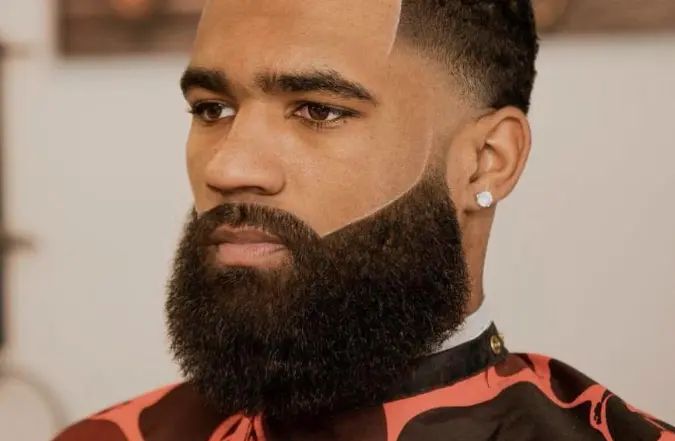
Table of Contents
1. Why Coily and Curly Beard Hair Needs Its Own Approach
Beard hair on Black men typically grows in a curved follicle shape, which produces the coily or tightly curled texture most common in this hair type. That curve is also what makes it prone to curling back into the skin as it grows, which is the root cause of razor bumps and ingrown hairs.
This is why generic grooming advice often falls short. Beard styles for Black men need to account for curl pattern from the very first trim, not just the final shape. Get the growth and shaving technique right, and almost any style on this list becomes realistic. Skip that step, and even a simple stubble look can turn irritated and patchy.
The good news: once you understand a few technique adjustments, coily beard hair is genuinely versatile. It holds shape well, adds natural volume, and suits a wider range of styles than people often expect.
2. Best Beard Styles for Black Men
Here are the styles that come up most often in the chair, along with what makes each one work well with coilier, denser hair textures.
Full Beard
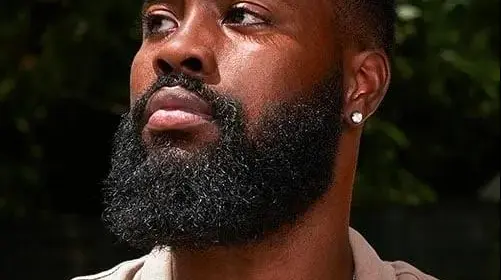
A dense, natural full beard is one of the most flattering options, since coily hair naturally fills in with volume that straighter textures take longer to build. Minimal shaping is needed beyond a clean neckline and cheek line.
- Best for: Men with even growth across the jaw and cheeks
- Maintenance: Trim every 3–4 weeks to maintain shape
Fade Beard
Pairing a beard with a skin or taper fade is one of the most requested combinations in modern barbershops. The tight fade contrasts sharply against the beard’s natural volume, giving the whole look a crisp, defined edge.
- Best for: Men wanting a modern, sharp appearance
- Maintenance: Touch-up every 2–3 weeks since fades grow out fastest
Boxed Beard
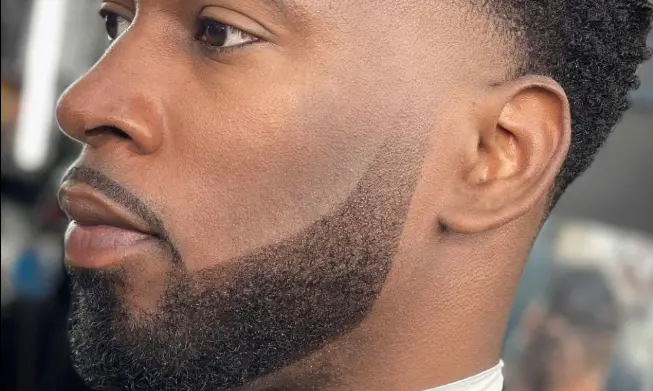
A boxed beard uses hard, straight lines along the cheek and jaw to create a clean, geometric shape. It’s one of the most popular black beard ideas because it works exceptionally well with denser, coilier hair that holds a defined edge without softening.
- Best for: Men who want structure without going as short as a corporate beard
- Maintenance: Line-up every 1–2 weeks to keep edges sharp
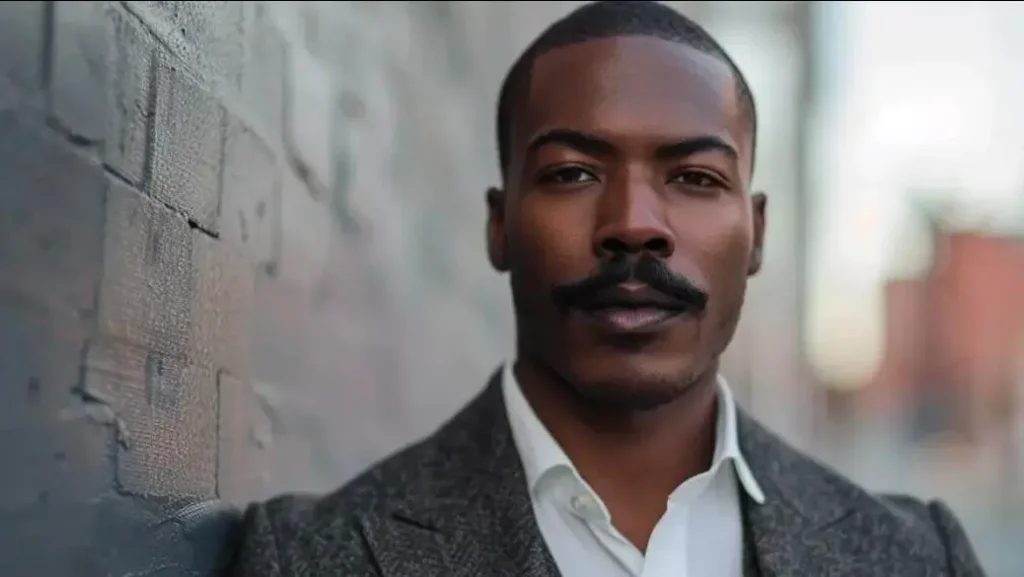
Circle Beard
A circle beard combines a rounded goatee with a connected mustache. On coily hair, this style often looks fuller and more deliberate than on straighter textures, since the curl adds natural density to a relatively small area.
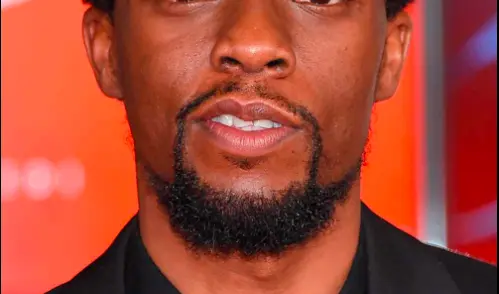
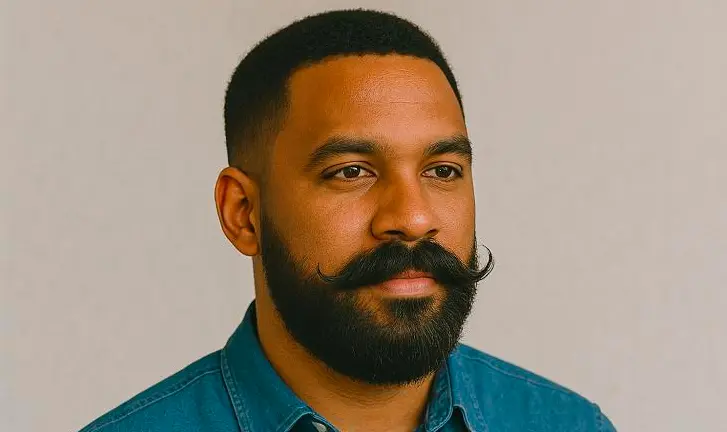
Van Dyke Beard
For something more distinctive, a Van Dyke beard — a pointed chin beard paired with a separate mustache — creates sharp definition and works well for men who don’t grow full connected sideburn-to-chin coverage.

Chin Strap Beard
A chin strap beard follows a thin line along the jaw from ear to ear. It requires more frequent shaping than fuller styles but gives strong facial definition, especially for rounder face shapes.
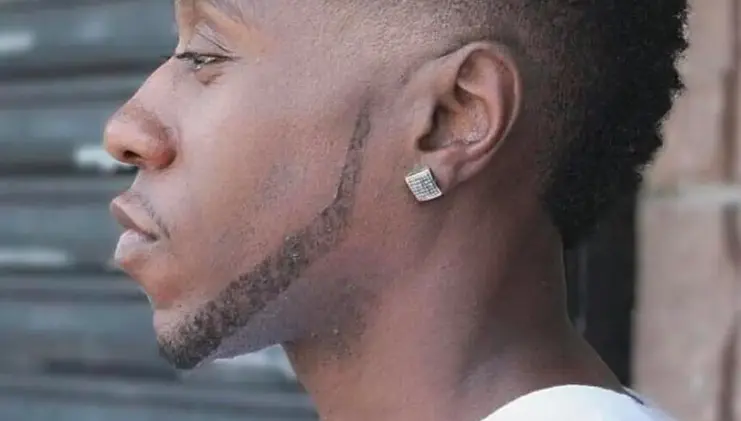
Corporate Beard
A short, tightly shaped corporate beard keeps length close to the skin while still showing full coverage. It’s a reliable choice for client-facing roles or conservative workplaces.

Goatee
A classic goatee style isolates growth to the chin, which works well for men whose cheek growth is patchier than their chin and jawline.
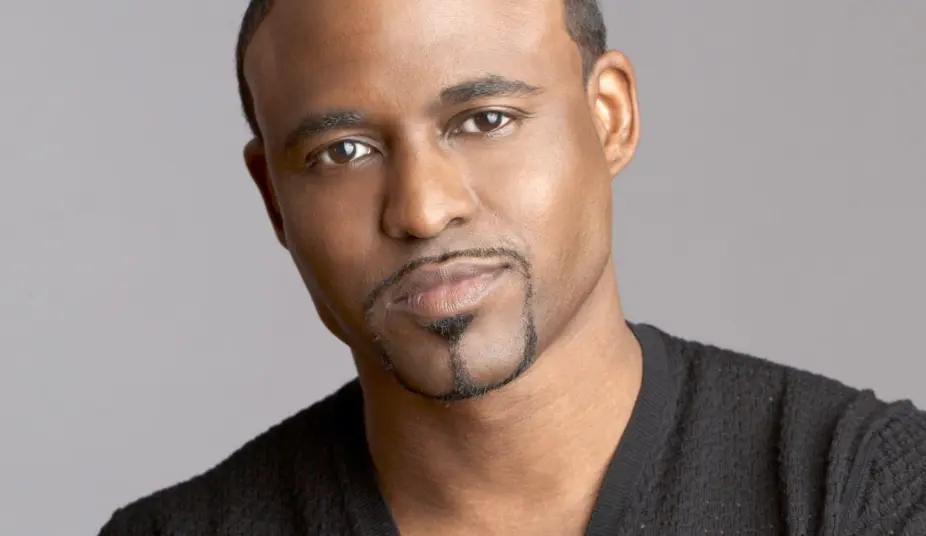
The Beardstache
A fuller mustache connected to a shorter beard — the beardstache — has become a popular statement look, and coily hair’s natural volume gives the mustache portion extra presence.
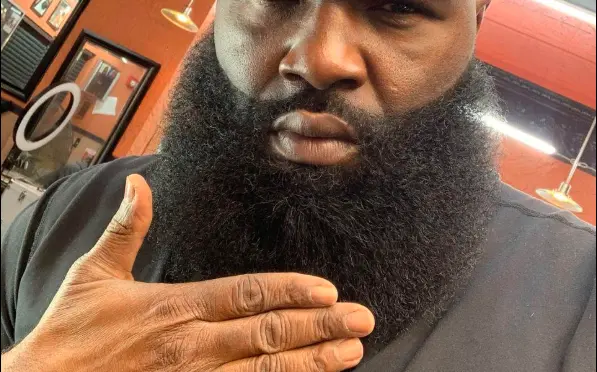
Bandholz Beard
For men aiming for maximum length and volume, the bandholz beard leaves growth largely untouched aside from basic shaping, letting natural density and curl pattern do the work.
Quick Comparison Table
| Style | Maintenance | Styling Difficulty | Best Growth Pattern |
| Full Beard | Moderate | Easy | Even, all-over growth |
| Fade Beard | High | Moderate | Dense on jaw and chin |
| Boxed Beard | Moderate-High | Moderate | Defined cheek line growth |
| Circle Beard | Moderate | Moderate | Full chin and mustache |
| Van Dyke | Moderate | Moderate-Hard | Strong chin, lighter cheeks |
| Chin Strap | High | Moderate | Clean jawline coverage |
| Corporate Beard | Low-Moderate | Easy | Even, moderate density |
| Bandholz Beard | Low | Easy | Dense, fast-growing |
3. Choosing the Best Beard for Black Men by Face Shape
Face shape has just as much influence on the right style as hair texture does. A style that flatters a round face can make an oblong face look longer, and vice versa.
| Face Shape | Recommended Style | Why It Works |
| Round | Boxed beard or Van Dyke | Adds angles and vertical length |
| Square | Rounded full beard | Softens strong jaw corners |
| Oval | Most styles work | Naturally balanced proportions |
| Diamond | Full beard with fuller cheek coverage | Balances a narrow forehead and chin |
| Heart | Fuller chin, tapered cheeks | Adds width at the jaw |
| Oblong | Fuller sides, shorter chin length | Prevents added length |
| Triangle | Fuller cheek and jaw coverage | Balances a narrower forehead |
For a more detailed look at your specific shape, see our guides on round face, square face, oval face, diamond face, heart face, oblong face, and triangle face shapes.
4. Solving the Most Common Beard Problems
Razor Bumps and Ingrown Hairs
This is the single biggest grooming challenge for coily beard hair. As curved hair grows, the tip can curl back and re-enter the skin, causing inflammation known medically as pseudofolliculitis barbae. The American Academy of Dermatology notes that this condition is significantly more common in people with curly or coily hair textures and is best managed through shaving technique rather than stronger razors alone.
Practical steps that help:
- Shave in the direction of hair growth, never against it
- Use a single-blade razor instead of multi-blade cartridges, which can cut hair below the skin’s surface
- Soften hair first with a warm shower or damp towel before shaving
- Avoid stretching the skin taut while shaving, since this increases the chance of hair retracting under the surface
- Let the beard grow out slightly rather than shaving down to the skin daily if bumps persist
If razor bumps are a recurring, painful, or worsening issue, seeing a dermatologist is worth it — this is a genuine medical condition, not just a grooming inconvenience.
Patchy Growth
Uneven density across the cheeks is common and not unique to any one ethnicity, though it’s a frequent search alongside African American beard styles. Choosing a style that works with your existing density — like a goatee or chin strap instead of a full beard — usually solves this faster than waiting out uneven growth. Our patchy beard guide covers additional shaping strategies.
Dryness and Flaking
Coily beard hair holds less natural moisture along the strand due to its curve, which makes dryness and flaking more noticeable than in straighter textures. Daily beard oil and a weekly deep conditioner or beard butter application address this directly.
5. How to Grow African American Beard Styles the Right Way
Step-by-step growth process:
- Weeks 1–2: Let the beard grow untouched, resisting the urge to shape too early
- Weeks 3–4: Begin trimming stray hairs and defining the neckline only — leave the cheek line alone until there’s enough growth to see the natural pattern
- Month 2: Shape the cheek line and neckline properly for the first time, ideally with a barber who has experience with coily hair textures
- Months 3+: Maintain shape with regular trims every 2–4 weeks depending on the style chosen
Expert tip: Ask specifically for a barber experienced with textured hair when booking your first shaping appointment. Technique for coily hair genuinely differs from technique for straight or wavy beard hair, particularly around blade angle and stretch.
6. Daily and Weekly Maintenance Routine
- Wash 2–3 times a week with a beard-specific cleanser; over-washing strips natural oils that coily hair already struggles to retain
- Apply beard oil daily, focusing on the skin underneath as well as the hair itself
- Use a beard brush, not just a comb, to train curl pattern and distribute oil evenly through denser growth
- Deep condition weekly with a beard butter or balm to combat dryness
- Trim edges every 1–2 weeks for sharper styles like boxed beards or fades; every 3–4 weeks for looser, fuller styles
For a broader grooming routine covering washing schedules, oils, and tools in more depth, our beard care guide is worth reading alongside this one. If you’re building trimming skills at home, how to trim a beard walks through the basics step by step.
7. Styling Difficulty and Maintenance at a Glance
| Factor | Low Maintenance Styles | High Maintenance Styles |
| Examples | Bandholz, full beard, corporate beard | Fade beard, boxed beard, chin strap |
| Trim frequency | Every 3–5 weeks | Every 1–2 weeks |
| Daily styling time | Under 5 minutes | 5–15 minutes |
| Best for | Busy schedules, first-time growers | Men comfortable with regular touch-ups |
8. Common Myths About Black Beard Growth
- “Coily hair grows slower.” Growth rate is determined by genetics and follicle health, not curl pattern. Coily hair can appear shorter because of shrinkage, not because it’s actually growing slower.
- “You need special products just because you’re Black.” What matters is your hair’s texture and porosity, which does correlate with coily patterns often but isn’t determined by ethnicity alone.
- “Shaving more often prevents razor bumps.” In most cases it makes them worse, since more frequent shaving means more opportunities for curved hair to re-enter the skin.
- “A patchy beard will always stay patchy.” Density often improves over the first year of consistent growth, particularly for younger men still developing full facial hair coverage.
9. Best Beard Styles by Age Group
- Teens and early 20s: Lighter styles like a goatee or chin strap work well while density is still developing. Our beard styles for teenagers guide covers realistic expectations for this stage.
- 20s to 40s: This is when most men can comfortably wear fuller styles like a full beard, fade beard, or boxed beard, since density is usually at its peak.
- 40s and beyond: A well-maintained corporate beard or bandholz beard tends to age well, especially as some men notice thinning or greying. Our grey beard styles and beard styles for men over 40 guides go into more detail for this stage.
10. Conclusion
Beard styles for Black men work best when the approach starts with hair texture, not just the finished shape. Coily and curly growth patterns bring real advantages — natural volume, density, and definition — but they also come with specific challenges like razor bumps and dryness that need direct attention rather than generic advice. Pick a style that matches your actual growth pattern and face shape, shave with the grain instead of against it, and keep up with a real maintenance routine. Do that consistently, and almost any style on this list becomes achievable.
11. FAQs
What is the best beard style for Black men? There’s no single best style — it depends on face shape and growth pattern. A full beard or boxed beard tends to be the most universally flattering choice for African American beard styles, since coily hair naturally adds volume and definition to both.
How do I stop razor bumps when growing a beard? Shave in the direction of hair growth, use a single-blade razor instead of a multi-blade cartridge, and avoid stretching the skin while shaving. If bumps persist or become painful, a dermatologist can recommend additional treatment.
Does Black beard hair grow slower than other hair types? Not necessarily. Coily hair often appears shorter due to shrinkage rather than a genuinely slower growth rate. Actual growth speed depends more on individual genetics and follicle health than on curl pattern.
What beard style works best for patchy growth? A goatee, chin strap, or circle beard tends to work well for patchier growth, since these styles isolate facial hair to areas that typically grow in more evenly, like the chin.
How often should I trim a fade beard? A fade beard usually needs a touch-up every 2 to 3 weeks to keep the transition between hair lengths sharp, since regrowth becomes noticeable fastest along the fade line.
Is beard oil necessary for coily or curly beard hair? Yes. Coily hair retains less natural moisture along its curved shape compared to straighter hair, which makes daily beard oil more important for preventing dryness, flaking, and itchiness.
What’s the difference between a boxed beard and a regular full beard? A boxed beard uses hard, straight lines along the cheeks and jaw for a defined, geometric shape, while a full beard follows a more natural, rounded outline with softer edges.
Can a beginner shape their own beard at home? Basic maintenance like neckline touch-ups can be done at home with the right tools, but the first full shaping is best done by a barber, ideally one experienced with coily or textured hair.
What causes ingrown hairs in beard hair? Ingrown hairs happen when curved hair grows back into the skin instead of straight outward. This is more common in coily and curly hair types due to the natural curve of the follicle.
How long does it take to grow a full beard? Most men need two to four months of consistent, untouched growth before a beard is ready for its first proper shaping, though this varies based on individual growth rate and density.
Do Black men need different grooming products than other hair types? Not because of ethnicity specifically, but because coily and curly textures often need richer oils and butters to manage dryness. Choosing products based on your actual hair texture matters more than any general category.
What beard style suits a round face best? A boxed beard or Van Dyke tends to work best for round faces, since both add angular structure and vertical length that softer, rounder styles don’t provide.
Is it better to shave with the grain or against it to avoid bumps? Shaving with the grain, meaning in the same direction the hair grows, significantly reduces the risk of razor bumps compared to shaving against the growth direction.