 By Bread Styles Team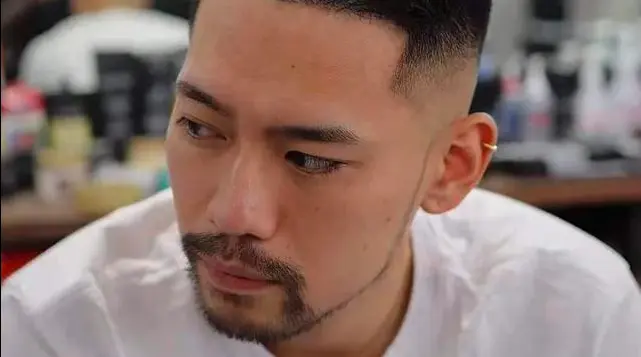
Table of Contents
1. Understanding Asian Facial Hair Growth
Facial hair on Asian men tends to grow with fewer follicles per square inch on the cheeks compared to some other ethnic groups, and the strands themselves are often finer and straighter. This combination means visible density builds more slowly, and certain zones — usually the cheeks — fill in later than the chin and mustache area.
None of this means a full, healthy beard is out of reach. It means the approach to beard styles for Asian men works best when it’s built around actual growth patterns instead of forcing a style that needs density you don’t have yet. Chin-focused and mustache-forward styles tend to look more finished, faster, than a full beard attempted too early.
Genetics, testosterone levels, and age all play a role in how quickly and fully a beard fills in, and these vary from person to person regardless of ethnicity. Two Asian men in the same family can have noticeably different growth patterns.
2. Best Beard Styles for Asian Men
Here’s a breakdown of the styles that consistently work well, starting with the lowest-density options and building toward fuller looks.
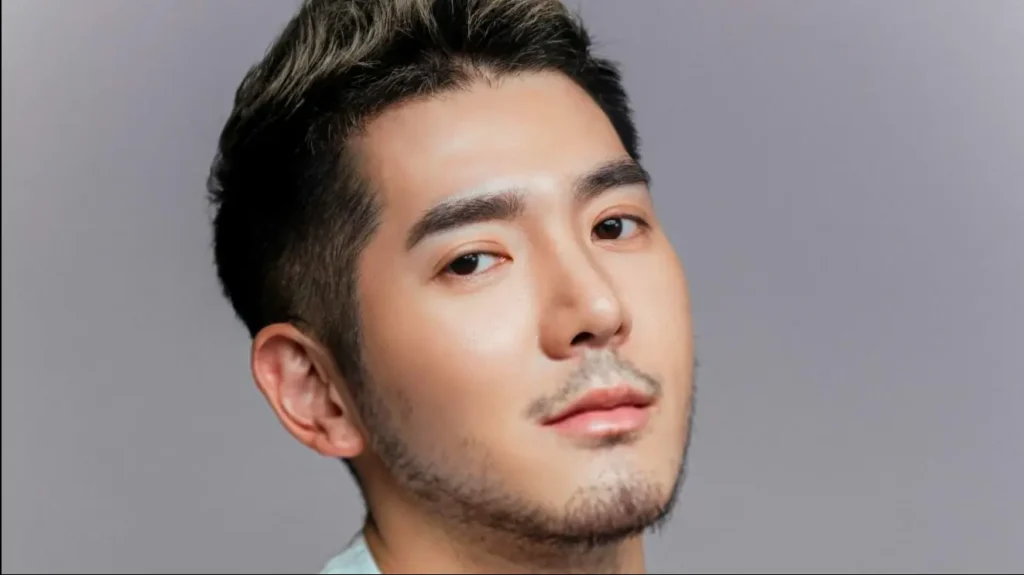
Stubble
Short stubble, kept between two and five millimeters, is one of the most reliable Beard Styles for Asian Men because it doesn’t require heavy density to look intentional. Even, well-maintained stubble reads as groomed rather than unfinished.
- Best for: Men still building density, or anyone wanting a low-maintenance daily look
- Maintenance: Trim every 3–5 days with a guard to keep length consistent
Goatee
A goatee isolates growth to the chin, which is usually the area with the most consistent density. It’s one of the most dependable choices when cheek growth is still patchy.

Circle Beard
A circle beard connects a rounded chin beard with the mustache, creating a compact, defined shape that doesn’t rely on cheek coverage at all.
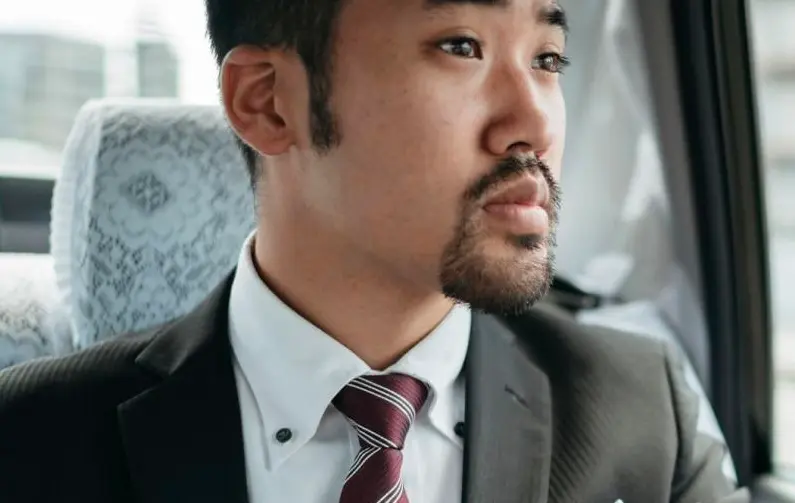
French Beard
The French beard is a short, closely trimmed style that follows the jawline without needing much length or volume. It’s a popular pick for a clean, modern look that photographs well.

Corporate Beard
A tight, short corporate beard works well for finer, straighter hair since shorter lengths make thinner strands look denser than they would at longer lengths.
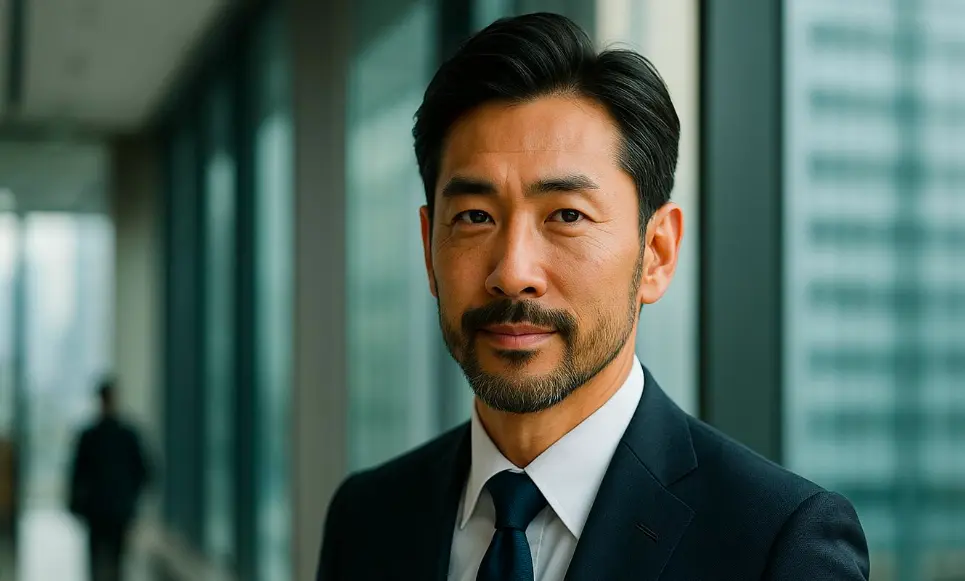
Van Dyke Beard
For sharper definition, a Van Dyke beard — a pointed chin beard paired with a separate mustache — plays to the strength of chin and mustache growth while skipping the cheeks entirely.
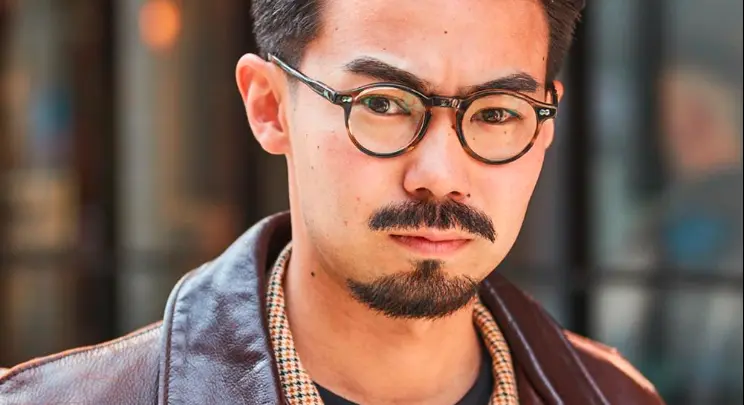
Chin Strap Beard
A chin strap beard traces a thin line along the jaw. It requires regular upkeep but adds visible facial structure without depending on thick growth.
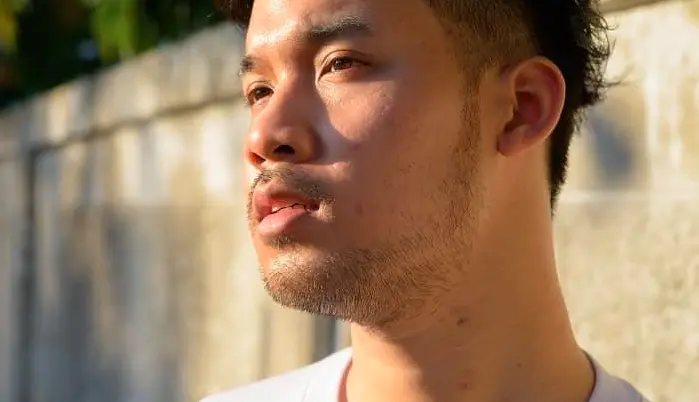
Balbo Beard
A Balbo beard combines a floating mustache with a shaped chin beard, leaving the cheeks bare by design rather than by necessity. It’s an especially good option if cheek patchiness is a concern, since the style is built around that gap rather than fighting it.
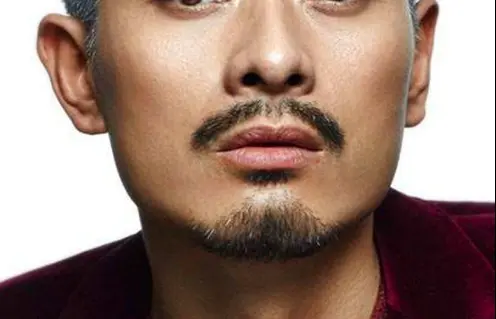
Mustache-Forward Styles
Many Asian men grow denser mustache hair relative to their cheeks, which makes styles like the handlebar mustache or a defined chevron mustache worth considering, either on their own or paired with light chin growth.
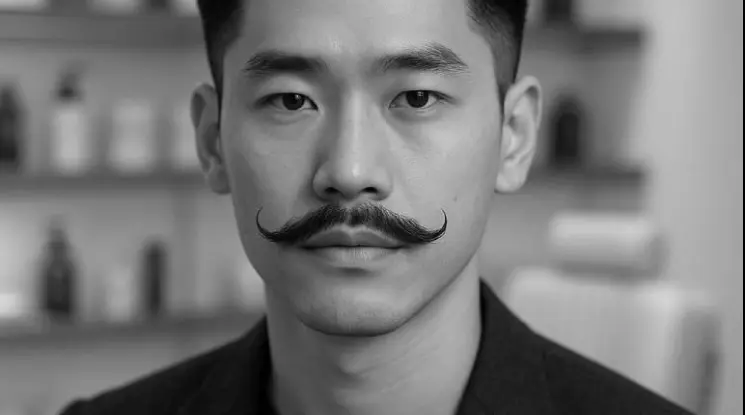
Samurai Beard
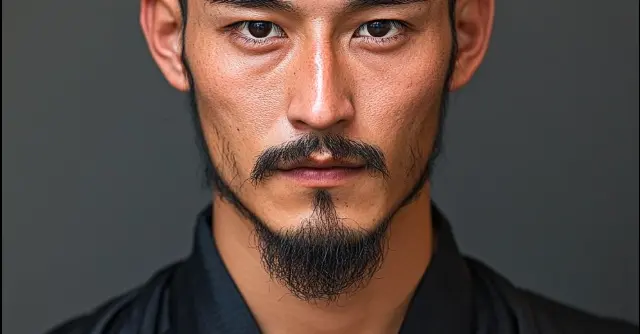
For a bolder, historically inspired option, the samurai beard combines length at the chin with a shaped mustache, drawing on traditional East Asian facial hair aesthetics. It takes longer to grow into but delivers a distinctive result.
Full Beard
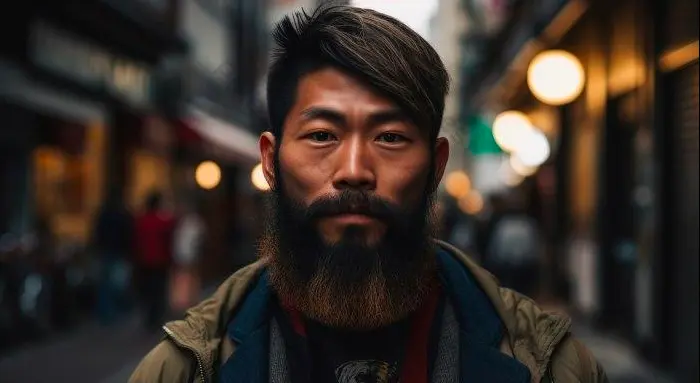
A full, connected beard is absolutely achievable, but it usually takes longer to fill in evenly. Patience during the growing-out phase matters more here than with any other style on this list. Our guide to types of beard styles for asian men covers the general growth stages in more depth.
Quick Comparison Table
| Style | Density Needed | Maintenance | Best For |
| Stubble | Low | Low-Moderate | Everyday, low effort |
| Goatee | Low-Moderate | Moderate | Patchy cheeks |
| Circle Beard | Moderate | Moderate | Defined chin and mustache growth |
| French Beard | Moderate | Moderate | Clean, modern look |
| Corporate Beard | Moderate | Low-Moderate | Professional settings |
| Van Dyke | Moderate | Moderate-High | Sharp, defined chin growth |
| Balbo Beard | Moderate | Moderate | Cheek patchiness |
| Samurai Beard | Moderate-High | Moderate | Bold, longer chin growth |
| Full Beard | High | Moderate | Even, all-over growth |
3. Choosing the Best Beard for Asian Men by Face Shape
Face shape changes which style looks most balanced, independent of how much density you’re working with.
| Face Shape | Recommended Style | Why It Works |
| Round | Van Dyke or chin strap | Adds vertical length and angles |
| Square | Rounded goatee or circle beard | Softens strong jaw corners |
| Oval | Most styles work | Naturally balanced proportions |
| Diamond | Circle beard with fuller mustache | Balances a narrow forehead and chin |
| Heart | Fuller chin coverage, like a goatee | Adds width lower on the face |
| Oblong | Stubble or French beard, avoid excess chin length | Prevents the face from looking longer |
| Triangle | Fuller mustache, tighter jaw shaping | Balances a narrower forehead |
For a closer look at your own face shape, see our guides on round face, square face, oval face, diamond face, heart face, oblong face, and triangle face shapes.
4. How to Maximize Density and Fill In Patchy Areas
Realistic growth timeline:
- Weeks 1–4: Uneven growth is normal; resist trimming or shaping too early
- Weeks 4–8: Patchy zones, usually the cheeks, become clearer — this is the point to decide whether a full beard or a chin-focused style makes more sense
- Months 2–4: Density in the chin and mustache typically reaches a workable level for most men
- Months 4+: Cheek density, if it’s going to fill in further, usually does so gradually rather than suddenly
Steps that genuinely help:
- Keep the skin underneath healthy with regular cleansing and moisturizing, since irritated or dry skin can affect follicle function over time
- Brush the beard daily to stimulate blood flow to the area and train hair growth direction
- Be patient through the first eight weeks rather than shaving off patchy growth prematurely
- If growth seems unusually slow or absent compared to family patterns, a dermatologist can check for underlying causes and discuss options, including topical treatments used under medical guidance
Expert tip: Trimming stubble regularly, even while growing a longer beard, doesn’t slow growth. What it does is keep the beard looking shaped rather than scraggly during the in-between stage, which is often the difference between a beard that looks intentional and one that just looks unfinished.
5. Common Problems and Realistic Expectations
- Patchy cheeks that never fully fill in. This is genuinely common and often permanent for some men, regardless of ethnicity. Choosing a chin-focused style like a goatee or Balbo beard works with this rather than against it. Our patchy beard guide has more shaping strategies specific to this issue.
- Fine, wispy hair that looks thin even at length. Keeping the beard slightly shorter often looks denser than growing it out, since shorter strands stand closer together visually.
- Slower visible progress than expected. Growth rate varies enormously between individuals. Comparing your timeline to someone else’s, even a family member, isn’t a reliable measure of what’s normal for you.
6. Daily and Weekly Maintenance Routine
- Wash 2–3 times a week with a beard-specific cleanser to avoid stripping natural oils
- Apply beard oil daily, particularly if hair feels dry or wiry at the ends
- Trim every 1–2 weeks for shorter, defined styles like a French beard or corporate beard; every 3–4 weeks for longer, fuller styles
- Keep the neckline and cheek line clean weekly, since undefined edges make any style look less deliberate, using our beard neckline and beard cheek line guides for reference
For a complete grooming routine beyond shaping, our beard care guide covers washing schedules, oils, and tools in more depth. If you’re building trimming skills yourself, how to trim a beard breaks the process down step by step.
7. Styling Difficulty and Maintenance at a Glance
| Factor | Low Maintenance Styles | High Maintenance Styles |
| Examples | Stubble, corporate beard | Van Dyke, chin strap, samurai beard |
| Trim frequency | Every 3–5 days to every 3 weeks | Every 1–2 weeks |
| Daily styling time | Under 5 minutes | 5–15 minutes |
| Best for | Busy schedules, lower current density | Men comfortable with regular touch-ups |
8. Common Myths About Asian Beard Growth
- “Asian men can’t grow full beards.” Many can, and genetics vary widely between individuals regardless of ethnicity. Density and speed differ, but a full beard isn’t off the table for everyone.
- “Shaving makes hair grow back thicker.” This is a persistent myth with no basis in how hair follicles actually work. Shaving doesn’t change strand thickness or density.
- “If it hasn’t filled in by six months, it never will.” Beard density can continue to improve into a man’s late twenties and even beyond, as testosterone and follicle maturity change over time.
- “Thinner hair means a weaker-looking beard.” Choosing the right style, like tighter stubble or a chin-focused shape, often makes finer hair look just as defined as coarser textures.
9. Best Beard Styles by Age Group
- Teens and early 20s: Growth is often still developing at this stage. Lighter styles like stubble or a simple goatee tend to look more finished than attempting a full beard too early. Our beard styles for teenagers guide covers this stage in more detail.
- Mid-20s to 40s: Density typically peaks during this window, making fuller styles like a circle beard, Van Dyke, or full beard more realistic for most men.
- 40s and beyond: Some men notice greying or thinning starting here. A well-shaped corporate beard or salt and pepper beard style tends to age particularly well. Our beard styles for men over 40 guide has more direction for this stage.
10. Conclusion
Beard styles for Asian men work best when the style is chosen to match real growth patterns instead of fighting them. Finer strands and lower cheek density aren’t obstacles to a good-looking beard — they’re just information that points toward chin-focused and mustache-forward styles working faster and looking more finished than a full beard attempted too soon. Give any new style at least eight weeks before judging it, keep the neckline and cheek line clean throughout, and choose a shape that flatters your face rather than one you saw on someone with a completely different growth pattern.
11. FAQs
What is the best beard style for Asian men? There’s no universal best style — it depends on density and face shape. A goatee, circle beard, or Van Dyke tend to be the most reliable Asian beard styles, since they work well with chin-focused growth patterns common in many Asian men.
Why do some Asian men struggle to grow a full beard? Facial hair density and growth speed are largely genetic. Many Asian men have fewer hair follicles on the cheeks compared to the chin and mustache area, which is why chin-focused styles often look more filled-in than full beard attempts.
How long does it take to see real beard growth? Most men need at least eight weeks of consistent, untouched growth before density becomes clear enough to judge which style will work best. Some areas may continue improving for several months beyond that.
What is the best beard for Asian men with patchy cheeks? A goatee, Balbo beard, or circle beard works well with patchy cheek growth, since these styles are built around chin and mustache density rather than requiring even cheek coverage.
Does shaving make Asian facial hair grow back thicker? No. This is a common myth. Shaving cuts hair at the surface and has no effect on follicle size, density, or how thick the hair grows back.
What beard style suits a round face for Asian men? A Van Dyke or chin strap beard tends to work best for round faces, since both styles add vertical length and angular definition that softer, rounder shapes don’t provide.
Can Asian men grow a full beard eventually? Yes, many can. Genetics, age, and testosterone levels all play a role, and density can continue to improve well into a man’s late twenties or beyond.
How often should stubble be trimmed to look intentional? Stubble generally looks best when trimmed every 3 to 5 days with a guard, keeping length even and preventing it from drifting into an unshaped, longer beard by accident.
What’s the best short beard guide style for thinner facial hair? Shorter, defined styles like a French beard or corporate beard tend to look denser on finer hair than longer styles, since shorter strands appear closer together visually.
Should I see a dermatologist about slow beard growth? If growth seems unusually slow or patchy compared to your family’s typical pattern, a dermatologist can check for underlying causes and discuss appropriate options.
Does trimming a beard while it’s still growing slow down the process? No. Trimming stray hairs or the neckline doesn’t affect overall growth rate. It simply keeps the beard looking shaped during the patchy in-between stage.
What is a samurai beard, and does it suit Asian facial hair well? A samurai beard combines longer chin growth with a shaped mustache, drawing on traditional East Asian grooming aesthetics. It works particularly well for men whose chin and mustache density outpaces their cheek growth.