 By Beard Style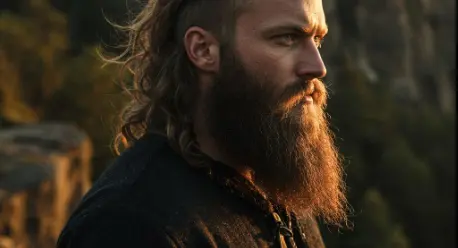
Table of Contents
Viking beard styles are back in barbershops for a reason — they’re bold, they’re rugged, and they look nothing like the trimmed corporate beards you see on every second man at the office. A proper Viking beard is thick, long, and often shaped with braids, beads, or a shaved neckline that makes it look intentional rather than neglected. This guide breaks down the real Viking beard styles worth growing, how long they take, which face shapes wear them best, and how to keep one looking sharp instead of scraggly.
What Counts as a Viking Beard
A Viking beard is a thick, full beard grown to at least chin or chest length, often paired with braiding, beads, or metal rings woven into small sections of hair. It’s not just “a long beard” — the defining feature is texture and structure. The hair sits full and untamed through the cheeks and jaw, but the ends are usually groomed, braided, or tied off so the beard reads as styled rather than unkempt.
Most Viking beard styles share three traits:
- Length — chin-length at the shortest, chest-length at the longest
- Density — full coverage with minimal thinning, especially on the cheeks
- Detail — braids, beads, rings, or a shaped neckline that gives the beard structure
This is different from a general long beard style, which can be worn loose with no styling at all. A Viking beard almost always has some form of intentional detail worked into it.
Where the Viking Beard Look Actually Comes From
Historical Norse men didn’t have a single uniform beard — grooming varied by region, wealth, and era. What survives in sagas, burial finds, and carved imagery points to well-kept, often braided facial hair, since combs were common personal items found in Viking Age graves. Beard care mattered enough that grooming kits, including tweezers and ear scoops, have been recovered from Norse settlements.
The modern version of the Viking beard borrows from this — thick, braided, occasionally beaded — but it’s shaped more by film and television than by strict historical accuracy. Shows and movies popularized the tightly braided, almost ornamental Norse beard that’s now common in barbershop requests. Worth knowing if you want the look for accuracy versus if you just want something that looks striking; the two aren’t always the same beard.
8 Viking Beard Styles Worth Trying
Not every Viking beard needs full braiding and beads. Here are the styles men actually ask barbers for, ranked from lowest to highest maintenance.
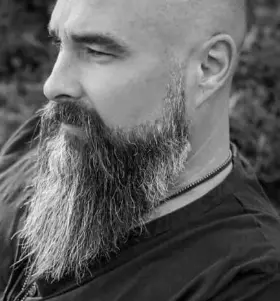
1. The Full Norse Beard
A dense, chin-to-chest beard left mostly natural, with only the neckline and cheek line cleaned up. This is the base style most other Viking looks are built from, and it works well if you already have thick, even facial hair growth. Pair it with a defined beard neckline so it doesn’t creep down your throat.
2. Long Viking Beard with Braids
The classic. Sections at the chin or sides are braided into two or three thick plaits while the rest of the beard stays full. A long Viking beard like this needs at least 8–10 inches of length before braiding holds properly — shorter hair just unravels.
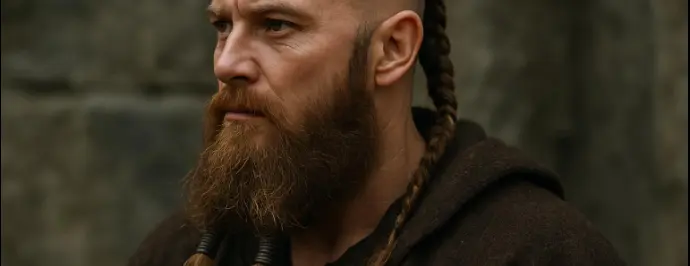
3. Two-Strand Braided Beard
A tighter, more controlled braid pattern using two strands twisted together rather than a full three-strand plait. It reads as more refined than the classic thick braid and suits men who want the Viking effect without looking quite as wild.
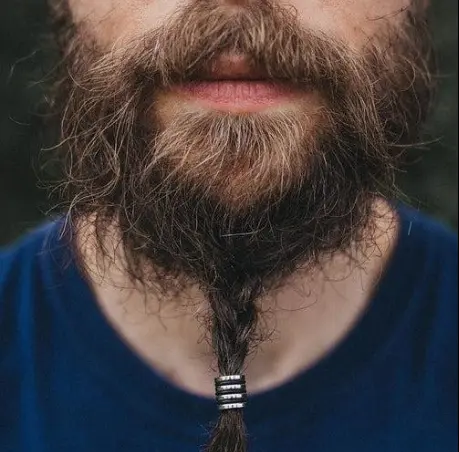
4. Viking Beard with Beads or Rings
Small metal or wooden beads threaded onto individual braided sections. This works best on beards that are already braided, since beads need a firm braid to sit on without sliding off. It’s the most decorative version of the style and the one people usually picture when they hear “Norse beard.”
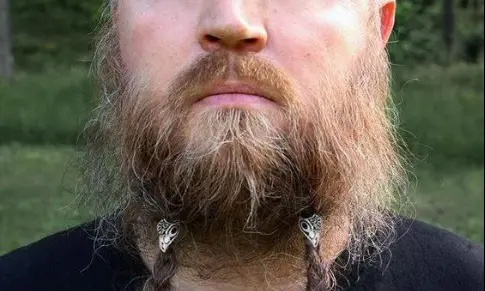
5. Mustache-Braided Viking Beard
Here the braiding happens on the mustache rather than the chin — two thin braids running down either side, sometimes tied together beneath the chin. It’s a strong option if your chin growth is patchier than your mustache growth.
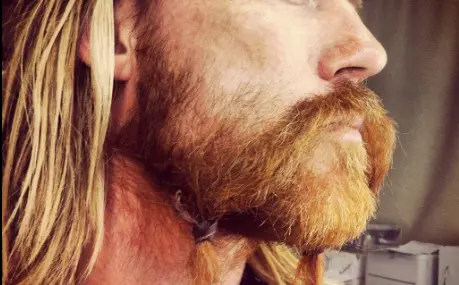
6. Short Viking Beard
A compact version at 1–2 inches, kept dense and squared off rather than tapered. It keeps the rugged texture of a Viking beard without the multi-month growing commitment. If full length isn’t realistic for you yet, a short beard style with a similarly blunt, full shape gets you close to the same effect.
7. Viking Beard with Undercut Fade
The beard stays long and full while the sides and back of the head are faded short, creating contrast between a rugged beard and a cleaner haircut. This is one of the more popular combinations for men who want the beard to be the focal point rather than the whole head. A beard fade style works particularly well against this heavier beard shape.
8. Garibaldi-Style Viking Beard
Rounder, fuller, and slightly less structured than the classic Norse braid, this borrows shape from the Garibaldi beard — wide, bushy, and rounded at the bottom — then adds a single braided section for the Viking detail. Good middle ground if full braiding feels like too much commitment.
Viking Beard vs. a Regular Long Beard
People often use “long beard” and “Viking beard” interchangeably, but they’re not styled the same way.
| Feature | Viking Beard | Standard Long Beard |
| Minimum length | Chin to chest | Jaw length or longer |
| Styling detail | Braids, beads, or rings | Usually left loose |
| Neckline | Sharp, defined | Can be soft or undefined |
| Maintenance level | High (braiding, oiling) | Moderate |
| Best suited for | Men who want a distinct, rugged statement | Men who want low-effort length |
If you like the length but not the upkeep, a bandholz beard gives you the same full, untamed volume without the braiding work.
Best Viking Beard Styles for Your Face Shape
Face shape changes how a Viking beard should be trimmed, even if the overall style stays the same.
| Face Shape | Recommended Approach | Guide |
| Round | Keep length below the chin, avoid width on the cheeks | Best beard for round face |
| Square | Full Norse beard works naturally, soften jaw corners slightly | Best beard for square face |
| Oval | Almost any Viking beard style suits this shape | Best beard for oval face |
| Diamond | Add width at the jaw with a fuller cheek line | Best beard for diamond face |
| Heart | Keep the beard fuller at the chin to balance a narrow jaw | Best beard for heart face |
| Oblong | Avoid excessive chin length, keep width even | Best beard for oblong face |
| Triangle | Build volume at the jaw and cheeks, taper the chin | Best beard for triangle face |
Square and oval faces generally handle the boldest Viking beard styles without extra shaping. Round and oblong faces get better results from adjusting length rather than skipping the style altogether.
How to Grow a Viking Beard (Month by Month)
Growing Viking facial hair long enough to braid takes patience — most men underestimate how long it takes to reach braidable length.
| Timeline | What’s Happening | What to Do |
| Weeks 1–4 | Patchy, itchy growth phase | Resist trimming; use beard oil to reduce itch |
| Month 2 | Shape starts to show, uneven length | Clean up neckline only, leave length alone |
| Month 3–4 | Beard passes jaw length | Begin light shaping of cheek line |
| Month 5–6 | Chin-length, workable for basic braids | Start practicing simple three-strand braids |
| Month 7+ | Chest-length possible, full styling range | Add beads, rings, or multiple braid sections |
A few realistic points worth knowing before you start:
- Genetics decide your maximum thickness and speed more than any product does
- Facial hair grows roughly half an inch per month on average, so a proper long Viking beard is a five-to-eight-month project, not a weekend one
- Patchy growth in the early months is normal and usually fills in with time — a patchy beard at week three rarely stays patchy at month five
If your growth stays uneven past month four, that’s a sign to look at overall facial hair patterns rather than force the length.
How to Braid and Style a Viking Beard
Basic three-strand braid:
- Comb the beard section straight down to remove tangles
- Split it into three even strands
- Cross the right strand over the middle, then the left over the new middle
- Repeat down the length, keeping tension even
- Secure the end with a small elastic band or bead
Adding beads or rings:
- Finish the braid first, then slide the bead over the loose end
- Push the bead up to the desired position
- Tie off the braid below the bead so it can’t slip back down
Tip for beginners: practice on damp, conditioned hair. Dry, unconditioned facial hair is more likely to frizz mid-braid and unravel within a few hours. For more decorative patterns beyond basic braiding, look at broader beard design options once you’re comfortable with the basics.
Caring for a Viking Beard: Products, Tools, and Routine
A beard this size dries out fast without the right care. Here’s a routine that actually holds up:
Daily:
- Wash with a beard-specific cleanser 2–3 times a week (not daily — it strips natural oils)
- Apply beard oil after washing or showering while the skin is still slightly damp
- Comb through with a wide-tooth wooden comb to distribute oil evenly
Weekly:
- Deep condition with a beard balm or butter for extra hold and softness
- Check and clean up flyaway hairs along the neckline
Monthly:
- Trim split ends with sharp beard scissors, not clippers, to preserve length
- Reassess the cheek line and neckline shape
The British Association of Dermatologists recommends keeping facial hair clean and moisturized to prevent skin irritation underneath, which matters even more with a beard this dense since airflow to the skin is limited. If you’re unsure how far to trim without losing length, a beard care guide walks through the basics in more detail, and the how to trim a beard guide covers scissor technique specifically.
Mistakes That Ruin the Viking Look
- Skipping oil for weeks at a time. Dry beard hair looks dull and frizzes out of braids within hours.
- Braiding too early. Anything under 6–8 inches usually won’t hold a braid without slipping loose.
- Ignoring the neckline. A full beard with no defined neckline looks unshaped no matter how long it grows.
- Using rubber hair ties. They snag and break facial hair; use elastic beard bands or leather cord instead.
- Washing with regular shampoo. It’s too harsh for facial hair and leaves it brittle.
- Over-trimming out of impatience. Cutting length in month two undoes months of growing time.
Who Should Grow One (and Who Should Wait)
Viking beard styles suit thick, coarse hair types best, since density holds a braid shape and beads without gaps. Fine or sparse facial hair can still work, but braids will look thinner and may need more product to hold their shape.
- Teenagers: growth is often still filling in during the late teens, so a shorter version tends to look more even — see beard styles for teenagers for realistic options at that stage
- Men in their 20s–30s: typically the easiest window, since density and growth speed are usually at their peak
- Men over 40: graying strands often start appearing through the beard, which many men lean into rather than dye — beard styles for men over 40 and beard styles for men over 50 cover how to adjust shape as texture changes
- Curly hair types: curl pattern can make braiding trickier but also gives beads a firmer grip — curly beard styles has specific care notes for this texture
- Grey or salt-and-pepper beards: these often carry the Norse look especially well, since the visible texture reads as more rugged — worth a look at grey beard styles and salt and pepper beard for shaping advice
If your job has a strict grooming policy or you work in food service, check whether a beard this size is workable before committing months of growth to it.
Barber Tips for a Sharper Viking Beard
- Get the neckline and cheek line professionally defined once you hit month three, even if you’re growing the rest out yourself — a barber shaping the borders makes a huge difference in how intentional the beard looks
- Use a leave-in beard conditioner before bed if your hair runs dry or coarse; overnight conditioning cuts down on morning frizz
- If braids keep slipping, the beard is too short or too dry — don’t fight it with more product, just wait
- Ask for a “shape-only” trim at the barbershop rather than a length cut once you’re happy with your length; this keeps the ends healthy without shortening the beard
- A dense thick beard style benefits from thinning shears on the underside only, never the front, to reduce bulk without losing visible fullness
Common Myths About Norse Beards
Myth: Viking beards were always massively long. Historical evidence points to a range of lengths, many of them shorter and more practical than what’s shown in film. Full chest-length beards weren’t universal.
Myth: You need special genes to grow one. Density and speed vary by genetics, but most men with average facial hair coverage can reach a workable Viking beard length with enough patience — it’s mostly a time investment, not a rare trait.
Myth: Beard oil makes hair grow faster. Oil improves texture, reduces itch, and prevents breakage, which helps hair retain length. It doesn’t speed up the biological growth rate.
Myth: Braiding damages the beard. Done correctly, with conditioned hair and gentle tension, braiding doesn’t damage healthy facial hair. Damage usually comes from dry hair or tight, repeated braiding in the same spot.
Viking beard styles reward patience more than any product or trick. The men who pull off the look best are usually the ones who let the growing phase run its course, keep the neckline sharp the whole time, and only start braiding once there’s enough length to actually hold a shape. Whether you go for a full Norse beard, a beaded braid, or just a short, dense version of the look, the same basics apply — condition it, trim the edges, and give it time.
Suggested Image ALT Text
- “Viking beard styles with braided chin section”
- “Long Viking beard with beads and rings”
- “Short Viking beard with defined neckline”
- “Man with full Norse beard and undercut fade”
FAQs
What is a Viking beard called? There’s no single official name — it’s commonly called a Viking beard, Norse beard, or Nordic beard. All three terms describe the same general style: thick, long facial hair often finished with braids or beads.
How long does it take to grow a Viking beard? Most men need 5–8 months to reach a length long enough for proper braiding, since facial hair grows around half an inch per month. Shorter Viking-style beards can look complete in 2–3 months.
Do you need thick hair for a Viking beard? Thick, coarse facial hair holds braids and beads more easily, but finer hair can still work with extra conditioning and slightly tighter braiding for hold.
What’s the difference between a Viking beard and a regular long beard? A Viking beard usually includes styling detail — braids, beads, or a defined neckline — while a standard long beard is often left loose and unstyled.
Can I braid a short beard into a Viking style? Not effectively. Braids typically need at least 6–8 inches of length to hold their shape; shorter hair tends to unravel within hours.
What oil is best for a Viking beard? Any beard oil with jojoba or argan oil as a base works well for softening coarse, dense facial hair and reducing frizz before braiding.
How often should I wash a Viking beard? Two to three times a week with a beard-specific cleanser is usually enough. Daily washing with regular shampoo strips natural oils and leaves the beard dry and harder to style.
Are Viking beards historically accurate? Partly. Norse men are known to have groomed their facial hair, including combing and braiding, based on artifacts found in burial sites, but the exact styles varied and weren’t identical to what’s shown in modern film and television.
What face shape suits a Viking beard best? Square and oval face shapes generally handle full Viking beard styles without much adjustment. Round and oblong faces usually look better with length kept slightly shorter and cheek width controlled.
Can teenagers grow a Viking beard? Yes, though growth is often uneven in the late teens. A shorter, denser version of the style tends to look more even than a full-length braided beard at that stage.
Do beads damage the beard? No, as long as they’re applied to a properly conditioned, secured braid. Sliding beads on and off dry, unbraided hair is what typically causes breakage.
What’s the easiest Viking beard style for beginners? The full Norse beard with a single braided section is the easiest starting point — it needs no complex braiding pattern and still gives the Viking look.
Can curly hair hold a Viking beard braid? Yes. Curly hair can actually grip braids and beads more firmly than straight hair, though it may need extra conditioning to prevent frizz along the braid.
Is a Viking beard high maintenance? Compared to short or stubble styles, yes. Between oiling, conditioning, neckline upkeep, and periodic re-braiding, it needs more regular attention than most other beard styles.
Do gray or salt-and-pepper beards work for the Viking look? Very well, in fact — the mixed or lighter tones add visible texture that many men feel suits the rugged, Norse aesthetic even more than a solid dark beard.